






Antique Apothecary Pestle
An antique apothecary pestle sits at the heart of historical remedies, offering tactile connection to centuries of compounding and kitchen preparation.
Antique Apothecary Pestle
An antique apothecary pestle represents the handheld grinding implement used alongside a corresponding bowl to crush dry ingredients, resins, and medicinal substances. These implements appear in domestic kitchens, chemist shops, and trade contexts across several centuries.
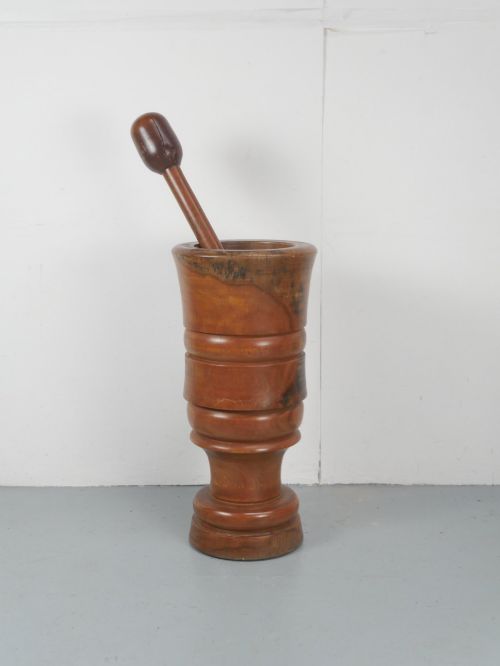
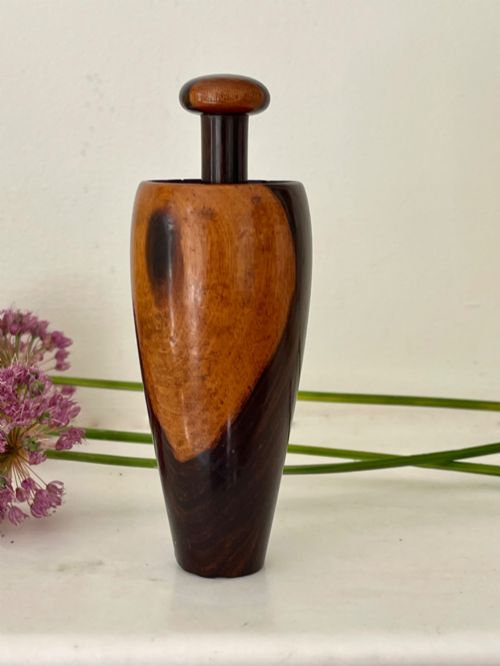
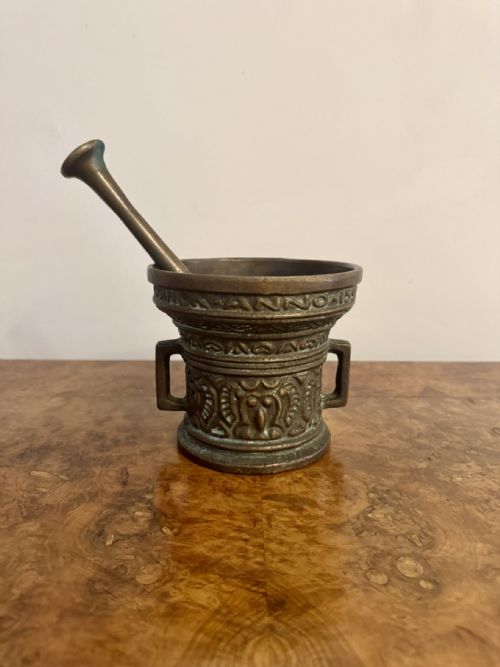
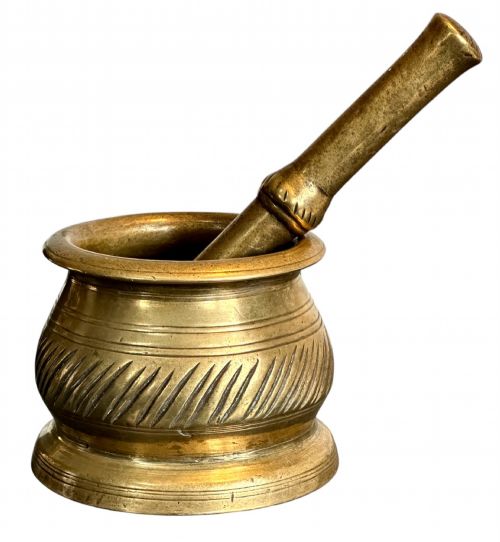
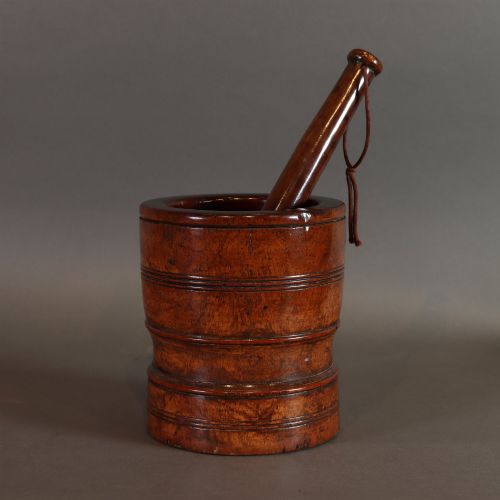
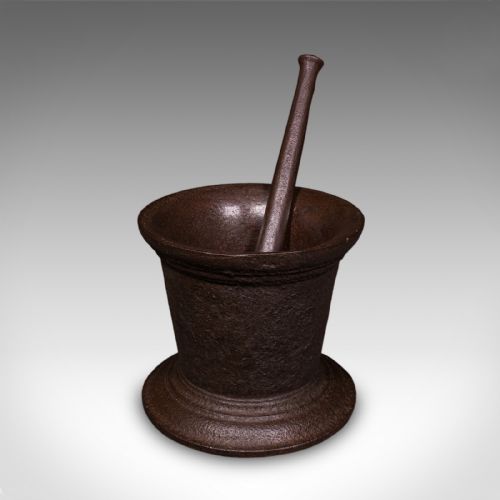
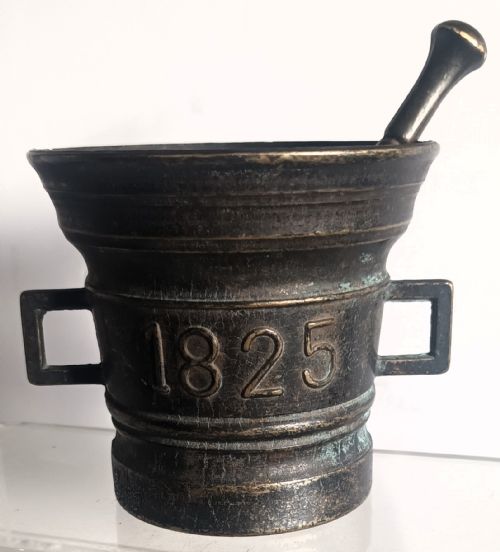
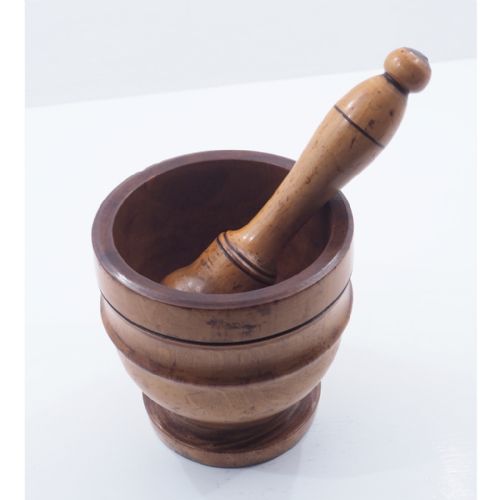
The selection here encompasses substantial metal examples alongside organic wooden forms. Bronze and brass predominate among the metal variants, while timber versions utilise dense hardwoods like lignum vitae and fruitwood.
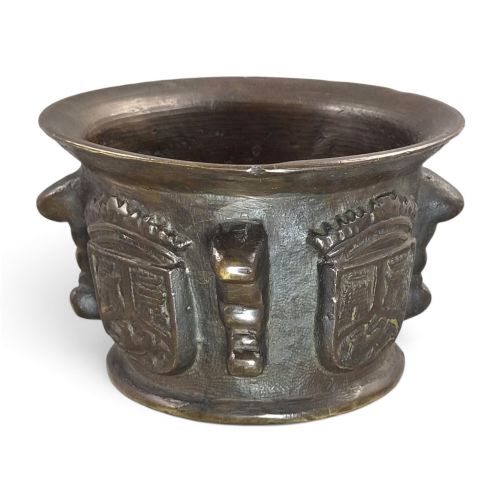
Examples span from seventeenth-century specimens through Georgian and Victorian eras up to Edwardian iterations. Certain pieces manifest distinct stylistic traits such as Gothic Revival details or Spanish Baroque casting.
How they were made
Metal versions typically involve molten bronze or brass cast in sand or loam moulds, sometimes incorporating decorative relief patterns, heraldic coats of arms, or ribbed surfaces directly into the casting process. Finishing work involves turning on a lathe or hand-chasing surface details.
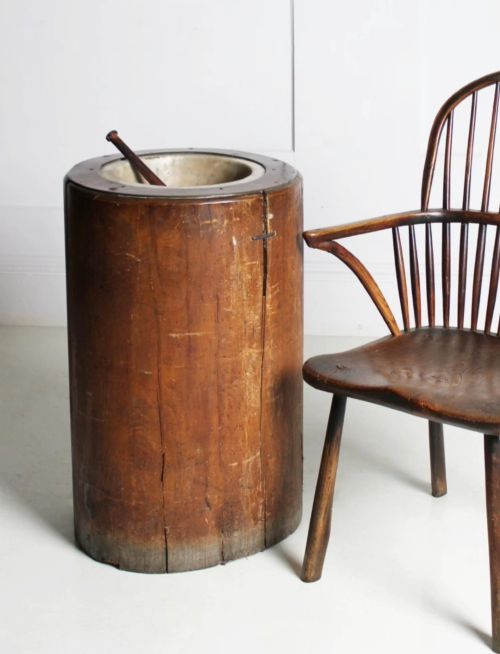
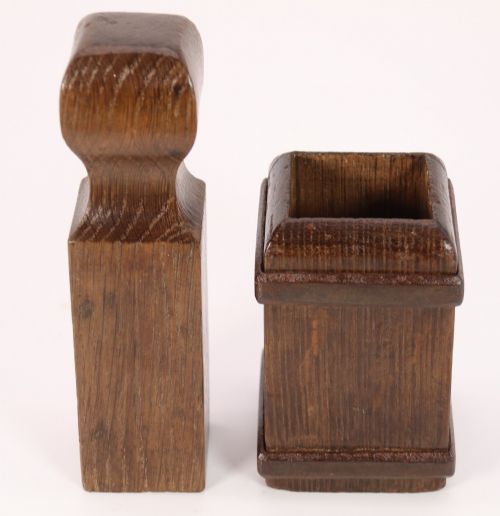
Wooden examples rely on seasoned timber such as oak, walnut, beech, or lignum vitae, shaped using a lathe to achieve balanced proportions and comfortable handles. Wrought iron mounts and hardware occasionally reinforce wooden or composite crushers.
Stone and ceramic elements appear in later iterations, providing durable working surfaces suited to intense chemical or culinary use.
Antique Apothecary Pestle Retail Price Guide 2026
Typical asking prices for apothecary pestle among the pieces listed under this phrase on Sellingantiques today, from the lower quarter to the upper quarter. They describe what is for sale here now, not the wider market.
One extraordinary nineteenth-century workshop utilised a floor-standing model weighing over a hundred pounds for industrial dye making.
What varies in quality
Quality rests primarily upon the integrity of the material and the crispness of the original cast or turned form. Heavier metal castings with well-defined decorative bands, inscriptions, or heraldic motifs indicate superior workshop production.
Proportion and balance dictate the functional success of each implement, where the handle matches the weight of the striking head. Well-preserved surfaces displaying authentic age patination elevate the standing of individual pieces.
The Antique Apothecary Pestle Glossary
- Apothecary
- A historical practitioner who formulated and dispensed materia medica and medicines. These professionals relied heavily on sturdy metal and stone mortars for daily compounding.
- Lignum vitae
- A dense, hard timber derived from trees of the genus Guaiacum, prized historically for its weight and self-lubricating oils. It resists splitting under heavy impact.
- Treen
- Small handmade wooden domestic objects and utensils. This category includes turned mortars, pestles, and snuff containers.
- Materia medica
- The body of collected knowledge concerning the therapeutic properties of any medicinal substance. It formed the basis of historical apothecary practice.
- Cast bronze
- An alloy of copper and tin poured into a mould to solidify. It provides the heavy, resonant structure required for rigorous crushing tasks.
Antique Apothecary Pestle: Frequently Asked Questions
What did they use pestles for?
Historical practitioners and households utilised these implements to pulverise dried roots, barks, minerals, and chemical ingredients for medicinal draughts and culinary recipes. The heavy head provided sufficient force to break down stubborn resinous materials.
Beyond medicine, kitchen variants ground spices, seeds, and sugar loaves for daily food preparation before mechanical grinders became common.
How do I date an old bronze pestle?
Dating relies on the profile shape, casting style, and decorative elements such as ribbing, Tudor rose motifs, or heraldic stamps. Earlier seventeenth-century examples often feature flared rims and thick, irregular casting.
Nineteenth-century versions tend towards standardised machine finishing and cleaner, symmetrical lines. Comparing the wear patterns on the striking surface also helps establish age.
Are wooden pestles durable?
Dense hardwoods like lignum vitae and oak provide surprising structural resilience for grinding dry herbs and resins. These timbers resist splintering under moderate downward pressure.
However, wooden versions remain susceptible to moisture damage and splitting if exposed to damp environments or harsh cleaning agents.
How should I display my mortar and pestle?
These objects suit placement on open shelves, kitchen dressers, or library tables where their weight and material texture remain visible. Pairing the pestle inside or beside the mortar creates an authentic silhouette.
Keeping them away from direct heat sources prevents timber from drying out and metal patinas from shifting unnaturally.