
Antique Animal Canvas
An antique animal canvas brings the historical presence of horses, dogs, and livestock into an interior through oil paint.
Antique Animal Canvas
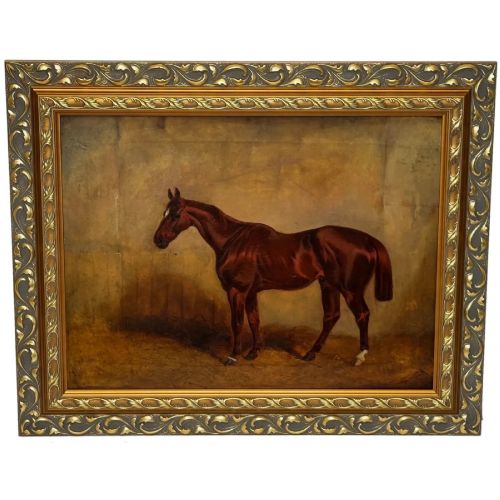
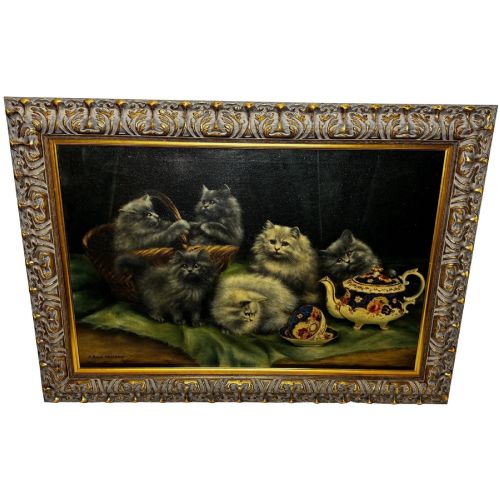
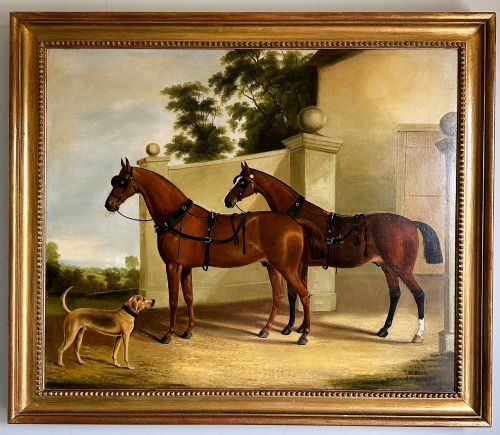
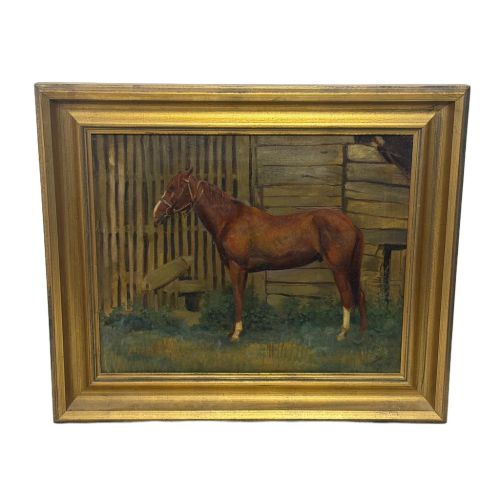
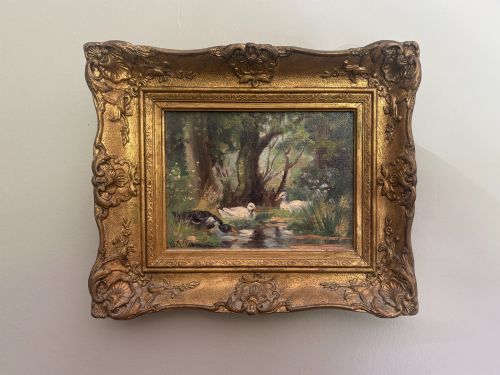
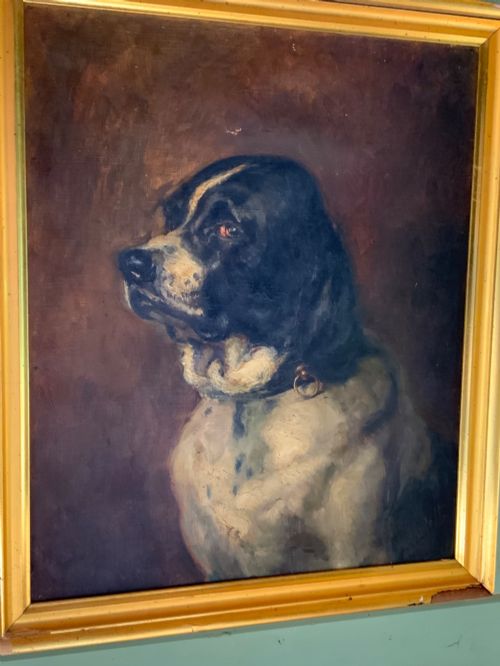
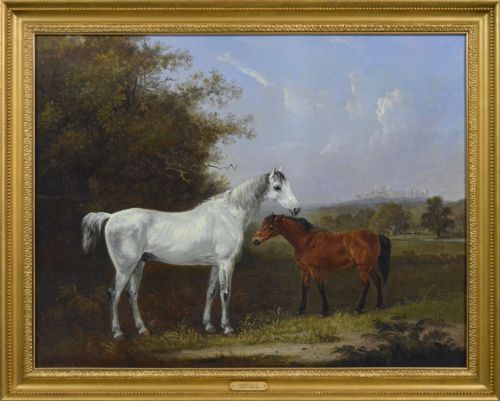
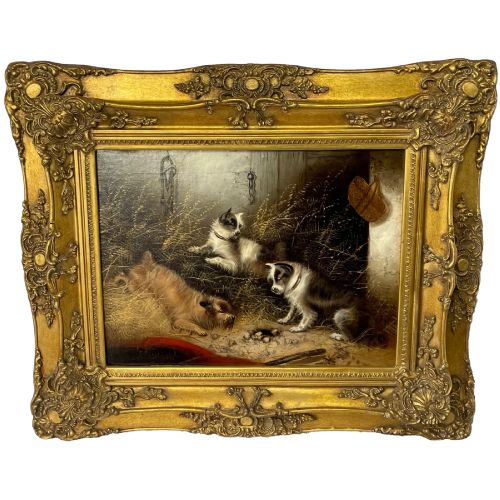
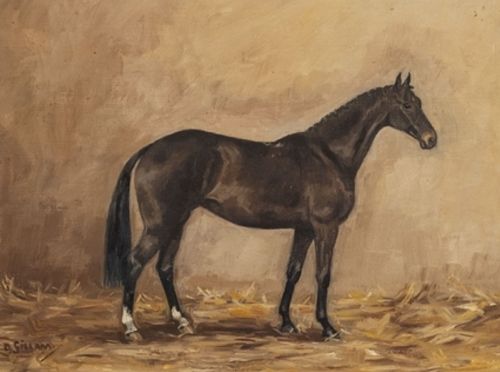
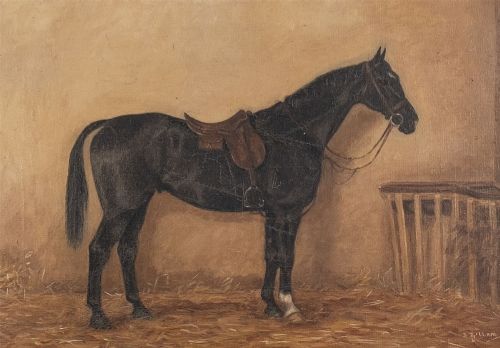
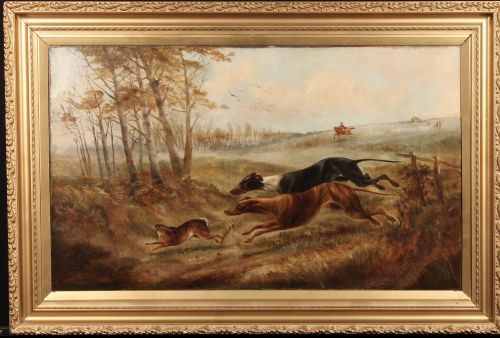
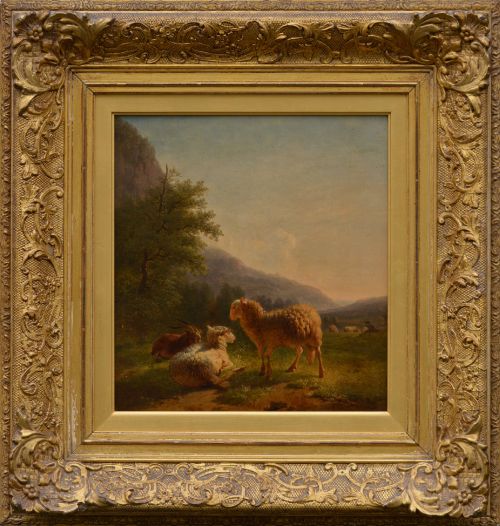
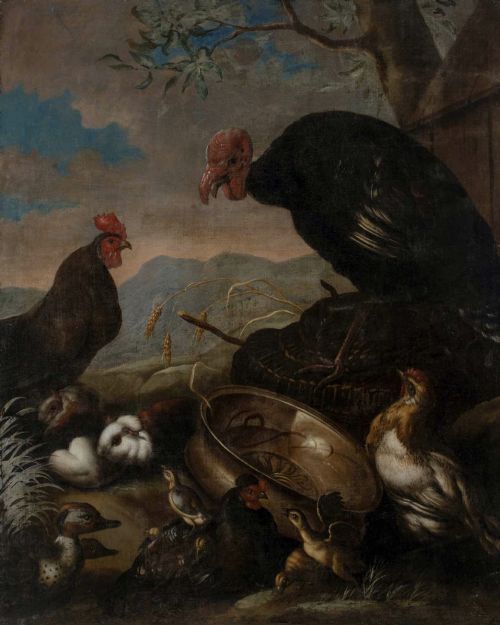
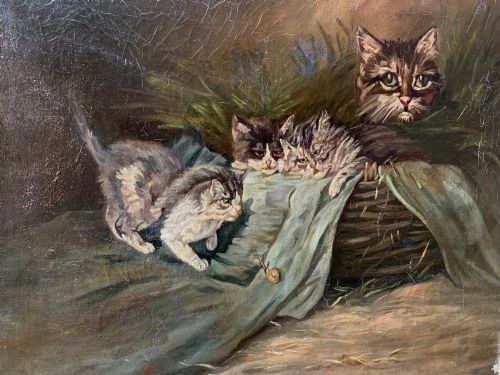
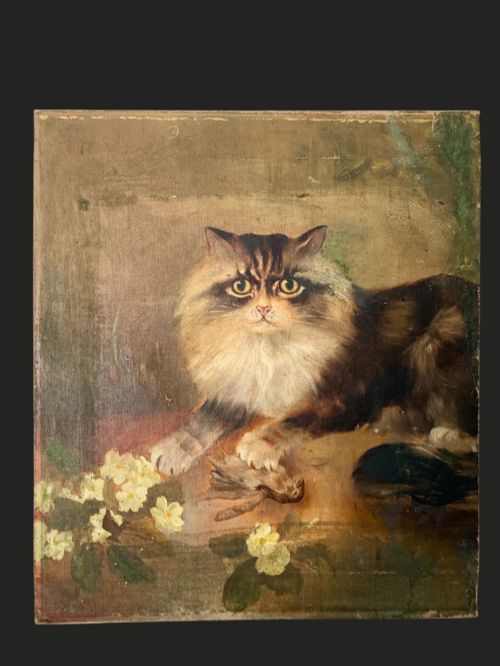
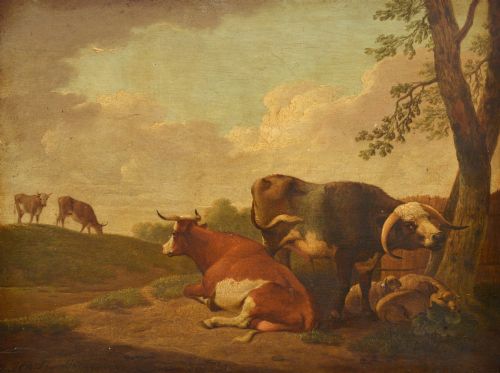
When you search for an antique animal canvas, you encounter oil paintings spanning several centuries, depicting horses, dogs, cats, cattle, and sheep. These works range from naive folk art portraits to accomplished Victorian sporting art and continental scenes.
The most common examples on this page are nineteenth-century British and French school paintings. They capture domestic pets, working terriers, prized livestock, and equestrian subjects rendered directly onto woven support fabric.
Subjects stretch from solitary equine portraits to complex landscapes populated by fowl, deer, and farm animals. The focus remains squarely on the animal subjects, recorded with varying degrees of anatomical precision and atmospheric background detail.
How they were made
These works rely on oil paint applied to stretched canvas, often supported by wooden stretcher frames that maintain the tension of the textile. Painters built up compositions using layered oil pigments, combining fine brushwork for animal coats with looser applications for surrounding landscapes.
Many historical pieces retain their original or period frames constructed from wood, gesso, and gilt. The interaction between the oil medium and the canvas substrate allowed artists to achieve subtle tonal gradations in animal fur and dramatic contrasts in natural light.
Materials recorded across current works consist of oil paint, woven canvas, wood, gesso, and giltwood frames.
What varies in quality
Quality rests on the draughtsmanship and anatomical understanding demonstrated by the painter, distinguishing stiff, naive interpretations from fluid, observant character studies. The handling of light across an animal's coat and the integration of the subject into its landscape setting dictate visual success.
The condition of the original paint layer and canvas support heavily influences desirability. Works that retain their unlined canvas, stable pigment layers, and period giltwood frames command greater appreciation among collectors.
Charles Bilger Spalding·Agnes Augusta Talboys·Lionel Ellis·Willem J Palman·Edmund Bristow·Edward Armfield·Eugène Verboeckhoven·Angelo Maria Crivelli·Hendrik Willem Schweickhardt·Albert Clark·Martin Theodore Ward·George Augustus Holmes·John Sargent Noble·Edgar Hunt·Robert Watson·Edwin Henry Landseer·Fred Fitzpatrick·William Watson Jnr·Alfred Arthur Brunel de Neuville·Henry Schouten
The Antique Animal Canvas Glossary
- Canvas
- A heavy woven fabric, typically made from flax or hemp, used as the primary support surface for oil paintings.
- Giltwood
- Wood carved and coated with a thin layer of gold leaf or metallic powder, commonly found on period frames.
- Gesso
- A plaster-like mixture applied to wooden frames as a smooth base before gilding or painting.
- Sporting Art
- A genre of painting dedicated to horses, hounds, shooting, fishing, and rural sports.
- Naive Art
- Work produced by an artist without formal academic training, often characterised by a charming simplicity of perspective.
Antique Animal Canvas: Frequently Asked Questions
What subjects appear on these canvases?
Paintings feature domestic pets like cats and spaniels alongside working animals such as lurchers, carriage horses, and cart-horses. Livestock including prized shorthorn bulls, sheep, and highland cattle also feature prominently.
Compositions range from intimate indoor animal portraits to expansive rural landscapes containing flocks, herds, and hunting dogs in the field.
How do I date an oil painting?
Dating relies on stylistic clues, costume details in accompanying figures, artist signatures, and the physical characteristics of the canvas and stretcher frame. Nineteenth-century works often bear distinct framing conventions and pigment chemistries.
Examine the reverse of the canvas for period inscriptions, stamps from nineteenth-century colourmen, or old collection labels that provide documentary evidence of origin.
Where should I hang a canvas?
Select a wall with stable humidity away from direct sunlight, heating vents, and damp exterior walls to protect the organic fibres of the canvas and the oil paint layer. Proper placement prevents warping of the wooden stretcher and fading of the pigments.
Pair the scale of the painting with the room, allowing sufficient wall space for the accompanying giltwood or wooden frame to sit comfortably without crowding.
Are these paintings signed by the artist?
Some canvases carry clear signatures, monograms, or dates applied by the painter, while others remain attributed to specific schools or anonymous hands based on stylistic traits. Unsigned works often emerge from regional British or continental traditions.
Documentation, exhibition labels, and historical provenance can help identify the hand behind unsigned works or confirm the authorship of signed pieces.