

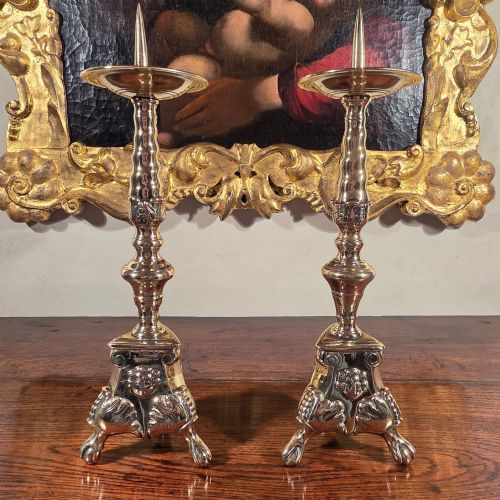


Antique Altar Sticks
These antique altar sticks bring solemn height and flickering warmth to a room, cast in heavy brass or carved with gilded leaf.
Antique Altar Sticks
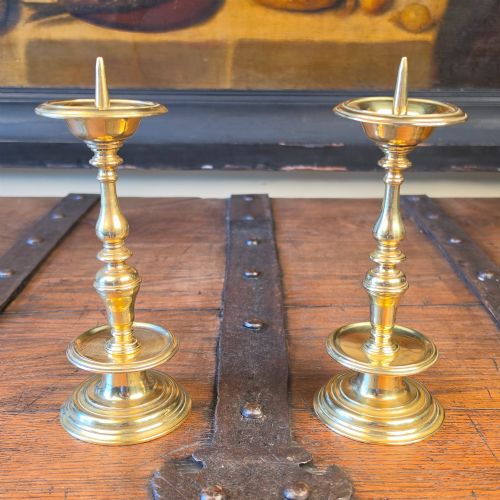
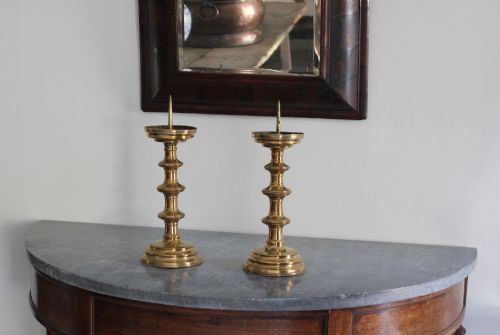
When you search for antique altar sticks, you are looking at tall candleholders made for ecclesiastical spaces, domestic chapels, and grand table settings. The pieces gathered here span from the sixteenth century into the twentieth, taking the form of church candlesticks, pricket sticks with spikes for large candles, and later lamp conversions.
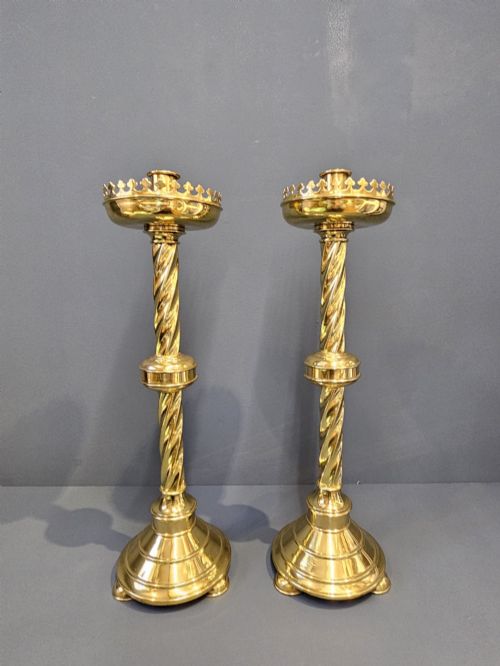
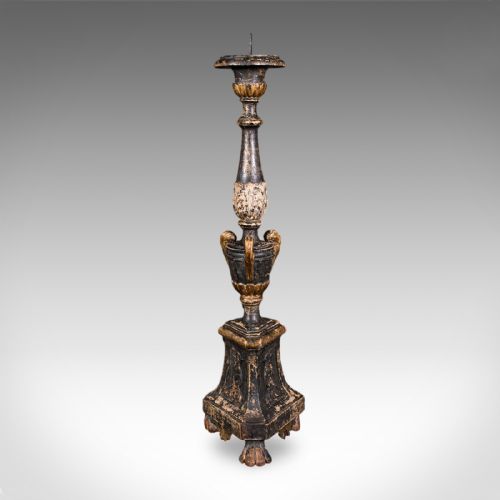
You will most frequently meet nineteenth-century brass examples on this page, often bearing Gothic Revival details or heavy turned shafts. Alongside these brass pillars, the selection includes eighteenth-century forms and carved wooden pieces finished in silver or gold leaf.
How they were made
Makers shaped these objects using cast brass, forged iron, and carved wood finished with gesso and gold or silver leaf. Brass components were cast in sections and threaded or pegged together to achieve towering proportions, while wooden versions were turned on lathes before receiving hand-carved ornamentation.
Surface treatments range from polished metal to ebonised timber and delicate leaf application, creating varied textures that reflect candle flame. Construction prioritises stability at height, employing weighted bases or broad circular feet to support heavy tapers.
Antique Altar Sticks Retail Price Guide 2026
Typical asking prices for altar sticks among the pieces listed under this phrase on Sellingantiques today, from the lower quarter to the upper quarter. They describe what is for sale here now, not the wider market.
Several heavy brass pairs from the nineteenth century likely spent their Sundays supervising sermons before retiring to quiet dining rooms.
What varies in quality
Quality rests in the crispness of the casting or carving, the integrity of the original surfaces, and the sheer proportion of the piece. Heavy, well-balanced brass pieces with sharp mouldings sit at the upper end, alongside carved wooden pairs retaining their original leaf or polychrome finishes.
Substantial weight and honest wear without excessive modern intervention distinguish better examples from simpler decorative items. The precision of the turning and the harmony of the matched pairs dictate the standing of each item within its period.
T Thomason & Co
The Antique Altar Sticks Glossary
- Pricket
- A candlestick featuring an upward-facing spike in the centre of the drip pan to secure the base of a candle.
- Gesso
- A plaster-like mixture applied to wood surfaces as a smooth base for subsequent gilding with gold or silver leaf.
- Gothic Revival
- An architectural and decorative style drawing inspiration from medieval ecclesiastical design, prominent in nineteenth-century metalwork.
- Silver Leaf
- Extremely thin sheets of beaten silver applied to wooden or metal surfaces to imitate solid silver objects.
- Ebonised
- Timber treated with chemical or pigment processes to darken the grain and resemble ebony.
Antique Altar Sticks: Frequently Asked Questions
What is a pricket stick?
A pricket stick is a candleholder that uses a sharp metal spike rather than a socket to hold the candle in place. This design was standard for large ecclesiastical candles.
Such pieces require candles with a pre-drilled base or a softer composition to sit securely upon the spike.
How were altar sticks used?
These tall objects stood upon church altars to provide illumination during services and rituals. Their elevated height allowed light to carry across large spaces.
In domestic settings, they served as grand table centrepieces or decorative focal points in halls and reception rooms.
Are these pieces wired for electricity?
Several examples on this page have been adapted as lamp bases over time, whilst others retain their original candle-holding function. Conversions are typically executed to preserve the main body of the candlestick.
Buyers can choose between traditional pricket formats and electrified versions suited to modern interiors.
How do I care for wooden altar sticks?
Wooden and gilded surfaces require gentle dusting with a dry, soft cloth to protect fragile leaf finishes. Moisture and harsh cleaning agents will damage the gesso and underlying timber.
Keeping them away from direct heat sources prevents the wood from drying and splitting over time.