


Antique Alphabet Needlework
These antique alphabet needlework pieces are hand-worked linen panels recording letters, numbers, and verses that bring authentic domestic history into modern rooms.
Antique Alphabet Needlework
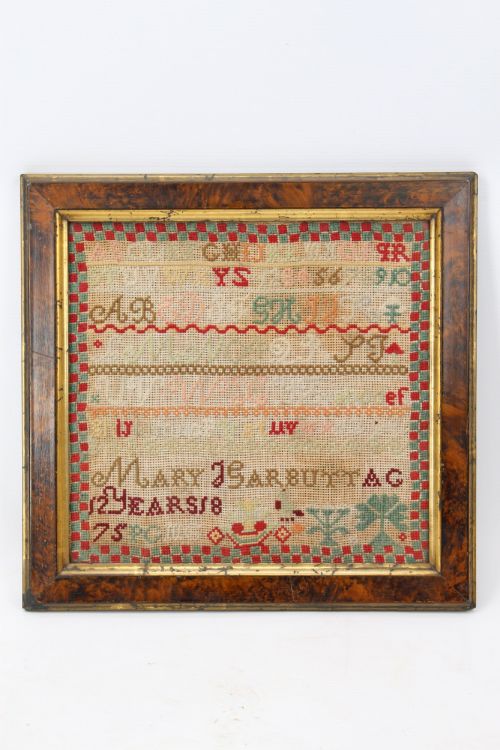
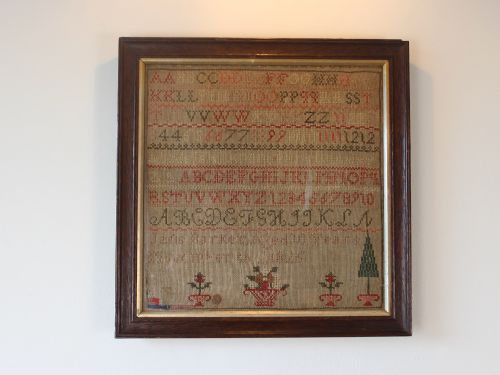
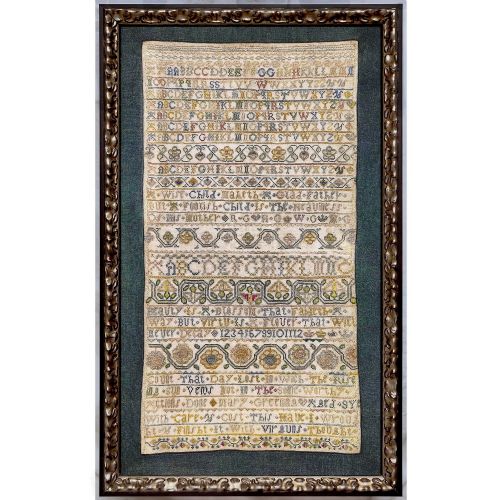
Antique alphabet needlework pieces primarily take the form of samplers worked on linen grounds by young makers recording their name, age, and date. The examples found here span from the late seventeenth century through the Victorian era, encompassing Georgian and Regency periods alongside Victorian folk art.
Most entries on this page present nineteenth-century and Georgian pieces, frequently dated precisely and naming makers such as Mary J Garbutt or Sarah Reading. Alongside simple alphabet rows, these textile works often incorporate numerical sequences, moral verses, the Lord's Prayer, or the Commandments.
The format ranges from miniature compositions to large framed wall art, sometimes grouped as pairs or double panels. Collectors encounter both schoolroom exercises from establishments like Oswestry National School and domestic pieces worked in silk thread and wool.
Standards of Execution
Quality rests upon the regularity of the stitching, the complexity of the motifs surrounding the alphabet, and the preservation of the original silk or wool colours. Pieces displaying crisp letter formation and balanced spacing command stronger interest than crowded or uneven compositions.
Documentation elevates a piece significantly; samplers retaining full names, precise dates, ages of the makers, and specific locations offer superior historical context. The inclusion of pictorial elements, biblical texts, or detailed school origins separates standard exercises from exceptional archival examples.
Maggie Muir left a stitch error in her 1880 Scottish sampler, preserving a momentary lapse in concentration across the centuries.
The Antique Alphabet Needlework Glossary
- Band sampler
- An early form of needlework where various embroidery stitches and alphabet patterns are worked in horizontal bands across a long linen strip. These served as reference templates for domestic needleworkers before framed pictorial samplers became standard.
- Linen
- A strong fabric woven from flax fibres that provides the foundational mesh for counting threads in needlework samplers. Its natural pale tone forms the background colour visible between stitched letters.
- Stitch error
- An unintentional deviation in the geometric repetition of embroidery threads made by the needleworker during the creation of the piece. These small irregularities help confirm the genuine handmade nature of antique textiles.
- Tapestry sampler
- A needlework panel executed in heavier threads or wools using dense stitch methods that cover the ground fabric entirely. They share the instructional purpose of standard samplers but yield a heavier pictorial texture.
Antique Alphabet Needlework: Frequently Asked Questions
What is an antique alphabet needlework sampler?
These textiles are historical practice pieces worked by hand, typically featuring rows of alphabets, numerals, and moral verses. Young makers stitched them to demonstrate proficiency in needlecraft.
They record names, dates, and sometimes school locations, serving as personal historical documents from the Georgian and Victorian eras.
How do I date an antique sampler?
Many pieces contain stitched dates, maker names, and ages that provide an immediate point of reference. Stylistic elements such as framing, border motifs, and lettering styles also indicate specific periods.
Examples from the seventeenth and eighteenth centuries often feature narrow band formats, while nineteenth-century pieces tend toward framed wall art with pictorial scenes.
Were these made by children?
Most surviving pieces were worked by girls aged ten to fourteen, often working under instruction in domestic settings or schools. Ages and dates recorded in the stitches confirm youth participation.
Works from institutions like Oswestry National School reflect structured educational curricula of the nineteenth century.
How should I display needlework samplers?
These textile panels require protection behind glass to shield fragile silk and wool threads from dust and atmospheric degradation. Framing should use acid-free materials that prevent direct contact with the antique fabric.
Placement away from direct sunlight preserves the original thread colours against fading over time.