


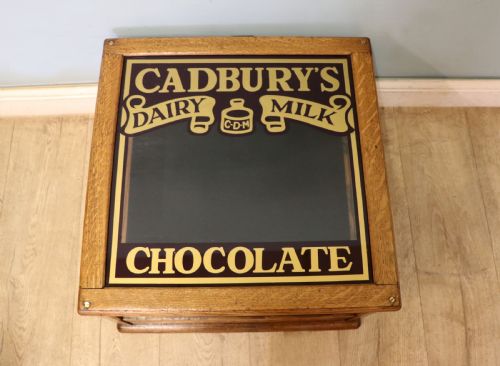
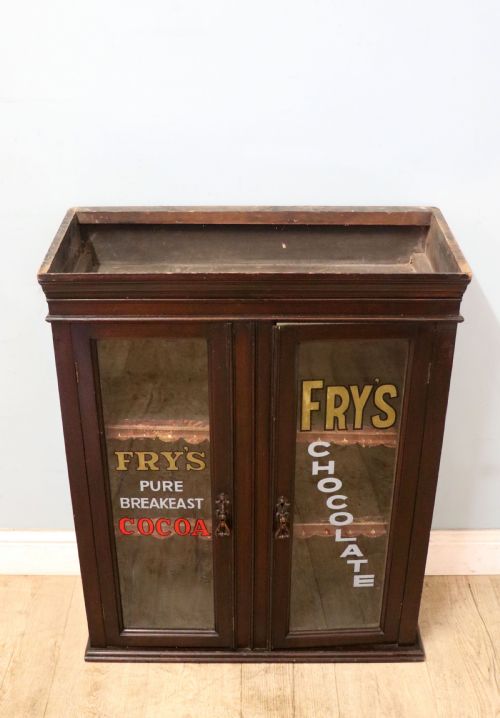


Antique Advertising Sign Cabinet
An antique advertising sign cabinet holds the merchandise of the past, combining practical display with painted commercial lettering that catches the eye.
Antique Advertising Sign Cabinet
An antique advertising sign cabinet brings together period commercial storage and hand sign written graphics from the nineteenth and early twentieth centuries. When you search for this phrase, you encounter glazed shopfitting furniture, corner cupboards, and countertop units bearing names such as Fry's Chocolate, Rowntree's Cocoa, OXO cubes, and Hovis Bread.
The versions most likely to meet you on this page span the Victorian and Edwardian eras through to the 1920s and 1930s. These pieces include both purpose-built display units and older furniture given later sign written decoration for specific traders like gunsmiths or grocers.
Beyond standard display cabinets, the category stretches to encompass related trade objects such as large shop display aneroid barometers and specialised dental collection signs. Each item reflects the commercial life and countertop presentation of its period.
How they were made
Makers built these cabinets using solid timbers like mahogany, oak, American walnut, pine, and mixed hardwoods, often incorporating glazed doors and panels to showcase contents. Brass hardware frequently secures the doors and framing of these shopfittings.
The characteristic lettering relies on hand sign writing applied directly to the wood or glass surfaces. Paint provides the medium for the commercial graphics that transform standard furniture and display units into active advertising media.
Antique Advertising Sign Cabinet Retail Price Guide 2026
Typical asking prices for advertising sign cabinet among the pieces listed under this phrase on Sellingantiques today, from the lower quarter to the upper quarter. They describe what is for sale here now, not the wider market.
A human teeth sample collection sneaks into the trade signage, proving that early twentieth-century dental marketing had genuine bite.
What varies in quality
The standard of timber selection and cabinetmaking carpentry sets the baseline for each piece, distinguishing solid mahogany and oak structures from lighter pine or hardwood constructions. Glazing quality and the preservation of original or later hand sign written details carry significant weight.
Distressed patination and the execution of the painted advertising influence how successfully a piece holds its visual impact. The harmony between the original age of the cabinet and the quality of its sign writing defines the overall character.
The Antique Advertising Sign Cabinet Glossary
- Shopfitting
- Furniture and fixtures specifically manufactured for commercial retail interiors. These items are built to withstand heavy daily use in a shop environment.
- Sign written
- Lettering applied by hand using paint rather than printed transfers or paper labels. This technique creates the raised texture and distinct brush marks seen on period advertising.
- Aneroid barometer
- A scientific instrument used to measure atmospheric pressure without using liquid mercury. Retailers often mounted large versions on shop walls to advertise weather-dependent clothing brands.
- Chiffonier
- A compact sideboard or low cupboard featuring a flat top surface and doors enclosing shelving. In commercial settings, these pieces served both storage and display functions.
- Glazed
- Fitted with transparent glass panels to protect merchandise from dust while maintaining visibility. This feature distinguishes display cabinets from enclosed cupboards.
Antique Advertising Sign Cabinet: Frequently Asked Questions
What periods do these cabinets come from?
The pieces span the Victorian and Edwardian eras, stretching through the nineteenth century into the 1920s and 1930s.
This timeline covers the height of traditional shopfitting and commercial advertising display units.
Were all these advertising signs original to the furniture?
Many cabinets feature later hand sign written decoration applied to older furniture bodies.
This practice repurposed existing Victorian and Edwardian cupboards for specific brands like Fry's, Rowntree's, and Hovis.
How do I place a countertop cabinet in a home?
Countertop display units sit well on modern sideboards, kitchen islands, or desks where their glass panels can protect collections.
Their shallow depth allows them to fit narrow surfaces while providing visible enclosed storage.
What timbers were commonly used?
Construction relies on solid hardwoods including mahogany, oak, and American walnut, alongside painted pine.
Heavier woods suited permanent shop fittings, while softer timbers served rustic country or utilitarian roles.