

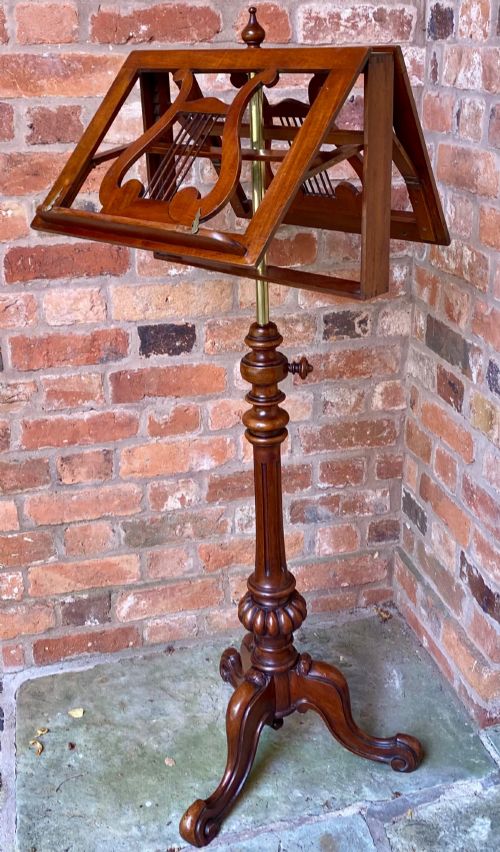
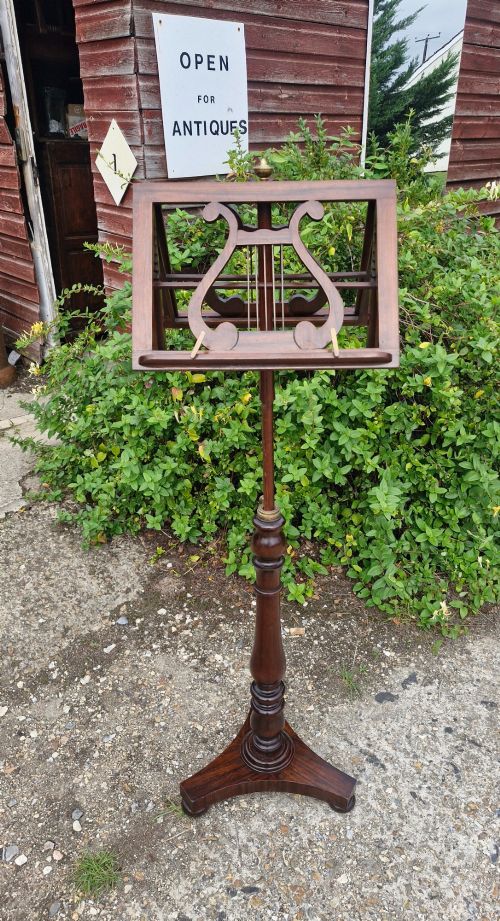
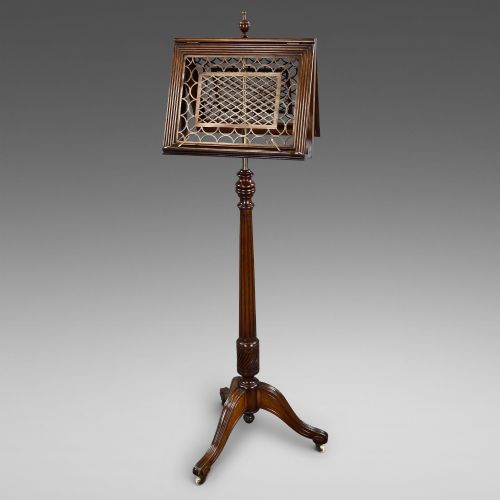
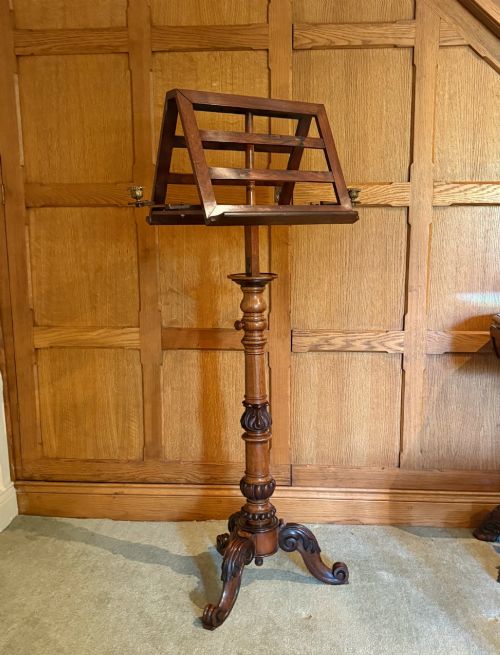


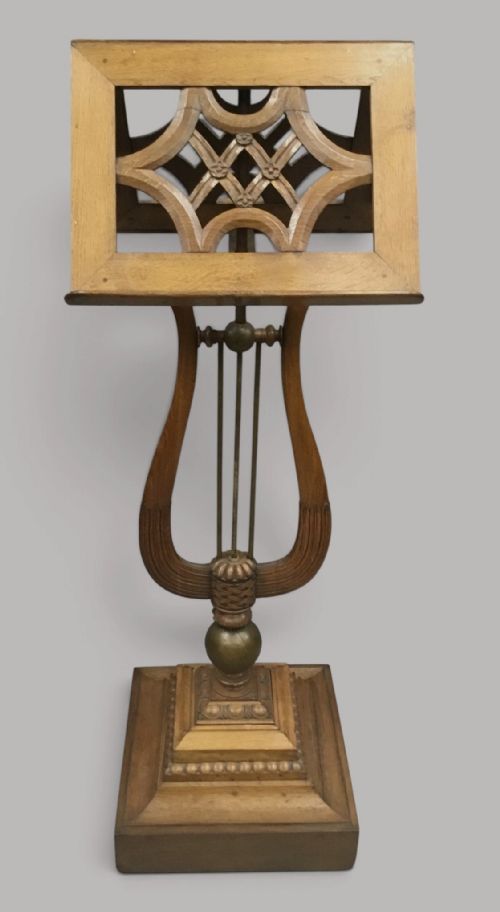
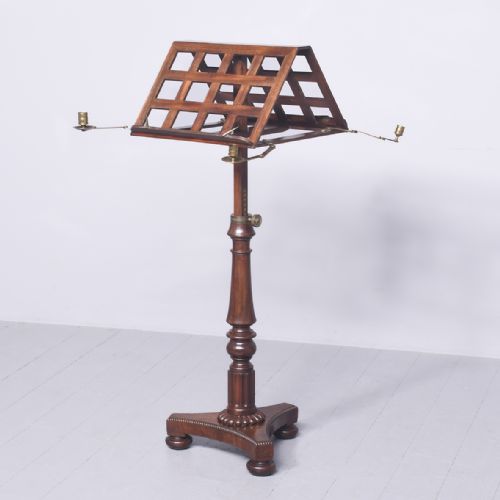


Antique Adjustable Duet Music Stand
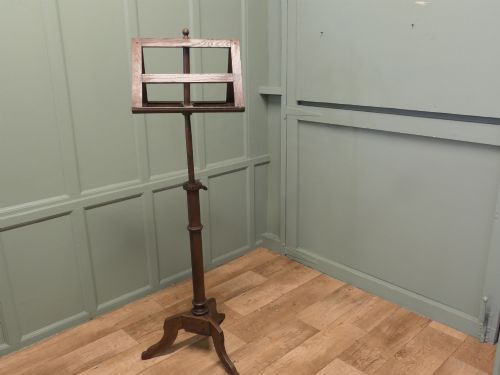
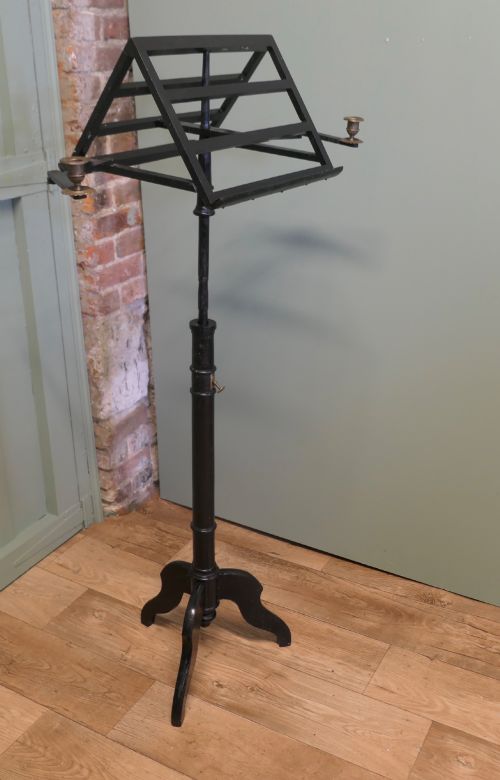
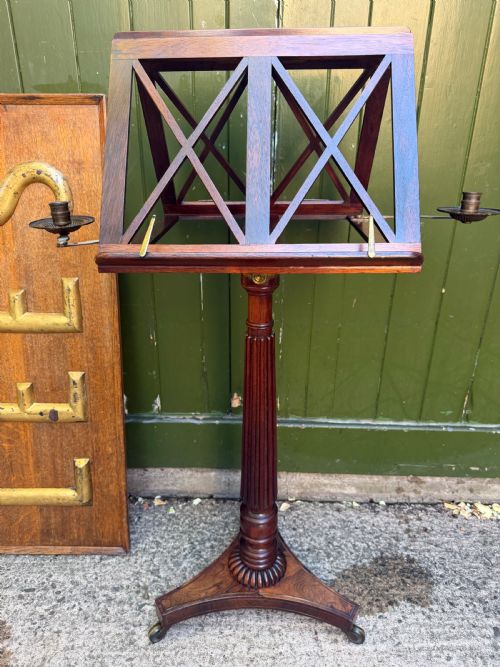
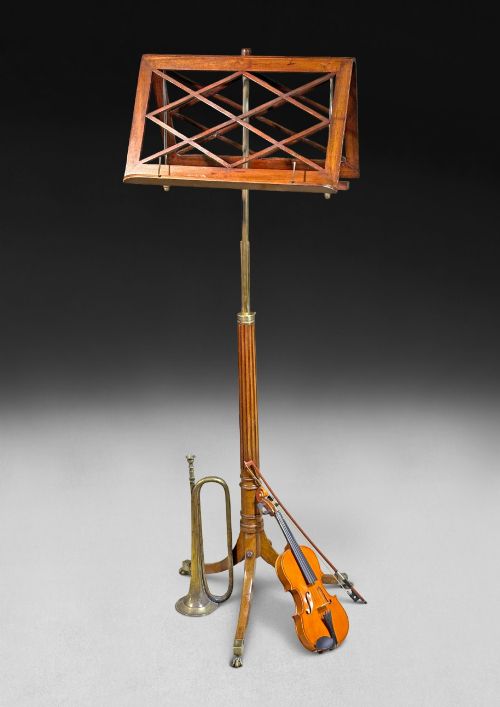
An antique adjustable duet music stand offers two readers independent support, combining functional mechanics with refined cabinetry.
Antique Adjustable Duet Music Stand
An antique adjustable duet music stand is a specialised piece designed to hold sheet music or books for two people simultaneously. The items gathered under this phrase span periods from the Georgian and Regency eras through to the Victorian period, including specific dates such as 1850, 1860, 1890, and circa 1800, 1835, and 1870. Alongside standard music stands, the selection encompasses related reading tables and folio stands.
Forms vary from classic tripod bases to more unusual configurations, including dual reading tables and bed tables. Stylistic influences recorded across the inventory include George IV, William IV, Grand Regency, and Victorian designs. Buyers will frequently encounter these pieces rendered in rich timbers tailored for domestic parlours and music rooms of the nineteenth century.
Materials and construction
Cabinetmakers constructed these stands predominantly from dense, figured hardwoods, utilising mahogany, rosewood, burr walnut, walnut, and oak. These timbers provided the necessary weight and stability for supporting heavy folios and bound musical scores on adjustable platforms.
Metal components, specifically brass, were integrated into the mechanical elements to facilitate height adjustment and tilting mechanisms. Fretwork detailing and inlaid decoration appear on select examples, demonstrating the high level of joinery standard in nineteenth century workshops.
Antique Adjustable Duet Music Stand Retail Price Guide 2026
Typical asking prices for adjustable duet music stand among the pieces listed under this phrase on Sellingantiques today, from the lower quarter to the upper quarter. They describe what is for sale here now, not the wider market.
Listings feature pieces spanning the Georgian, Regency, William IV, and Victorian periods, executed in mahogany, rosewood, burr walnut, walnut, oak, and brass.
Distinguishing quality in construction and design
The distinction between standard examples and top tier pieces rests on the complexity of the timber grain and the precision of the mechanical adjustment. Finely figured burr walnut, rich rosewood, and elaborate fretwork elevate the visual weight of the stand.
Makers such as Gillows and Swann & Millican demonstrate that documented attribution or branded hardware elevates a piece significantly. The integrity of the brass ratchets, screw mechanisms, and the solidity of the tripod or pedestal base determine functional endurance.
GILLOWS·Swann & Millican
The Antique Adjustable Duet Music Stand Glossary
- Duet stand
- A music stand fitted with dual ledges or a wide surface intended to accommodate two musicians reading together. These pieces often feature pivoting desks and height-adjustable columns.
- Tripod base
- A three-legged support structure commonly found on nineteenth century music stands. This configuration ensures stability on uneven floorboards.
- Folio
- A large book or collection of unbound sheets of music. Stands designed to hold these items frequently incorporate broader ledges or adjustable retaining arms.
- Lyre
- A decorative motif shaped like the ancient musical instrument, frequently incorporated into the central column or support brackets of nineteenth century stands.
- Ratchet mechanism
- The adjustable toothed metal arm behind the desk that holds the music rest at the desired angle. High quality examples operate smoothly and lock securely into position.
Antique Adjustable Duet Music Stand: Frequently Asked Questions
What is an antique adjustable duet music stand?
An antique adjustable duet music stand is a piece of nineteenth century furniture designed to hold books or sheet music for two people at once. These stands typically feature mechanisms to alter the height and angle of the reading desks.
They were essential furnishings in period drawing rooms and parlours where amateur and professional musicians gathered to play instruments or sing together.
How do I date a duet music stand?
Dating relies upon stylistic markers such as Regency, George IV, William IV, or Victorian design characteristics, alongside the timber used. Mahogany and rosewood are common in earlier Georgian and Regency pieces, while burr walnut frequently appears in mid to late Victorian examples.
Hardware details, such as the construction of the brass tightening screws and internal ratchets, also provide reliable clues to the period of manufacture.
Where were these stands used?
These stands were primarily used in the principal reception rooms of large houses, including drawing rooms, music rooms, and libraries. They served as functional furniture for piano accompaniments and chamber music ensembles.
Some variants, such as dual reading tables and folio stands, were also utilised in studies for holding large reference books and maps.
Can these stands hold modern books?
Yes, the adjustable ledges and sturdy timber construction make them practical for holding modern heavy books, tablets, or sheet music. The mechanical tilt allows you to set the reading surface to a comfortable angle.
Care should be taken not to overload fragile antique ratchets with excessive weight beyond their original intended capacity.