



Aneroid Barometer Wall Clock
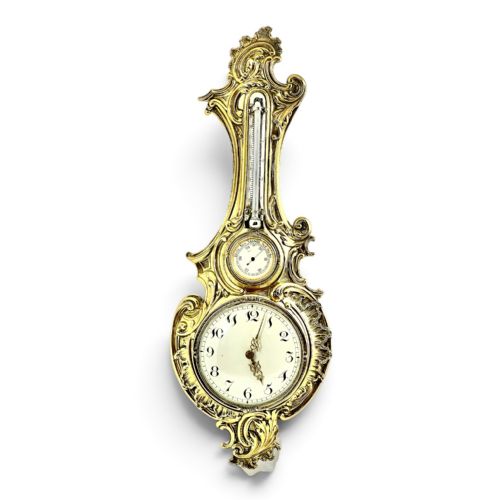
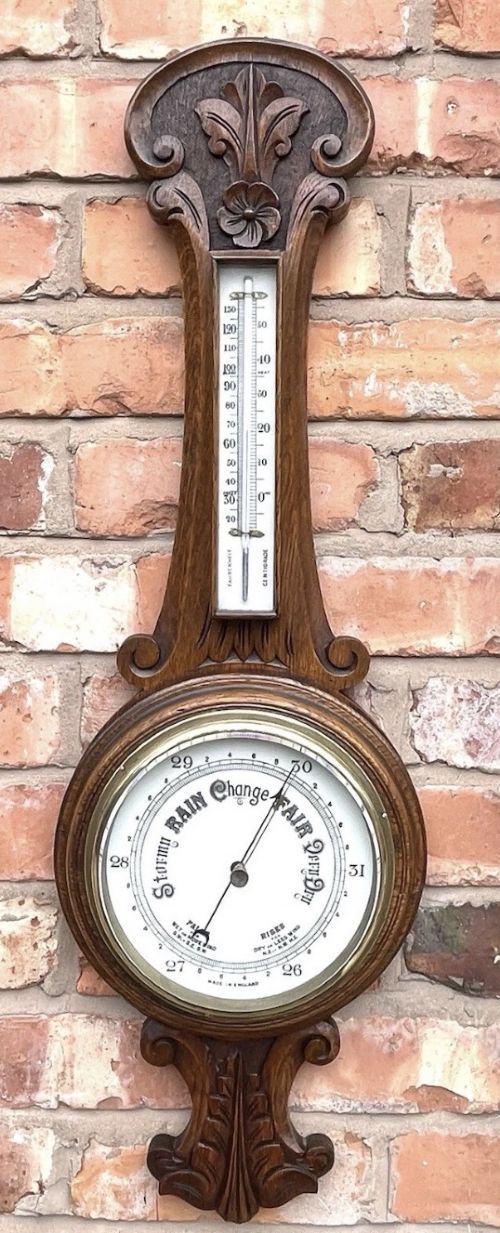
An aneroid barometer wall clock combines atmospheric pressure measurement with timekeeping, offering a practical combination housed in carved timber.
Aneroid Barometer Wall Clock
An aneroid barometer wall clock brings together a mechanical clock movement and a pressure-sensing aneroid dial within a single hanging case. These combination pieces appear across the Victorian and Edwardian eras, spanning the nineteenth and early twentieth centuries.
The format frequently takes the shape of the banjo barometer, mounting vertical mercury thermometers alongside the dial faces. Variations include carved oak, walnut, and mahogany housings, alongside distinct regional interpretations like Dutch oak and Black Forest styles.
Most examples originate from British workshops, though American and Dutch pieces also emerge. They serve both a domestic recording function and a decorative purpose upon the wall.
How they were made
Cabinetmakers constructed the wooden housings primarily from solid oak, walnut, and mahogany. These timbers were heavily carved with foliate motifs, scrolls, and architectural pediments, particularly during the Victorian period.
The dial faces utilise enamel, ceramic, and brass plates marked with meteorological scales and Roman or Arabic numerals. Glass bezels protect these sensitive paper or enamel dial cards from atmospheric dust and damage.
Aneroid Barometer Wall Clock Retail Price Guide 2026
Typical asking prices for aneroid barometer wall clock among the pieces listed under this phrase on Sellingantiques today, from the lower quarter to the upper quarter. They describe what is for sale here now, not the wider market.
Some nineteenth-century makers styled their aneroid barometer cases to resemble medical caduceus staffs for consulting rooms.
What varies in quality
The depth and crispness of the carved wood decoration separate standard production from finer work. Deep relief carving on walnut and oak banjo cases indicates a more skilled hand than shallow machine stamping.
The inclusion of subsidiary instruments, such as functioning mercury thermometers and secondary clock dials, elevates the complexity of the piece. High-grade examples incorporate signed brass movements and quality silver gilt mounts.
Negretti and Zambra
The Aneroid Barometer Wall Clock Glossary
- Aneroid barometer
- A barometer that measures air pressure through the expansion and contraction of a sealed metal capsule without using liquid mercury. This mechanism allows the instrument to be mounted securely on a vertical wall clock.
- Banjo barometer
- A household barometer featuring a rounded top head that houses the dial and a long, tapering trunk below. This elongated body frequently accommodates a thermometer and humidity indicator.
- Bulkhead clock
- A marine-style timepiece enclosed in a heavy metal case designed to be bolted directly to a ship wall or bulkhead. They are often paired with matching aneroid barometers.
- Silver gilt
- Silver that has been coated with a thin layer of gold over its surface. This finish provides a bright, tarnish-resistant metallic sheen to decorative mounts and bezels.
- Skeletonised
- A design where the outer dial or case plate is cut away to reveal the internal mechanical workings behind the face. This showcases the brass gears and levers of the aneroid mechanism.
Aneroid Barometer Wall Clock: Frequently Asked Questions
How do you read the barometer?
The barometer dial uses a pointer that moves across weather descriptors like rain, change, and fair based on air pressure changes. Tapping the glass lightly before reading helps settle the internal mechanical linkages.
Rising needle movements generally indicate improving weather, while falling readings suggest approaching rain or stormy conditions.
Where were these clocks placed?
These combination instruments were traditionally hung in hallways, libraries, or main living areas where household members gathered. Their prominent wall placement allowed convenient daily checks of both the time and the local weather forecast.
Maritime versions found use in ship cabins or offices with a nautical aesthetic.
How do you date these wall clocks?
Dating relies upon stylistic markers such as the heavy Victorian Rococo Revival carving, Edwardian refinement, or later Art Nouveau curves. The materials used, like silver gilt mounts and ceramic dials, also point to specific manufacturing decades.
Maker signatures inscribed on the brass bezels or clock faces provide definitive attribution when present.