





Aneroid Barometer Dial
An aneroid barometer dial measures atmospheric pressure without liquid, presenting weather data through a clear face and delicate pointer.
Aneroid Barometer Dial
The aneroid barometer dial sits at the centre of weather-measuring instruments, translating the movement of an internal metal capsule into readable meteorological observations. When you examine an aneroid barometer dial, you are looking at the interface between scientific utility and domestic decoration spanning the Victorian and Edwardian eras.
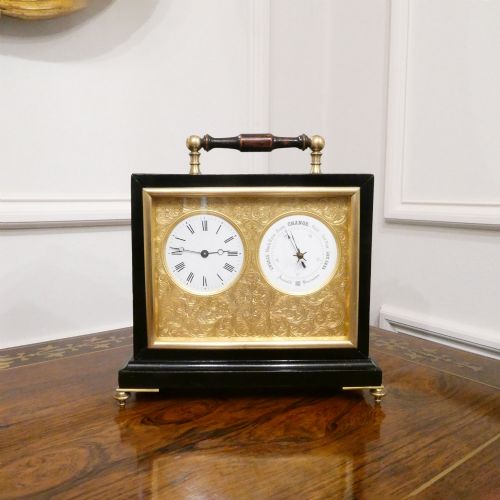
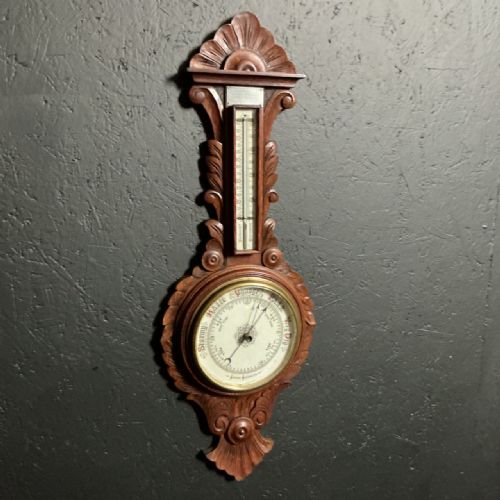
Makers integrated these dials into diverse styles, including traditional carved oak cases, ebonised wood frames, and striking Art Deco designs. Simpler desk barometers sit alongside complex marine barographs, reflecting how households and institutions monitored atmospheric shifts.
Materials and construction
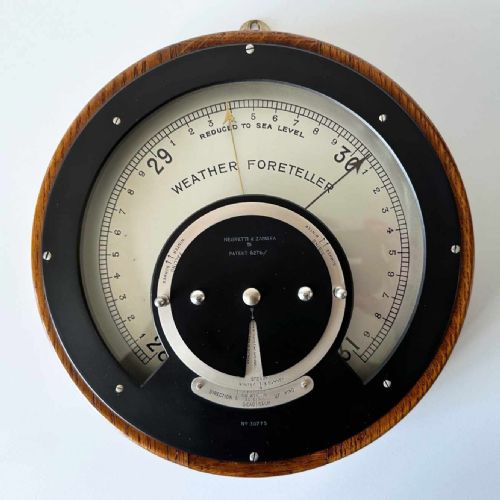
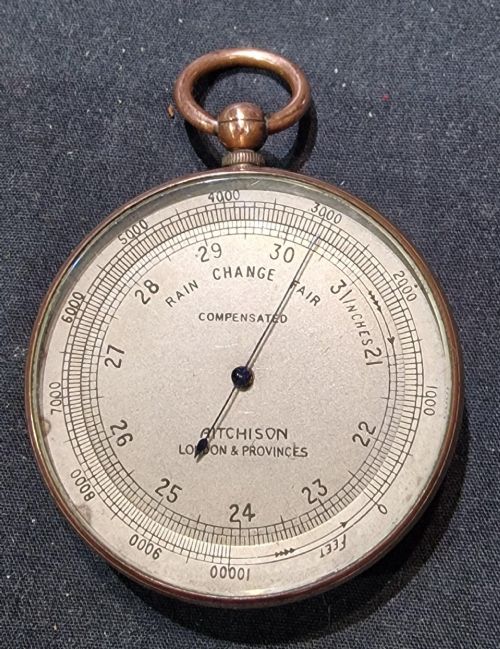
Makers constructed these dials primarily from silvered metal or brass, often etching graduations and weather forecasts directly onto the surface. Protective bezels fitted with thick glass plates shielded the delicate hands and underlying mechanisms from dust and damage.
The surrounding cases rely on cabinet timbers such as oak, mahogany, walnut and ebonised wood, sometimes featuring elaborate carvings of birds or Chinoiserie finishes. Metal components were meticulously cast, turned, and polished to ensure precise alignment with the internal aneroid capsule.
Aneroid Barometer Dial Retail Price Guide 2026
Typical asking prices for aneroid barometer dial among the pieces listed under this phrase on Sellingantiques today, from the lower quarter to the upper quarter. They describe what is for sale here now, not the wider market.
Some Victorian dials feature weather forecasts that optimistically promise set fair while the needle points resolutely to rain.
Judging execution and finish
Quality reveals itself in the crispness of the dial engraving and the legibility of the lettering across the silvered metal surface. Finer examples display precise scale divisions and well-proportioned hands that move smoothly without catching the glass cover.
The cabinetwork around the dial distinguishes standard production pieces from superior commissions. Well-executed timber carving, robust brass bezels, and substantial bevelled glass indicate skilled workshop production from established opticians and instrument makers.
Short & Mason·Negretti & Zambra·Maple & Co·Dollond of London·M Pillischer
The Aneroid Barometer Dial Glossary
- Aneroid barometer
- An instrument that measures atmospheric pressure by the expansion and contraction of a sealed metal capsule, without using mercury or other liquids.
- Silvered metal
- A brass or copper base treated with a silver compound to produce a bright, reflective face suitable for precise engraving.
- Bezel
- The retaining ring, typically made of brass, that holds the protective glass face in position over the dial.
- Banjo barometer
- A wall-mounted weather instrument housed in a case shaped like a banjo, frequently incorporating a thermometer alongside the main dial.
- Desk compendium
- A multi-instrument desk accessory combining a barometer dial with clocks, calendars, or thermometers in a single housing.
Aneroid Barometer Dial: Frequently Asked Questions
How do I read an aneroid barometer dial?
Read the inner scale where the pointer indicates current atmospheric pressure, usually calibrated in inches of mercury or millibars. The fixed scale shows standard pressure points, while the movable hand tracks recent changes.
Tapping the glass gently before reading helps settle the pointer if friction restricts movement. Compare the current position against weather descriptions inscribed on the face to anticipate local conditions.
Can I hang an aneroid barometer dial in any room?
These instruments suit most domestic interiors, provided you select a stable wall away from direct heat sources and excessive moisture. Sudden temperature swings can affect the internal metal capsule and reduce reading accuracy.
Hallways and studies offer consistent environments where timber cases and brass bezels remain protected. Ensure the mounting bracket securely supports the weight of the complete instrument.
How do I date a Victorian barometer dial?
Examine the typography, engraving style, and materials used on the face alongside the surrounding timber case. Victorian pieces often feature ornate silvered metal dials paired with carved oak or walnut.
Maker signatures inscribed on the face provide direct historical reference points. Comparing the mechanical layout with known production periods helps narrow down the decade of manufacture.