



Amethyst Diamond Ring
An amethyst diamond ring brings together rich violet quartz and bright white sparkle, offering a striking centrepiece for the hand.
Amethyst Diamond Ring
An amethyst diamond ring pairs deep purple quartz with sparkling diamonds across various historical periods, including Victorian, Edwardian, and Art Deco eras. Buyers searching for an amethyst diamond ring find pieces ranging from delicate Edwardian cluster settings to large cocktail rings from the mid-twentieth century.
How they were made
Goldsmiths set amethysts and diamonds into mounts of 9ct gold, 18ct gold, or platinum, utilising claw, bezel, and flush settings to secure the stones. Older pieces often employ hand-cut stones secured in handcrafted metalwork, while later twentieth-century examples show precise, uniform mountings.
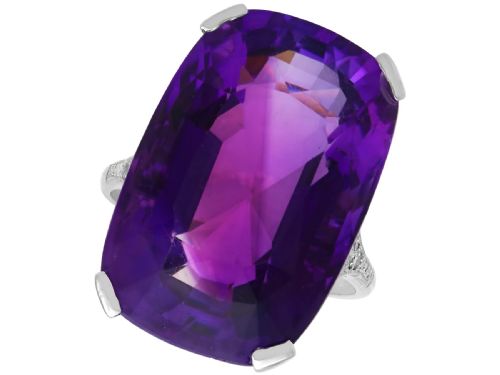
Makers integrated diamonds as accent stones alongside large cushion-cut, round, or marquise amethysts, balancing the saturated purple quartz with brilliant highlights.
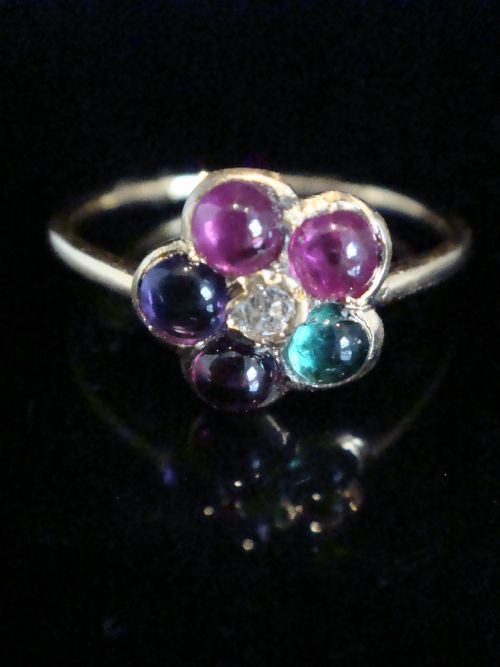
Victorian jewellers spelled out secret love notes on fingers using amethyst, diamond, ruby, and emerald.
What varies in quality
Quality rests in the depth and clarity of the central amethyst and the precision of the metalwork supporting the stones. Substantial stone weight and refined period craftsmanship distinguish finer examples from standard commercial production.
The Amethyst Diamond Ring Glossary
- Amethyst
- A purple variety of quartz prized for its violet hue, frequently utilised as the primary gemstone in period jewellery. It ranges from pale lilac to deep plum.
- Cluster ring
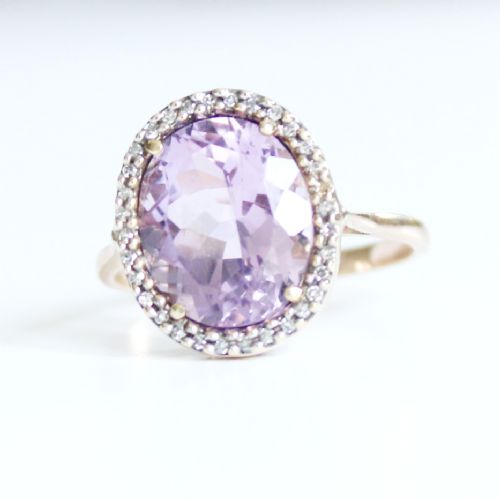
- A jewellery design featuring a central stone encircled by a border of smaller accent stones, often diamonds surrounding an amethyst. This layout maximises visual impact on the hand.
- Art Deco
- A design style dominant in the 1920s and 1930s characterised by geometric lines, symmetry, and stylised motifs. Rings from this period often pair calibrated amethysts with sharp diamond arrangements.
- Edwardian
- A period spanning the early twentieth century known for delicate, lacy platinum and gold work. Jewellery from this era frequently incorporates intricate filigree and old-cut diamonds.
- Suffragette
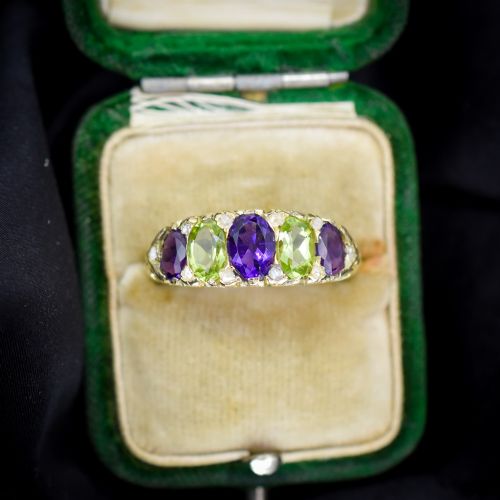
- A style of jewellery featuring the colours green, white, and violet, associated with the women's suffrage movement. These pieces commonly combine peridot, diamond, and amethyst.
Amethyst Diamond Ring: Frequently Asked Questions
How do I care for an amethyst ring?
Amethyst is a moderately hard quartz that responds well to gentle cleaning with warm soapy water and a soft brush. Avoid harsh chemical cleaners and ultrasonic devices to protect the stone and its setting.
Store the ring in a fabric-lined box away from harder gemstones to prevent surface scratching during storage.
Can I wear an amethyst ring every day?
Daily wear is possible with proper care, though higher-set stones require attention to avoid knocks against hard surfaces. Selecting a secure bezel or lower-profile setting helps protect the purple quartz from daily impact.
Removing the piece during manual labour or heavy household tasks preserves the integrity of the gold or platinum mount.
What does a Victorian acrostic ring mean?
Victorian acrostic rings spell words using the first letter of each gemstone in the setting, such as REGARD or DEAREST. These romantic pieces often incorporate amethyst alongside diamond, ruby, and emerald.
Makers arranged the coloured stones in specific sequences to communicate hidden sentiments to the recipient.
How do I identify an Art Deco amethyst ring?
Art Deco rings display strong geometric forms, straight lines, and angular stone cuts that depart from Victorian curves. Platinum and white gold frequently form the metal base for these high-contrast designs.
Step-cut amethysts and pavé-set diamonds are typical hallmarks of this 1920s and 1930s aesthetic.