

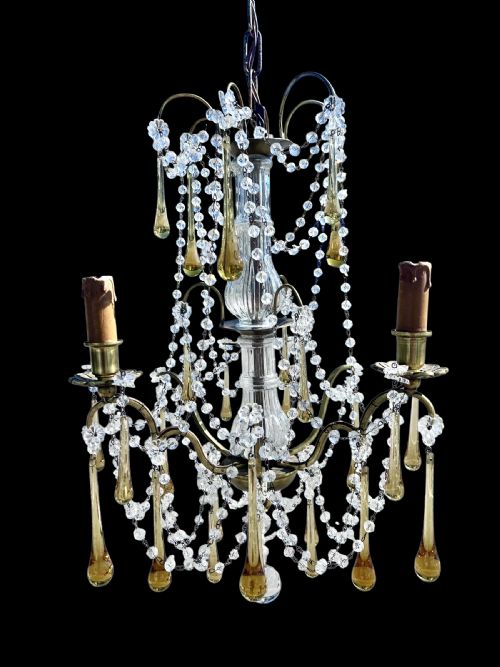


Amber Pendant Light
An amber pendant light casts a warm, honeyed glow across a room, bringing the rich tones of pressed and crystal glass into focus.
Amber Pendant Light
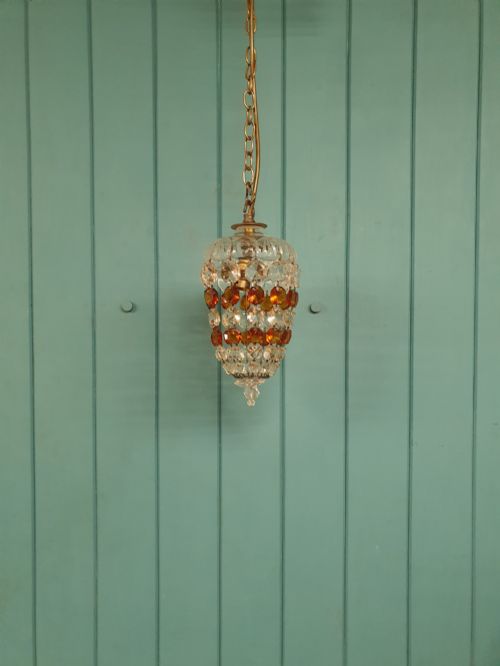
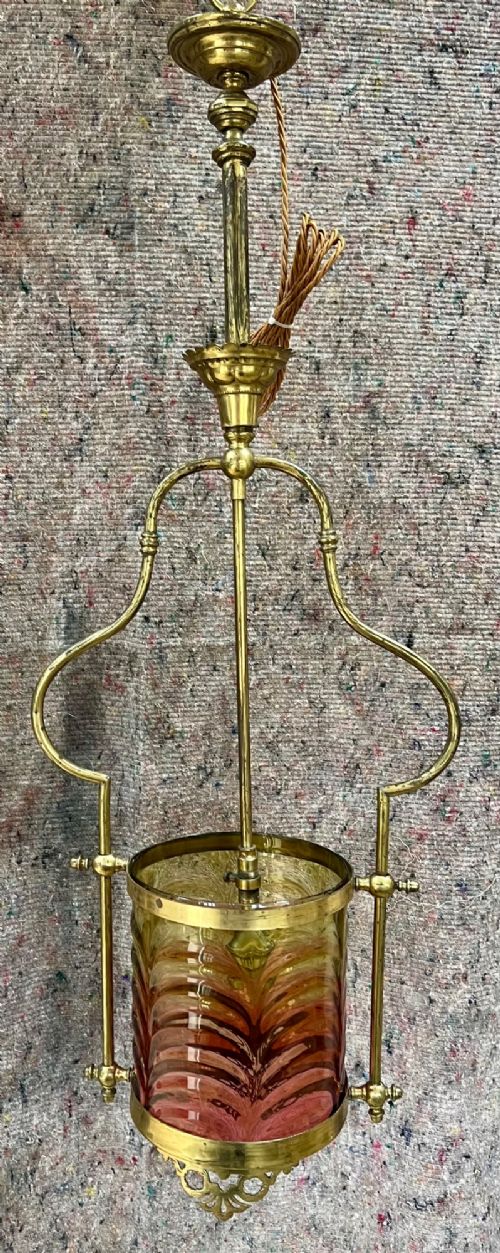
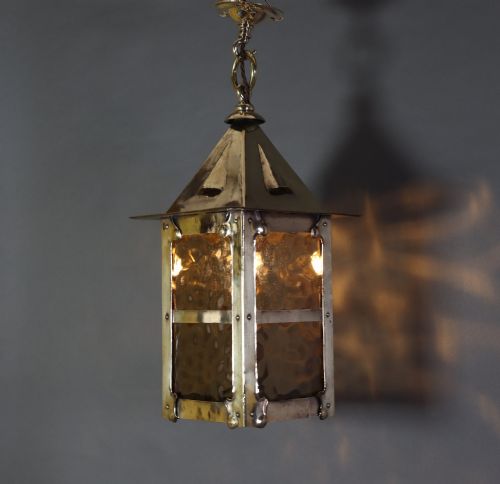
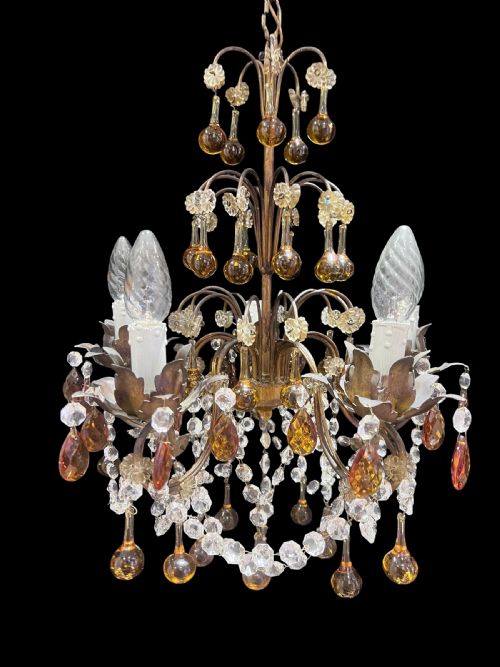
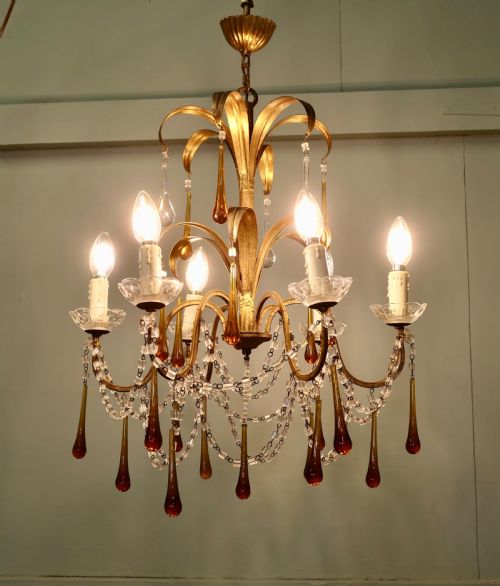
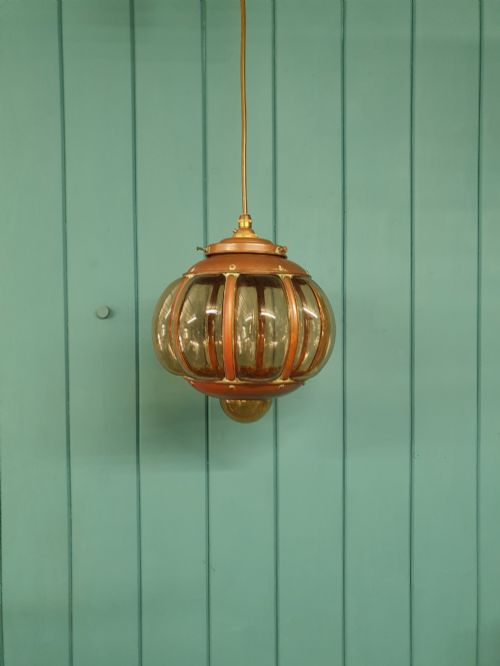
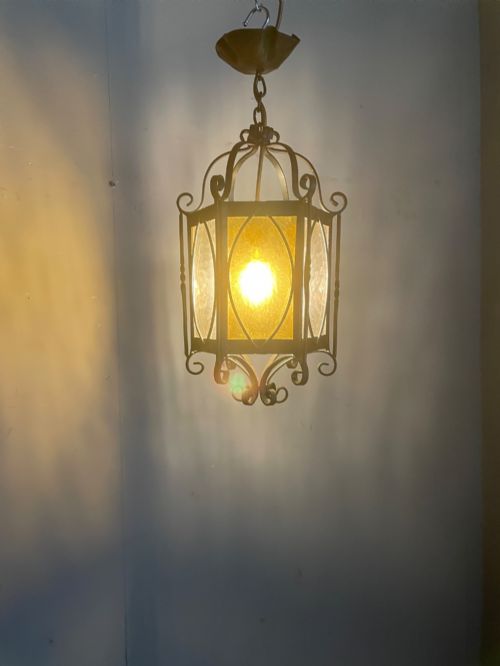
When searching for an amber pendant light, collectors encounter a diverse array of hanging illumination spanning from the Victorian era through the Art Deco period. These fixtures range from brass-framed lead glass lanterns and Arts & Crafts designs to French chandeliers hung with coloured crystal teardrops and fruits.
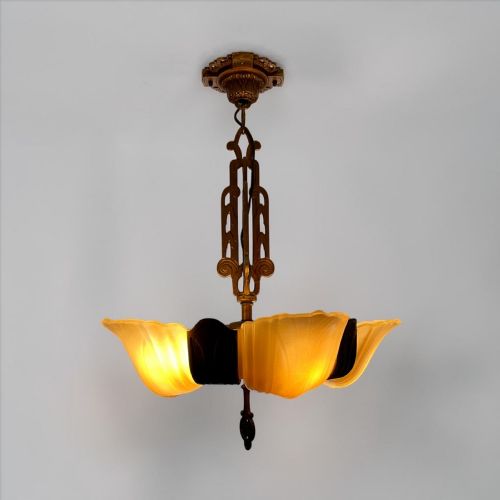
The most common examples on this page date from the early twentieth century, particularly the 1920s and 1930s, featuring characteristic geometric or floral glass elements. Pieces take the form of hall lanterns, ceiling lights, and basket chandeliers suspended by metal chains or wiring.
Origins stretch across England, France, Italy, and Sweden, reflecting regional preferences in metalwork and glass manipulation. Buyers find both simple domestic lampshades and monumental architectural fittings suited to various ceiling heights.
How they were made
Craftsmen built the structural frameworks of these lights using brass, wrought iron, copper, and gilt metal to support the heavy glass components. Metal elements were cast, forged, or soldered to create secure baskets, frames, and ceiling mounts.
Glass production involved techniques such as leaded construction, etching, moulding slip shades, and carving alabaster. Artisans also incorporated crystal drops, beads, and moulded fruit shapes wired directly into the metal armature.
Amber Pendant Light Retail Price Guide 2026
Typical asking prices for amber pendant light among the pieces listed under this phrase on Sellingantiques today, from the lower quarter to the upper quarter. They describe what is for sale here now, not the wider market.
Origins represented among the pieces include English, French, Italian, and Swedish workshops from the late nineteenth and early twentieth centuries.
What varies in quality
The distinction between standard and superior pieces rests upon the weight and clarity of the glass and the crispness of the metal casting. Heavier brass frames and hand-cut crystals demonstrate a higher standard of manufacture than lighter, mass-produced alternatives.
Design integrity and the completeness of original glass drops or fruit clusters elevate a piece significantly. Finer examples retain matching sets of tinted glass and sophisticated period mounts that reflect distinct stylistic movements like Art Deco or Arts & Crafts.
Verrerie Des Vosge
The Amber Pendant Light Glossary
- Slip shade
- A moulded piece of glass designed to slide into a metal frame, frequently seen in Art Deco ceiling lights.
- Lead glass
- Glass manufactured with lead oxide to increase brilliance and weight, commonly utilised in Victorian lanterns.
- Tolewear
- Painted sheet metal shaped into decorative elements, often found on French chandeliers from the early twentieth century.
- Alabaster
- A fine-grained mineral stone carved into thin translucent bowls and dishes for diffused ceiling illumination.
- Hall lantern
- An enclosed hanging light fixture traditionally suspended in entranceways and corridors to illuminate passages.
Amber Pendant Light: Frequently Asked Questions
How do I hang a heavy brass and glass pendant?
These fixtures require secure anchoring into ceiling joists using appropriate metal hooks and brackets capable of supporting the combined weight of metal and glass. Professional electrical installation ensures the wiring safely accommodates the vintage drop.
Adjusting the suspension chain allows the pendant to hang at the correct height for the room proportions, typically above eye level in hallways or dining spaces.
Can I use modern LED bulbs in these vintage lights?
Modern low-heat LED bulbs function well within vintage fittings, provided the base size matches the original lampholder. Selecting warm white tones preserves the characteristic honeyed glow of the tinted glass.
Care should be taken not to exceed the original wattage limits marked on the fixture, protecting delicate nineteenth and twentieth-century wiring and sockets from excessive heat.
How do I clean delicate crystal and coloured glass?
Maintenance involves gently wiping glass components with a soft, lint-free cloth dampened in lukewarm water with mild soap. Harsh chemical cleaners can damage aged metal finishes and patinated brass.
For chandeliers hung with numerous crystal drops, cleaning them in situ avoids accidental breakage of delicate wires and fruit clusters.