


Amber Glass Ceiling Light
An amber glass ceiling light brings warmth to a room, casting a rich glow through period lanterns and chandeliers.
Amber Glass Ceiling Light
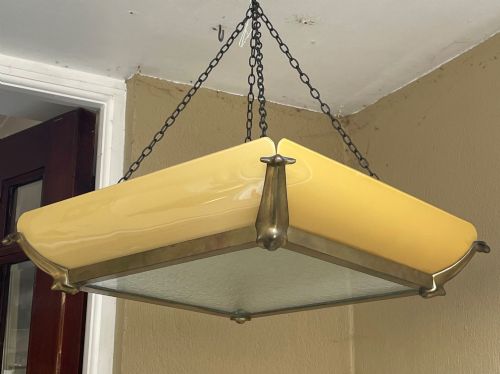
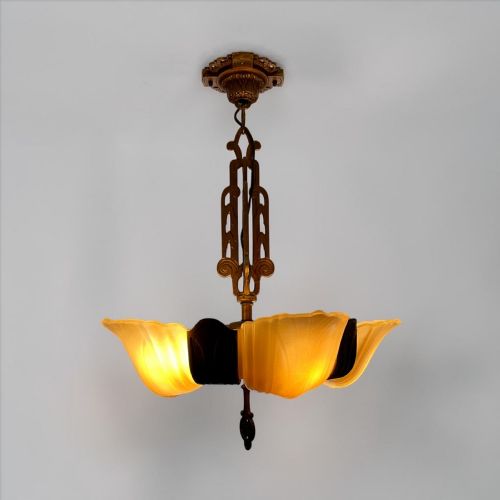
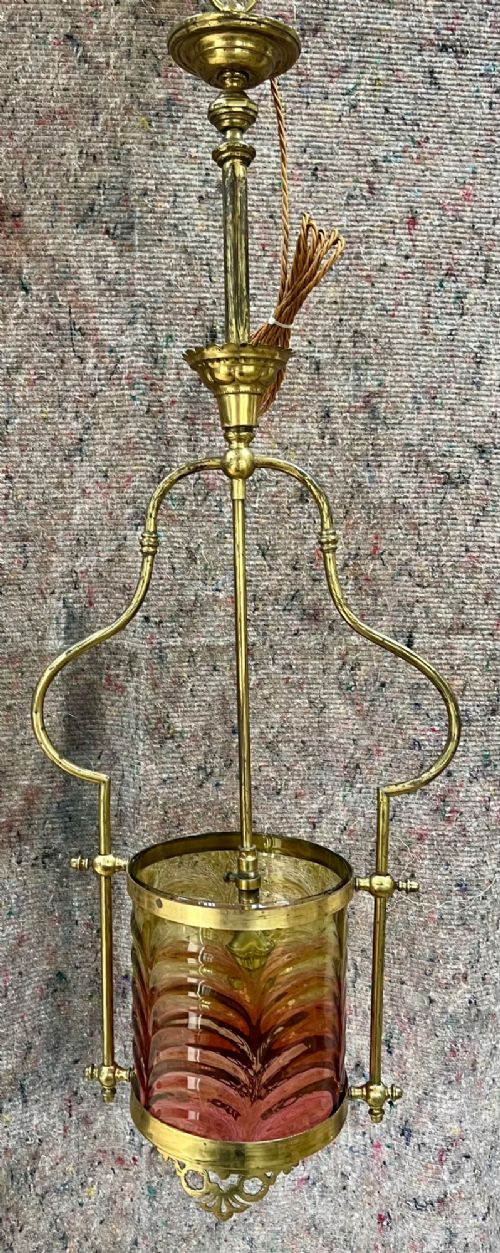
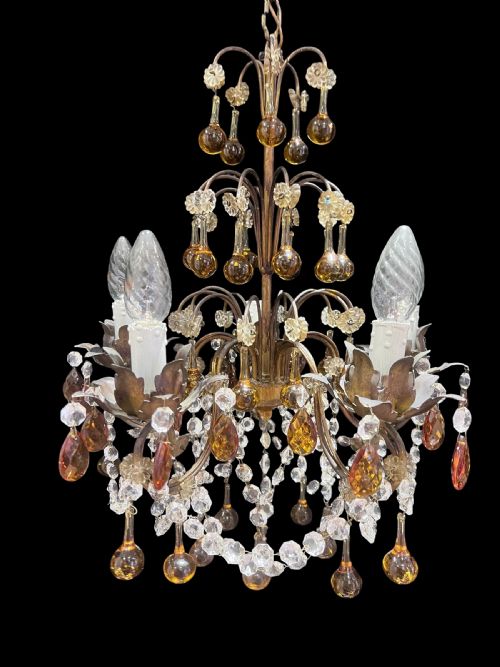
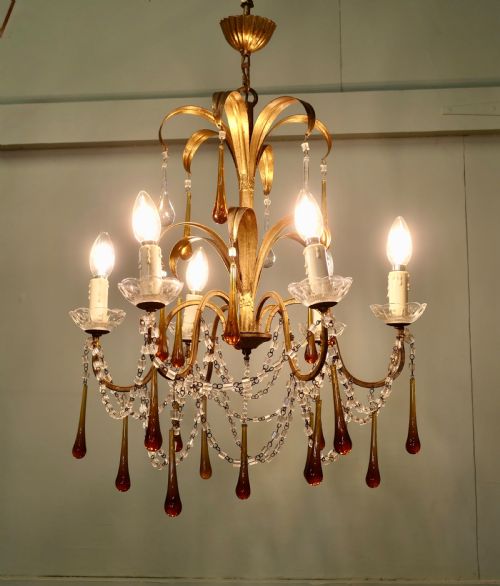
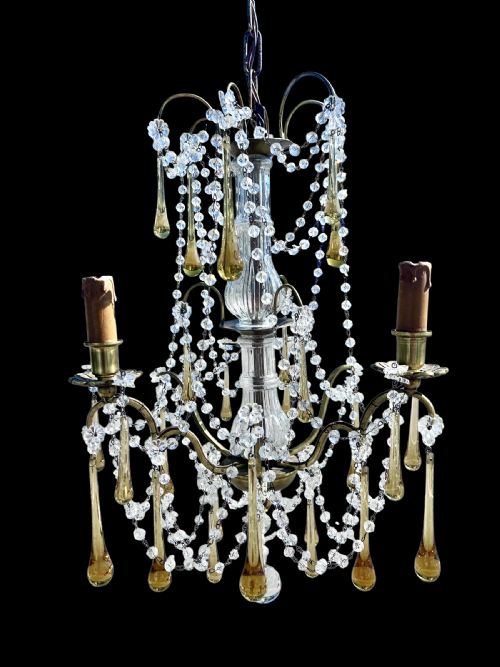
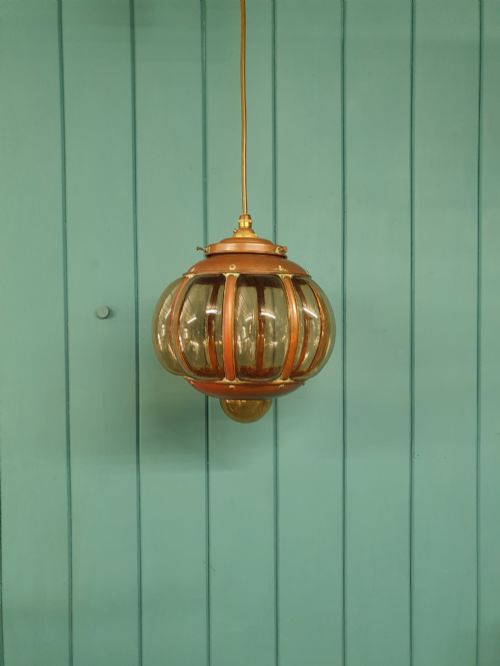
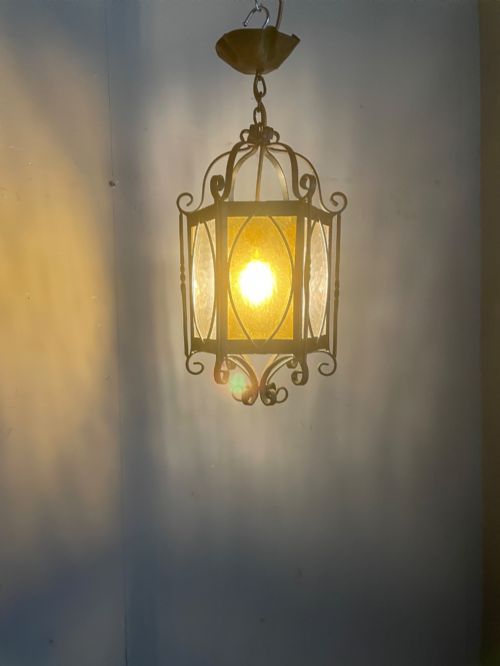
An amber glass ceiling light encompasses hanging lanterns, flush fixtures, and multi-armed chandeliers spanning the Victorian era through the Art Deco period. Buyers seeking this aesthetic often encounter French, Italian, and English designs utilising warm-toned glass.
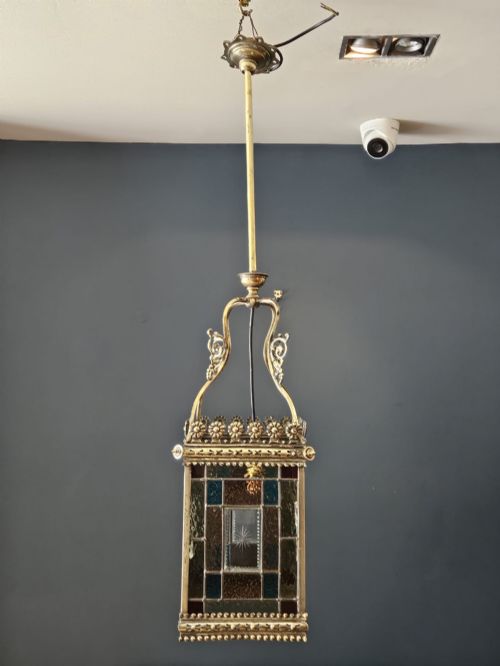
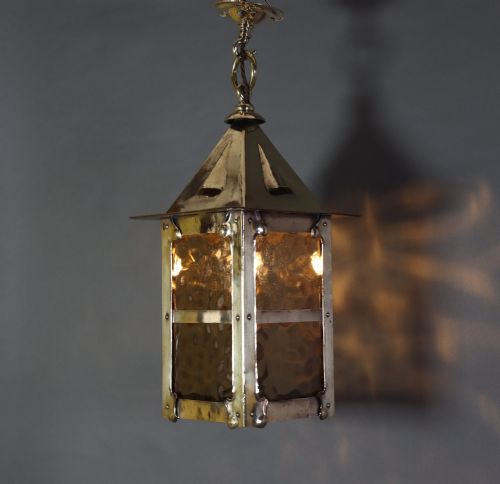
The selection ranges from early twentieth century pendants and Arts and Crafts brass lanterns to monumental Art Deco fixtures. Forms include hexagonal hall lanterns, basket chandeliers, and beaded lampshades suspended on brass, copper, or wrought iron frames.
How they were made
Maker techniques combine hand-blown or moulded glass with structural metalwork in brass, gilt metal, wrought iron, and copper. Components such as leaded glass panels, crystal teardrops, and frosted shades are secured within sturdy metal frames.
Makers integrated decorative elements like etched patterns, coloured crystals, and applied glass fruit or grape bunches directly into the lighting structure. Metal components were cast, forged, or spun to support the weight of the glass shades and crystal drops.
Some French chandeliers come laden with glass bunches of grapes and amber fruits, proving past makers took their harvest themes very seriously indeed.
What varies in quality
Quality rests in the weight of the metal framing, the depth and clarity of the glass, and the integrity of the suspension. Finer examples display crisper casting in the brass or iron, alongside hand-finished crystal elements rather than mass-produced glass.
The sophistication of the design dictates distinction, moving from utilitarian hallway lanterns to elaborate multi-arm chandeliers hung with coloured crystal fruits. Period harmony between the glass shade and the supporting metalwork defines the superior specimens.
Verrerie Des Vosge
The Amber Glass Ceiling Light Glossary
- Slip shade
- A moulded glass shade designed to fit directly into a metal bowl fixture, common in Art Deco lighting.
- Hall lantern
- An enclosed ceiling fixture, often hexagonal or square, traditionally hung in entranceways to provide direct illumination.
- Tolewear
- Painted sheet metal fashioned into decorative light fixtures and chandeliers, particularly popular in French designs.
- Lead glass
- Glass manufactured with lead oxide to increase brilliance and weight, frequently utilised in panelled lanterns.
- Drop chandelier
- A multi-armed light fixture suspended with hanging glass or crystal pendants that catch and refract the light.
Amber Glass Ceiling Light: Frequently Asked Questions
How do I hang a heavy brass lantern?
Suspension requires securing the fixture directly into ceiling joists or using a properly rated ceiling medallion to bear the weight of the metal and glass.
Professional installation is recommended for older wiring and heavy multi-armed chandeliers to ensure safe operation.
What rooms suit an amber glass ceiling light?
These warm-toned fixtures suit entrance halls, bedrooms, and dining spaces where ambient lighting creates an inviting atmosphere. Smaller pendants fit cosy corridors while larger multi-light chandeliers anchor principal reception rooms.
The coloured glass diffuses harsh glare, making them particularly effective in spaces designed for relaxation.
How do I clean period glass shades?
Remove delicate glass components from the metal frame when possible and wash them gently in lukewarm soapy water. Avoid harsh chemical cleaners that might damage aged patinated brass or frosted surfaces.
Dry thoroughly with a soft cloth before rehanging the fixture to prevent water spots on the glass.
Can these antique lights be rewired?
Rewiring allows historic metal frames and glass shades to meet modern electrical safety standards while retaining their original exterior appearance. Professional electricians can update internal fittings without compromising the antique components.
Many fixtures arrive already rewired for contemporary domestic use.