


Amber Glass Bottle
An amber glass bottle brings a warm, honeyed glow to a room, holding centuries of function within its rich, translucent walls.
Amber Glass Bottle
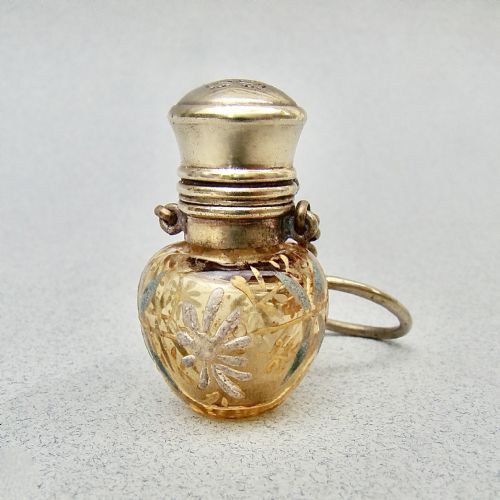
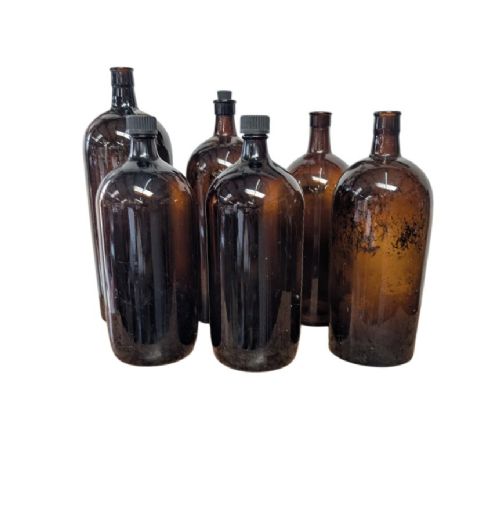
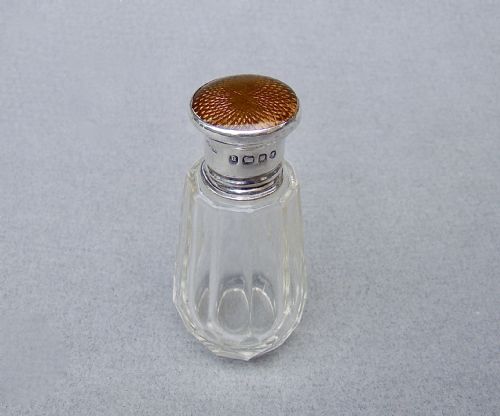
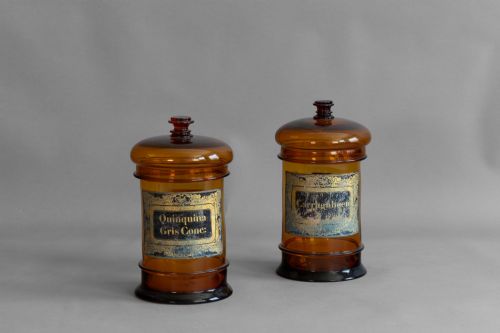
An amber glass bottle spans practical storage vessels and personal vanity items, appearing most frequently as Victorian scent bottles and utilitarian apothecary containers.
The form stretches from small pocket flasks with silver mounts to tall wine decanters and chemistry jars produced across the nineteenth and early twentieth centuries.
Makers in France, Britain, and Bohemia shaped these pieces using techniques ranging from heavy wheel-cutting to delicate floral enamelling.
Materials and technique
Molten glass received its deep golden-brown hue through the addition of sulphur and iron compounds during the batch mixing process, protecting contents from light.
Craftsmen shaped the vessels by hand-blowing into moulds or free-blowing, often finishing the surfaces with sliced-cut facets, acid-etching, or cameo carving.
Many containers received secondary mounts in sterling silver, silver gilt, or gilded metal, incorporating hinged lids and screw caps.
Materials recorded across the archive include sterling silver, paper labels, enamel, cameo glass, and gilded metal paired with amber glass bodies.
Quality and distinction
Superior examples show crisp, deep facet-cutting that catches the light cleanly, contrasting with softer, rounded mould seams found on utility ware.
The integration of metalwork dictates value; hallmarked silver collars and fitted hinged caps by named silversmiths elevate a simple scent bottle.
Clarity of the amber tone and complexity of surface decoration, such as layered cameo glass or hand-applied enamel, separate standard production from master works.
Henry Perkins·Rene Lalique·Karl Palda·Charles May·Lionel Spiers
The Amber Glass Bottle Glossary
- Apothecary bottle
- A utilitarian container originally used by chemists and pharmacists to store dry ingredients or liquid medicines.
- Cameo glass
- A technique where glass of one colour is overlaid upon another and carved back to create a raised white or contrasting design.
- Chatelaine scent bottle
- A small perfume flask fitted with a chain or hook to suspend from a woman's decorative waist belt.
- Latticinio
- A Venetian glassmaking method embedding white or coloured glass threads into clear or tinted glass in regular lace-like patterns.
- Slice-cut
- Geometric facets ground flat onto the exterior of a glass vessel to create sharp linear patterns.
Amber Glass Bottle: Frequently Asked Questions
How do I date an amber glass bottle?
Dating relies on a combination of manufacturing marks, pontil scars on the base, and associated metal mounts. Victorian and Edwardian pieces frequently feature legible silver hallmarks that pinpoint the exact year and assay office.
Utilitarian apothecary and chemistry bottles often lack hallmarks, requiring stylistic comparison of the lip finish, mould seams, and base wear against known production eras.
Were all amber bottles used for medicine?
While many larger survival examples served in pharmacies or laboratories for light-sensitive compounds, a vast number functioned as personal luxury items. Small pocket flasks and chatelaine bottles held expensive perfumes on dressing tables.
Larger serving bottles and decanters held wine or spirits, utilising the dark tint to protect the contents from sunlight degradation during storage.
How do I clean an antique glass bottle?
Cleaning antique glass requires caution, particularly when pieces retain delicate silver mounts, paper labels, or painted enamel decorations. Submerging mounted pieces can damage internal cements and corrode older metals.
Warm water and mild soap suffice for glass interiors, avoiding abrasive brushes that scratch the soft surfaces of nineteenth-century pieces.
What is the difference between Moser and ordinary glass?
Moser pieces stand apart through exceptional glass chemistry, brilliant hand-polishing, and intricate applications of coloured enamels and gilding. The glass body itself often exhibits superior weight and a richer, more uniform amber saturation.
Standard commercial production pieces lack the refined hand-finishing and artistic detailing characteristic of specialised Bohemian workshops.