


Alphabet Embroidery Sampler
These alphabet embroidery sampler pieces bring domestic history onto the wall through the careful stitches of young makers from centuries past.
Alphabet Embroidery Sampler
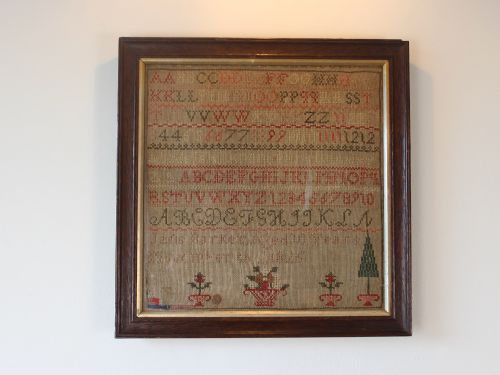
An alphabet embroidery sampler represents a traditional needlework exercise executed by children and young learners to demonstrate proficiency in letters, numbers, and decorative motifs. These textile works range from simple rows of lettering to elaborate pictorial compositions complete with names, ages, and dates.
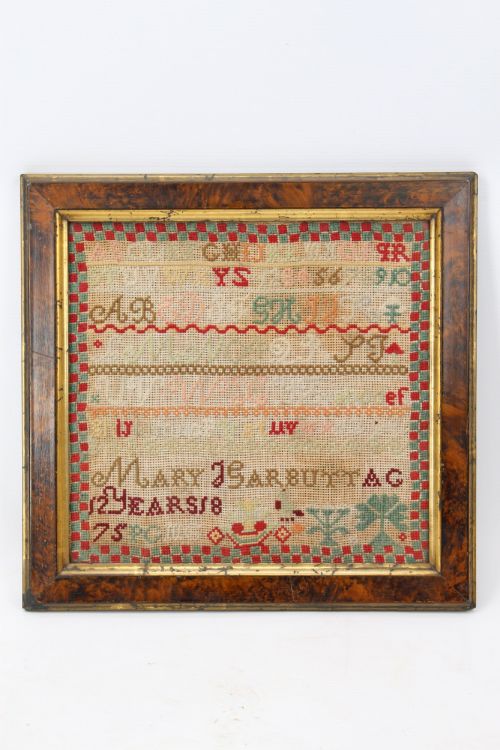
The pieces available span multiple eras, with the nineteenth century and the Georgian period forming the most common origins. Buyers frequently encounter examples bearing youthful signatures such as Mary J Garbutt or Margaret Ann Blackow, often accompanied by their ages.
Surviving formats include single framed panels and paired works mounted together, such as the samplers worked by Emma and Hannah Barnes. Collectors also find miniature versions alongside larger wall art displaying texts like the Lord's Prayer or the Commandments.
Assessing quality in needlework
Quality rests upon the regularity of the stitching, the complexity of the motifs, and the legibility of the alphabet lettering. Finer works display uniform tension across the linen ground and sophisticated border patterns surrounding the central text.
Condition and legibility distinguish superior examples, particularly regarding the preservation of the silk and wool threads against fading. The inclusion of detailed biographical data, such as a full name, exact date, and school location, elevates the historical interest of a piece.
At least one Victorian schoolgirl left behind a charming stitch error recorded permanently in thread.
The Alphabet Embroidery Sampler Glossary
- Band sampler
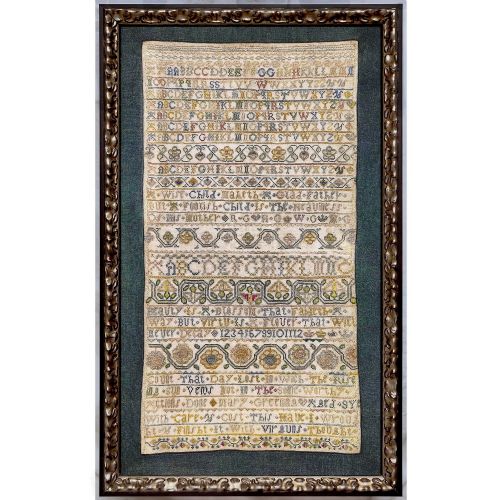
- An early form of needlework displaying horizontal strips of diverse patterns and alphabets. These pieces served as reference libraries of stitches for makers.
- Linen
- A strong textile woven from flax fibres that serves as the traditional ground fabric for needlework. Its visible weave aided stitchers in maintaining straight rows.
- Cross stitch
- A popular embroidery technique forming small crosses to create letters and images. This method dominates many nineteenth-century text pieces.
- Tapestry sampler
- A needlework panel executed on a canvas or open weave ground using coloured threads. These works often incorporate pictorial scenes alongside lettering.
Alphabet Embroidery Sampler: Frequently Asked Questions
How old are these samplers typically?
Most surviving examples date from the Georgian and Victorian eras, spanning the late eighteenth century through the late nineteenth century. Earlier band samplers from the seventeenth century also appear occasionally.
Each piece usually records its own date of creation alongside the maker's name and age, offering clear chronological markers for collectors.
Why did children make them?
Young makers stitched these textiles to practice literacy, numeracy, and fine needlework skills required in a domestic household. Completing a proficient sampler proved a girl's education and dexterity.
Schools and academies often supervised the work, sometimes noting the institution directly on the fabric alongside the child's signature.
How should I hang and care for them?
Display these framed textiles away from direct sunlight to prevent the silk and wool threads from fading. Maintaining stable indoor humidity protects both the historic fabric and the wooden frames.
Most pieces arrive behind glass, which shields the delicate embroidery from dust and atmospheric moisture during everyday exhibition.
Do all samplers include alphabets?
While alphabet sequences form the foundation of many pieces, numerous examples also incorporate numbers, verses, moral maxims, and religious texts. Some works feature pictorial motifs like houses, flora, and fauna.
Certain textiles focus on specific passages such as the Lord's Prayer or the Commandments rather than standard letter practice.