

Allegorical Figure Sculpture
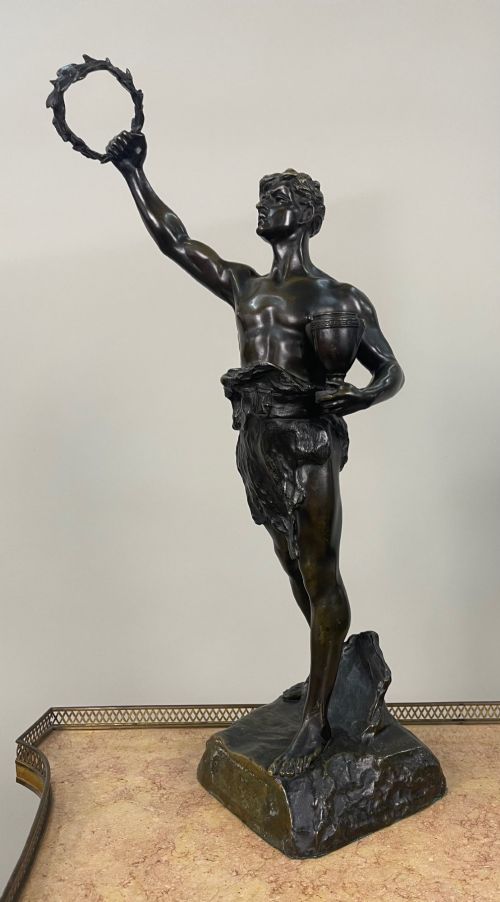
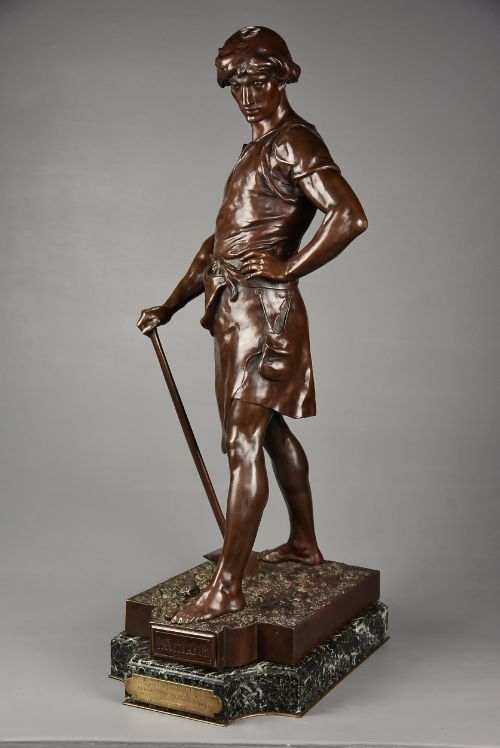
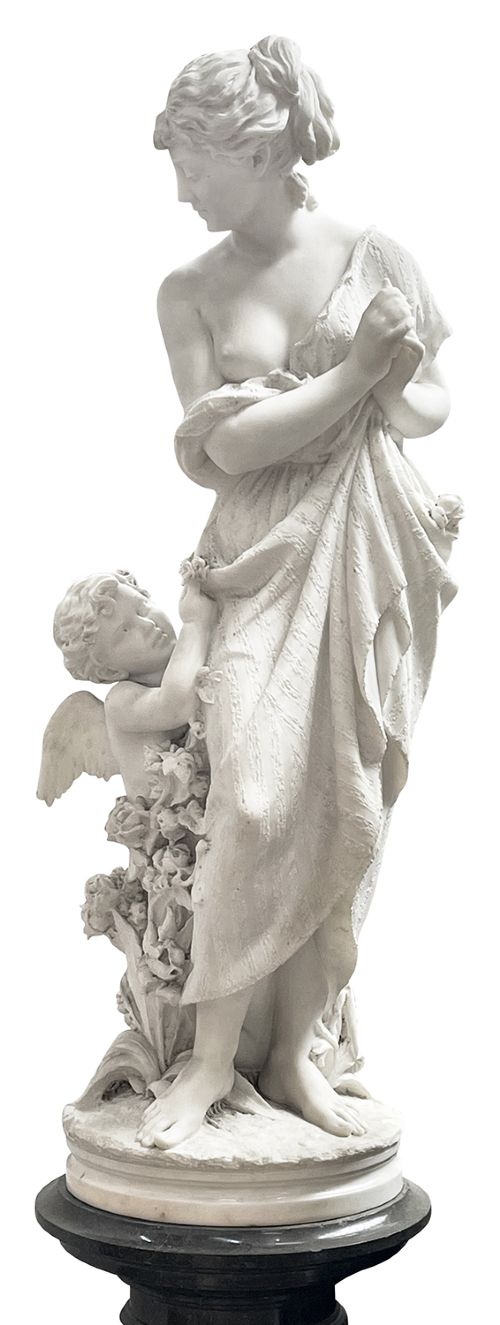
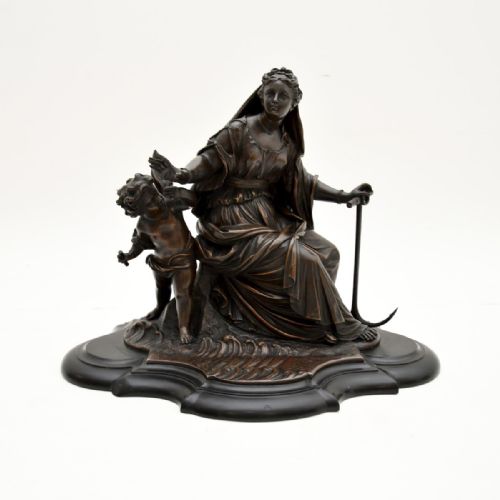
When you search for allegorical figure sculpture, you encounter personified virtues, seasons, and elements cast in bronze, carved in oak and marble, or modelled in porcelain.
Allegorical Figure Sculpture
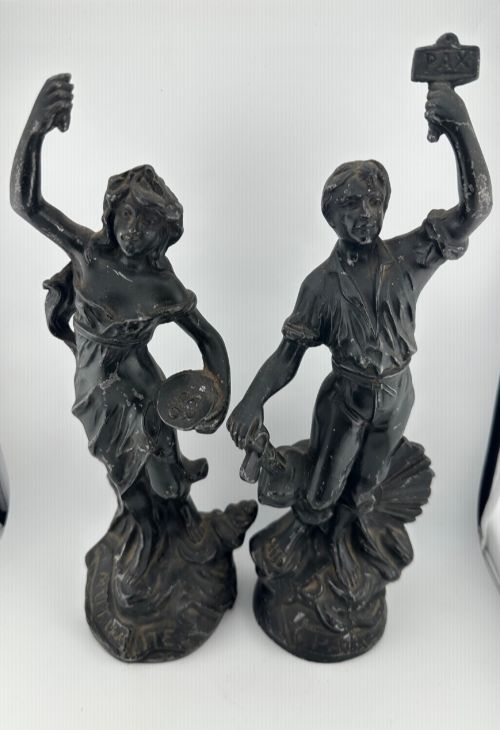
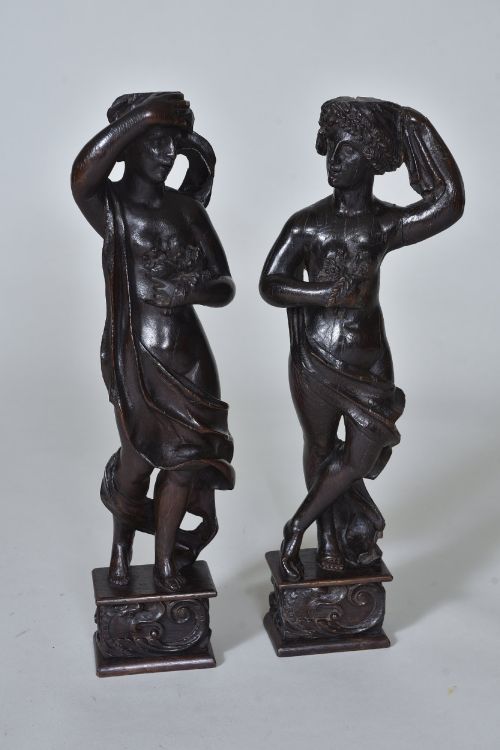
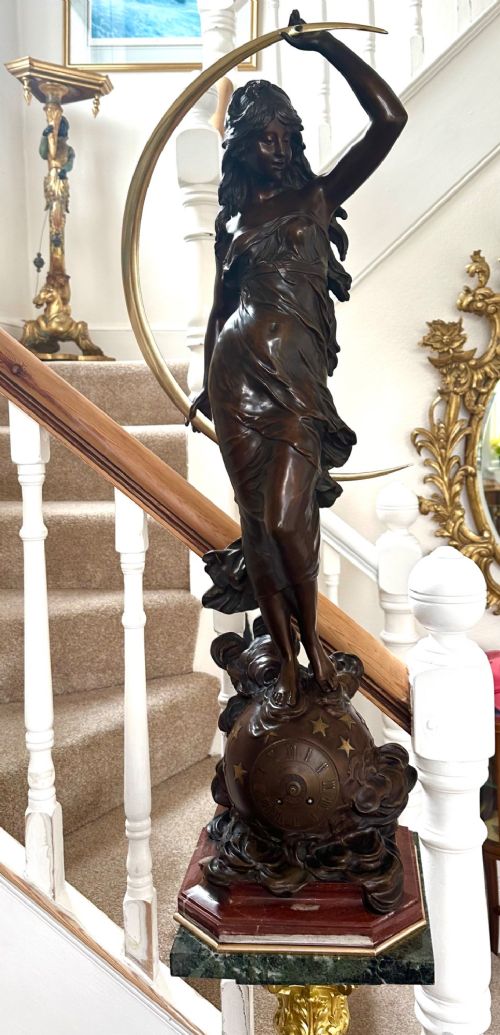
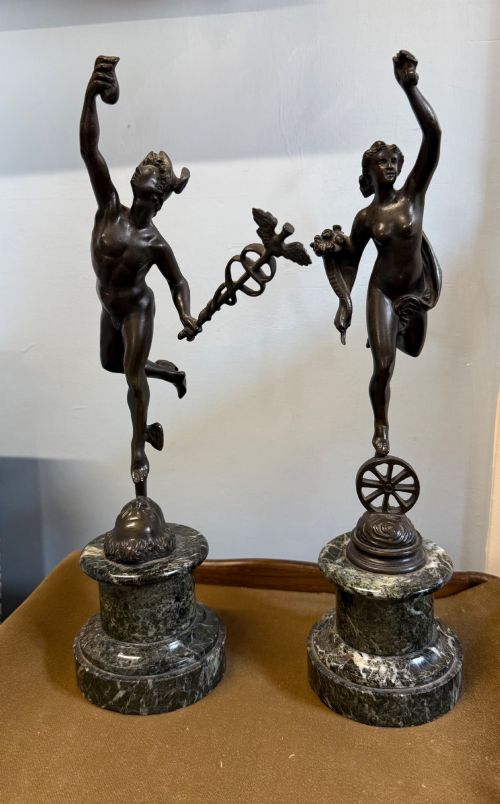
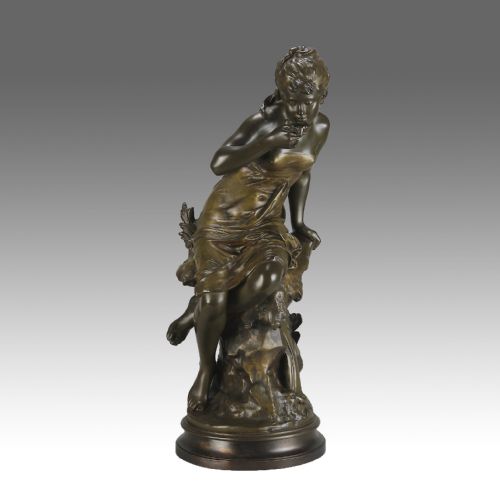
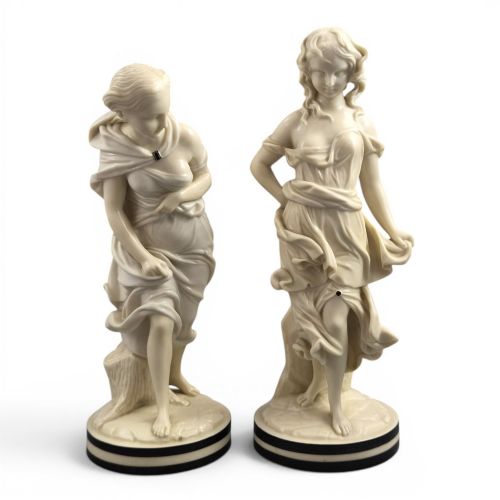
An allegorical figure sculpture translates abstract concepts such as peace, the seasons, water, or agriculture into human form. You will frequently meet pairs depicting complementary themes like harvest dancers, the elements, or peace and labour.
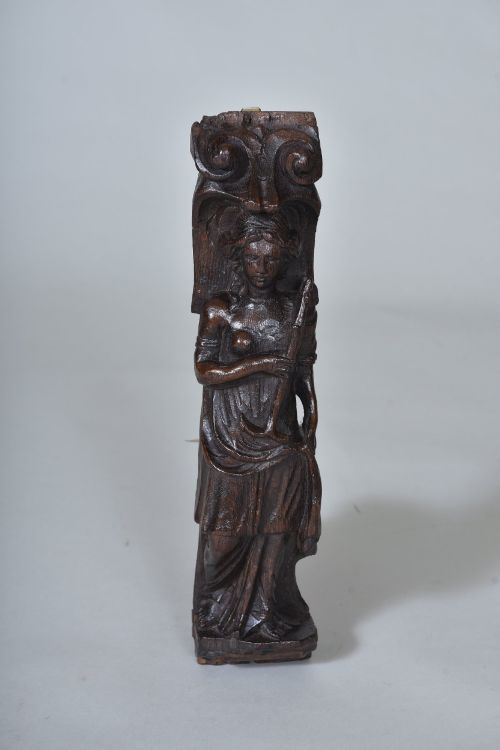
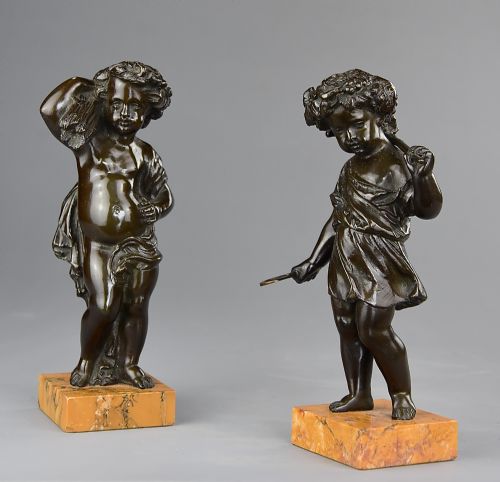
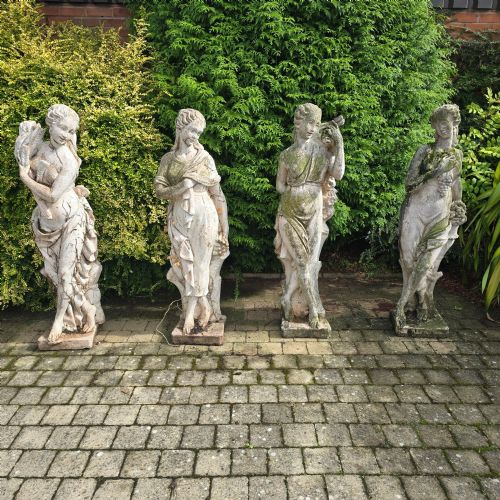
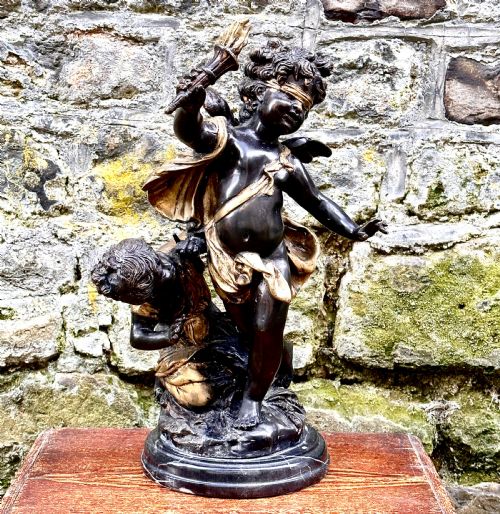
The pieces on this page span from seventeenth-century oak carvings to twentieth-century garden statuary in cast stone. French bronzes from the nineteenth century, often cast with patination and mounted on marble plinths, form a large part of the selection.
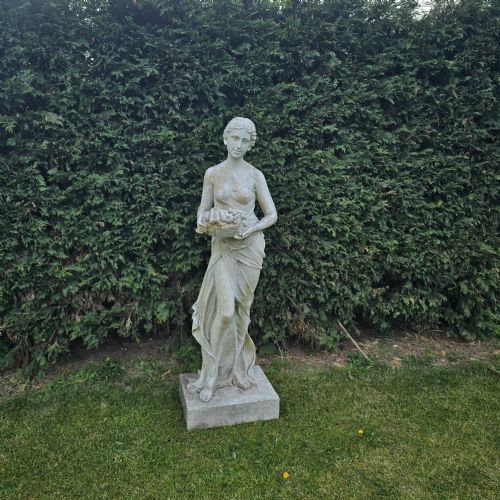
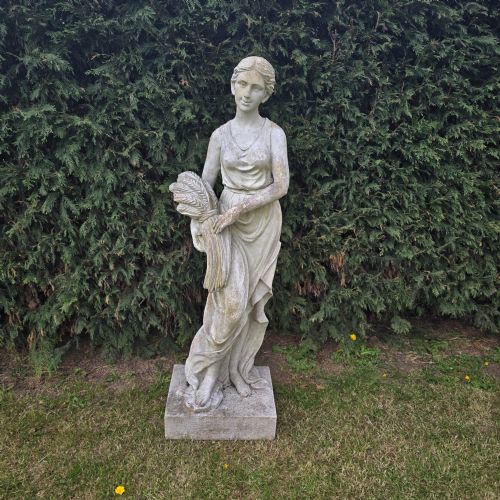
Porcelain works from factories like Bow, Derby, Meissen, and Volkstedt appear alongside bronze table lamps and large garden statues. These figures range from cabinet-sized figurines to life-sized stone representations of autumn and summer.
How They Were Made
Bronze sculptures relied on the lost-wax casting technique, allowing founders to capture intricate drapery and delicate facial expressions before applying chemical patination. Many nineteenth-century French casts received detailed hand-chasing after removal from the mould.
Porcelain figures were slip-cast or hand-modelled in soft-paste or hard-paste porcelain, then painted with enamel colours and gilded before being fired in kilns. Early English and continental factories often produced these figures in multiple sections and assembled them prior to glazing.
Carved pieces utilised seasoned timber like oak, solid marble, or alabaster, shaped with chisels and gouges to reveal texture in hair, garments, and natural elements. Stone garden figures employed durable cast stone or reconstituted stone mixtures poured into moulds to withstand weathering.
Allegorical Figure Sculpture Retail Price Guide 2026
Typical asking prices for allegorical figure sculpture among the pieces listed under this phrase on Sellingantiques today, from the lower quarter to the upper quarter. They describe what is for sale here now, not the wider market.
Father Time appears clipping Cupid's wings in several porcelain figure groups, offering a stern classical reminder that even love must eventually succumb to age.
What Varies in Quality
The precision of the casting and the depth of the subsequent chase work separate standard foundry output from masterworks. Finer bronzes retain crisp anatomical definition and subtle surface textures where cloth meets skin.
Marble and alabaster carvings reveal their standard through the purity of the stone and the sensitivity shown in carving difficult details such as hands, feathers, or translucent drapery.
Mathurin Moreau·Auguste Moreau·Emile Louis Picault·Ernst Barrias·Barbedienne·James Hadley·Achille Mollica·Jean-Jules Cambos·Pugi·Octave Galliard-Sansonetti
The Allegorical Figure Sculpture Glossary
- Spelter
- An alloy of zinc and lead often used as a cheaper alternative to bronze in nineteenth-century decorative figures. It is typically identified by a lighter weight and a applied bronze-coloured finish.
- Patination
- The surface coloration and chemical ageing applied to metal sculptures or developed naturally over time. It accentuates the contours and depth of the casting.
- Putto
- A chubby male child figure, frequently winged, used in classical and renaissance-derived art to represent spirits of love or the seasons. Plural form is putti.
- Soft-paste porcelain
- An artificial porcelain composition fired at lower temperatures than hard-paste, used by early English factories like Bow and Derby. It produces a warm, slightly creamy body and soft glaze characteristics.
- Neoclassical
- A Western style inspired by the art of classical antiquity, emphasising restraint, noble simplicity, and idealized human forms. It heavily influenced nineteenth-century allegorical casting and carving.
Allegorical Figure Sculpture: Frequently Asked Questions
What do allegorical figures represent?
These sculptures personify abstract ideas, moral virtues, natural elements, or calendar periods into human forms. Common themes include the four seasons, agricultural labour, peace, water, and art.
Artists used recognisable symbols, such as harvested wheat for autumn or water jugs for water elements, to communicate the intended meaning to contemporary viewers.
How can I tell bronze from spelter?
Bronze is heavier, colder to the touch, and rings with a clear tone when struck gently, whereas spelter is softer and more brittle. Spelter figures often show grey or white metal beneath chips in the surface patination.
Foundries used spelter as an economical substitute for bronze during the nineteenth century, particularly for decorative mantel figures and lamps.
Where should I place a heavy marble sculpture?
Solid marble and alabaster sculptures require a structurally sound surface capable of supporting considerable weight, such as a low heavy table, a reinforced cabinet, or a dedicated stone plinth.
Keep them away from direct sunlight, extreme temperature fluctuations, and high-traffic areas where accidental impacts could chip protruding fingers or drapery.