

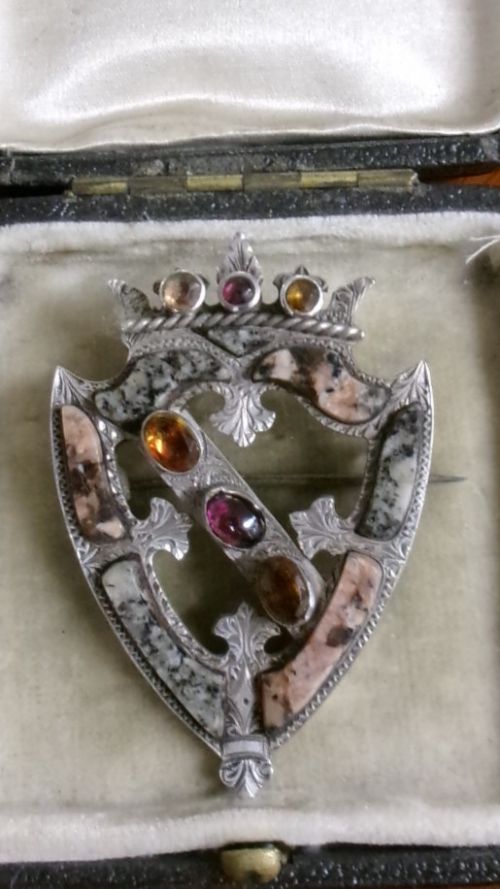
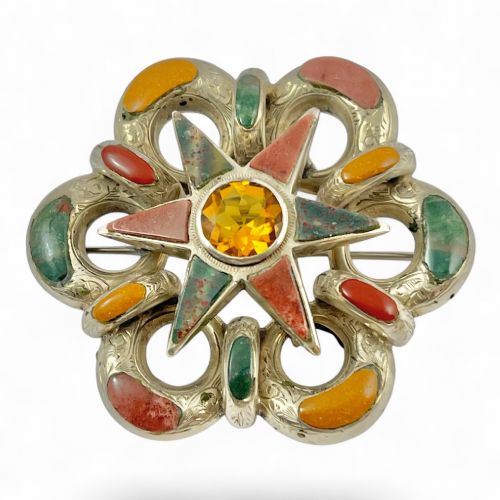


Agate Brooch Pin
An agate brooch pin brings together polished hardstones and precious metals in wearable forms that span the Georgian and Victorian eras.
Agate Brooch Pin
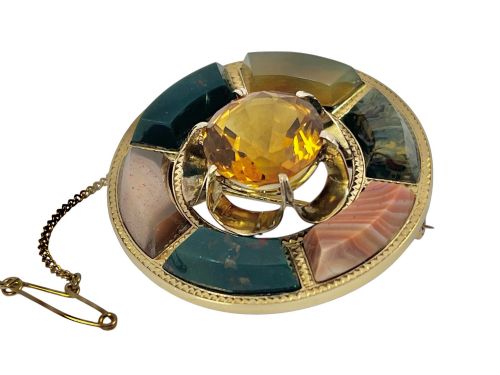
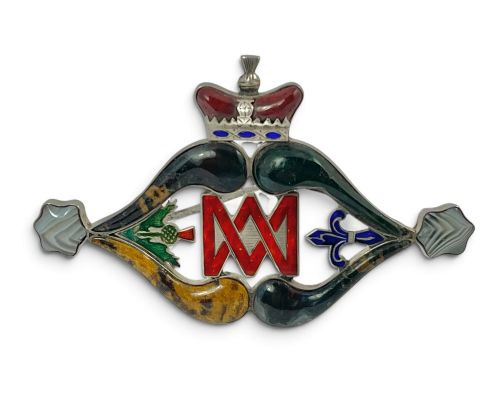
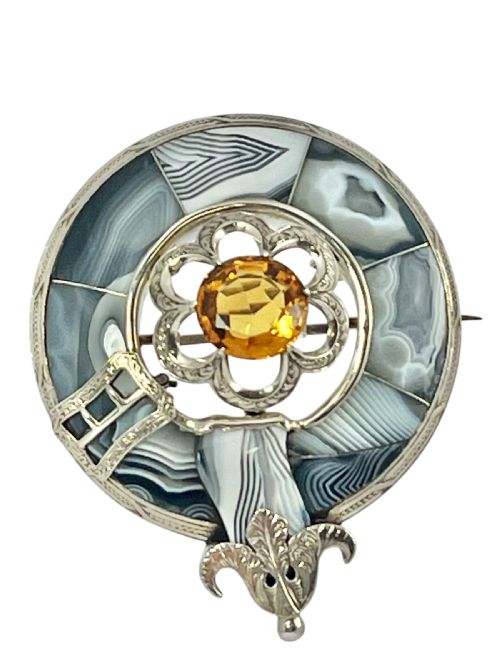
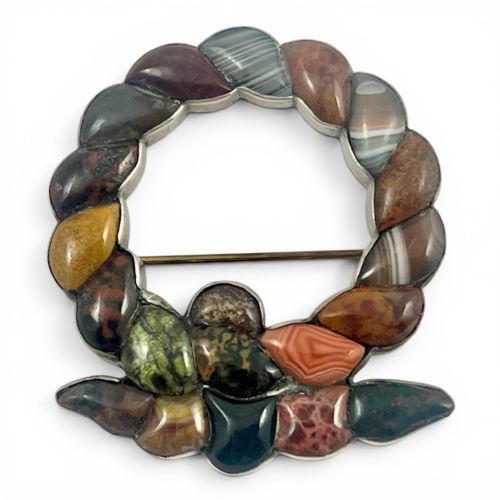
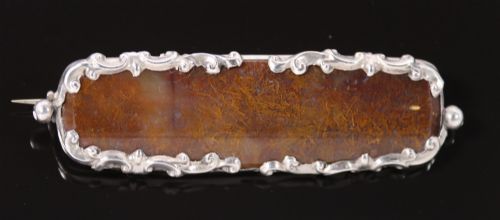
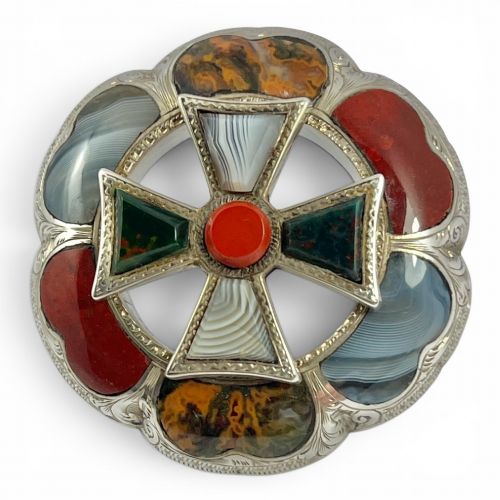
The most common versions met on this page are Victorian Scottish Revival silver brooches set with patterned stones and citrines. Buyers also encounter gold settings, hardstone cameos, and basket-hilted broadsword kilt pins dating across the nineteenth century.
Materials and construction
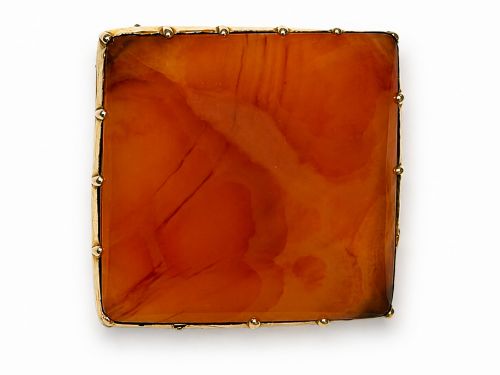
Craftsmen set natural hardstones, including Montrose agate, moss agate, jasper, bloodstone, and carnelian, into mounts of silver or gold such as 9ct, 15ct, and 18ct varieties. Gemstones like citrine and diamonds occasionally accent the central pebble work.
Lapidaries shaped and polished the hardstones to reveal natural banding and inclusions before mounting them securely within metal frameworks, sometimes incorporating enamel details or intricate metalwork like broadsword hilts.
Agate Brooch Pin Retail Price Guide 2026
Typical asking prices for agate brooch pin among the pieces listed under this phrase on Sellingantiques today, from the lower quarter to the upper quarter. They describe what is for sale here now, not the wider market.
Listings feature silver and gold settings, spanning Georgian and Victorian periods, with materials ranging from Montrose agate and jasper to citrine.
Judging quality in hardstone jewellery
The distinction between tiers rests upon the choice of stones and the precision of the metalwork. Richly coloured Montrose agates, well-matched pebbles, and sharp hardstone cameos demonstrate superior execution.
Substantial gold mounts or heavy silver work paired with clean gemstone settings elevate a piece above simpler designs. The integration of supplementary stones like citrine also separates standard examples from more elaborate compositions.
The Agate Brooch Pin Glossary
- Agate
- A variety of chalcedony quartz displaying natural bands of colour or distinct inclusions. It forms the primary decorative element in these nineteenth-century brooches.
- Montrose agate
- A specific Scottish variety of banded chalcedony prized for its distinct patterning. Lapidaries shaped these local stones into polished specimens for regional jewellery.
- Hardstone
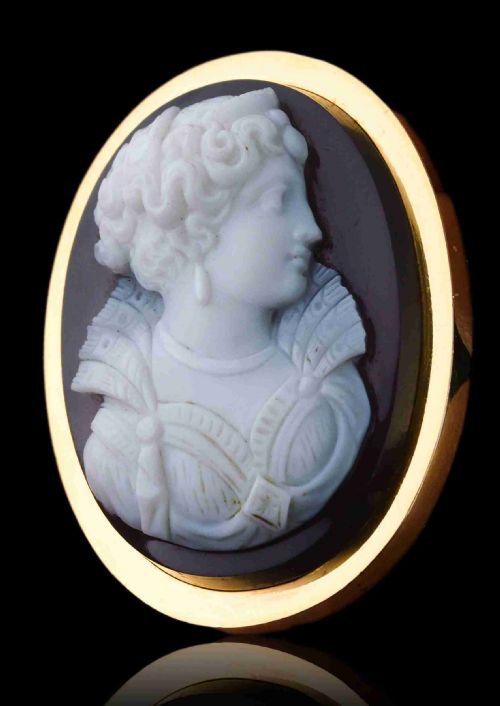
- A collective term for semi-precious stones harder than ordinary marble, utilised for intaglios, cameos, and polished pebble settings. These materials form the face of Victorian cameo brooches.
- Citrine
- A yellow variety of quartz frequently mounted alongside agates in Scottish Revival jewellery. Its warm tone complements the natural colours of the polished stones.
- Kilt pin
- A functional garment fastener styled as a sword or traditional weapon. These larger pieces served to secure Scottish Highland dress.
Agate Brooch Pin: Frequently Asked Questions
What is an agate brooch pin?
An agate brooch pin is a wearable nineteenth-century ornament combining polished chalcedony stones with silver or gold. These pieces often reflect Scottish Revival styles or Georgian craftsmanship.
They function primarily as decorative fasteners for shawls, plaids, and lapels, utilising natural hardstones shaped into shields, hearts, or swords.
How do I date a Victorian agate brooch?
Dating relies on stylistic markers, metal purity, and specific motifs associated with the nineteenth century. Pieces often date from the 1860s through the 1890s based on mounting techniques and silver or gold hallmarks.
Scottish Revival designs gained significant popularity during the Victorian era, particularly following royal patronage of Highland themes in the mid-nineteenth century.
What is Scottish Revival jewellery?
Scottish Revival jewellery is a nineteenth-century design movement inspired by traditional Highland weaponry, symbols, and geology. These ornaments incorporate native pebbles, silver mounts, and citrines.
Brooches often mimic the form of broadswords, kilt pins, or shield shapes, drawing on historic Scottish ornamentation adapted for Victorian wardrobes.
How should I care for antique agate jewellery?
Antique agate brooches require gentle handling to preserve both the polished stone and the historic metal mount. Avoid immersion in harsh chemical cleaners and ultrasonic baths.
Store each piece separately in a lined box to prevent scratching between the hardstone surfaces and softer gold or silver settings.