



Aesthetic Movement Brass Furniture
Aesthetic movement brass furniture brings together rich timbers and warm metalwork, offering striking decorative presence for any interior.
Aesthetic Movement Brass Furniture
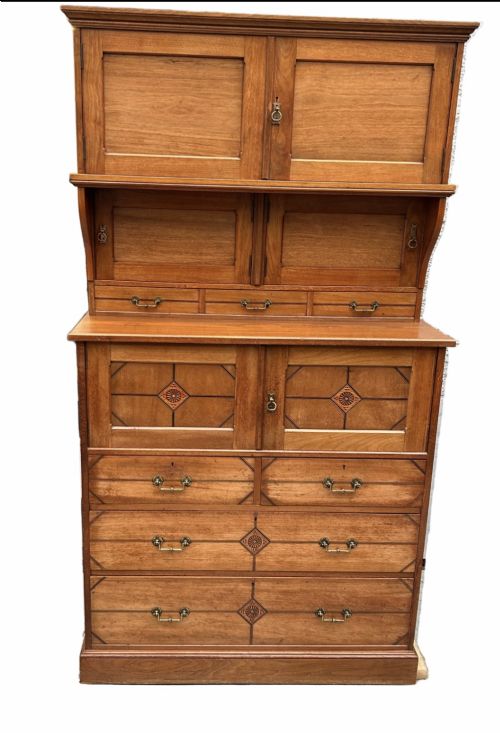
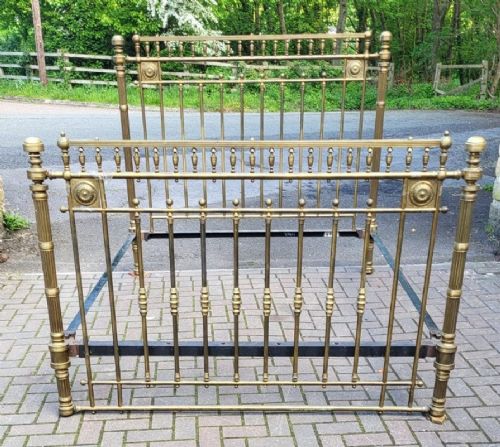
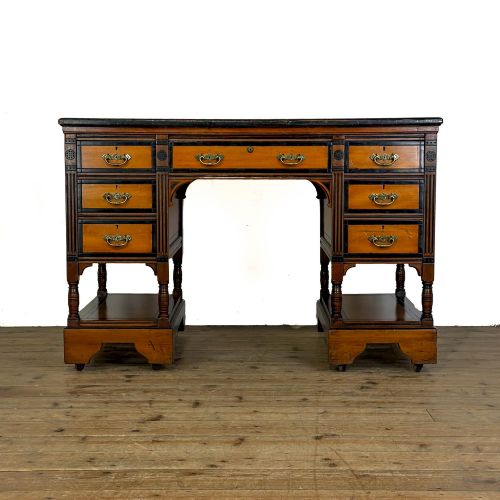
Aesthetic movement brass furniture combines functional forms with distinctive metal mounts, handles, and structural details. Buyers searching for aesthetic movement brass furniture will find pieces spanning the nineteenth century, including desks, bedsteads, benches, and tables.
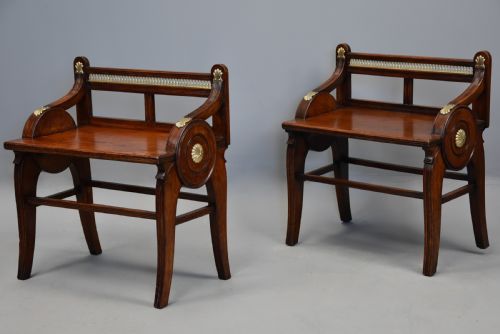
The objects listed on this page showcase varied timber frames such as oak, ebonised wood, pitch pine, and walnut, complemented by brass elements. Pieces range from large partners desks and king-size bedsteads to smaller hall benches and firedogs.
Victorian examples on this page reflect the distinct design ethos of the period, occasionally incorporating Anglo-Japanese influences or Regency style revivals. These items served both practical household roles and decorative functions in nineteenth-century interiors.
Materials and construction
Craftsmen utilised sturdy woods like oak, pitch pine, walnut, and ebonised wood as the primary carcasses and frames for these items. These timbers were often selected for their grain or stained to achieve specific dark or contrasting finishes.
Brass formed an integral part of the construction, appearing as cast solid sabots, mounts, handles, and structural fittings. Iron and leather also featured in specific utilitarian components and surfaces, such as desk inserts or internal framing.
Joinery and metalworking techniques of the nineteenth century ensured durability, combining traditional wood joints with secure brass mounting and architectural bronze elements.
Aesthetic Movement Brass Furniture Retail Price Guide 2026
Typical asking prices for aesthetic movement brass furniture among the pieces listed under this phrase on Sellingantiques today, from the lower quarter to the upper quarter. They describe what is for sale here now, not the wider market.
Listings feature items from the 1860s through the 1890s, utilising brass, oak, ebonised wood, pitch pine, and walnut.
Assessing quality and execution
Quality in these pieces rests on the precision of the timber joinery and the integrity of the brass mounts and fittings. Finer examples display carefully chosen wood grains, such as satinwood or figured oak, paired with crisply cast brass components.
The reputation of the maker or retailer plays a significant role in distinction, with documented workshop productions showing greater refinement in proportion and detail. Simpler vernacular items utilise more basic pine or secondary woods with standard brass hardware.
James Shoolbred & Co.·Blyth & Son·Daniel Cottier
The Aesthetic Movement Brass Furniture Glossary
- Aesthetic Movement
- A nineteenth-century design movement that emphasised decorative arts and visual beauty over strict moral or narrative purpose in design. It drew inspiration from various global traditions, including Japanese art.
- Partners Desk
- A large double-sided desk designed for two people to work opposite each other, featuring drawers and cupboards on both sides. These frequently incorporated substantial brass handles and locks.
- Firedogs
- Metal supports placed in a hearth to hold logs above the hearth floor for better airflow. Aesthetic period examples often utilised brass or bronze in architectural and sculptural designs.
- Sabots
- Protective metal sleeves or mounts fitted to the feet of tables and chairs. Solid brass sabots were common on mid-to-late nineteenth-century tables.
- Anglo-Japanese style
- A design aesthetic popular in Britain during the late nineteenth century that combined British structural forms with Japanese decorative motifs and flat planes.
Aesthetic Movement Brass Furniture: Frequently Asked Questions
What defines aesthetic movement brass furniture?
These pieces combine nineteenth-century timber frames with prominent brass mounts, hinges, and handles. They reject heavy Victorian ornamentation in favour of cleaner lines and artistic decorative details.
Items range from desks and tables to seating and fireplace accessories, often reflecting broader design movements of the era.
How do I care for brass mounts on wood?
Brass components benefit from gentle dusting and occasional cleaning with a non-abrasive cloth to maintain their natural metal lustre. Avoid harsh chemical polishes that can strip patination or damage adjacent wood surfaces.
Timbers require standard conditioning suited to antique furniture, keeping them away from direct heat sources and excessive moisture.
Where were these pieces used originally?
Victorian households utilised these furnishings across libraries, reception rooms, and grand bedrooms. Desks and tables served working and writing functions, while hall benches and stick stands welcomed visitors near entranceways.
Fireplace accessories such as firedogs operated directly within the hearth to support fires in principal living spaces.
How can I identify the period of a piece?
Dating relies on examining construction methods, timber choices, and stylistic markers typical of the nineteenth century. The presence of specific design influences, such as Anglo-Japanese motifs or Regency revivals, helps narrow the timeframe.
Maker marks, stamps, or labels from firms active during the 1860s to 1890s provide more precise chronological context.