

Aesthetic Movement Bamboo
Aesthetic movement bamboo brings together natural cane, lacquer and japanned finishes in versatile occasional tables, cabinets and hall stands.
Aesthetic Movement Bamboo
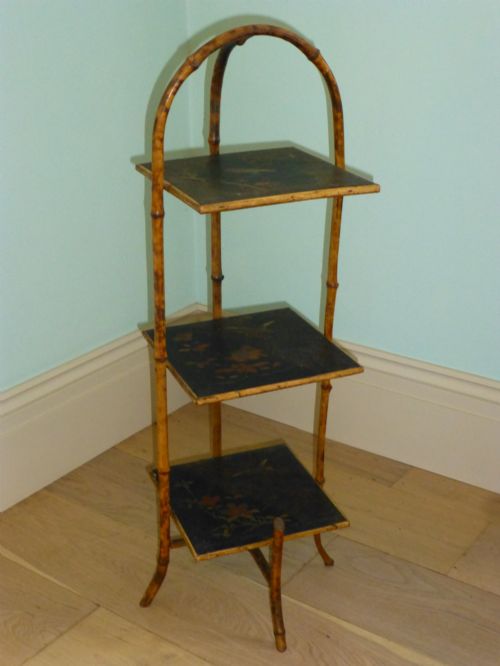
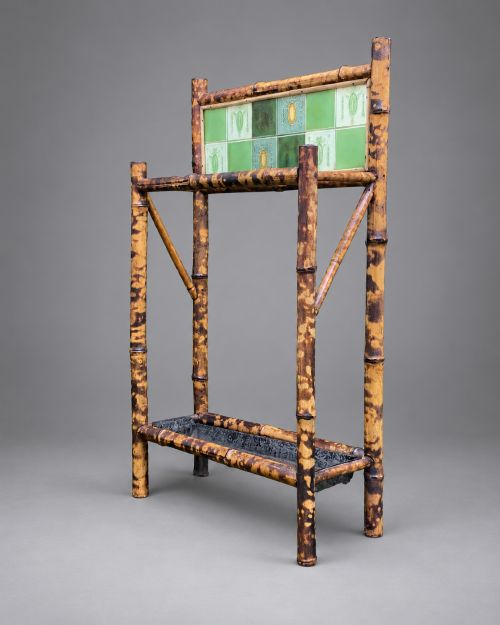
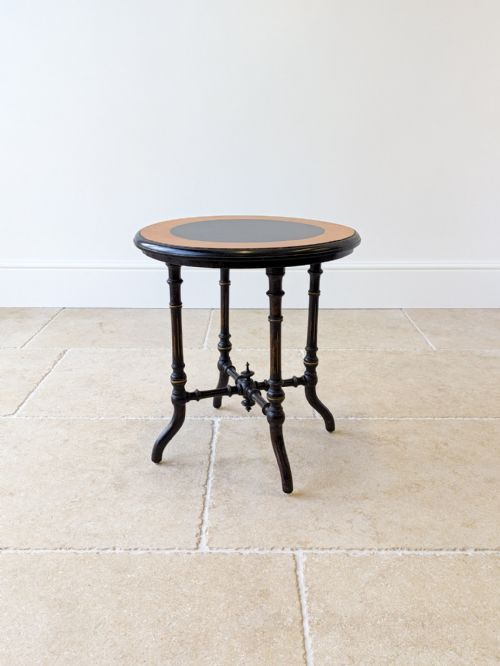
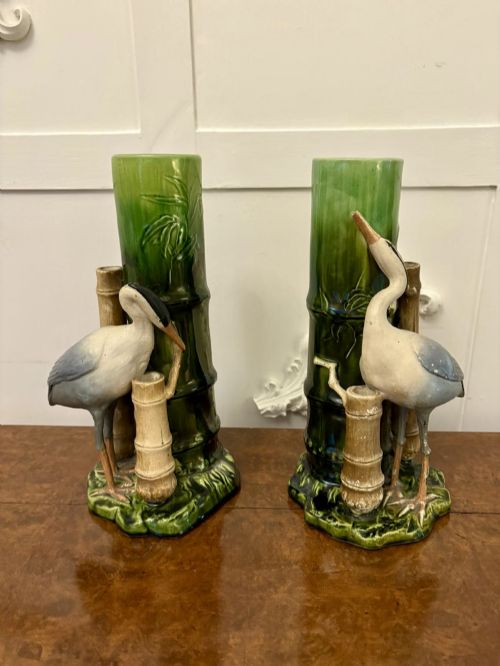
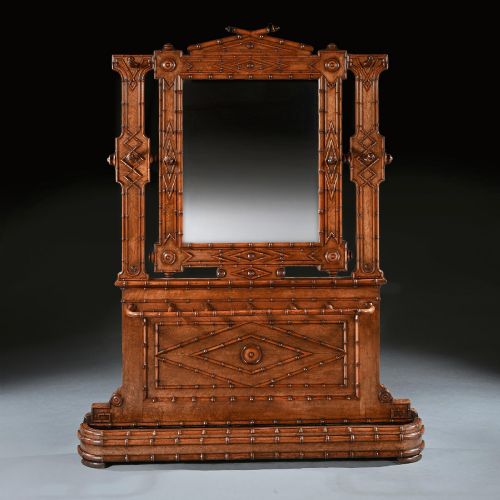
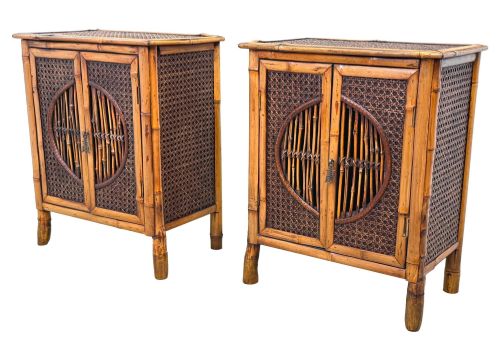
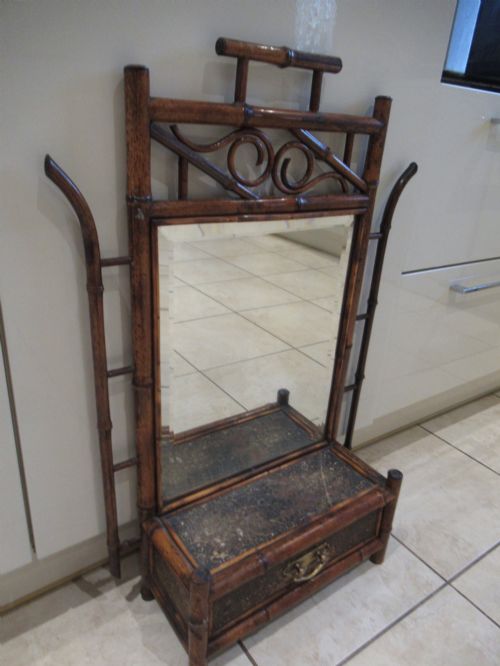
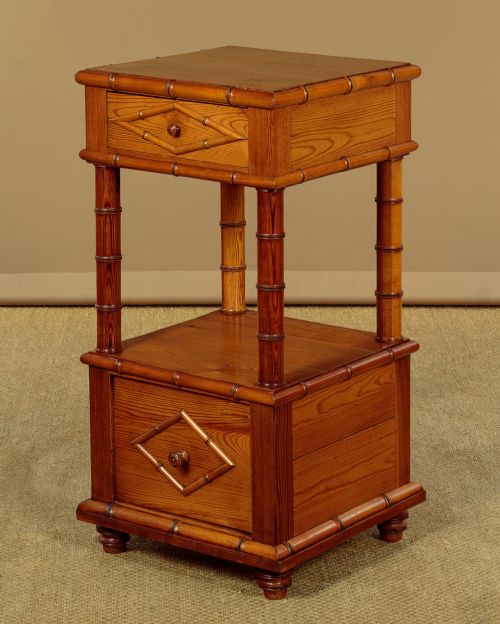
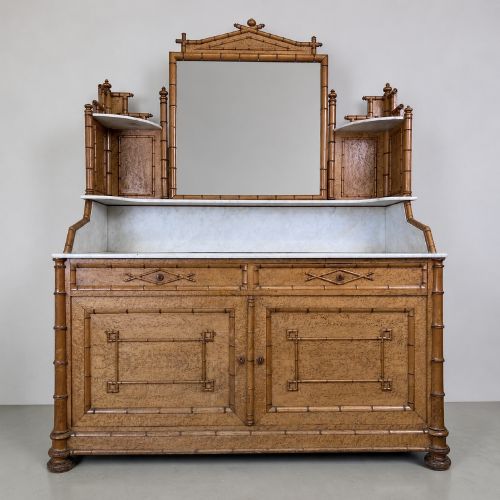
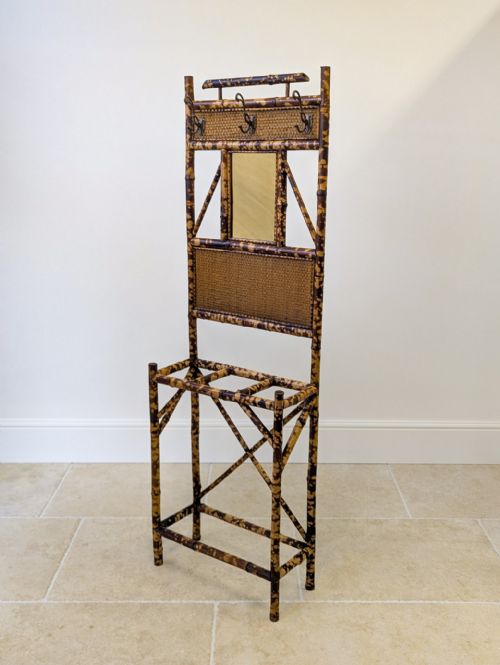
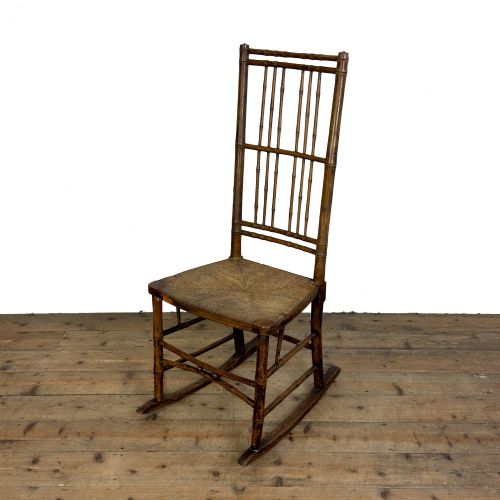
Aesthetic movement bamboo furniture captures the late nineteenth-century fascination with exotic forms, with side tables, occasional tables and hall stands forming the core of the items seen here. These pieces range from authentic natural cane frames to turned and painted hardwood built to imitate the look.
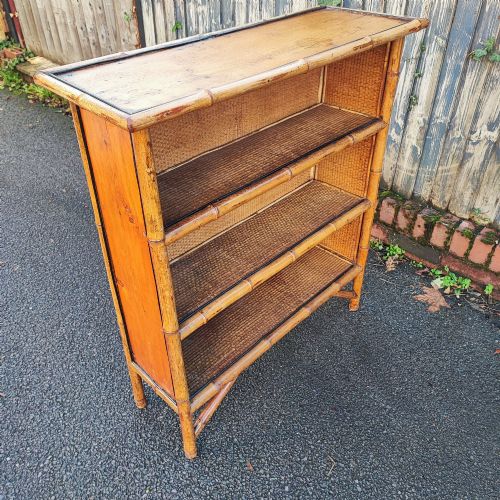
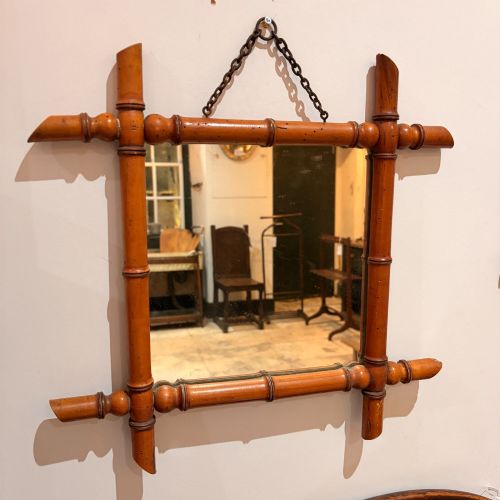
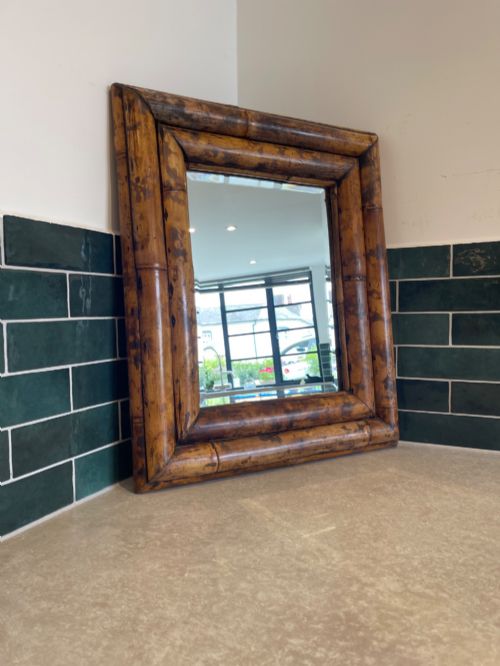
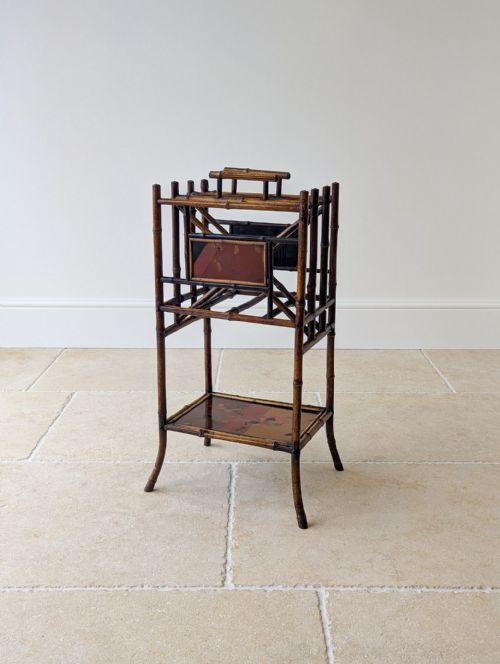
The material appears across multiple domestic forms, including wall mirrors, Canterbury magazine racks, display cabinets and bedside tables. Pieces frequently date from the Victorian era, specifically around eighteen ninety, alongside later examples from the early twentieth century.
Makers and designers of the period blended British domestic utility with Eastern motifs, producing items suited for drawing rooms, hallways and bedrooms. Buyers encounter both light natural cane structures and heavier painted surfaces incorporating lacquer, glass, metal and brass.
Materials and construction
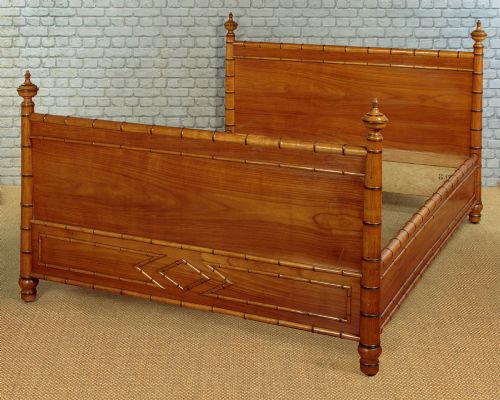
Construction relies upon flexible natural bamboo stems secured with pins and bindings, or alternatively turned wood shaped to resemble natural nodes and joints. Workshops also utilised birch and maple, applying finishes such as bird's-eye maple graining or ebonising to achieve the desired aesthetic look.
Surface decoration frequently includes applied lacquer, decoupage, leather inserts, and painted Chinoiserie panels. Brass and metal hardware, alongside mirrored glass and woven reed or cane panels, complete the construction of cabinets, stands and tables.
Aesthetic Movement Bamboo Retail Price Guide 2026
Typical asking prices for aesthetic movement bamboo among the pieces listed under this phrase on Sellingantiques today, from the lower quarter to the upper quarter. They describe what is for sale here now, not the wider market.
A cuff bangle bracelet made of bamboo with studded silver and gold birds proves that the Victorian obsession with this material extended to personal adornment.
Judgement of quality
Quality rests upon the structural integrity of the cane or faux bamboo frame and the precision of the joints. Superior examples maintain rigidity without looseness in the stems, whereas lesser items suffer from wobbling or unstable legs.
The refinement of surface decoration distinguishes finer pieces, such as crisp lacquer work, intact decoupage and well-executed japanning. Finer cabinets and tables also demonstrate careful integration of secondary materials like leather, brass and glass.
Liberty and Co·Leonard Wyburd·Bretby
The Aesthetic Movement Bamboo Glossary
- Canterbury
- A low multi-section rack designed for holding sheet music, books or newspapers. Victorian examples in this category utilise bamboo or faux bamboo frames.
- Japonisme
- The influence of Japanese art and design on Western decorative arts during the late nineteenth century. It manifests in these pieces through asymmetric arrangements and Oriental motifs.
- Decoupage
- The art of decorating a surface by applying cut-out paper illustrations and varnishing them over. Several tables on this page employ this technique for tabletop panels.
- Ebonised
- Wood finished with a dark stain or black paint to resemble expensive ebony. It served as a popular ground for gilt and painted ornamentation.
Aesthetic Movement Bamboo: Frequently Asked Questions
How do I care for bamboo furniture?
Keep these pieces away from direct heat sources and extreme moisture to prevent the natural cane from drying out or splitting over time. Dust gently with a dry cloth and avoid harsh chemical polishes.
Conditioning the wood or bamboo lightly with appropriate oils helps preserve the finish. Ensure joints remain stable and avoid placing excessive weight on fragile shelves.
Is faux bamboo less authentic than real bamboo?
Faux bamboo is a period-correct technique rather than a modern reproduction. Makers used turned hardwoods to achieve greater structural strength while retaining the fashionable Orientalist style.
Both real cane and faux bamboo variants date from the same Victorian and Edwardian periods. Collectors value both types depending on the form and quality of the specific piece.
Where should I place a bamboo hall stand?
A bamboo hall stand functions well in an entrance hallway for holding umbrellas, walking sticks and coats. Their light visual weight makes them suitable for smaller hallways where heavy oak furniture would feel imposing.
Ensure the room humidity remains stable to protect any mirrored glass or applied lacquer work. Avoid overloading the structural hooks with excessively heavy garments.
How can I date an aesthetic bamboo piece?
Dating relies upon stylistic markers, construction methods, and materials associated with the late nineteenth century. Pieces often feature Aesthetic Movement or Japonisme motifs popular during the Victorian era around eighteen ninety.
Later examples extend into the early twentieth century, occasionally displaying Edwardian influences. Look at the hardware, mirror bevelling and secondary timbers for additional chronological clues.