


Adjustable Wood Shelves
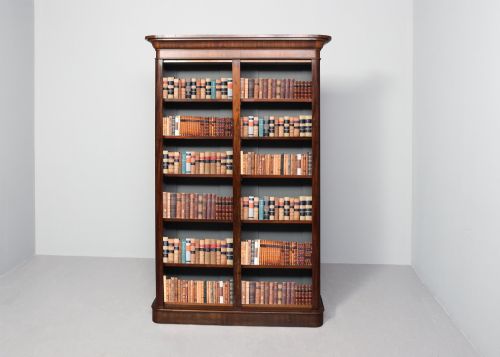
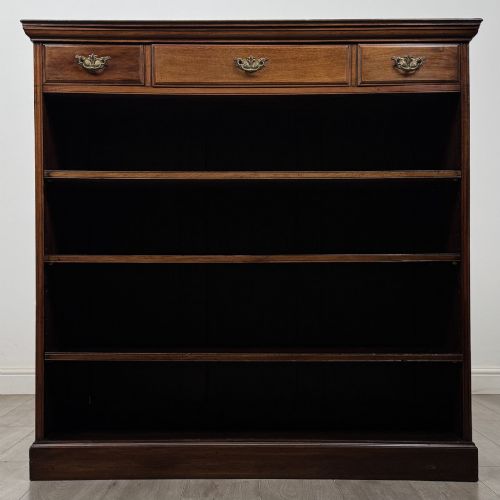
Adjustable wood shelves offer flexible storage, appearing mostly within open bookcases and cabinets across the nineteenth and twentieth centuries.
Adjustable Wood Shelves
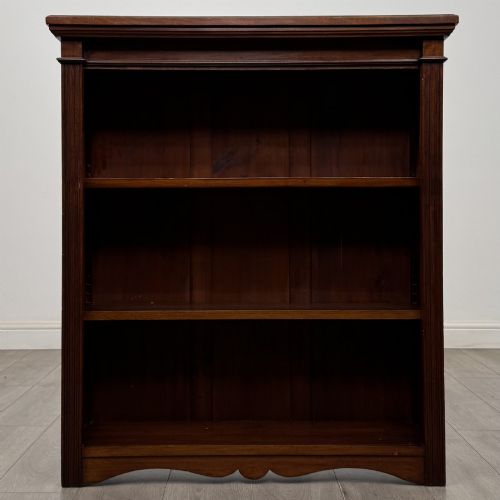
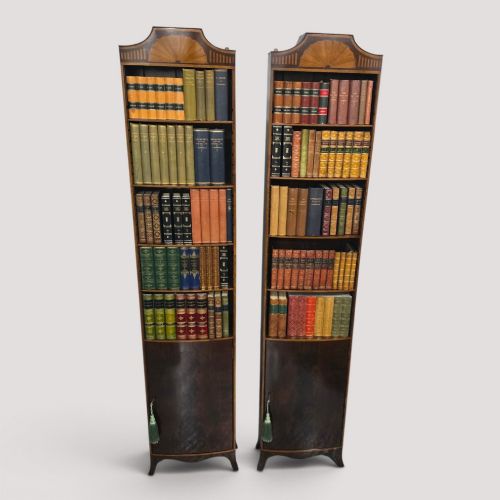
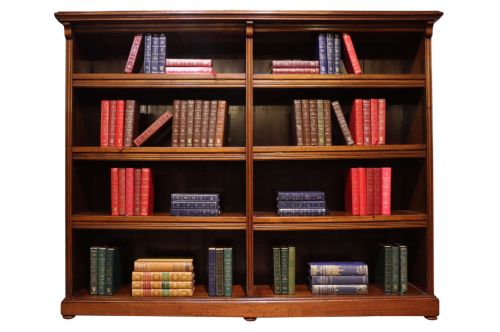
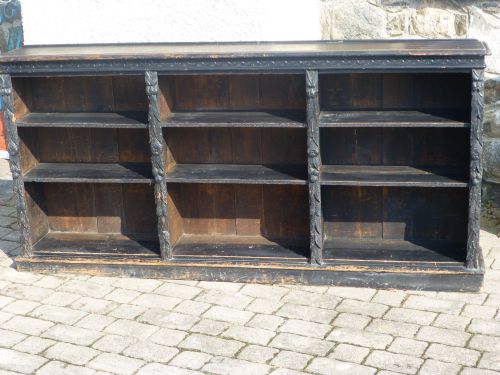
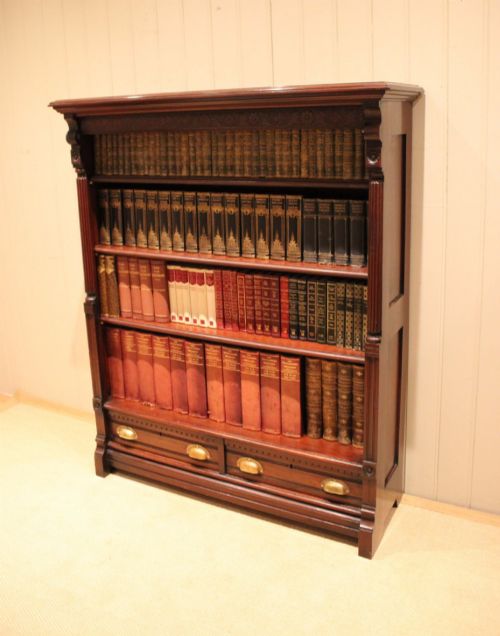
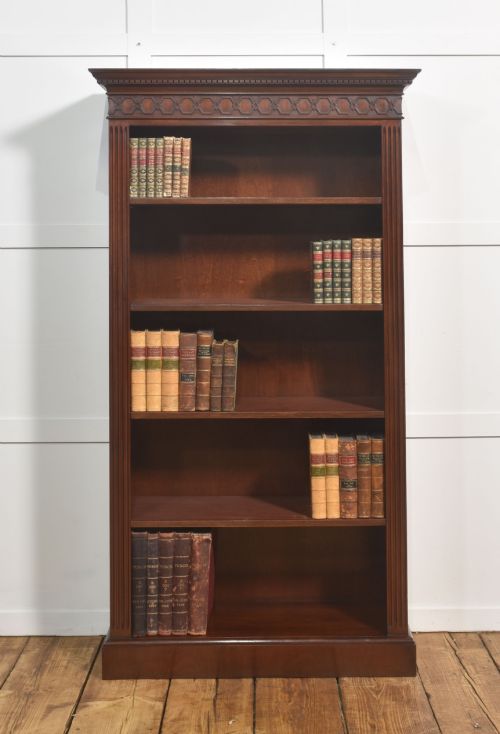
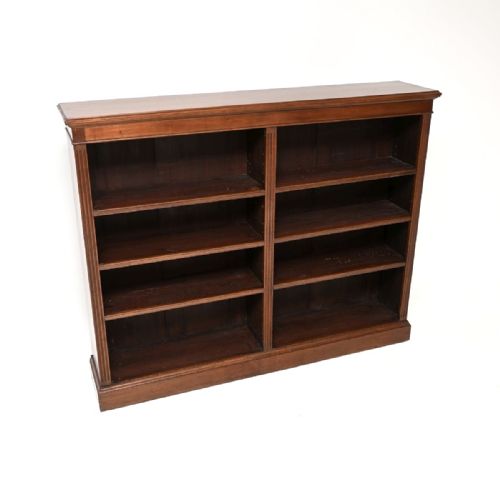
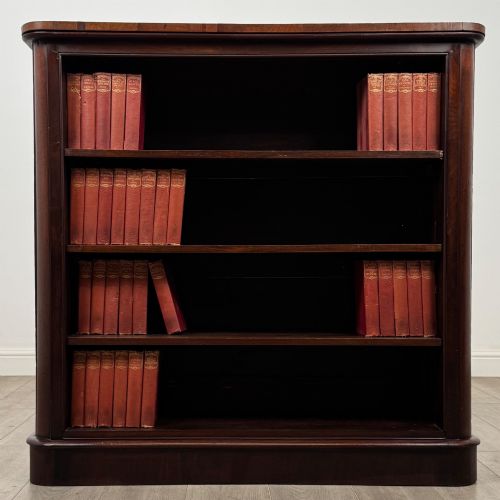
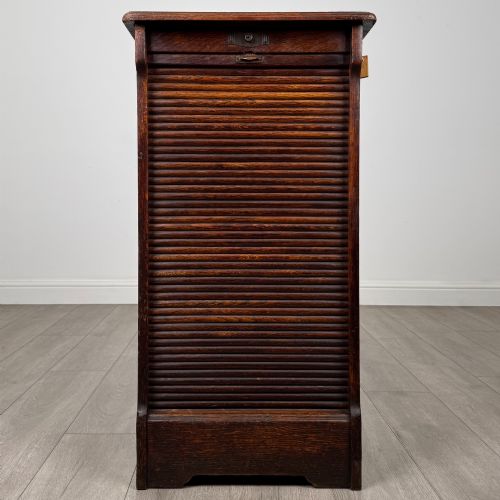
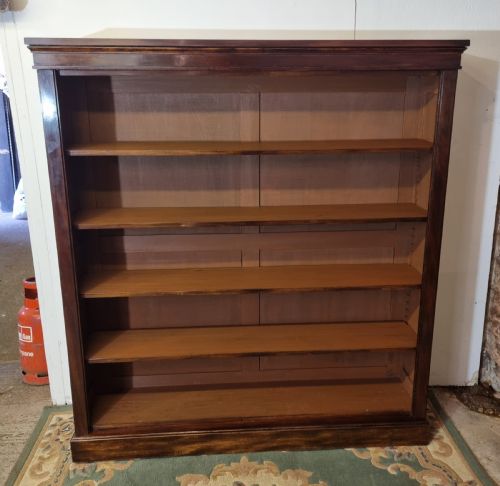
Adjustable wood shelves are primarily encountered within open bookcases, pier cabinets, and tambour units dating from the Victorian and Edwardian eras. Buyers seeking adjustable wood shelves typically find tall mahogany, walnut, or oak bookcases designed to hold varying volumes of books.
The selection ranges from large library bookcases down to small dwarf bookcases and low open units. Many examples hail from the nineteenth century, spanning periods from Regency through to late Victorian and Edwardian production.
Assessing quality in construction and timber
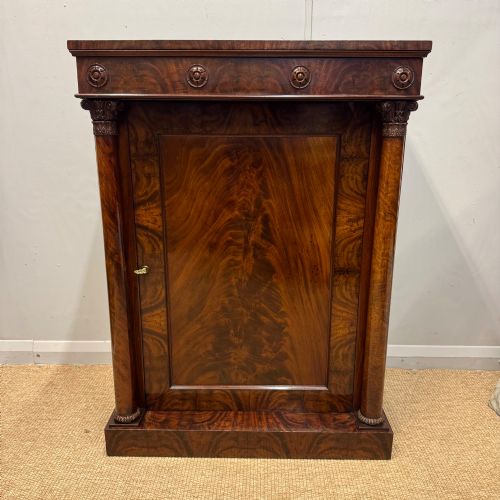
Quality rests upon the selection of timber figures, such as flame mahogany or figured walnut, alongside the crispness of carved details like green man motifs or architectural mouldings. Finer pieces display careful book-matching in veneers and robust internal mechanisms for shelf support.
Proportion and scale dictate the visual weight of each unit, with larger breakfront bookcases and matched pairs representing more ambitious workshop output compared to simpler softwood or pine variants.
Adjustable Wood Shelves Retail Price Guide 2026
Typical asking prices for adjustable wood shelves among the pieces listed under this phrase on Sellingantiques today, from the lower quarter to the upper quarter. They describe what is for sale here now, not the wider market.
Listings feature items from the 1860s, 1880s, 1890s, and early twentieth century, spanning Victorian, Edwardian, and Regency styles.
Waring and Gillows
The Adjustable Wood Shelves Glossary
- Dwarf bookcase
- A low open bookcase, typically standing below chest height, designed to fit beneath windows or in smaller rooms.
- Breakfront
- A cabinet or bookcase whose central section projects forward from the flanking sections, creating architectural depth.
- Pier cabinet
- A narrow cabinet designed to stand against the wall space between windows, often featuring adjustable shelving.
- Tambour
- A flexible sliding shutter formed of narrow strips of wood glued to canvas, seen on specialised storage cabinets.
- Rosewood veneer
- A decorative thin layer of dense, richly figured exotic wood applied to a secondary timber base.
Adjustable Wood Shelves: Frequently Asked Questions
How do adjustable wooden shelves work?
Most period bookcases use wooden support strips, brass studs, or ratchets inset into the interior sides. These allow the shelves to be lifted and repositioned at different heights.
This adaptability accommodates books of varying sizes, from small pocket volumes to large folios.
What woods are commonly used?
Mahogany, oak, and walnut are the predominant timbers found in these pieces, often selected for their strength and grain pattern. Softer woods like pine are also utilised, sometimes concealed beneath veneers.
More decorative examples incorporate satinwood inlay or rosewood veneer surfaces.
Are these pieces strictly Victorian?
While a significant portion dates from the Victorian and Edwardian periods, production spans earlier Regency designs up to twentieth-century traditional pieces. Stylistic cues help distinguish between eras.
For instance, heavy carving often points to the Victorian period, whilst lighter satinwood details suggest Edwardian work.
How do I care for wood shelving?
Keep the wood away from direct heat sources and strong sunlight to prevent the timber and veneers from drying out or warping. Regular dusting with a dry, soft cloth helps maintain the finish.
Applying appropriate wax polish occasionally preserves the lustre of mahogany and walnut surfaces.