

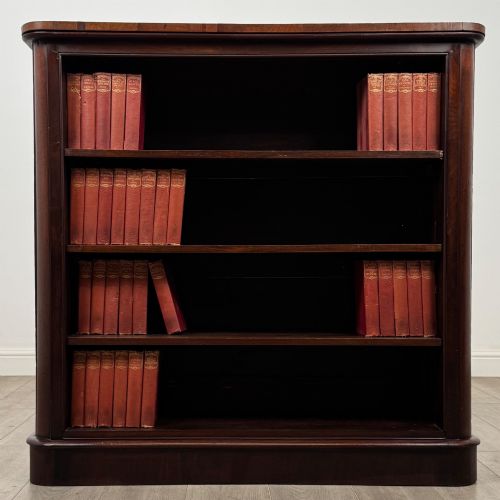
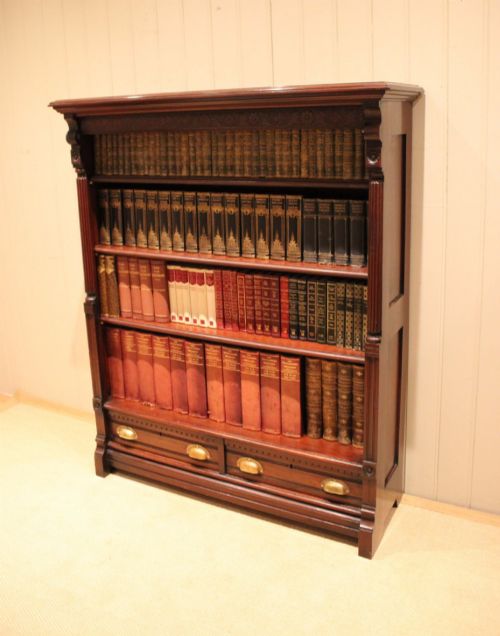
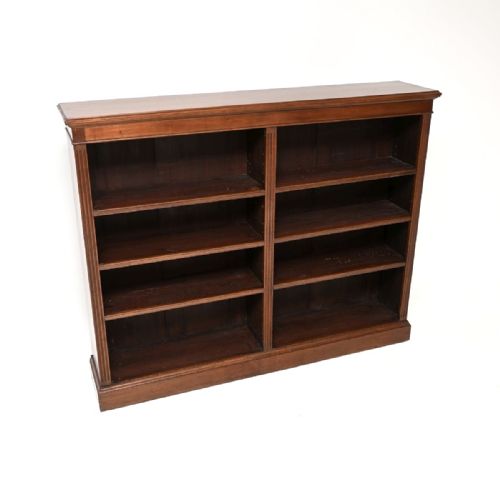
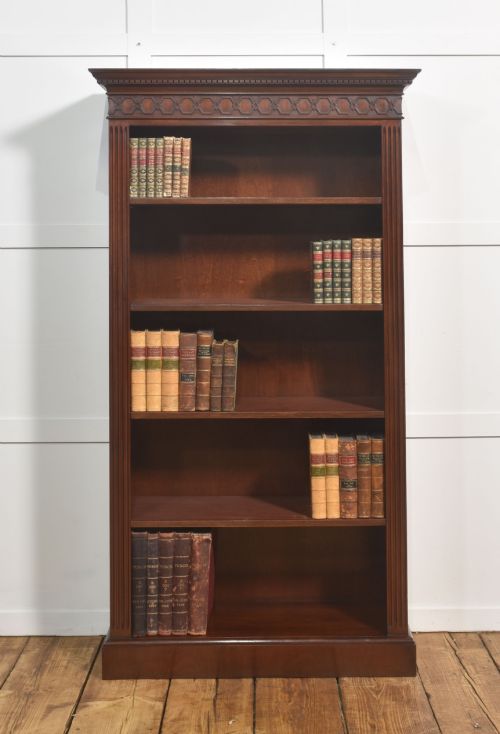


Adjustable Wood Bookshelf
An adjustable wood bookshelf gives any room practical character, offering adaptable shelving tailored to your collection through centuries of fine cabinet-making traditions.
Adjustable Wood Bookshelf
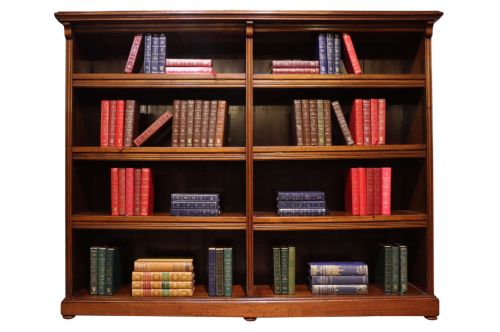
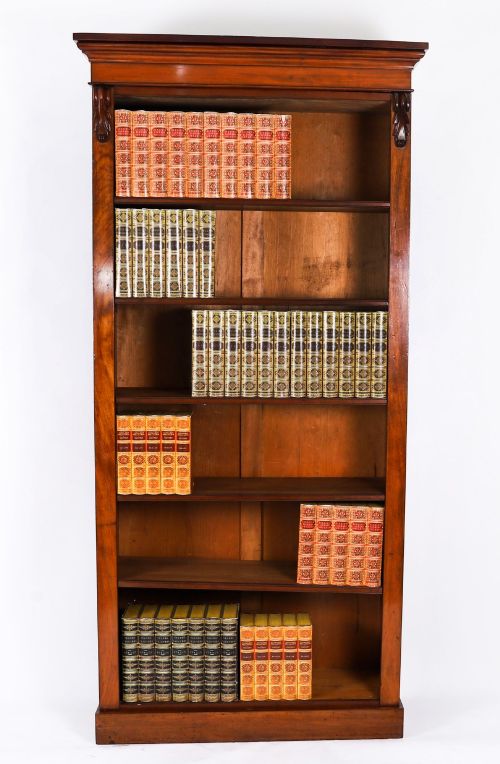
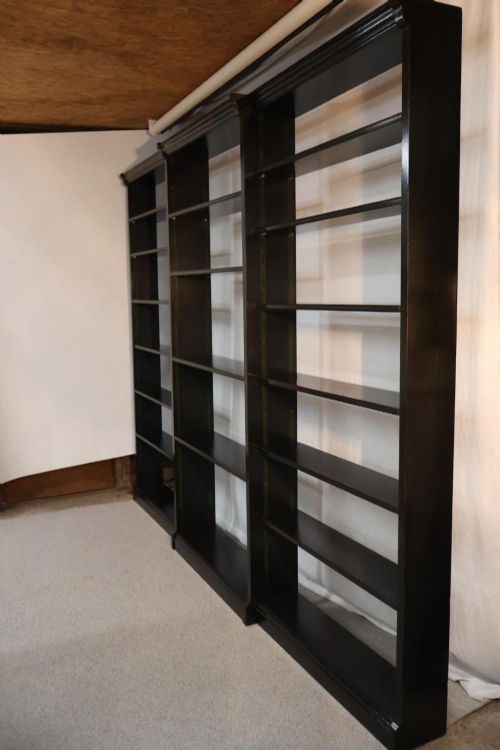
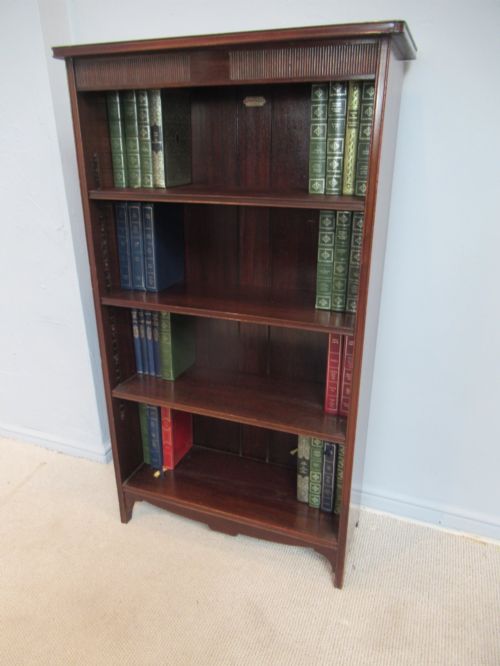
An adjustable wood bookshelf provides flexible open storage for libraries and studies, appearing across Victorian, Edwardian, and Regency periods in various timber forms. These pieces serve practical book-housing needs while displaying the distinct proportions and mouldings of their respective eras.
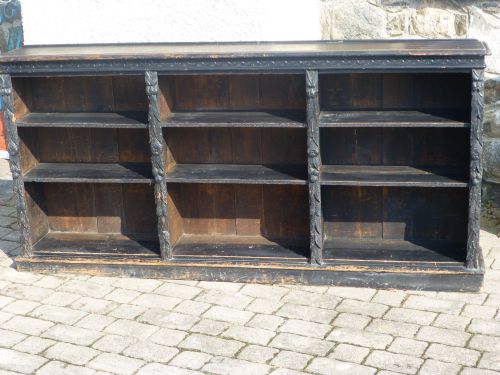
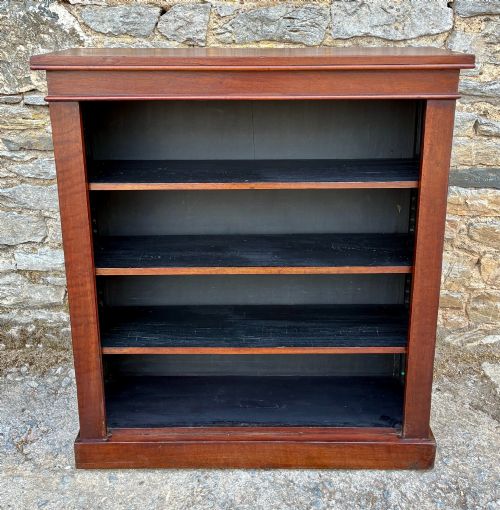
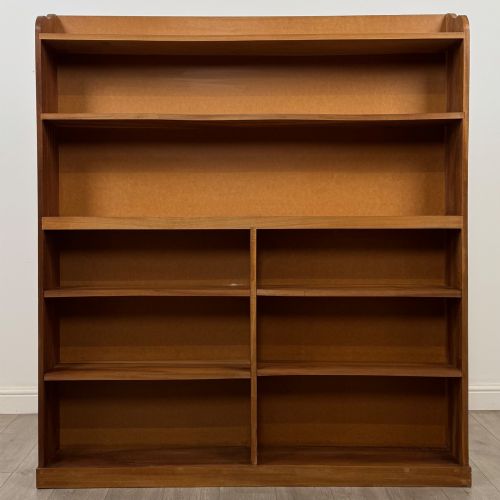
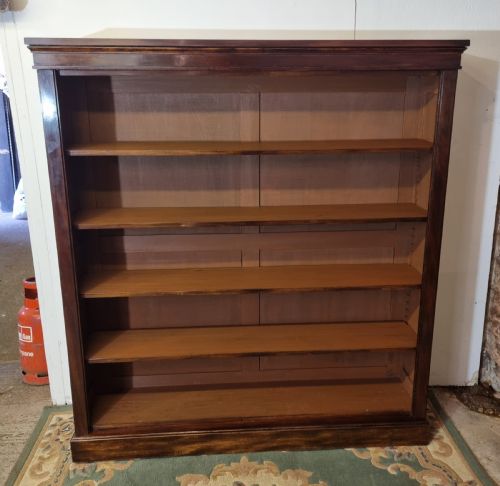
Most examples found here take the form of open bookcases and low dwarf bookcases featuring movable internal shelves. Buyers frequently encounter mahogany and oak constructions from the nineteenth century, ranging from compact small units to large breakfront library bookcases.
How they were made
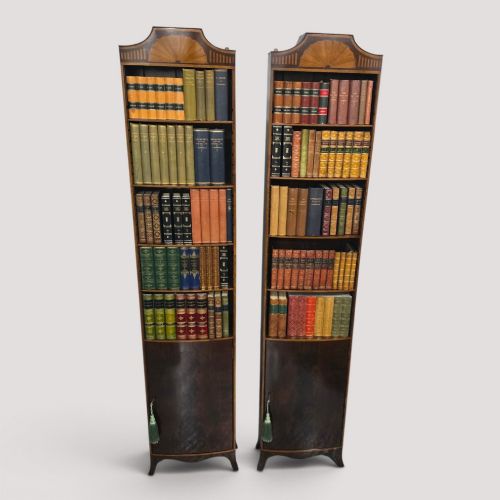
Cabinet-makers built these bookcases using solid timbers such as mahogany, oak, and walnut, often applying decorative veneers like rosewood or satinwood inlay. Workshops utilised traditional joinery methods to construct sturdy open frames capable of supporting heavy volumes.
Internal shelf support systems rely on wooden ratchets, brass studs, or notched uprights, allowing the shelves to move freely to accommodate books of different heights. Ebonised finishes, carved details, and patinated marble tops occasionally complement the primary timber structure.
Adjustable Wood Bookshelf Retail Price Guide 2026
Typical asking prices for adjustable wood bookshelf among the pieces listed under this phrase on Sellingantiques today, from the lower quarter to the upper quarter. They describe what is for sale here now, not the wider market.
Period examples span from the Regency era through the Victorian and Edwardian periods up to the early twentieth century.
What varies in quality
The choice of timber and the execution of carved details distinguish standard production pieces from finer cabinet-making. Superior examples feature well-figured mahogany or walnut grains and crisp mouldings that retain their definition.
The refinement of the adjustable mechanism itself indicates the standard of manufacture. Robust brass fittings and smoothly operating shelf supports demonstrate deliberate design and careful assembly by the maker.
Waring and Gillows
The Adjustable Wood Bookshelf Glossary
- Dwarf bookcase
- A low open bookcase, typically standing below window height, designed for easy access to frequently used volumes.
- Breakfront
- A cabinet design where the central section projects forward from the flanking wings, adding architectural depth to the piece.
- Ebonised
- Wood treated with a dark finish to imitate expensive ebony, a technique popular during the Victorian period for dramatic contrast.
- Satinwood
- A pale, lustrous timber utilised for decorative inlay work and contrasting borders on fine cabinet furniture.
- Ratchet support
- A mechanical shelving system using notched wooden bars to hold adjustable shelves securely at various heights.
Adjustable Wood Bookshelf: Frequently Asked Questions
How do adjustable shelves work in antique bookcases?
Antique bookcases typically use wooden ratchets, brass pegs, or vertical slots cut into the interior sides to support the shelves at different intervals. These systems let you reposition shelves easily by hand to fit varying book sizes without damaging the timber.
Over decades of use, these mechanisms have proven remarkably durable. Regular adjustment remains straightforward as long as the supporting pegs or ratchets match the original interior tracks.
What is a dwarf open bookcase?
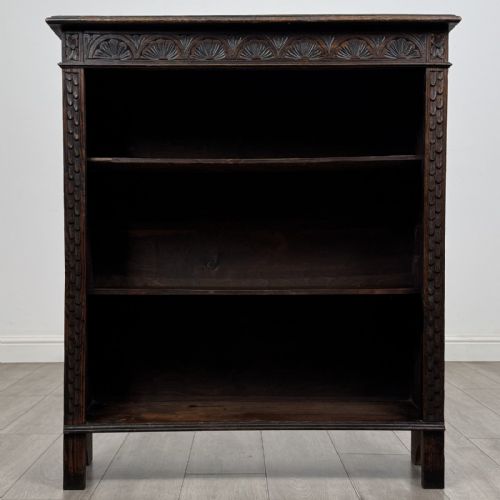
A dwarf open bookcase is a low-standing shelving unit, usually built below table height, designed for domestic libraries and sitting rooms. Their modest stature allows the top surface to function as a display area for decorative objects.
These pieces provide accessible storage without dominating the wall space of smaller rooms. Victorian and Edwardian examples often feature carved details or contrasting wood veneers.
How do I care for a mahogany bookcase?
Maintenance involves dusting with a soft cloth and occasionally applying natural wax to nourish the timber grain. Keeping the bookcase away from direct sunlight and strong heat sources protects the polish and prevents wood movement.
Avoid liquid polishes containing silicones, which can build up on antique surfaces over time. Proper humidity control in the room ensures the structure and joints remain stable.
How can I tell a Victorian bookcase from an Edwardian one?
Victorian bookcases generally display heavier proportions, darker timber tones, and more ornate carved elements such as foliate motifs or ebonised finishes. Edwardian pieces often exhibit lighter construction, simpler lines, and influences from earlier revival styles.
Examining the interior construction, backboards, and shelf adjustment hardware also helps clarify the period of manufacture. Cabinet-making techniques shifted gradually from hand-cut joints toward more mechanised production by the early twentieth century.