



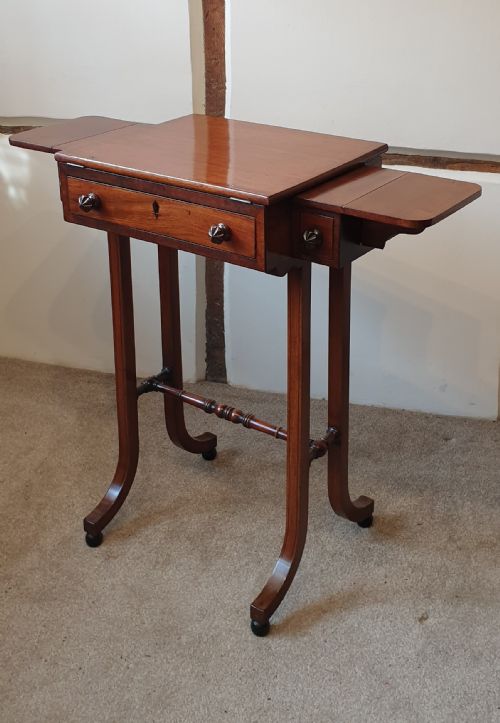
Adjustable Slope Desk
An adjustable slope desk provides a versatile writing and reading surface, bringing period timber and brass adjustment mechanisms into daily use.
Adjustable Slope Desk
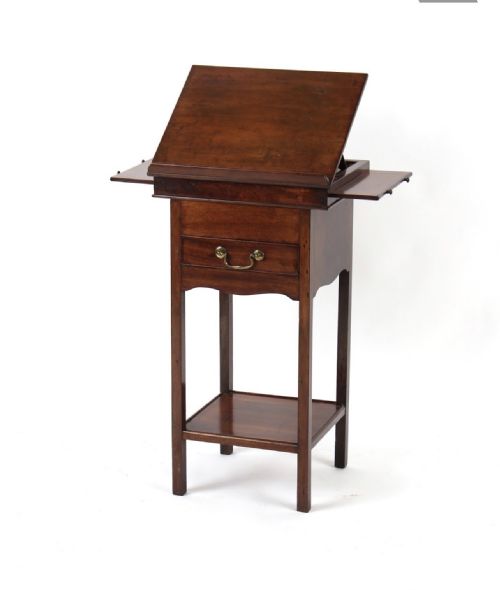
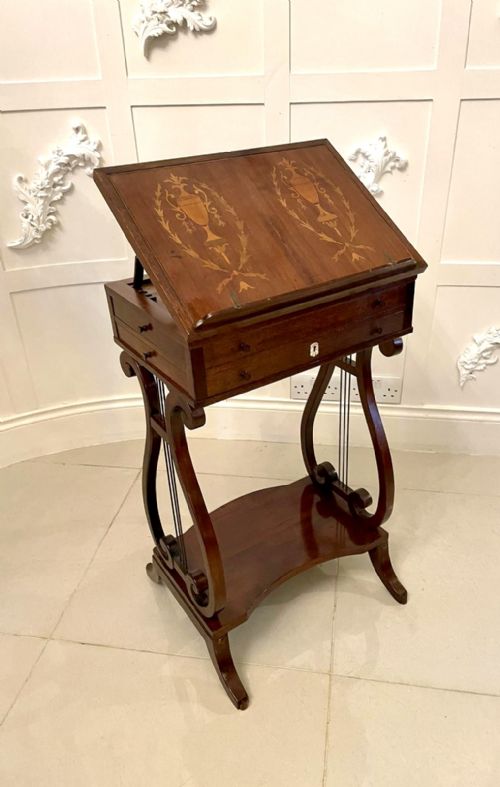
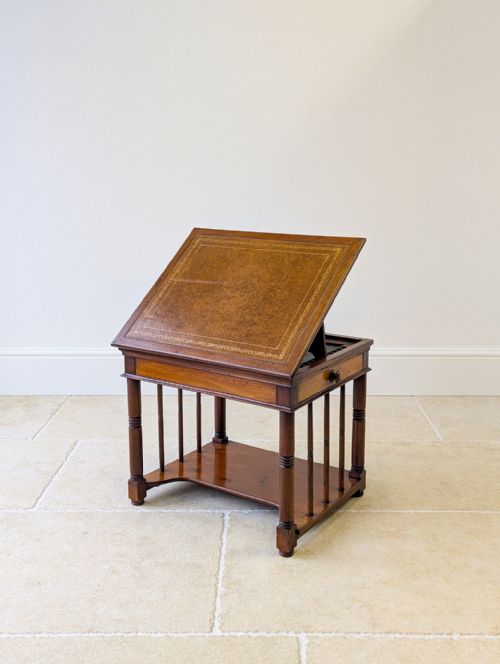
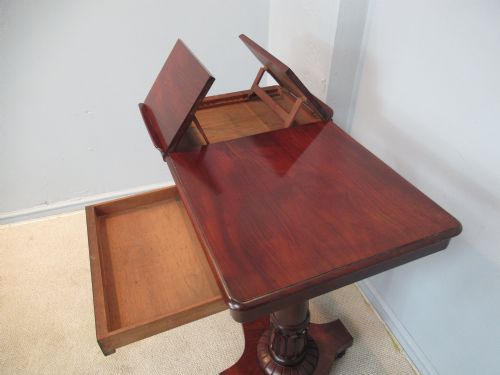
An adjustable slope desk brings together writing surfaces and reading stands, appearing in forms such as library tables, campaign table tops, and architect's desks. These pieces span the 18th century, Georgian, Regency, William IV, Victorian, and Edwardian periods.
The versions most commonly met on this page are mahogany and rosewood reading tables and architect's tables from the 19th century. They combine tilting or elevating tops with compartments, writing surfaces, and occasional table forms.
Makers and designers of the period adapted these forms for specific tasks, incorporating leather writing surfaces and velvet inserts alongside brass ratchets and supports. The resulting pieces function equally well as reading stands and writing tables.
How they were made
Cabinet makers utilised dense hardwoods such as mahogany and rosewood, frequently incorporating satinwood, oak, and boxwood for contrasting stringing and inlay. Timber selection provided the structural stability required for moving tops and folding mechanisms.
Brass fittings and ratchets governed the adjustable slopes and reading stands, fixed securely into timber frames. Inset surfaces of leather and velvet provided durable writing areas atop the wooden structures.
Adjustable Slope Desk Retail Price Guide 2026
Typical asking prices for adjustable slope desk among the pieces listed under this phrase on Sellingantiques today, from the lower quarter to the upper quarter. They describe what is for sale here now, not the wider market.
Listings feature mahogany and rosewood most frequently, alongside oak and satinwood across the 18th, 19th, and early 20th centuries.
What varies in quality
The sophistication of the internal adjustment mechanism separates standard examples from finer pieces, alongside the precision of the brass ratchets and hinges. Cabinet work that conceals moving parts smoothly demonstrates higher workshop skill.
The choice of timber grain and the refinement of secondary woods like satinwood and boxwood define the upper tier of these pieces. Original leather or velvet surfaces and well-figured mahogany veneers contribute significantly to the overall integrity.
GILLOWS of LANCASTER
The Adjustable Slope Desk Glossary
- Campaign
- Portable furniture designed for travel, often featuring brass corners and folding stands. These pieces were built for easy dismantling and transport.
- Architect's table
- A specialised desk featuring an adjustable sloping top designed for drawing and drafting plans. They frequently include pull-out ledges and compartmented interiors.
- Reading table
- A table equipped with a rising or tilting book rest, often used in libraries and sitting rooms. They appear across the Georgian, Regency, and Victorian periods.
- Stringing
- Thin lines of contrasting timber inlaid into the surface of a piece for decoration. Boxwood and satinwood were commonly used for this purpose on mahogany furniture.
- Ratchet
- A notched metal mechanism that engages with a catch to hold a slope or reading stand at various angles. Brass was the preferred material for these moving parts.
Adjustable Slope Desk: Frequently Asked Questions
What is an adjustable slope desk?
An adjustable slope desk is a piece of furniture featuring a rising or tilting surface designed for writing, reading, or drawing. These tables often incorporate brass ratchets to alter the angle of the top.
They appear in various forms, including architect's tables, library reading tables, and campaign stands, spanning several centuries of British cabinet making.
How were these tables used?
These pieces served multiple functions in period interiors, acting as writing desks, reading stands, and drawing tables. The adjustable top allowed users to set books or papers at a comfortable viewing angle.
Many designs included compartmented interiors, pull-out ledges, and dedicated spaces for writing materials, making them central items in libraries and studies.
Which timbers are most common?
Mahogany is the primary timber found in these desks, used extensively throughout the Georgian, Regency, and Victorian periods. Rosewood also appears frequently in 19th-century examples.
Additional timbers such as oak, satinwood, and boxwood occur in structural elements and decorative stringing or inlay work.
How do I identify a Regency piece?
Regency pieces often display classical restraint, clean lines, and dark timbers like mahogany and rosewood. Brass mounts and ratchets are characteristic of the period's functional hardware.
Comparing the construction methods, secondary woods, and mechanism types against known dated examples helps establish the period of manufacture.