
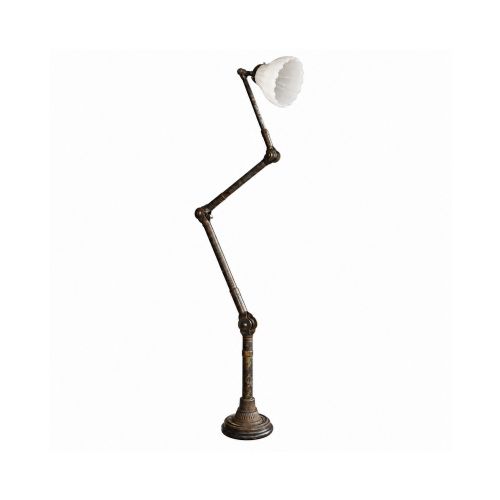


Adjustable Reading Glass
An adjustable reading glass or lamp offers precise directional light and magnification, combining practical utility with period character for the study or desk.
Adjustable Reading Glass
When you search for an adjustable reading glass, you are looking at items designed to aid close work and reading through flexible arms, pivoting lenses, and adjustable stands. The pieces available span desk lamps, floor lamps, table lamps, and specific magnifying glasses that date from the late nineteenth century through to the art deco period.
You are most likely to meet brass desk lamps and pivoting magnifying lenses from the Edwardian era, alongside chrome and bronze variants from the 1920s and 1930s. These objects served functional roles in offices, libraries, and studies, which explains their robust construction and mechanical joints.
The materials range from cast iron and steel to polished brass and bronze, frequently paired with glass elements such as cranberry glass shades or bullseye lenses. Each piece demonstrates how makers adapted illumination and magnification for the Victorian and early twentieth-century reader.
Materials and construction
Makers utilised durable metals such as brass, bronze, cast iron, and chrome to build rigid frames that could support pivoting joints and articulated arms. These metals were cast, spun, or forged to create heavy bases and flexible stems that held their position during use.
Glass components, including clear lenses, bullseye magnifiers, and coloured shades in cranberry or blue hues, were integrated into metal mounts via collars and set screws. The assembly relies on mechanical ingenuity, using threaded joints, counterweights, and sliding mechanisms to achieve full adjustability.
Listings feature items spanning from the late Victorian period through the Edwardian era and into 1930s art deco designs.
Distinctions in quality
The distinction between standard utility items and finer examples rests on the complexity of the mechanical action and the integrity of the original materials. Superior pieces employ heavy cast bases, substantial gauge brass or bronze, and smooth pivoting joints that hold tension without slipping.
Artistic design choices, such as shell-shaped bases, pirouette frames, or specific coloured glass shades, elevate certain items beyond basic office equipment. Maker attribution and the retention of original surface patination further separate standard production items from distinguished specimens.
Dugdill·Tiffany Studios NYC
The Adjustable Reading Glass Glossary
- Bullseye lens
- A thick, convex glass lens designed to concentrate light or magnify text. It is typically mounted in a pivoting brass or bronze ring.
- Swan neck
- A curved, flexible, or rigid metal tube resembling a swan's neck, used on desk lamps to direct the light source precisely.
- Cranberry glass
- A rich pinkish-red glass created by adding gold chloride to the molten batch. It is frequently seen on Edwardian lamp shades.
- Counterweight
- A heavy mass attached to a lamp arm or stand to balance the weight of the shade or lens and maintain position.
- Articulated arm
- A segmented metal arm connected by joints that can be angled and locked into various positions for reading.
Adjustable Reading Glass: Frequently Asked Questions
How do I adjust the height?
Most pieces utilise sliding metal stems, counterweights, or pivoting joints secured with thumbscrews to alter the height and angle.
Loosening the adjustment mechanism allows you to reposition the arm or lens before tightening it to hold the desired posture.
Are these lamps safe to use?
Original nineteenth and early twentieth-century wiring often requires professional rewiring to meet modern safety standards before regular daily use.
Consult a qualified electrician to inspect the internal cord and bulb holder while preserving the exterior metal components.
How do I clean brass parts?
Dust the metal gently with a soft dry cloth to remove surface particles without disturbing the accumulated historic patination.
Avoid abrasive chemical polishes that strip away the aged finish characteristic of antique bronze and brass.
What period do these come from?
The pieces span the late Victorian era, the Edwardian period, and the 1920s and 1930s art deco movements.
Stylistic cues like heavy cast iron bases or chrome finishes help date each specific desk accessory or lamp.