



Adjustable Occasional Table
An adjustable occasional table brings mechanical ingenuity into domestic spaces, offering versatile heights and surfaces for reading, display, or writing.
Adjustable Occasional Table
An adjustable occasional table combines a compact footprint with mechanical height or surface movement, spanning forms from reading stands to display tables. These pieces emerge across Georgian, Regency, and Victorian periods, reflecting shifting domestic habits.
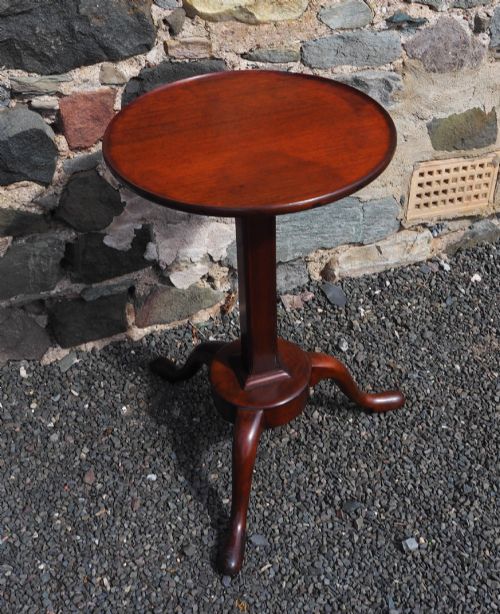
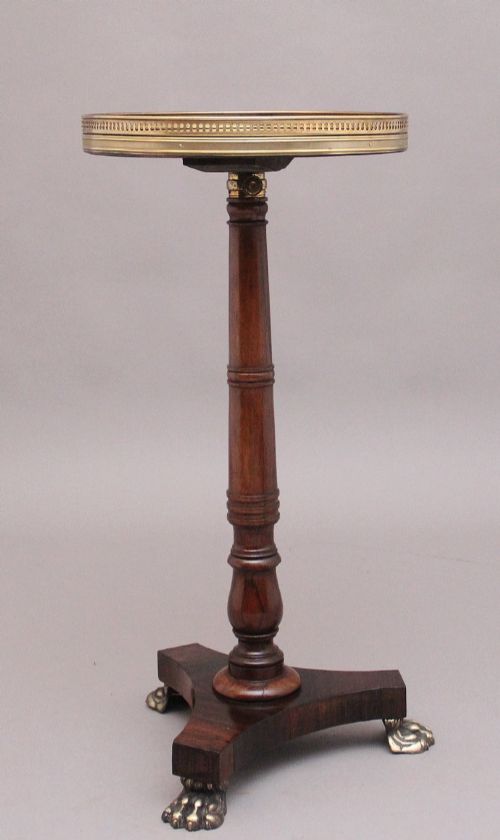
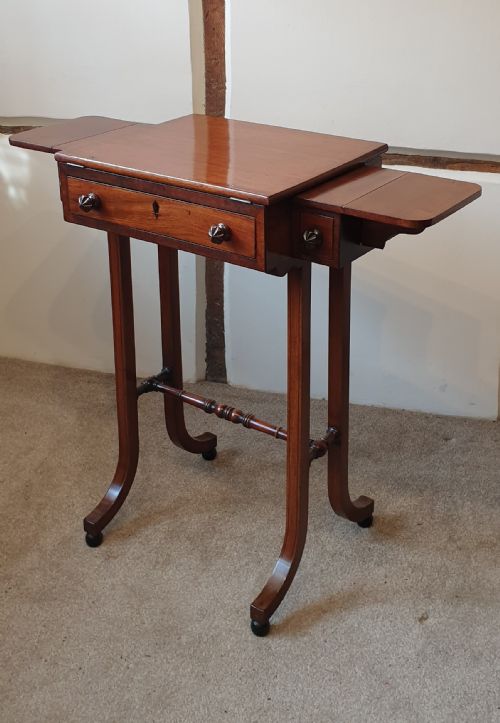
The most common iterations on this page are mahogany reading tables and rosewood occasional tables featuring telescopic columns or cantilevered book rests. Examples range from early Georgian walnut candlestands to marine-themed mahogany designs and metamorphic Early Victorian forms.
How they were made
Cabinetmakers utilised dense timbers including mahogany, rosewood, and walnut for durable table tops and supporting columns. These woods provide the necessary strength for repetitive mechanical adjustment.
Brass mechanisms and cast iron components facilitate the telescopic movement, reading stand ratchets, and extending cantilevers. Metalwork integration requires precise fitting within the wooden framework to ensure smooth operation.
Adjustable Occasional Table Retail Price Guide 2026
Typical asking prices for adjustable occasional table among the pieces listed under this phrase on Sellingantiques today, from the lower quarter to the upper quarter. They describe what is for sale here now, not the wider market.
Listings span the eighteenth and nineteenth centuries, featuring mahogany, rosewood, walnut, brass, and cast iron.
What varies in quality
Quality rests in the seamless integration of the mechanical movement with the traditional cabinetmaker's joinery. Superior pieces conceal or elegantly integrate their brass screws, ratchets, and telescopic columns without disrupting the silhouette.
The choice of timber grain and the crispness of turned or carved details separate standard utility tables from exceptional examples. Finer tables exhibit carefully selected mahogany or figured walnut that maintains stability despite moving parts.
The Adjustable Occasional Table Glossary
- Telescopic
- A mechanism allowing a column or shaft to slide within another to alter height. This engineering enables smooth vertical adjustment on occasional tables.
- Cantilever
- A rigid structural member supported at one end only. It allows the table surface or reading rest to project outward over a chair or bed.
- Candlestand
- A small table designed specifically to hold a light source. Early examples often feature adjustable stems to direct illumination.
- Metamorphic
- Describing furniture that transforms from one form or function into another. These pieces conceal mechanical extensions or folding book rests within standard table designs.
Adjustable Occasional Table: Frequently Asked Questions
How were reading stands used?
Reading stands were positioned beside chairs or beds to hold books, folios, or documents at a comfortable viewing angle. The adjustable book rest reduced strain during extended periods of study or correspondence.
Many designs incorporate folding mechanisms so the surface can lie flat when the stand is not in use as a reading desk.
Which woods are most common?
Mahogany, rosewood, and walnut dominate these pieces due to their strength and rich grain patterns. Cabinetmakers relied on these dense hardwoods to support the internal brass and iron moving parts.
Oak and other secondary timbers sometimes appear in concealed framework beneath the primary show wood.
How do I identify a Victorian table?
Victorian examples often display heavier proportions, robust cast iron or brass mechanisms, and darker finishes on mahogany or walnut. The period embraced utilitarian innovation, resulting in complex metamorphic tables.
Stylistic cues draw heavily on earlier Georgian forms but incorporate more industrial hardware to achieve telescopic movement.