



Adjustable Hearth Guard
An adjustable hearth guard keeps the warmth where it belongs while keeping stray sparks off the rug.
Adjustable Hearth Guard
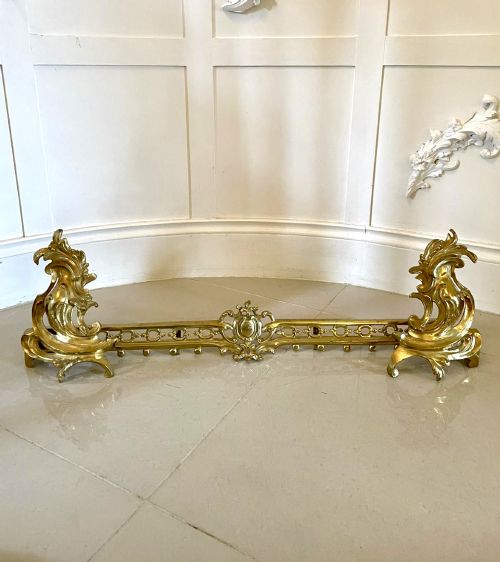
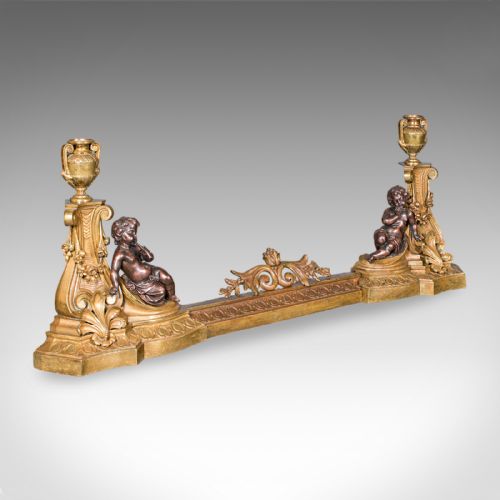
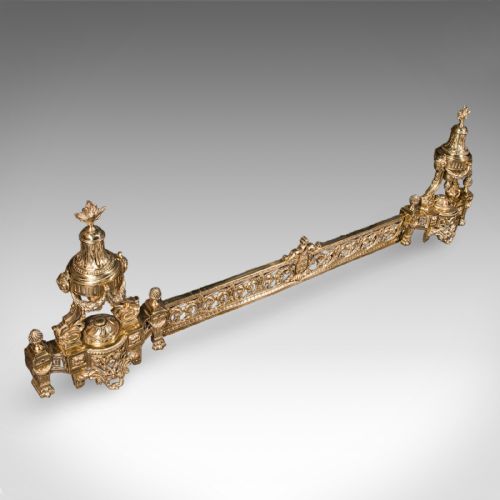
An adjustable hearth guard encompasses expanding metal curbs and extending brass fenders designed to fit varied fireplace openings across different periods.
Most examples found here date from the nineteenth century, including Victorian and Edwardian brass iterations alongside French Rococo and Louis XV style pieces.
Buyers also encounter related adjustable fire screens featuring embroidered panels, needlework, and etched glass set into mahogany or rosewood frames.
How they were made
Metalwork forms the backbone of these pieces, utilising cast and forged brass, bronze, gilt brass, and ormolu to create scrolling frames and expanding kerbs.
Cabinetmakers and metalworkers incorporated timber such as mahogany, rosewood, and solid walnut for upright screen frames and decorative surrounds.
Detailed embellishments rely on hand embroidery, needlework panels, poker work, and etched glass inserted into movable doors and screens.
Adjustable Hearth Guard Retail Price Guide 2026
Typical asking prices for adjustable hearth guard among the pieces listed under this phrase on Sellingantiques today, from the lower quarter to the upper quarter. They describe what is for sale here now, not the wider market.
Listings span the Georgian, Victorian, Edwardian, and Regency periods, featuring brass, bronze, mahogany, rosewood, and glass.
What varies in quality
The weight of the metal and the substance of the casting dictate the baseline quality of an extending fender, separating solid brass and bronze from lighter alternatives.
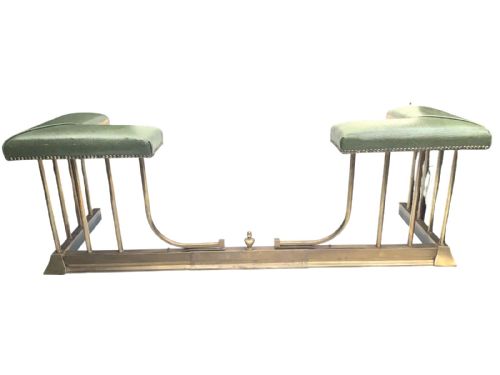
Design complexity marks the higher tiers, seen in French Rococo scrollwork, finely chased gilt bronze, and substantial club fender forms.
The integrity of the mechanism determines everyday utility, allowing extension pieces to slide smoothly without binding or losing alignment.
The Adjustable Hearth Guard Glossary
- Fender
- A low metal guard placed before a hearth to contain ash and embers. These items often incorporate telescoping sections to adjust width.
- Firescreen
- A standing panel placed in front of a fireplace to block radiant heat when the fire is unlit. Many versions include sliding or height-adjustable elements.
- Ormolu
- Gilded bronze applied to decorative metalwork and mounts. This technique provides a rich, gold-coloured finish on nineteenth-century pieces.
- Pole screen
- A vertical stand holding a movable panel that slides up and down on a central rod. Users adjust the height to block heat from the face.
- Club fender
- A low, padded-seat surround fitted around a hearth. Adjustable versions allow the metal frame to expand to fit the chimney breast.
Adjustable Hearth Guard: Frequently Asked Questions
How do adjustable hearth guards work?
These pieces feature telescoping metal sections or sliding tracks that permit the frame to expand or contract. This allows a single fender to fit different fireplace widths securely.
Movable screens often rely on friction collars or counterweights on vertical poles to hold the panel at the desired height.
What is the difference between a fender and a screen?
A fender sits directly on the floor around the hearth perimeter to contain logs and sparks. They are strictly horizontal metal barriers.
A screen stands upright to shield the room from radiant heat when the fire dies down. Some hybrid designs incorporate folding wings or adjustable doors.
Where were these pieces used?
They belonged in principal reception rooms and parlours where coal or wood fires provided domestic heating. Grand townhouses and country residences utilised them in equal measure.
The materials matched the status of the room, ranging from simple brass kerbs to ornate gilt bronze and rosewood pole screens.
How do I date an adjustable hearth guard?
Stylistic cues offer the clearest indication of age, moving from Georgian restraint through Victorian ornate revival to Edwardian simpler lines. Materials like solid walnut, rosewood, and cast brass shift across these decades.
Mechanical construction also changes, with nineteenth-century sliding joints differing noticeably from twentieth-century fabrication methods.