




Adjustable Book Cabinet
These adjustable book cabinets combine practical library storage with period character, offering flexible shelving housed in solid oak, walnut, and mahogany.
Adjustable Book Cabinet
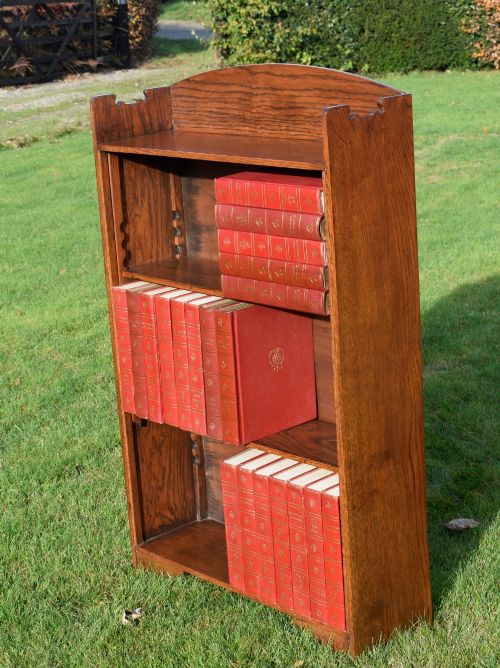
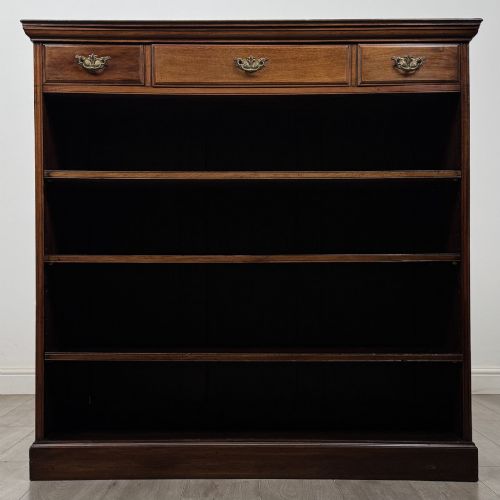
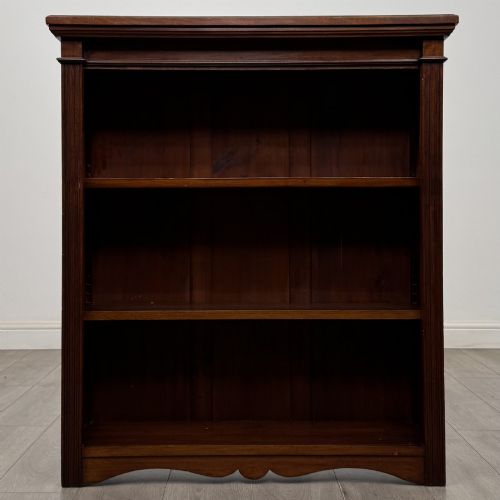
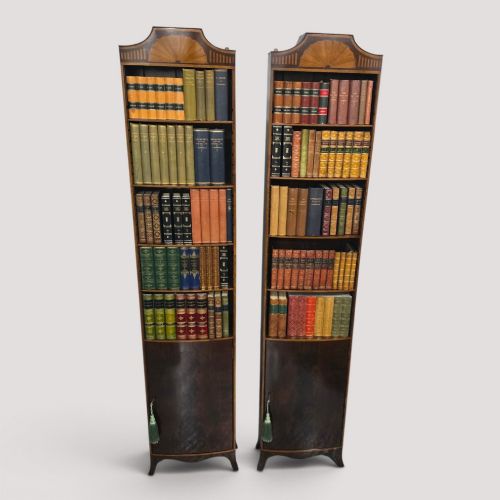
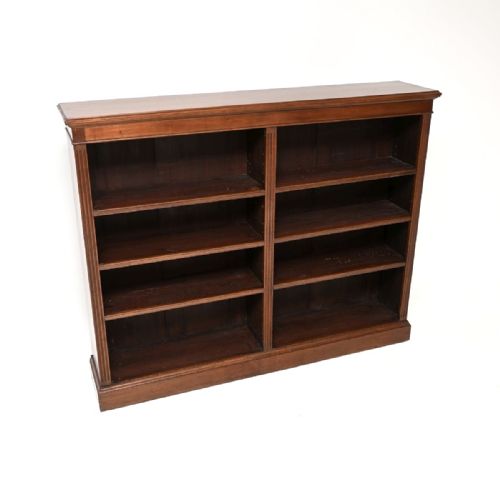
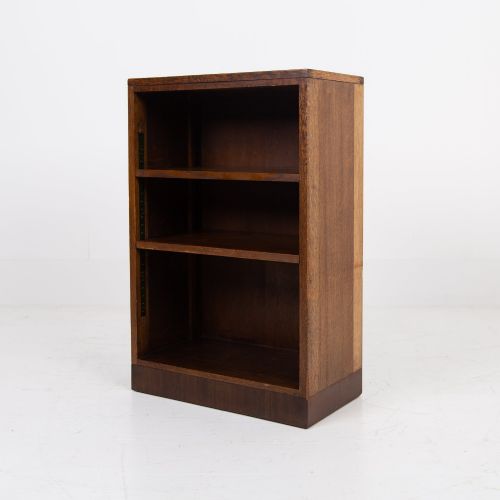
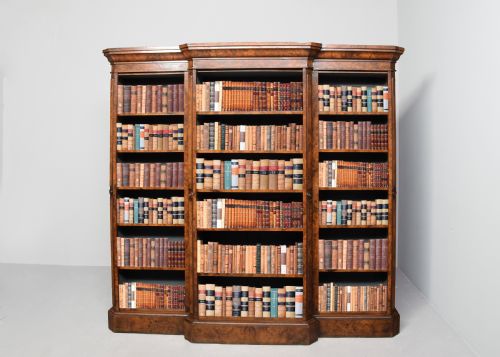
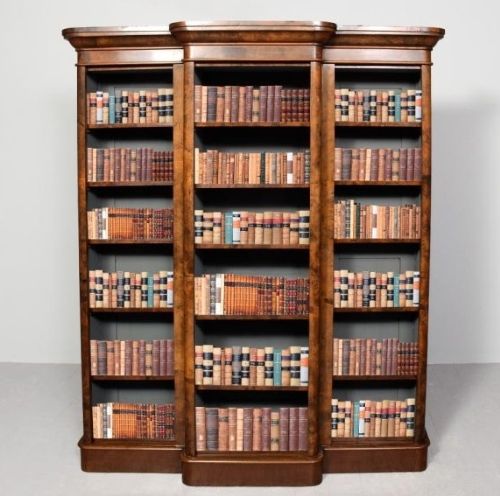
An adjustable book cabinet provides flexible shelving for libraries and living spaces, appearing predominantly as open-front bookcases from the Victorian, Edwardian, and later periods. These pieces range from slim single bays to large multi-section breakfront forms in timber.
The most common examples on this page are open bookcases in oak and walnut, alongside mahogany and pine variations. Makers utilised adjustable shelf mechanisms to allow customisation for volumes of varying heights.
How they were made
Construction relies on timbers such as oak, walnut, mahogany, and pine, frequently paired with brass shelf supports or mechanical systems. Cabinetmakers constructed these pieces using solid boards and burr walnut veneers, occasionally incorporating glass panels or leather tops.
Joinery techniques include traditional carcass construction alongside carved ornamentation, particularly visible in Jacobean Revival and Gothic Arts and Crafts examples. Concertina doors and modular multi-section breakfront designs required precise joinery to ensure smooth movement and stability.
Adjustable Book Cabinet Retail Price Guide 2026
Typical asking prices for adjustable book cabinet among the pieces listed under this phrase on Sellingantiques today, from the lower quarter to the upper quarter. They describe what is for sale here now, not the wider market.
Some Victorian volumes were so hefty that makers reinforced the shelf tracks with brass just to stop the books winning.
What varies in quality
Quality rests in the selection of timber, from plain pine and oak up to burr walnut and figured mahogany veneers. Superior examples display refined carving, well-executed proportions, and robust adjustable mechanisms.
Construction methods distinguish standard utility pieces from fine workshop productions. Cabinetmakers who invested care in the internal shelf supports and timber matching produced pieces that maintain structural integrity over generations.
Bowman Brothers London
The Adjustable Book Cabinet Glossary
- Breakfront
- A piece of furniture where the central section projects forward from the side sections. This layout often appears in large multi-section library bookcases.
- Burr walnut
- A wood harvested from the wart-like growth on a walnut tree, yielding highly figured grain patterns. Cabinetmakers utilised this veneer on prominent display surfaces.
- Concertina door
- A folding door system that collapses in sections, occasionally found on glazed bookcase cabinets to provide unhindered access to the shelves.
- Jacobean Revival
- A nineteenth-century style imitating seventeenth-century English furniture, characterised by dark oak, geometric moulding, and heavy carving. Pieces in this style often present a sturdy appearance.
- Open bookcase
- A shelving unit without doors, designed for immediate access to books. These forms dominate the current selection of adjustable book cabinets.
Adjustable Book Cabinet: Frequently Asked Questions
How do adjustable shelves work?
Most pieces utilise wooden ratchets, metal studs, or vertical slots cut into the interior sides to support the movable shelves. This mechanism allows owners to reposition boards to fit books of different heights.
Over the decades, these systems have evolved from simple wooden pegs to sophisticated brass tracks. When adjusting shelves, lift the board clear of its supports before relocating it to avoid straining the interior uprights.
Where should I place an open bookcase?
Open bookcases suit studies, libraries, and living rooms where easy access to volumes is a priority. Positioning them away from direct sunlight protects both the timber finish and the paper bindings from fading.
Ensure the floor is level so the tall carcass remains stable against the wall. Heavy oak and walnut models benefit from being secured to the wall for added safety.
How do I date a walnut bookcase?
Dating relies on assessing the timber preparation, hardware, and stylistic revival influences present in the construction. Early Victorian and mid-Victorian pieces often display rich burr walnut veneers, while Edwardian examples show lighter tones and simpler mouldings.
Examining the backboards and shelf support mechanisms provides further clues to the manufacturing decade. Machine-cut screws and standardised metal tracks typically indicate a later nineteenth or early twentieth-century origin.