




Adam Console Table
An adam console table brings classical symmetry and refined architectural lines into a hall or reception room.
Adam Console Table
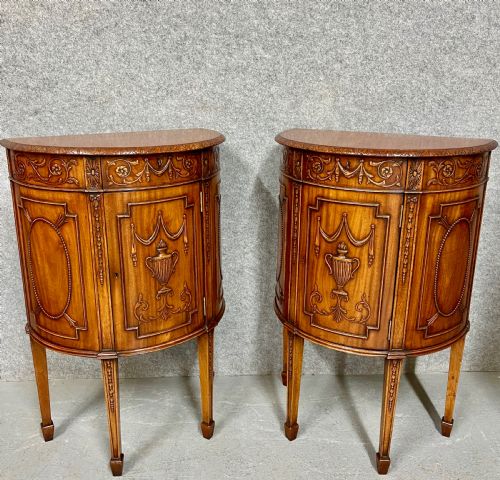
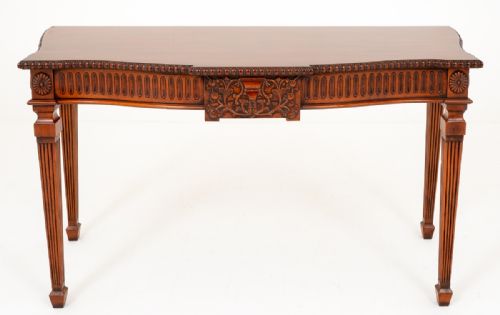
An adam console table draws upon neoclassical design principles, featuring rectilinear or demi-lune forms designed to stand flush against a wall. The pieces listed here span the eighteenth, nineteenth, and early twentieth centuries, encompassing Georgian origins alongside later revivals.
Makers frequently employed mahogany, painted wood, and giltwood to achieve the desired neoclassical aesthetic. Forms range from narrow side tables and serving tables to console cabinets and serpentine console tables.
The selection on this page demonstrates how heavily the Adam style influenced later Victorian and Edwardian cabinetmakers. Buyers encounter original eighteenth-century examples alongside nineteenth-century interpretations and early twentieth-century revivals.
Materials and Construction
Cabinetmakers utilised solid mahogany and painted wood as the primary foundation for these tables, often applying gesso to create crisp architectural ornament. Carved details incorporate classical motifs executed with precision across the timber and giltwood surfaces.
Marble tops frequently provide a durable and classical surface finish above the wooden framework, particularly on demilune and pier tables. Paint finishes, including Chinoiserie decoration, demonstrate the varied surface treatments applied during the nineteenth and early twentieth centuries.
Adam Console Table Retail Price Guide 2026
Typical asking prices for adam console table among the pieces listed under this phrase on Sellingantiques today, from the lower quarter to the upper quarter. They describe what is for sale here now, not the wider market.
Several tables arrive with stories of important provenance, though the wall remains the true judge of their balance.
Judging Quality
The sophistication of the carved neoclassical ornament distinguishes finer examples from simpler revival pieces. Crisp lines in the gesso and timberwork reflect the skill invested by the maker.
Proportion and material selection dictate the presence of quality within each category. Original eighteenth-century pieces display timber density and joinery that differ visibly from later nineteenth-century interpretations.
The Adam Console Table Glossary
- Demi-lune
- A half-moon shape used for table tops and cabinet fronts, popular in neoclassical furniture design. This format allowed tables to sit compactly against hallway walls.
- Giltwood
- Timber that has been coated with a thin layer of gold leaf. It creates a bright, reflective surface characteristic of formal neoclassical interiors.
- Neoclassical
- A style originating in the mid-eighteenth century that drew inspiration from classical antiquity. It prioritised symmetry, straight lines, and classical architectural motifs.
- Serpentine
- A furniture front or edge that curves outward in the centre and inward at the sides. This contour adds visual movement to console and serving tables.
- Gesso
- A plaster-like mixture applied to wood surfaces to form a smooth base for painting or gilding. It enables the creation of sharp, low-relief decorative mouldings.
Adam Console Table: Frequently Asked Questions
Where should I place an adam console table?
These tables suit hallways, entrance foyers, and reception rooms where floor space is limited. Their shallow depth allows them to stand against walls without obstructing pathways.
Pairing a demi-lune or rectangular console with a mirror above creates a traditional focal point in a dining room or drawing room.
How do I identify an original eighteenth century piece?
Examine the timber construction, secondary woods, and tool marks beneath the top and within the frame. Eighteenth-century pieces utilise period joinery techniques distinct from later revival work.
Consider the carving style and proportions, as Georgian makers adhered strictly to classical architectural proportions derived from Robert Adam's designs.
What is the difference between a console and a side table?
Console tables traditionally rely on the wall for structural support or are fixed directly to it, often accompanied by matching legs at the front. Side tables are entirely freestanding pieces with four legs.
In modern usage, the terms often overlap, particularly among nineteenth-century revival pieces that function interchangeably in domestic settings.
How do I care for mahogany and giltwood surfaces?
Keep wooden furniture away from direct sunlight and heat sources to prevent timber shrinkage and finish cracking. Dust regularly with a soft, dry cloth.
Avoid liquid polishes and silicone sprays on giltwood and painted surfaces, as moisture can lift delicate gesso and gold leaf applications.