




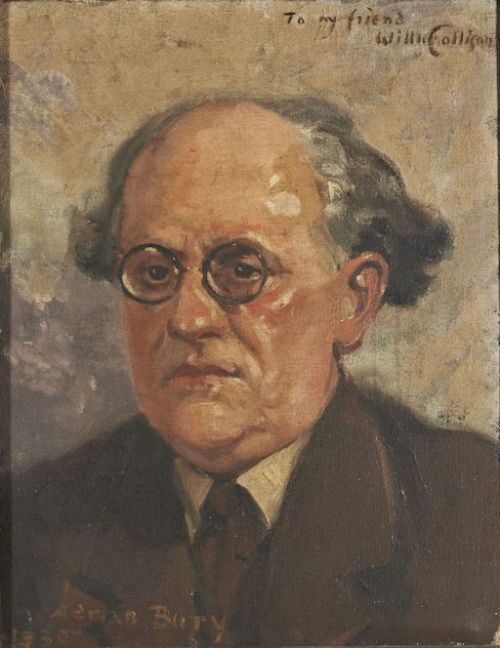


Academic Style Portrait Artwork
Academic style portrait artwork brings rigorous draftsmanship and historical presence to any interior.
Academic Style Portrait Artwork
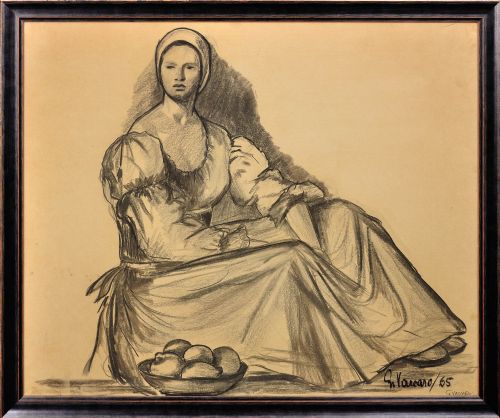
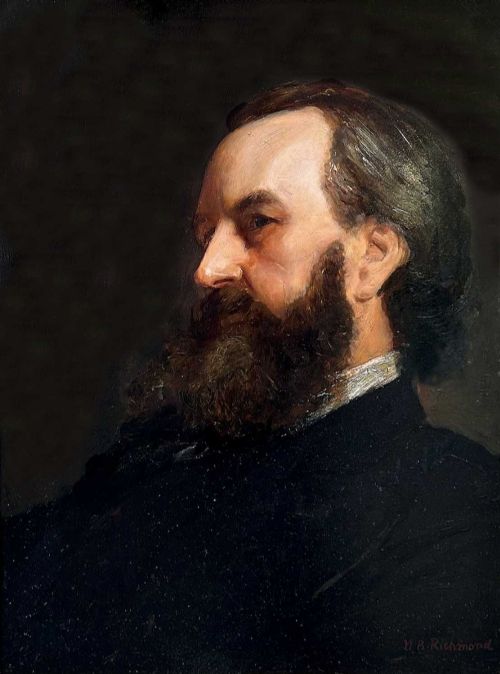
Academic style portrait artwork encompasses formal oil paintings on canvas, drawings and sketches, and framed prints originating largely from the nineteenth century. These pieces reflect strict institutional training in anatomy, expression, and narrative composition.
Most examples encountered on this page date from the Victorian era through the early twentieth century, spanning periods such as 1860, 1880, 1890, and 1900. Subjects range from gentlemen and ladies to historical militia and mythological figures.
The aesthetic is rooted in movements including 19th Century French and Renaissance Revival, often utilising gilt wood or gold leaf frames to complement the formal canvas.
Materials and technique
These works are executed primarily in oil paint upon canvas or mounted on wood panels, supplemented by sanguine drawings and framed prints. Pigments are handled with careful layering to achieve depth in skin tones and drapery.
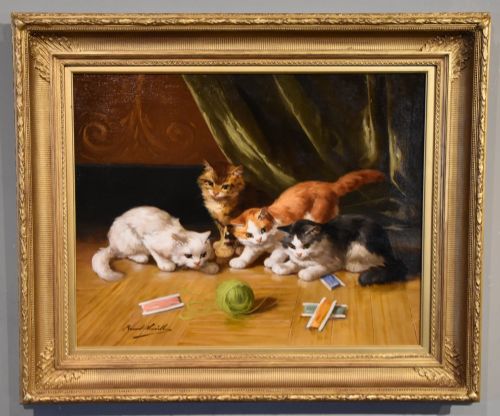
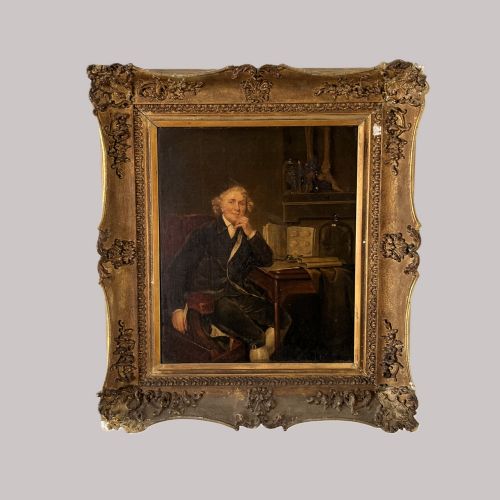
Frames are constructed from wood and embellished with giltwood or gold leaf, providing the heavy ornamentation characteristic of the period.
Academic Style Portrait Artwork Retail Price Guide 2026
Typical asking prices for academic style portrait artwork among the pieces listed under this phrase on Sellingantiques today, from the lower quarter to the upper quarter. They describe what is for sale here now, not the wider market.
Listings feature oil paint on canvas, wood panels, and sanguine drawings enclosed in giltwood frames.
Judging quality
Quality rests upon the precision of anatomical rendering, the handling of light and shadow, and the psychological depth captured in the sitter's expression. Masterful brushwork distinguishes works by trained academicians from routine commercial portraiture.
The integrity of the original canvas, the preservation of the oil paint surface, and the authenticity of the accompanying gilt wood frame significantly influence the standing of each piece.
Dumini Leopoldo·William Blake Richmond·Alfred Arthur Brunel de Neuville·André Charles Voillemot·Alfred Holst Tourrier·August Heinrich Riedell·Arthur Hacker·Willem Johannes Martens·James Bertrand·Geza Vastagh·Adolphe Alexandre Lesrel·Pierre-Louis Bouchard·William Dring·Adrian Bury·Frank Samuel Eastman
The Academic Style Portrait Artwork Glossary
- Academic
- Pertaining to the formal rules of composition and traditional techniques taught by European art academies.
- Sanguine
- A drawing executed in red chalk, frequently used for preparatory sketches and portraits in the nineteenth century.
- Giltwood
- Wood that has been coated with gold leaf or a gold-coloured metallic finish, commonly used for nineteenth-century frames.
- Historical Genre
- A painting style depicting scenes from history, literature, or everyday life staged with dramatic narrative focus.
Academic Style Portrait Artwork: Frequently Asked Questions
What is academic style portrait artwork?
Academic style portrait artwork refers to formal figurative paintings and drawings created under the strict influence of European art academies. These pieces emphasise traditional draughtsmanship, precise anatomy, and often incorporate historical or mythological themes.
They emerged strongly during the nineteenth century, reflecting the rigorous standards demanded by official exhibitions and salons of the period.
How should I display a gilt framed oil painting?
These works require placement away from direct sunlight and fluctuating humidity to protect the oil paint and canvas. Gilt wood frames benefit from gentle dusting with a soft, dry brush rather than liquid cleaners.
Ensure the hanging wall can support the substantial weight of the timber stretcher and ornate frame.
How do I identify the period of a portrait?
Dating relies on examining the stretcher construction, canvas type, and the sitter's costume or hairstyle. Stylistic clues such as Victorian romanticism or Renaissance revival traits also indicate the era of execution.
Signatures, stamps, and framing techniques frequently provide further chronological markers.
What is the difference between a painting and a sanguine?
A painting utilises oil pigments applied to canvas or wood to build rich colour, texture, and light. A sanguine is a drawing made using red chalk sticks, focusing on line, tone, and contour.
Both forms were utilised within academic traditions for portraits and preparatory studies.