



9ct Gold Shell
These 9ct gold shell pieces combine precious metalwork with natural materials, offering portable classical carving and charm jewellery that collectors prize for wearable history.
9ct Gold Shell
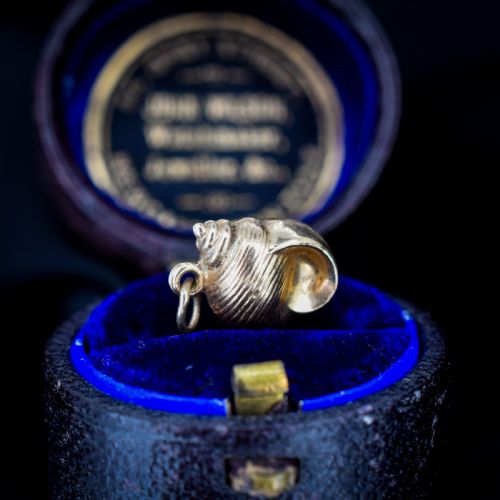
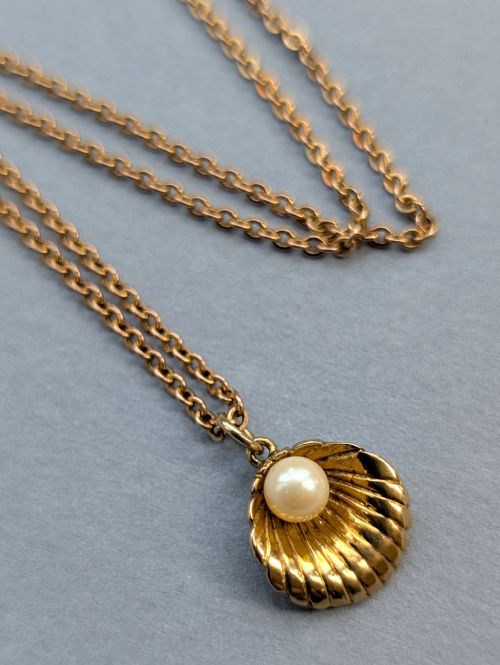
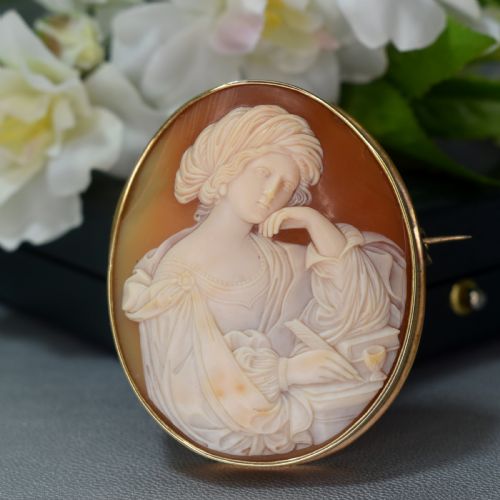
A 9ct gold shell selection spans Victorian brooches, Edwardian earrings, Art Deco rings, and mid-century charms or pendants. Buyers encounter carved cameos depicting classical figures alongside natural shell and pearl combinations set in yellow gold.
The Victorian and Edwardian periods supply the majority of carved cameos and portrait rings, while later decades introduce geometric mounts and simple charm pendants. These ornaments served as personal adornments or wearable art, utilising durable low-carat gold frames to secure delicate marine materials.
How they were made
Goldsmiths utilised 9ct gold and pinchbeck to form bezels, wire loops, and detailed mounts that cradle the natural curves of sea shells and mother-of-pearl. Carvers worked into layered mollusc shells to expose contrasting strata for portrait cameos.
Artisans combined pearls and diamonds with gold settings through soldering and bezel work, securing screwback mechanisms on earrings and hinged pins on brooches. These techniques balanced the fragility of organic shell with the structural strength required for daily wear.
9ct Gold Shell Retail Price Guide 2026
Typical asking prices for 9ct gold shell among the pieces listed under this phrase on Sellingantiques today, from the lower quarter to the upper quarter. They describe what is for sale here now, not the wider market.
The listings combine Victorian, Edwardian, and Art Deco periods, uniting materials like conch shell, mother of pearl, and 9ct yellow gold.
What varies in quality
Depth of relief and crispness of line separate master-carved cameos from simpler production pieces, particularly in works depicting classical deities or historical sibyls. The fineness of the gold mount, including scrollwork detail and secure bezel setting, dictates the overall grade.
Proportion between the organic material and the precious metal frame influences desirability, as does the condition of the shell surface and pearl lustre. Signed works by specific makers command greater attention than unsigned commercial output.
R. Pernice
The 9ct Gold Shell Glossary
- Cameo
- A method of carving where a raised image stands out from a background of a different colour. This technique exploits the natural layered strata of shells to create contrasting portraits.
- Pinchbeck
- An alloy of copper and zinc developed to imitate gold. It frequently appears alongside 9ct gold components in historical drop earrings and brooch mounts.
- Mother of pearl
- The iridescent inner layer of mollusc shells. Artisans shape this material into geometric screwback hoop dangle earrings and decorative panels.
- Bezel setting
- A method of holding a stone or shell in place with a thin metal strip pushed over the edges. This secures fragile organic materials without placing undue stress on the perimeter.
9ct Gold Shell: Frequently Asked Questions
How do I date a cameo?
Examine the mount style, clasp mechanism, and subject matter to determine the era of production. Victorian examples often feature deep scrollwork frames and mythological subjects.
Later Edwardian and Art Deco pieces show cleaner geometric lines or lighter pendant loops. Hallmarks and gold purity marks further narrow down the manufacturing decade.
Can I wear these every day?
Shell and pearl require careful handling because organic materials are softer than precious stones and metals. Regular wear is possible with proper mindfulness regarding impacts and moisture.
Store pieces separately in lined boxes to prevent scratches on the delicate shell surface. Avoid exposing vintage gold mounts to harsh chemical cleaners.
What is the difference between pinchbeck and gold?
Pinchbeck is an alloy of copper and zinc created to simulate the appearance of gold without the high cost. It has a warm tone commonly found in antique jewellery mounts.
True 9ct gold contains a specific proportion of pure gold alloyed with other metals for durability. Hallmarks on the metal help distinguish genuine gold from base metal substitutes.
How were these pieces used?
Victorian and Edwardian items functioned primarily as personal adornments such as brooches, drop earrings, and portrait rings. They allowed wearers to display classical tastes and sentimental motifs.
Charms and pendants were suspended from chains or charm bracelets as portable keepsakes. Tabletop ornaments served as decorative art pieces for interior display.