
9ct Gold Link Bracelet
When you search for a 9ct gold link bracelet, you are looking at enduring wrist ornaments crafted in yellow, rose and tricolour gold from the Victorian, Edwardian and mid-century eras.
9ct Gold Link Bracelet
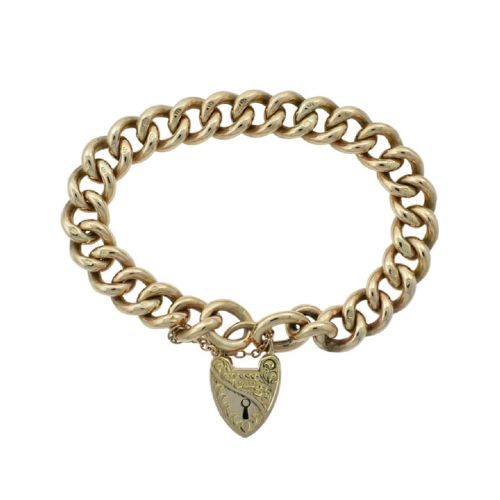
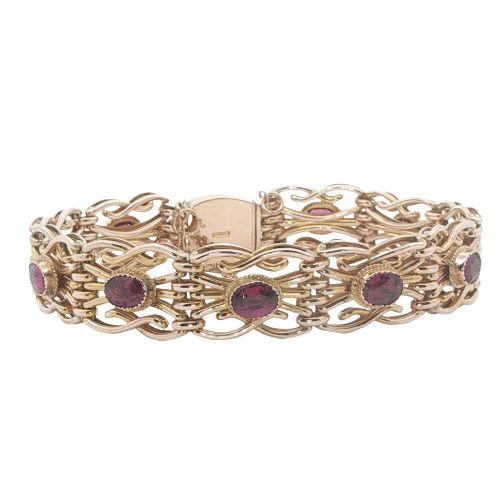
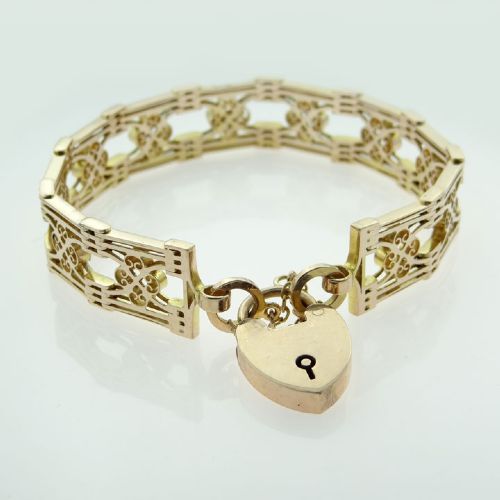
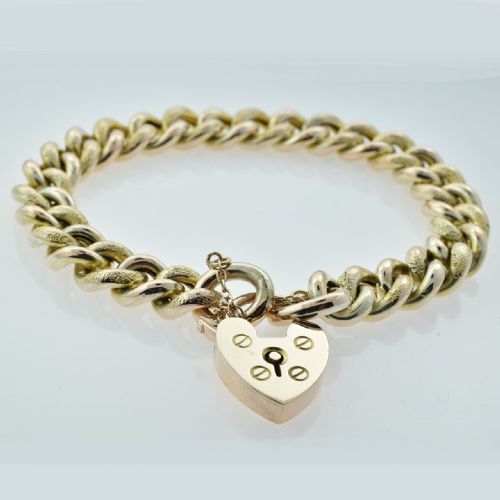
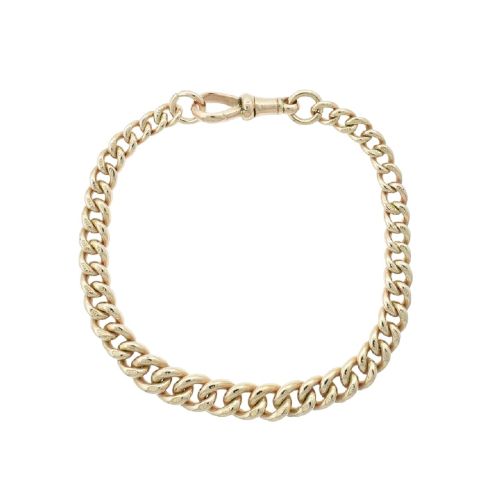
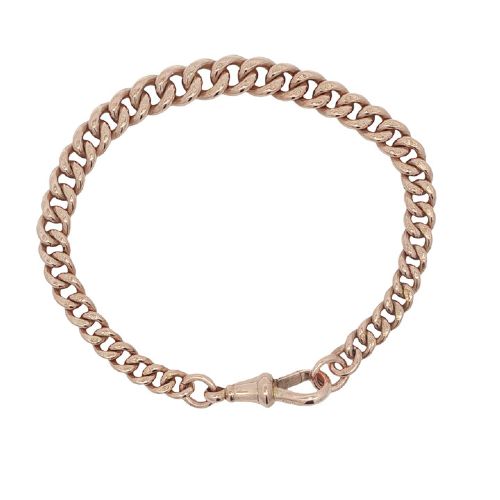
A 9ct gold link bracelet spans diverse forms from the late nineteenth century through the mid-twentieth century, capturing Victorian sentiment and Edwardian design. Buyers searching for a 9ct gold link bracelet encounter heavy curb chains, intricate gate links, and hollow tubular bar variations designed for daily wear.
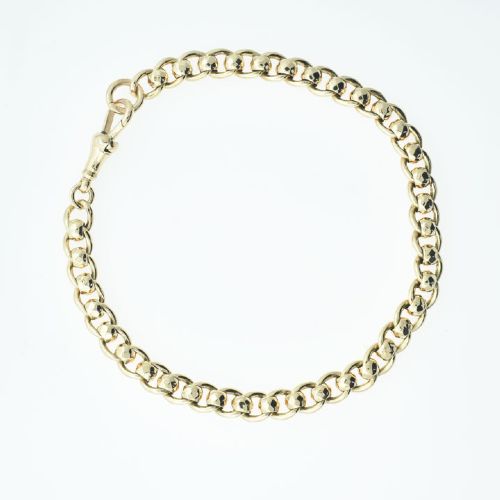
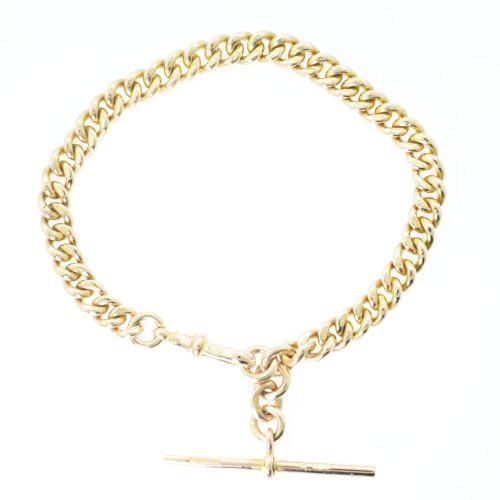
The selections recorded here encompass pieces originating from the 1890s up to the 1960s, reflecting changing tastes in fastener mechanisms like heart padlocks, dog clips and spring rings. Gate bracelets and albert chains adapted as bracelets dominate the physical evidence.
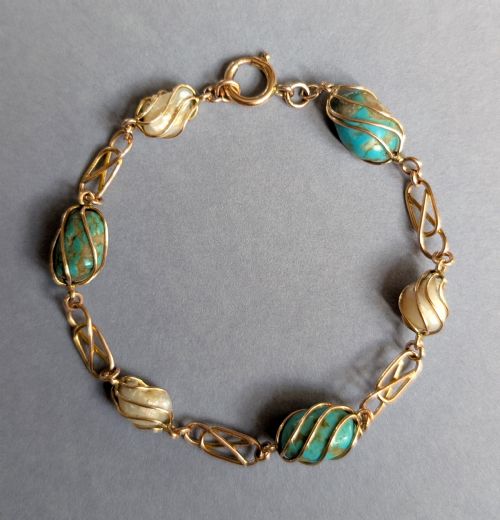
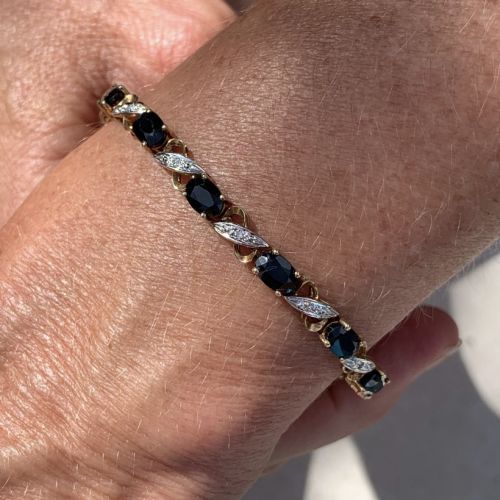
Gemstone embellishments frequently accompany these links, with turquoise, almandine garnet, amethyst, pearl and sapphire appearing alongside plain polished or half-engraved surfaces. The range moves from solid daily chains to ornate multi-bar configurations.
How They Were Made
Goldsmiths utilised 9ct yellow and rose gold, occasionally incorporating higher 15ct gold standards or mixed tricolour hues to construct these articulated chains. Links were hand-assembled, soldered and sometimes hollow-formed or tubular to achieve substantial visual weight without excessive material cost.
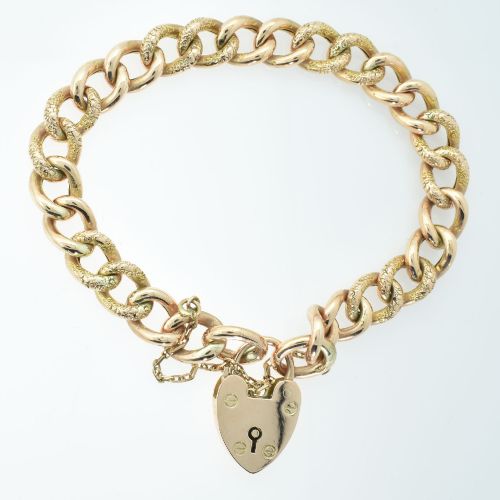
Surface ornamentation relied on hand engraving, chasing and repoussé techniques, applying delicate floral motifs or geometric half-engraved patterns onto curb and gate links. Padlocks and dog clips were cast and fitted with internal steel springs to secure the heavy chain assemblies.
The inventory records curb, gate, tubular bar, love knot, and rollerball link configurations spanning the late nineteenth century to the 1960s.
What Varies in Quality
Quality rests upon the structural integrity of the individual links, the crispness of the hand engraving, and the originality of the accompanying clasp or padlock. Solid gold construction commands higher regard than hollow rolled variations, maintaining rigidity and resistance to denting over decades of wear.
The precision of the link articulation determines the fluidity of the bracelet, ensuring it drapes comfortably around the wrist without catching or twisting. Hallmarking clarity and maker attribution further distinguish superior examples from standard commercial output.
Theo Fennell
The 9ct Gold Link Bracelet Glossary
- Curb link
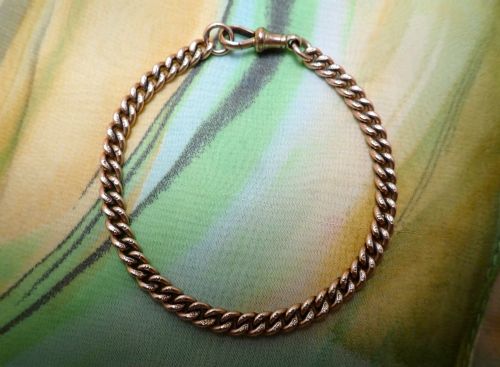
- A chain design composed of identical oval links that have been twisted and flattened to lie uniformly flat against the skin. This classic layout forms the structural backbone of many antique bracelets.
- Gate link
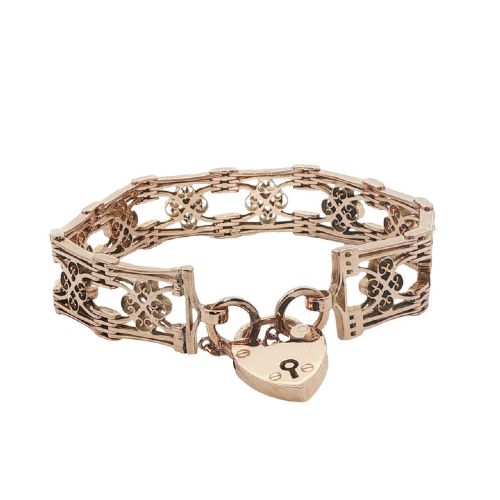
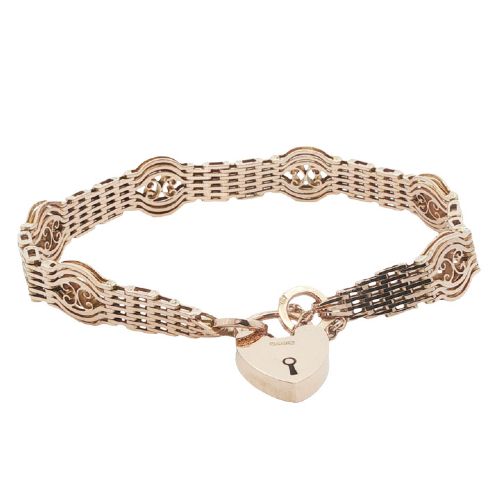
- A patterned style featuring parallel vertical bars connected by small central links, mimicking historical household gates. Victorian and Edwardian makers produced these in solid and multi-bar formats.
- Heart padlock
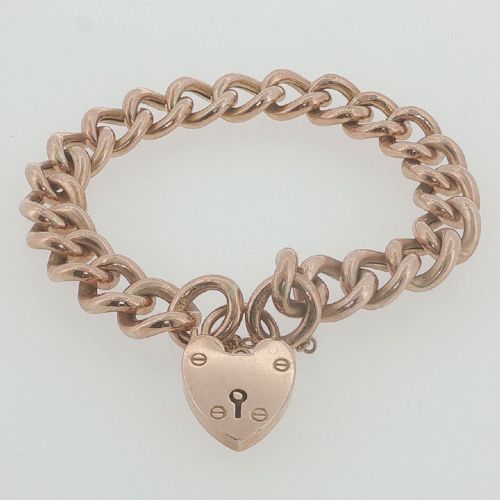
- A commemorative clasp shaped like a padlock, frequently engraved with floral patterns and utilised to secure curb and gate chains. They often carry historical hallmarks dating the piece.
- Dog clip
- A spring-loaded swivel fastener historically attached to watch chains but commonly found securing antique bracelets. The spring mechanism allows for quick attachment to loops or jump rings.
- Albert chain
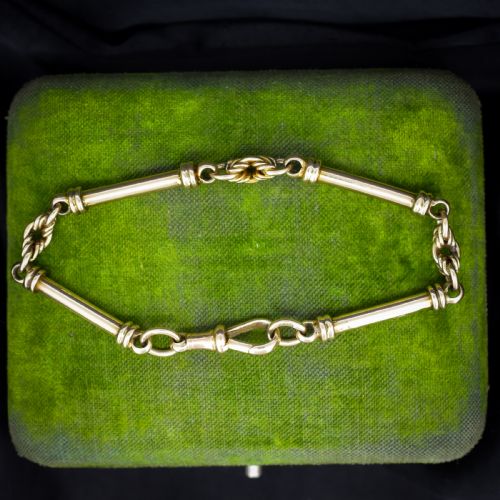
- A heavy watch chain originally designed to secure pocket watches to waistcoats, adapted by period wearers into substantial wrist bracelets. They typically feature graduated links and a T-bar.
9ct Gold Link Bracelet: Frequently Asked Questions
How do I date a gold link bracelet?
Dating relies heavily on official hallmarks stamped onto the metal, which indicate the assay office, standard of gold, and year of manufacture. Stylistic clues such as the presence of a heart padlock or gate construction also point toward Victorian and Edwardian periods.
Changes in clasp technology and link styles help narrow down the decade of production. Examining the construction method provides further context for its historical origin.
Can I wear my bracelet every day?
Solid 9ct gold link bracelets are durable enough for regular daily wear due to the inherent strength of the alloy. However, hollow links or delicate gemstone settings require greater care to avoid impacts.
Removing the bracelet during strenuous physical activities protects the links and clasp mechanisms from undue wear. Regular inspection of jump rings and safety chains ensures the piece remains secure.
What is the difference between curb and gate links?
Curb links consist of interlocking flattened oval loops that create a continuous, flexible chain draping smoothly across the wrist. Gate links feature rows of vertical bars joined by central links, forming a wider, more architectural structure.
Gate bracelets often incorporate multiple bars and are secured with heart padlocks, whereas curb links frequently utilise dog clips or spring rings. Both styles represent distinct aesthetic traditions within late nineteenth and early twentieth-century jewellery.
What is an albert bracelet?
An albert bracelet is a heavy chain originally made to secure a pocket watch, which has been shortened or repurposed for the wrist. These pieces often feature graduated links and retain a decorative T-bar.
Their robust construction makes them popular choices for those seeking substantial historical jewellery. They frequently showcase the heavier end of period goldsmithing.