
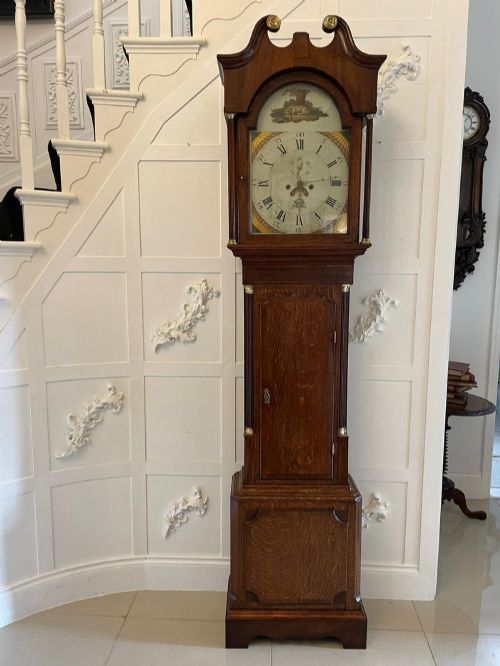
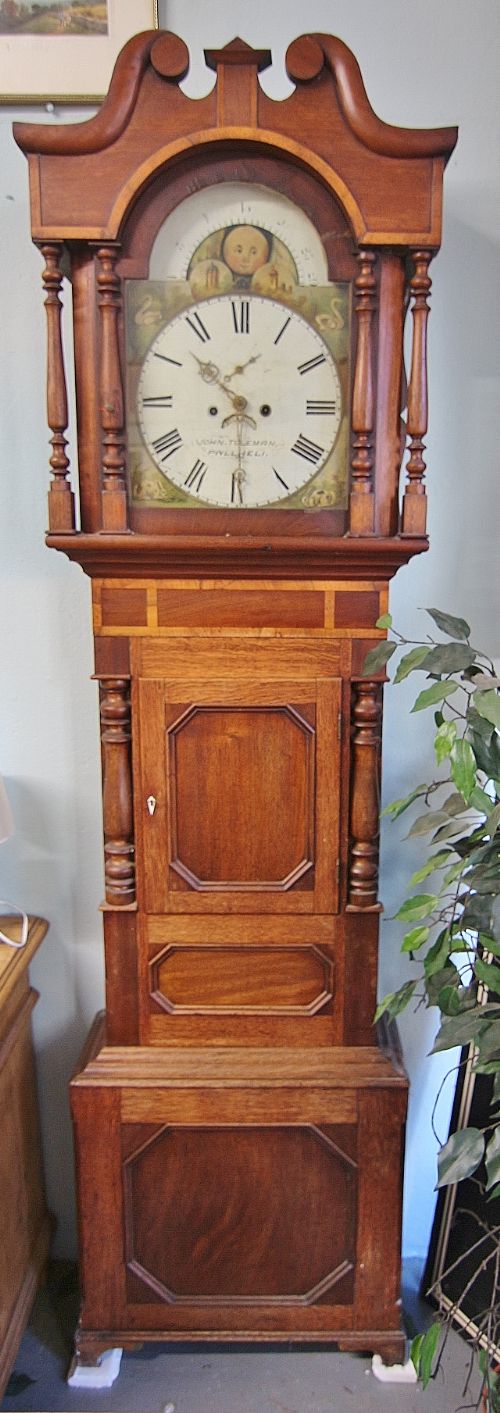
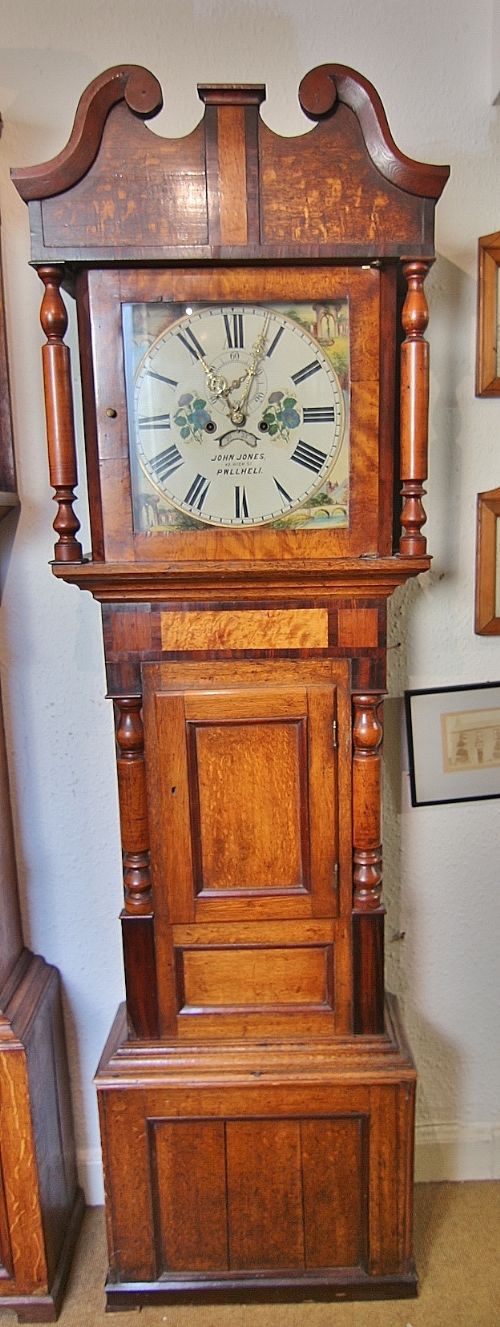
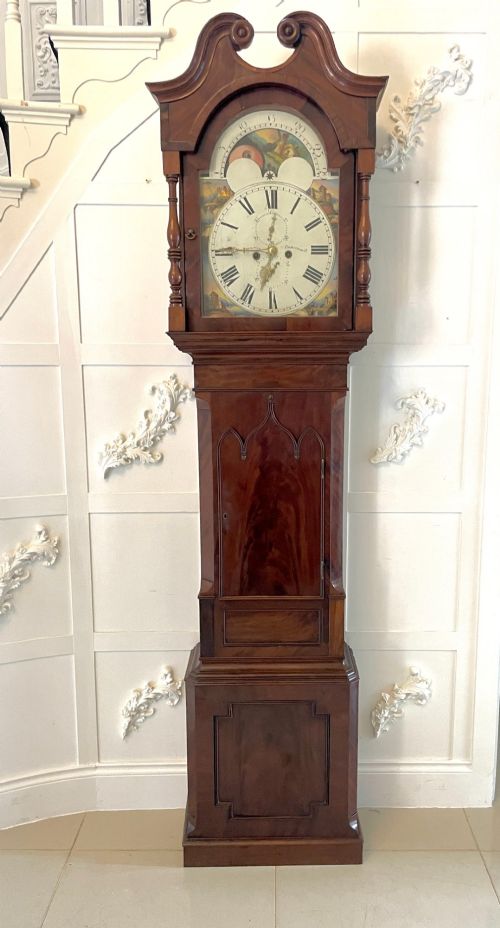
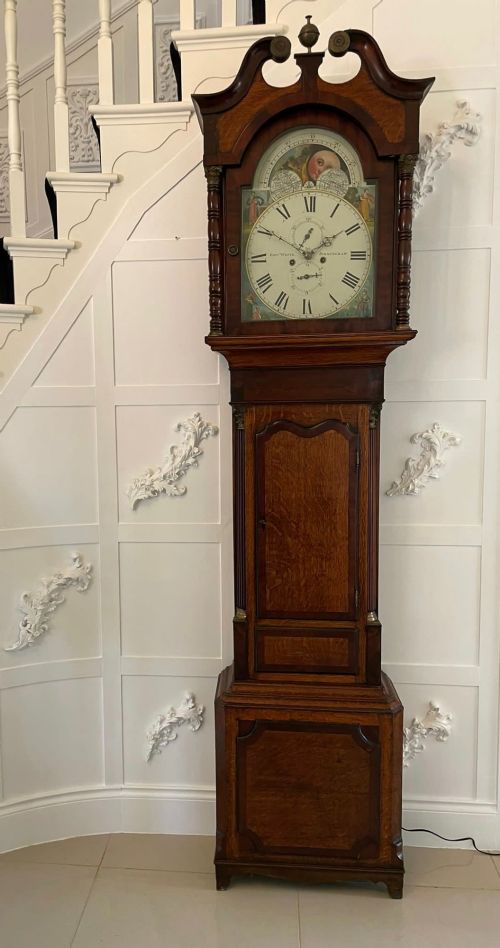
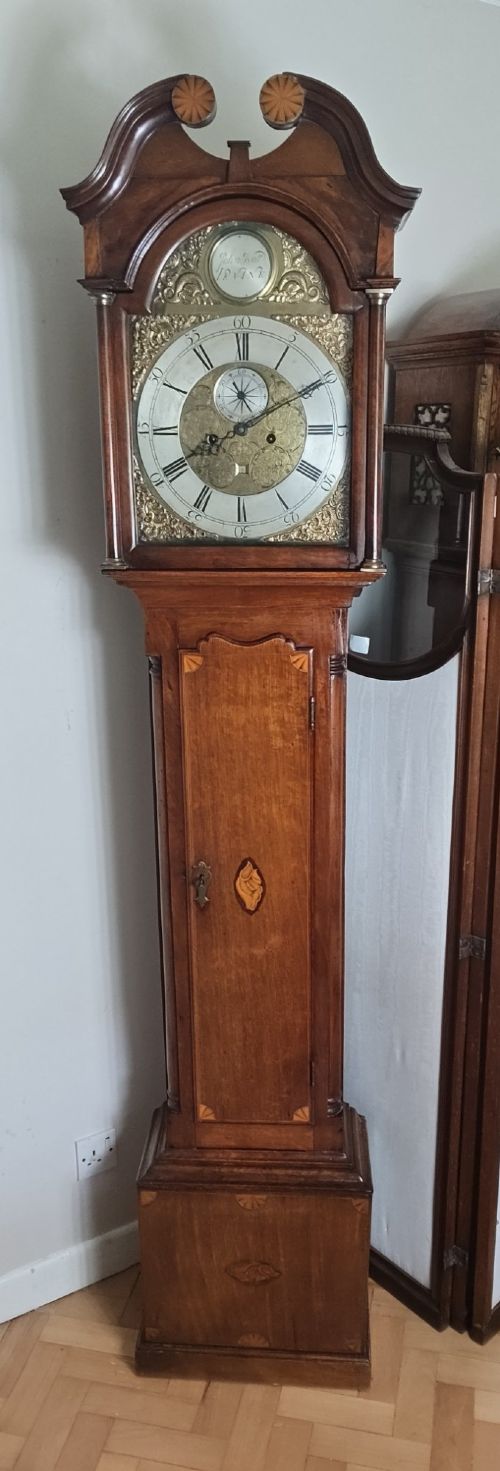
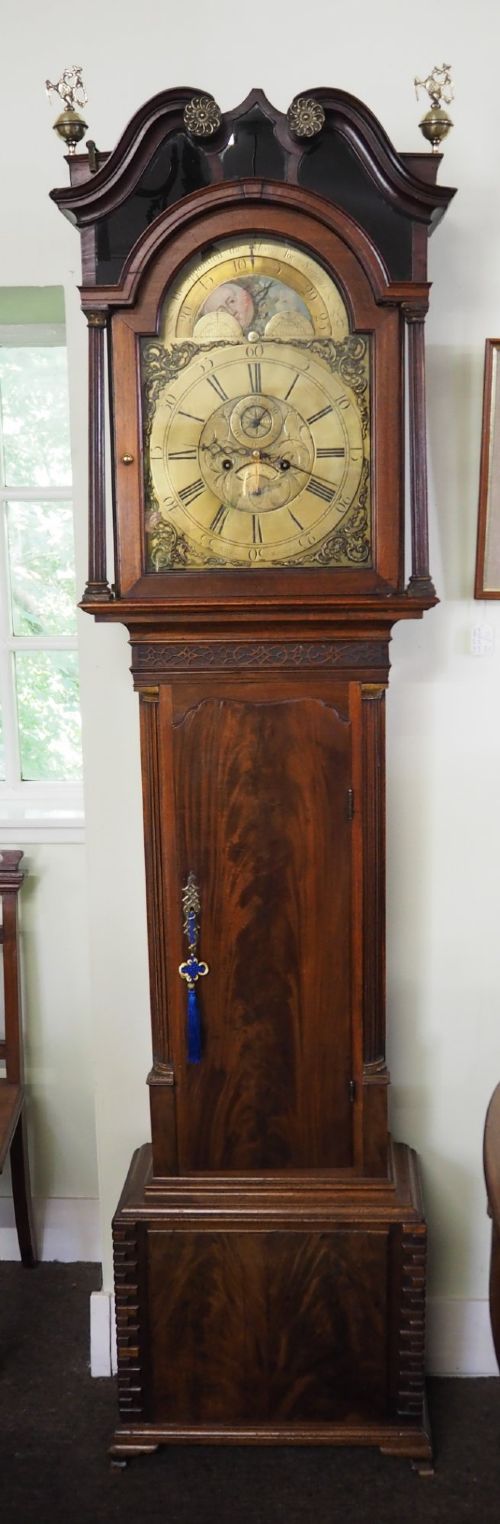
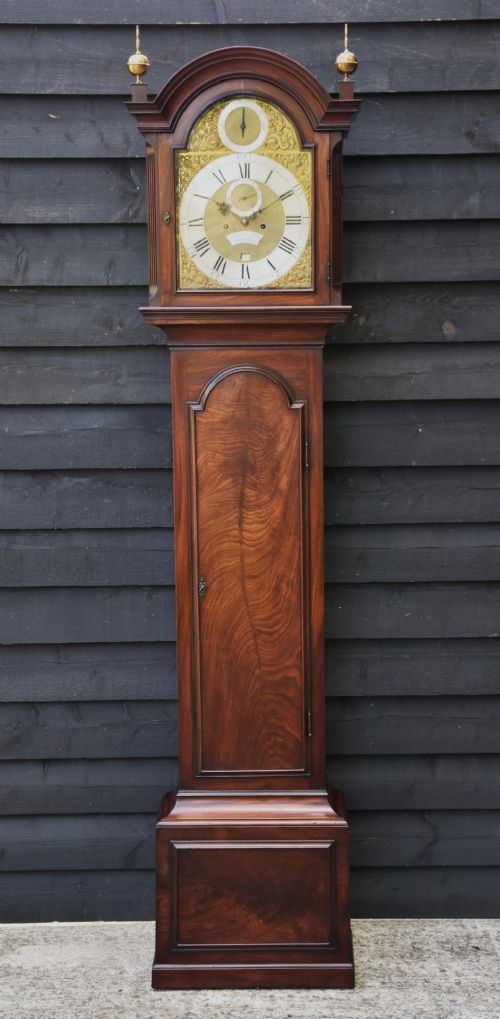
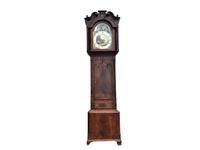
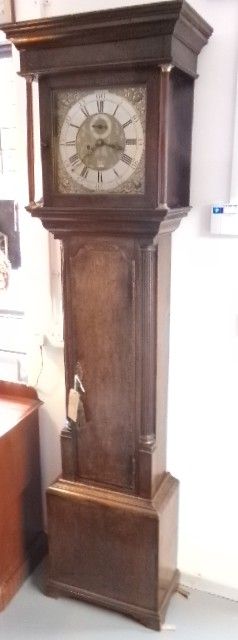


8 Day Tallcase Clock
An 8 day tallcase clock keeps time across the floors of Georgian and Victorian rooms with weight-driven precision.
8 Day Tallcase Clock
An 8 day tallcase clock, also known as a longcase or grandfather clock, stands upright to house a pendulum and weight-driven movement. These pieces originate primarily from Georgian and Victorian periods, reflecting centuries of domestic timekeeping tradition.
The version most commonly met on this page is the mahogany or oak longcase clock featuring either a brass or painted iron dial. Makers housed these mechanisms in tall wooden cases designed to protect the delicate gears while serving as prominent household furniture.
How they were made
Cabinetmakers utilised timber such as mahogany, oak, and flame mahogany to construct the tall wooden housings, frequently incorporating glass panels to protect the dial. These woods provided the structural stability required to support heavy moving parts over extended periods.
Horologists combined brass, steel, and painted iron to build the complex gear trains and dials that drove the mechanical movements. Dial faces often featured intricate engraved details, moon rollers, or subsidiary hands to track calendar functions.
Some regional Scottish dials feature painted horses that appear to gallop across the face as the mechanism runs.
What varies in quality
Cabinetwork quality ranges from plain oak housings to elaborate cases adorned with marquetry, burr walnut veneers, and fine paterae inlay. The architectural proportion of the hood, trunk, and base dictates the overall visual harmony of the piece.
Green of Edinburgh·John Ellicott·D. Straiton·Handley & Moore·Parkinson Bros·Windmills and Wightman·Charles Dowsett
The 8 Day Tallcase Clock Glossary
- Moon dial
- A secondary dial that tracks the phases of the lunar cycle using a rotating painted disc behind the face. This complication was popular on clocks produced during the Georgian period.
- Strike-silent
- A mechanism allowing the clock's striking train to be manually disengaged so it remains quiet during the night. It demonstrates a higher grade of mechanical sophistication in longcase movements.
- Quarter striking
- A movement capability that chimes the quarters of the hour in addition to tolling the full hour. These examples often require complex gear trains.
- Drum head
- A circular dial housing design set atop the trunk, characteristic of certain Victorian regional styles. This form alters the traditional architectural profile of the tallcase clock.
- Paterae
- Small circular decorative reliefs carved or inlaid into furniture woodwork. They frequently accent the frieze or hood of neoclassical grandfather clocks.
8 Day Tallcase Clock: Frequently Asked Questions
How often do I wind an 8 day tallcase clock?
These clocks require winding once every eight days by using a crank key to draw the weights back up. Keeping to a consistent weekly schedule maintains tension on the driving lines and preserves accurate timekeeping.
Neglecting to wind the movement causes the weights to hit the bottom of the trunk and the clock to stop. Regular gentle winding prevents unnecessary wear on the winding arbors.
Where should I place a tallcase clock in my home?
Position the clock against an interior wall away from direct sunlight and heating vents to protect the wooden case and movement. Fluctuating temperatures and humidity can cause timber to warp and metal parts to expand.
Ensure the floor beneath the clock is level so the pendulum swings evenly and the escapement ticks in a steady rhythm. Securing the case to the wall using hidden brackets adds stability.
How do I tell an 18th-century clock from a 19th-century one?
Eighteenth-century examples typically feature square brass dials with applied cast spandrels in the corners. The proportions of earlier cases tend to be simpler and built from solid oak or early mahogany.
Nineteenth-century versions frequently display painted iron arched dials, sometimes with moon rollers or calendar apertures. Cabinet styles from this later era often incorporate flame mahogany veneers and richer inlay work.
Why does my grandfather clock run fast or slow?
Changes in ambient temperature and humidity cause the metal pendulum rod to expand or contract, altering the swing rate. Adjusting the regulating nut up or down on the pendulum bob corrects this variance.
If the beats sound uneven, the clock is out of beat and requires minor crutch adjustments behind the dial. Professional servicing may be necessary if the gear teeth have accumulated dust or dried oil.