

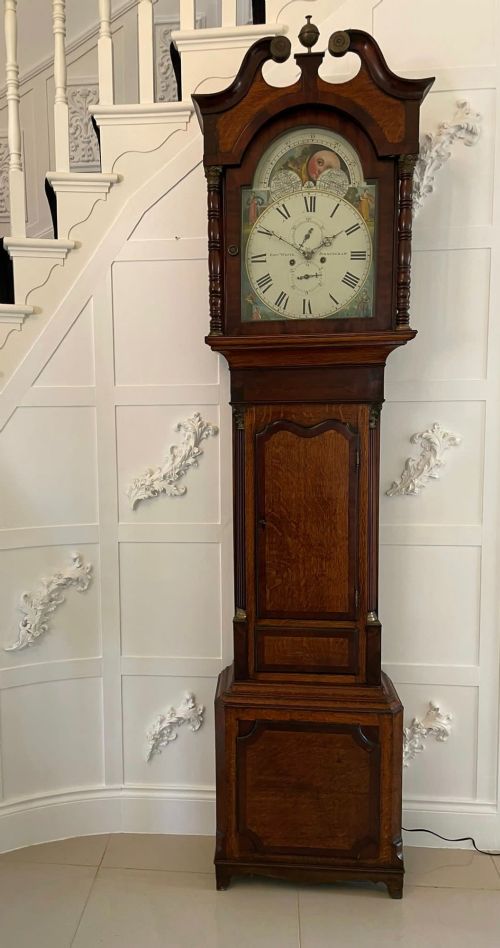
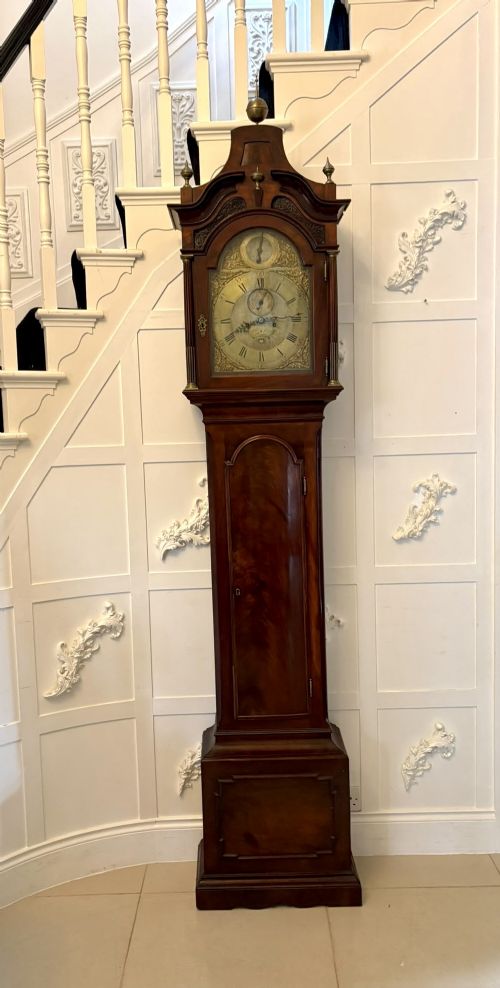
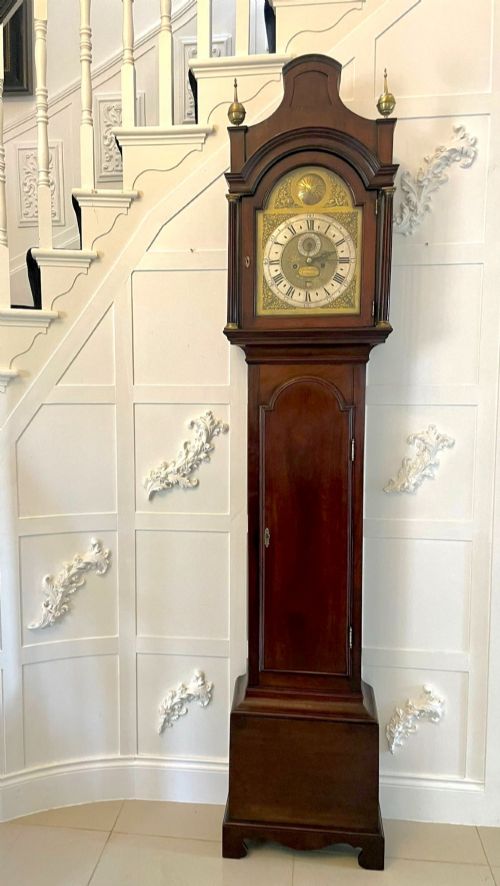

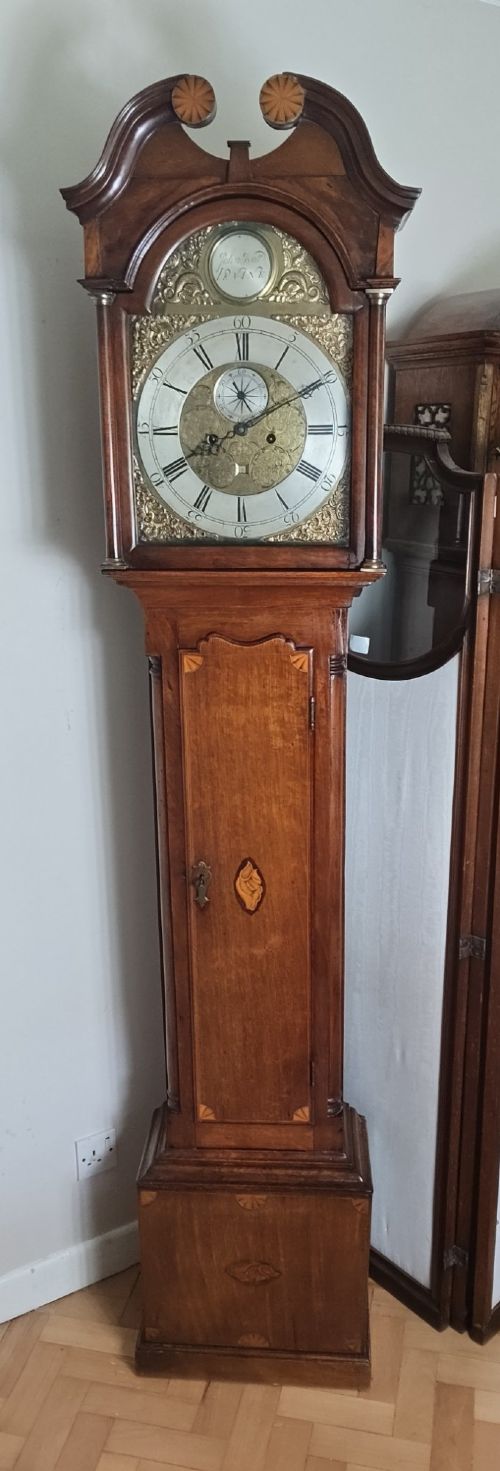



8 Day Tall Clock
An 8 day tall clock measures time through a week and a day without daily winding, bringing architectural presence and movement to a room.
8 Day Tall Clock
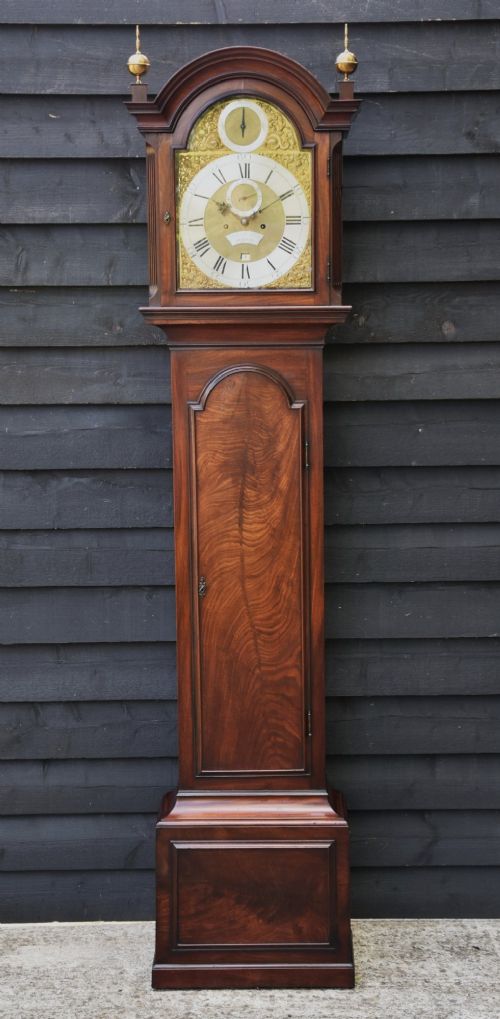
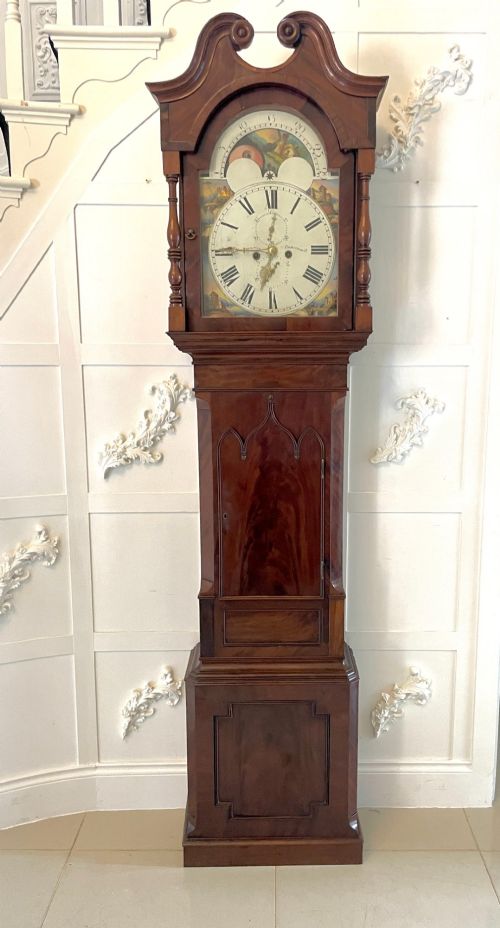
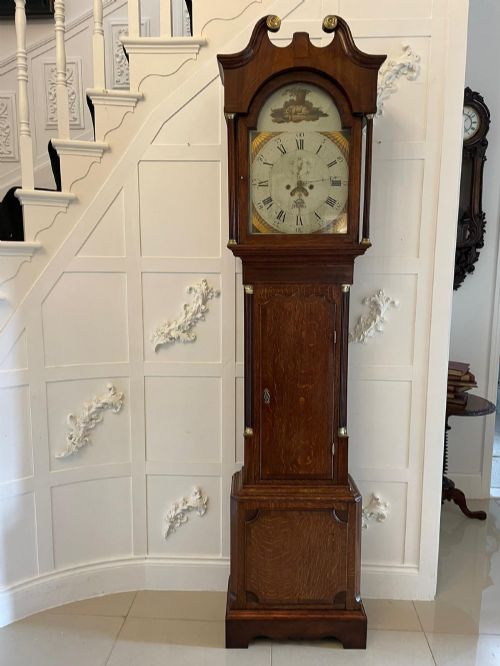
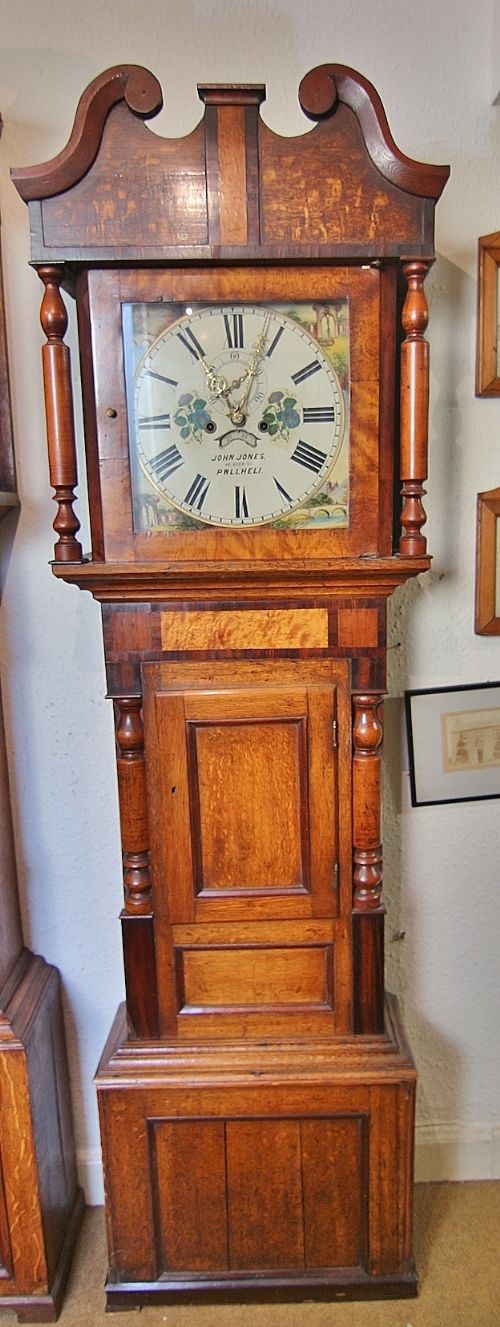
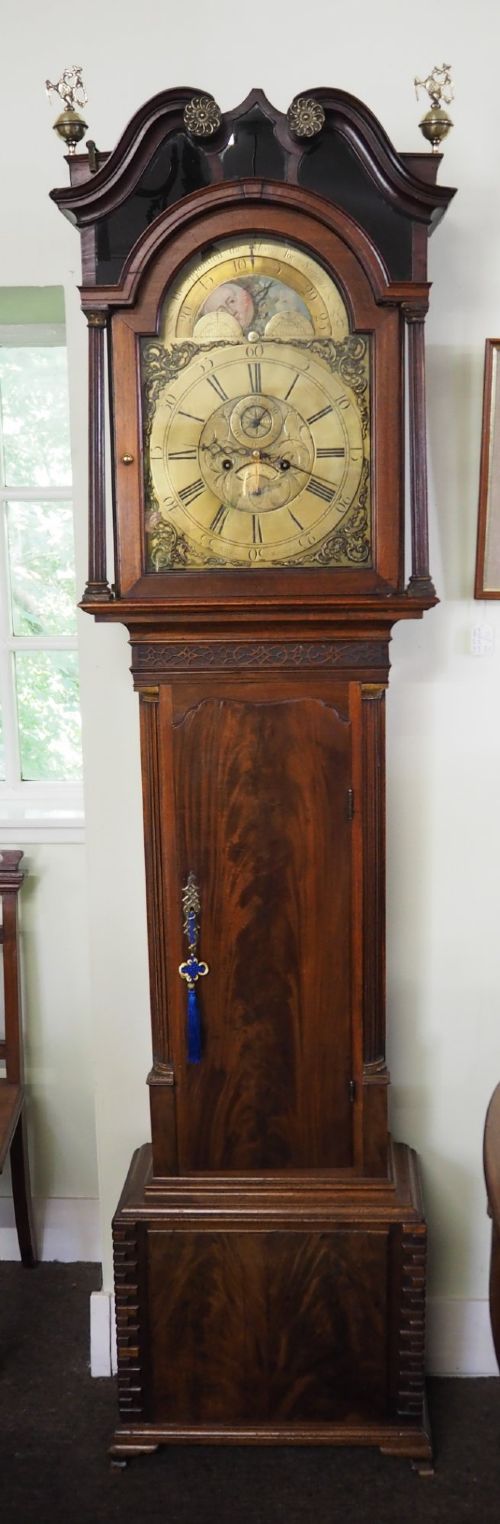
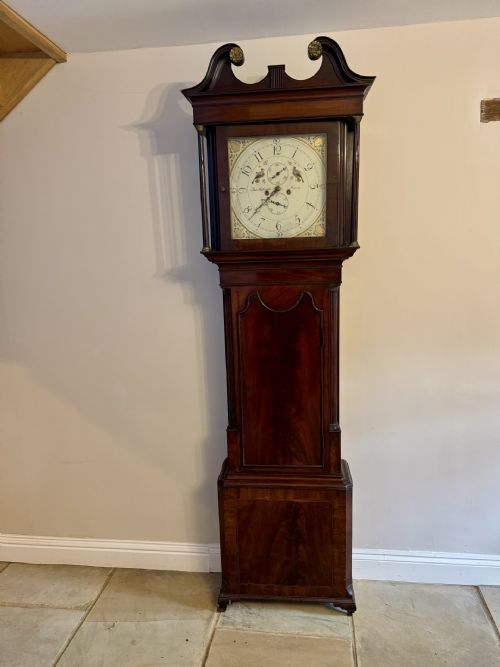
When you search for an 8 day tall clock, you encounter tall floor-standing timepieces spanning the seventeenth, eighteenth, nineteenth, and twentieth centuries, predominantly styled as longcase or grandfather clocks. The examples seen on this page range from early Georgian burr walnut pieces to Victorian mahogany drum head designs and Scottish regional variations.
The most common versions met here date from the Georgian and George III periods, constructed from woods like oak and mahogany with brass or painted iron dials. Regional makers from London to Scotland contributed distinct provincial proportions and dial details to the surviving pool.
Materials and construction
Cases utilise cabinet timbers such as mahogany, oak, walnut, and burr oak, often joined and polished to enclose the tall trunk and weight-driven movement. Dial faces incorporate brass, enamel, and painted iron, displaying numerals, subsidiary seconds, and moon phases.
Movements rely on brass gears, steel arbors, and glass hoods or doors to protect the pendulum and weights from dust. Dial furniture and spandrels involve cast or chased brass work fixed to the dial plates.
8 Day Tall Clock Retail Price Guide 2026
Typical asking prices for 8 day tall clock among the pieces listed under this phrase on Sellingantiques today, from the lower quarter to the upper quarter. They describe what is for sale here now, not the wider market.
One Scottish example shares house room with a painted horse motif on the dial.
Factors separating quality ranges
Quality rests in the precision of the brass movement and the crispness of the cabinetmaker's joinery, distinguishing straightforward utility from exceptional workshop execution. Secondary woods, drawer linings, and the depth of figure in mahogany or burr walnut indicate the tier of the piece.
The engagement of skilled provincial or London makers, demonstrated by signed dials and complex moon phase or strike-silent mechanisms, separates standard domestic timekeepers from superior horological examples.
Walker of Nantwich·John Taylor London·Edward White Birmingham·Charles Shuckburgh London·Hendrie Ogg Dunfermline·Gordon of Aberdeen·Lee of Great Marlow·D Straiton Montrose·Tait Peebles·James Field of Hempstead·Richard Corless of Stockport·James McCabe·Handley and Moore London·Windmills and Wightman London·D Williams of Crickhowell·Henry Weedon London·Edward Shepley of Manchester
The 8 Day Tall Clock Glossary
- Longcase clock
- A tall freestanding weight-driven timekeeper housed in a wooden case with a pendulum, commonly called a grandfather clock.
- Moon phase
- A dial mechanism tracking the lunar cycle through a rotating painted disk visible through an arched aperture.
- Regulator
- A high-precision clock designed to maintain strict timekeeping standards, often utilised for setting other timepieces.
- Paterae
- Small circular decorative motifs carved or inlaid into furniture surfaces during the Georgian and neoclassical periods.
- Spandrel
- The triangular corner space on a clock dial surrounding the circular chapter ring, frequently decorated with cast brass ornamentation.
8 Day Tall Clock: Frequently Asked Questions
How often do you wind an 8 day tall clock?
These movements require winding every eight days via key-holes on the dial face, which lifts the internal weights.
Skipping the weekly interval allows the weights to descend fully, bringing the pendulum to a halt.
Where should I place a tall clock in my home?
Position the case on a firm, level floor against a sturdy wall away from direct sunlight and heating vents.
Securing the upper trunk to the wall prevents accidental tipping and maintains the plumb alignment essential for proper pendulum beat.
What is a moon phase dial?
The arched top of certain dials houses a rotating disk that depicts the phases of the moon across a twenty-nine and a half day cycle.
Clockmakers added this complication for agricultural and tidal reference rather than standard timekeeping.
How do I distinguish an 18th century clock from a 19th century one?
Eighteenth century examples often display brass dials with cast spandrels and rich oak or walnut cases, while nineteenth century versions frequently feature painted iron dials and mahogany or Scottish provincial veneers.
Dial inscriptions and case proportions shift from square brass plates toward arched painted faces as styles progress into the Victorian era.