


8 Arm Brass Light
An 8 arm brass light brings substantial illumination and classical proportion to a room, spanning grand French chandeliers and heavy Victorian wall fixtures.
8 Arm Brass Light
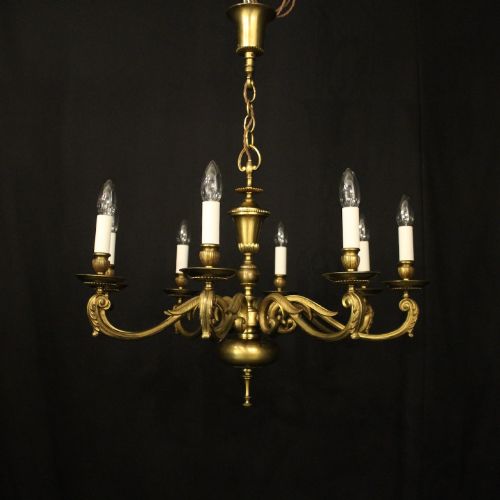
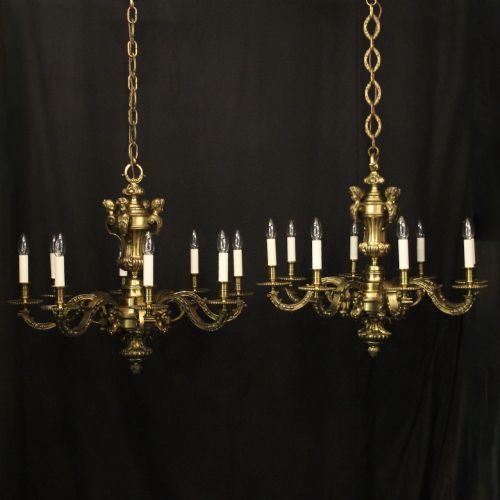
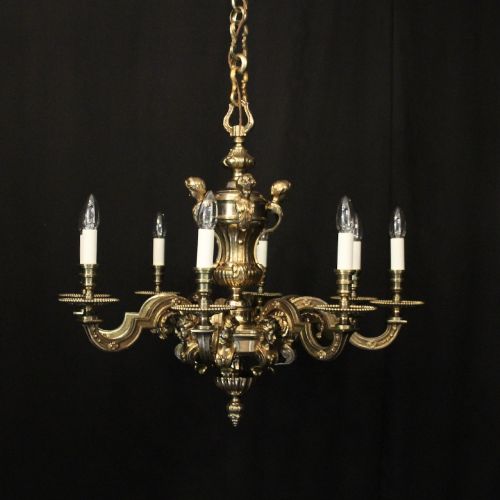
When searching for an 8 arm brass light, buyers encounter a mix of substantial hanging fixtures and multi-branch fittings designed for domestic or civic interiors. The selection spans the nineteenth century through the early decades of the twentieth century, with particular emphasis on French chandeliers and English brass work.
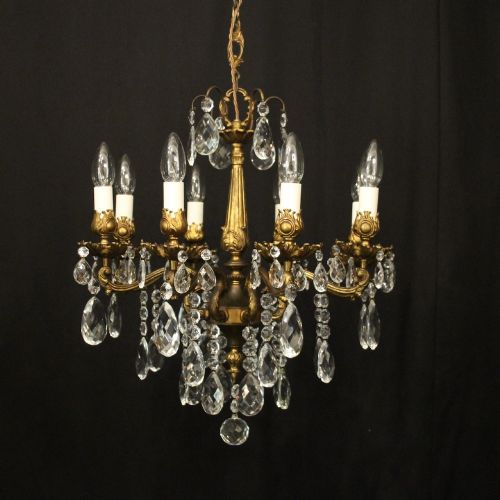
The physical forms on this page include multi-tiered chandeliers, tent and waterfall constructions, and grand chandeliers hung with crystal lustres. Alongside central hanging fixtures, the material evidence incorporates wall lights and sconces utilising twin or triple branches.
Stylistically, pieces draw upon French Empire, Rococo Revival, and Arts and Crafts traditions. The metalwork reflects distinct periods from Victorian manufacturing up to the 1930s, utilising brass, gilt bronze, and copper.
Materials and construction methods
Construction relies heavily on cast and spun brass, gilt bronze, and ormolu, providing the structural framework for multi-branched arms and central stems. Metal components are frequently paired with glass, crystal lustres, and opalescent glass shades to diffuse illumination.
Surface treatments range from polished brass to heavy gilding and dark bronze patination. Decorative elements include applied crystal drops, toleware accents, and burr walnut mounts that indicate specific nineteenth and early twentieth-century workshop practices.
Object forms include wall sconces, ceiling lights, desk lamps, and multi-tier crystal chandeliers.
Judging quality in multi-branch brass lighting
Quality rests upon the crispness of the metal casting and the weight of the brass or gilt bronze components used in the arms and central body. Superior examples display refined chasing, secure joint construction, and integrated decorative elements rather than mass-produced stamped connections.
The inclusion of original crystal lustres, intact glass shades, and coherent patination distinguishes finer items. Maker attribution and documented civic or domestic provenance elevate the standing of individual chandeliers and sconces.
Bruce Talbert·Villeroy & Boch
The 8 Arm Brass Light Glossary
- Ormolu
- Gilded bronze used extensively in French decorative arts for mounts and lighting fixtures. The technique involves applying a finely ground gold-mercury amalgam to a bronze base before firing.
- Lustre
- A cut glass or crystal pendant suspended from a chandelier to reflect light. These drops are typically faceted and hung in arrangements around the central stem.
- Gasolier
- A light fixture designed specifically for gas illumination before the widespread adoption of electricity. Many examples from the nineteenth century are later converted to electric power.
- Bouillotte lamp
- An adjustable desk or table lamp originating in France, traditionally featuring a central stem, multiple candle arms, and a Toleware or metal shade.
- Toleware
- Painted or lacquered sheet metal items popular in domestic lighting and decorative accessories. The green finish is frequently encountered on nineteenth-century French desk lamps.
8 Arm Brass Light: Frequently Asked Questions
How do I clean an antique brass light?
Dust brass lighting gently with a soft dry cloth to preserve the existing surface patination. Avoid harsh chemical cleaners that strip historical finishes.
Check that the fixture is securely disconnected from the mains before undertaking any maintenance on hanging components or crystal lustres.
Are these lights wired for modern use?
Many surviving antique fixtures have undergone conversion for contemporary electrical standards during their history. Buyers should consult a qualified electrician to inspect internal wiring prior to installation.
Original gas or early electric components may require professional rewiring to meet current safety regulations while retaining the external metalwork.
How do I date an 8 arm brass light?
Dating relies upon stylistic indicators such as French Empire or Arts and Crafts motifs, alongside manufacturing techniques like cast versus stamped metal. The presence of gas-era fittings or specific glass shade types helps narrow the period of production.
Reference materials and historical design patterns assist in distinguishing Victorian examples from early twentieth-century reproductions.
Where should I hang a large chandelier?
Large multi-arm chandeliers require adequate ceiling height and structural support to bear the combined weight of brass, bronze, and crystal elements. They suit reception rooms, stairwells, and high-ceilinged dining spaces.
Ensure the hanging point is anchored directly into ceiling joists rather than plaster alone.