

20th Century Oak Server
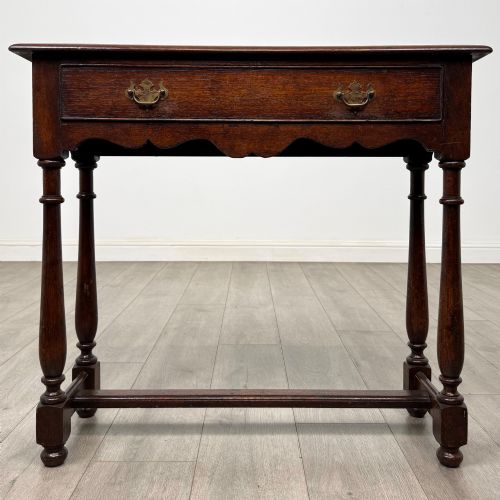
These pieces of 20th century oak server offer robust storage and sturdy surfaces, built to anchor a dining room or hallway with traditional utility.
20th Century Oak Server
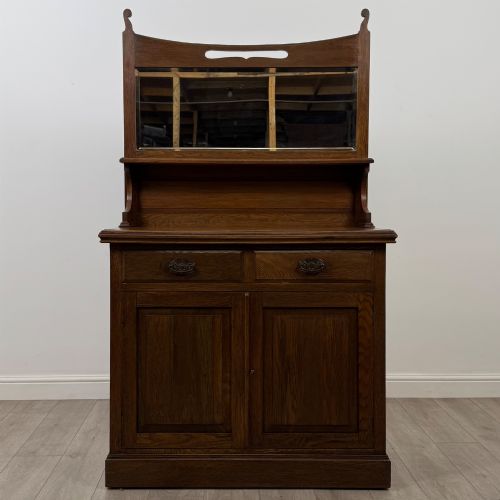
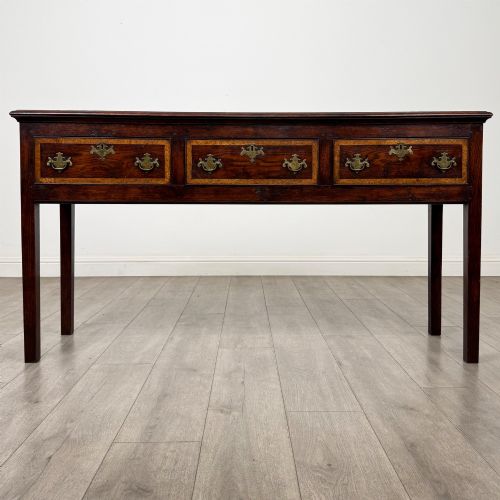
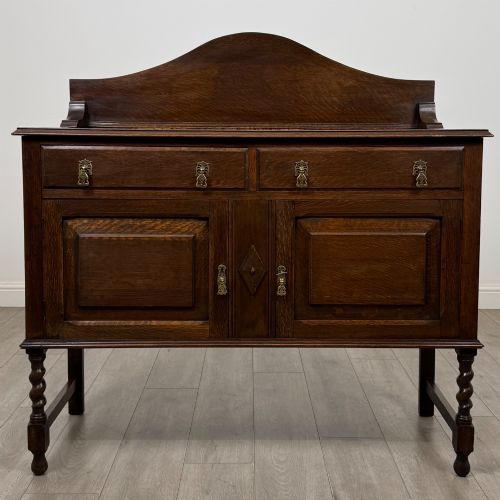
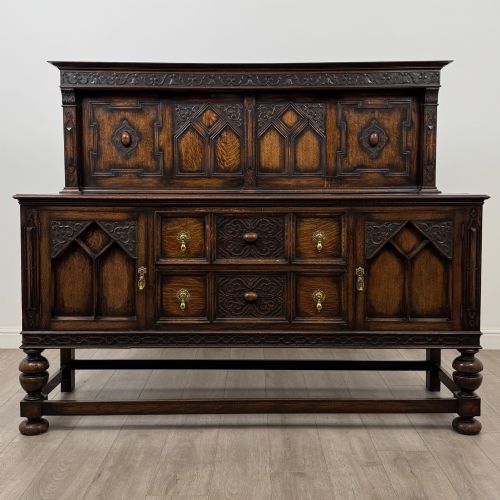
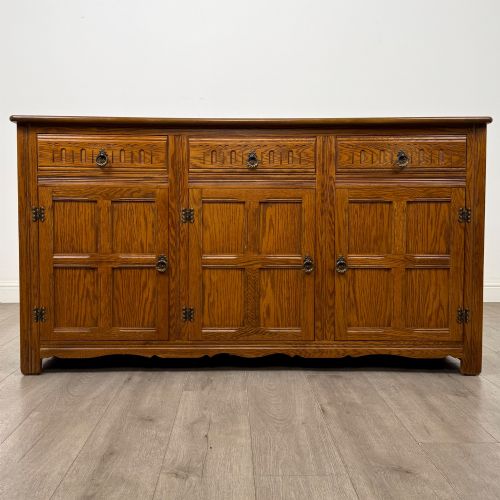
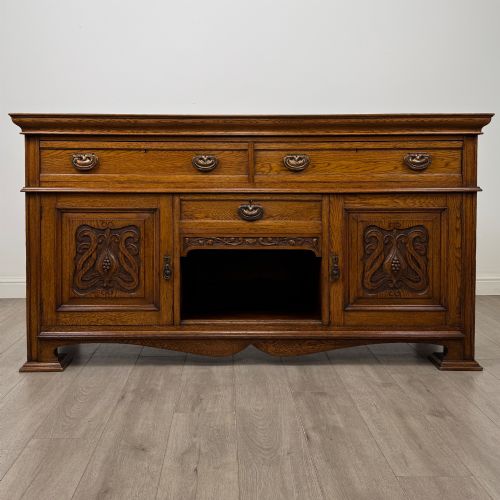
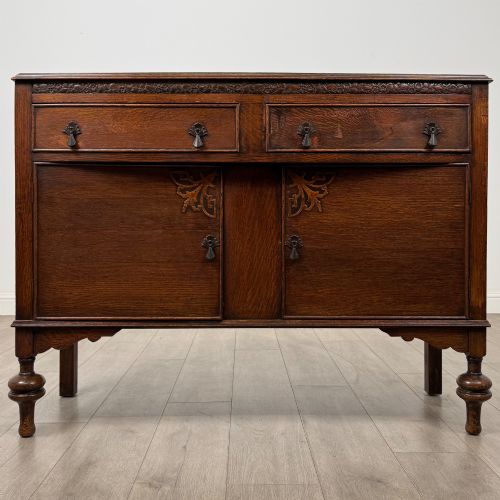
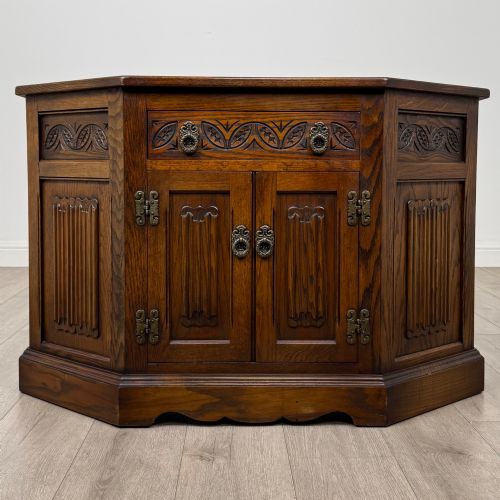
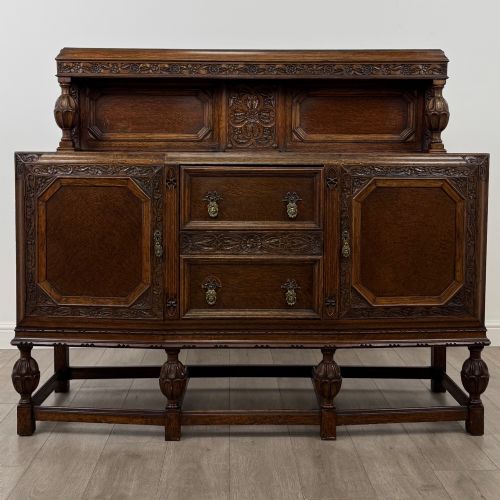
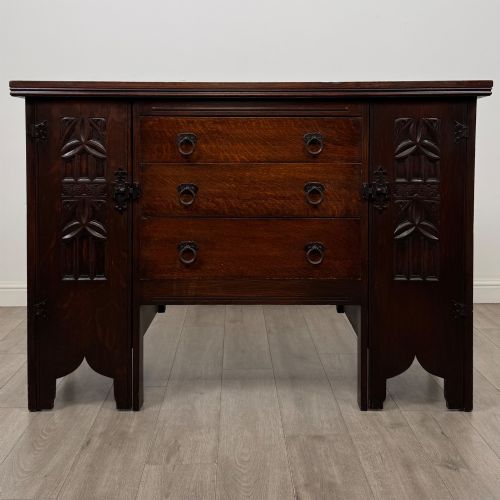
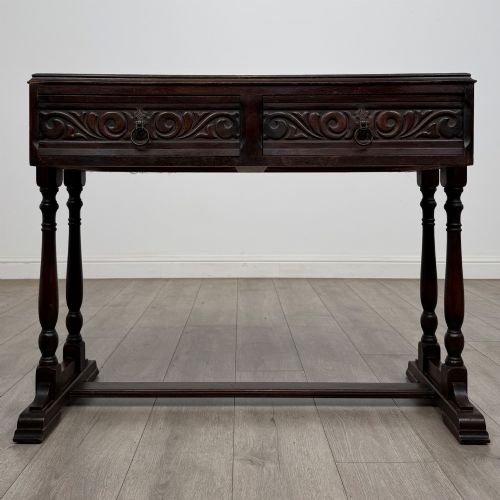
A 20th century oak server encompasses practical heavy-timber furniture designed for serving food, storing dining ware or organising household items. You meet sideboards, court cupboards, dresser bases, side tables, and hallway tables frequently on this page.
The pieces draw heavily on historical revivals, featuring Jacobean, Tudor, Gothic, and Georgian styles alongside Edwardian interpretations and Arts and Crafts designs. Golden oak and light oak predominate across these forms, alongside occasional dark tones.
Origins trace primarily to the Edwardian era and the decades immediately following, specifically around nineteen ten and nineteen twenty. The selection bridges formal dining room cabinetry and simpler domestic utility furniture.
How they were made
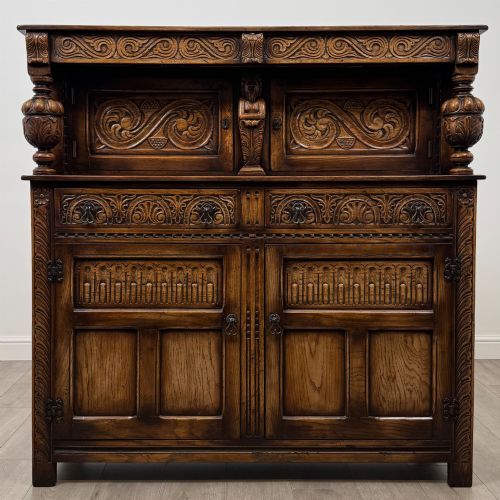
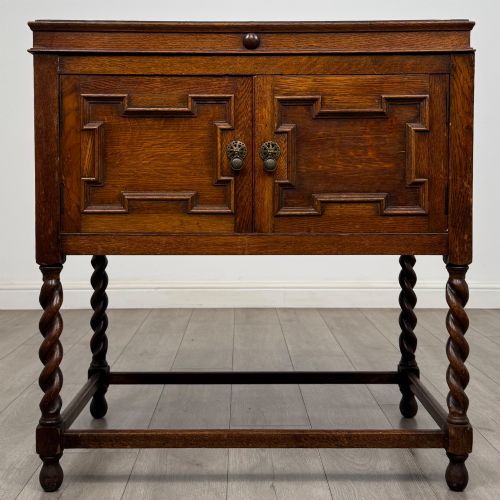
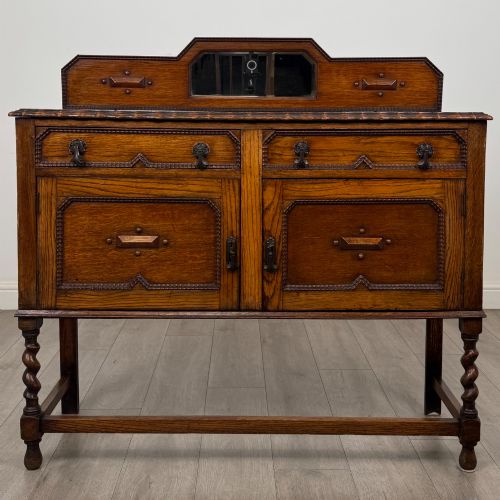
Carpenters utilised solid oak alongside pine for secondary framing, constructing heavy carcases with traditional joints and substantial timber panels. Surfaces often display carved ornamentation, linenfold panels, and barley twist turnings.
Metal hardware incorporates brass, iron, copper, and mixed metal fittings for handles, hinges, and structural bracing. Glass appears selectively in cabinet doors, while specialised forms integrate ships gallery frameworks and folding trays.
Listings span the Edwardian period, nineteen ten, nineteen twenty, and Georgian revival interpretations, constructed mainly in oak with brass, iron, and glass.
What varies in quality
The caliber of carving and the depth of relief work distinguish finer examples from standard production pieces. Hand-carved details and balanced proportions elevate court cupboards and sideboards.
Timber selection and finish play a critical role, with carefully figured golden oak or light oak assemblies showing superior grain consistency. Hardware integration, from cast brass pulls to sturdy iron hinges, further separates standard utilitarian items from finer cabinetwork.
The 20th Century Oak Server Glossary
- Court cupboard
- A heavy enclosed storage piece with an upper section recessed or supported by pillars, typical of revival dining furniture.
- Dresser base
- A low cabinet featuring cupboards or drawers beneath a wide top surface, designed for food preparation and storage.
- Linenfold
- A style of wood carving that imitates folded fabric, frequently seen on cabinet doors and panels.
- Barley twist
- A type of turned furniture leg or column resembling a twisted rope, popular in Edwardian production.
- Ships gallery
- A raised wooden border fitted around the top of a table to prevent items from sliding off at sea or during daily use.
20th Century Oak Server: Frequently Asked Questions
What is a 20th century oak server used for?
These pieces serve primarily as dining room sideboards, display cabinets, or hallway surfaces for holding household objects.
They provide enclosed cupboard space and wide top boards suited for serving meals or arranging decorative items.
How do I identify an Edwardian oak server?
Edwardian examples frequently display revival motifs such as Jacobean carving, linenfold panels, and barley twist legs.
They utilise golden oak or light oak timbers and often incorporate brass or iron hardware typical of the period.
Where do these servers fit in a home?
Dining rooms accommodate larger sideboards, court cupboards, and dresser bases easily against main walls.
Narrower side tables and hall tables suit entranceways, corridors, and living spaces where floor area is restricted.
What styles influence these oak pieces?
Designers drew heavily on historical British motifs, creating Jacobean, Tudor, Gothic, and Georgian revival pieces.
Arts and Crafts philosophies also influenced the construction, emphasising straightforward timber framing and honest craftsmanship.