
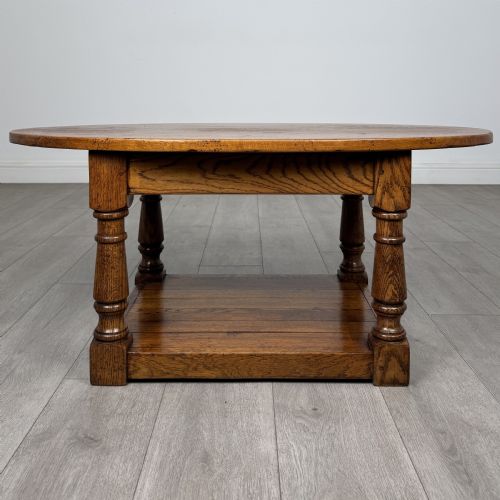
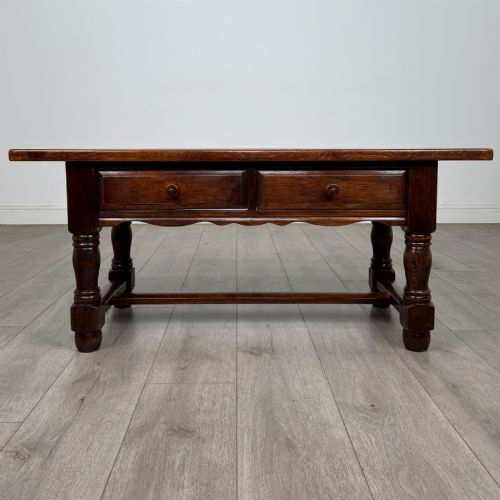
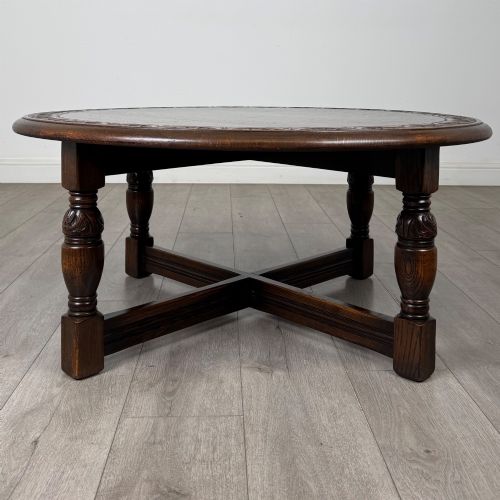
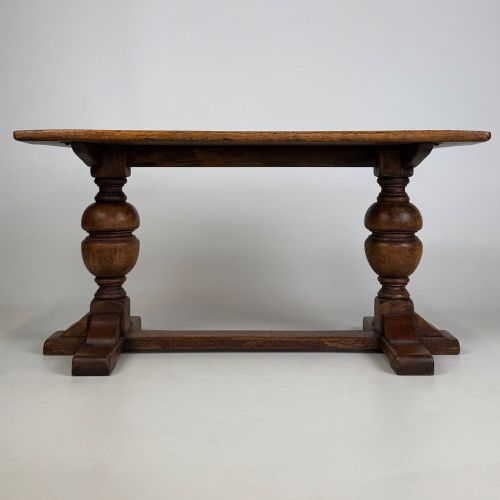
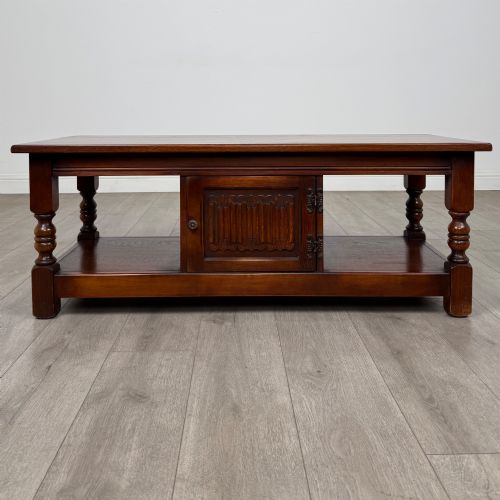
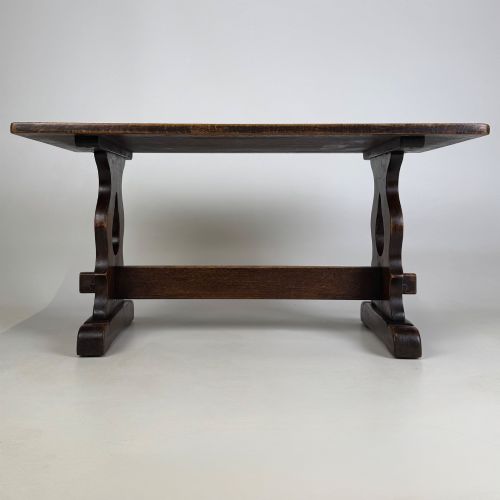
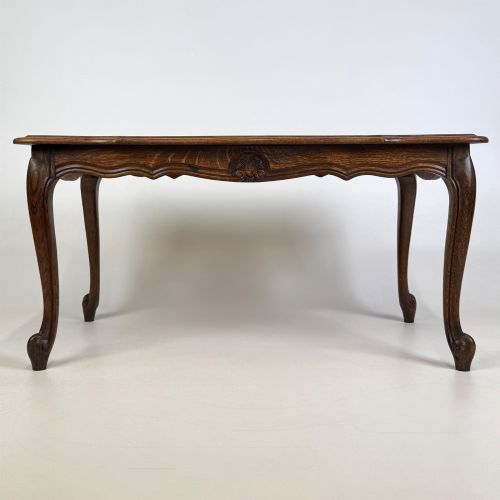
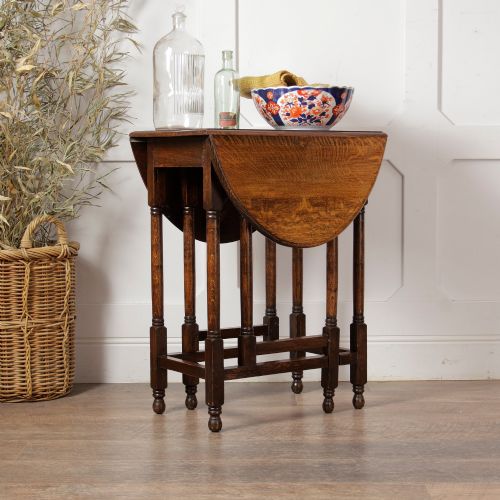


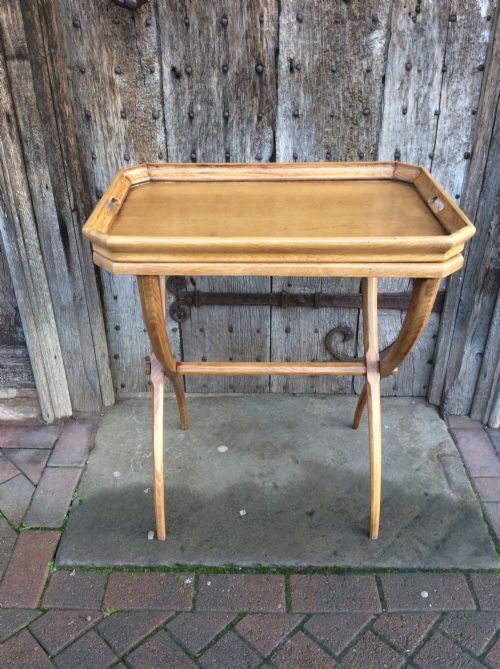
20th Century Oak Coffee Table
A 20th century oak coffee table brings solid timber grain and practical low furniture into a modern room.
20th Century Oak Coffee Table
A 20th century oak coffee table brings solid timber grain and functional low surfaces into a sitting room, drawing on decades of domestic design. Buyers searching for a 20th century oak coffee table will encounter forms ranging from compact Edwardian examples to folding tables and cheese press conversions from later decades.
The pieces listed on this page span the Edwardian era through the nineteen-forties, covering styles like Jacobean revival, Arts and Crafts, and rustic farmhouse. Alongside traditional coffee tables, the selection includes side tables, occasional tables, tray tables, and gateleg designs adapted for low-level use.
Materials and construction
Constructed predominantly from solid oak and oak veneer, these tables often incorporate metal, iron, pine, and carved hardwood elements depending on the workshop and period. Joinery relies on traditional methods suited to domestic furniture, whether built with fixed frames or folding mechanisms.
Surfaces show varied finishes, from honey oak tones to carved detailing and utilitarian butler's tray constructions. The integration of iron fittings and sturdy supports reflects the practical demands placed on everyday household furniture throughout the century.
A cheese press table originally destined for dairy work now holds your coffee cups.
Judging quality
Quality in these tables rests on the integrity of the timber selection and the crispness of any carved detailing, distinguishing standard utilitarian pieces from finer workshop productions. Heavy Jacobean revival carving or refined Edwardian proportions set certain examples apart from simpler domestic items.
Construction robustness also defines the upper tier, visible in the smooth operation of folding tables, gateleg actions, and tray stands. Timber grain consistency and the balance of proportions between top and supports indicate the care taken in the original manufacture.
The 20th Century Oak Coffee Table Glossary
- Oak veneer
- A thin layer of oak applied to a secondary timber base to provide a figured surface while maintaining structural stability. This technique allowed makers to achieve decorative grain patterns without using solid timber throughout.
- Gateleg table
- A table with hinged drop leaves supported by swing-out legs that resemble a swinging gate. This design allowed furniture to fold down for compact storage when not in use.
- Butler's tray
- A removable wooden tray with raised sides and carrying handles, originally designed to sit upon a folding wooden stand. In domestic settings, this combination served versatile functions for serving and display.
- Cheese press table
- A heavy utilitarian table repurposed from agricultural equipment, characterised by robust timbers and functional framing. These pieces bring industrial character into domestic interiors.
- Arts and Crafts
- A design movement prioritising honest construction, visible craftsmanship, and simple forms inspired by medieval traditions. Furniture from this ethos emphasises the natural qualities of the wood.
20th Century Oak Coffee Table: Frequently Asked Questions
How do I date an oak coffee table?
Dating relies on stylistic clues, hardware, and construction methods characteristic of periods like the Edwardian era or the nineteen-thirties.
Examining the timber preparation and secondary woods helps place the piece within its specific decade of manufacture.
Are folding tables sturdy enough for daily use?
Folding tables from the early decades were engineered with robust wooden hinges and sturdy leg frames designed for regular household adaptation.
Their stability depends on the tightness of the original joints and the quality of the mechanisms.
What is the difference between a side table and a coffee table?
Coffee tables are specifically proportioned for low seating arrangements in a living room, whereas side tables traditionally stood beside chairs or against walls at a taller height.
Many lower side tables and occasional pieces are adapted for coffee table use today.
How should I care for an antique oak surface?
Maintain oak surfaces by dusting regularly with a dry cloth and occasionally applying quality beeswax to nourish the timber grain.
Avoid placing them near direct heat sources to prevent the wood from splitting.