



20th Century French Terracotta
These 20th century french terracotta pieces bring warmth and sculptural presence to an interior, offering tactile appeal through modelled clay and painted finish.
20th Century French Terracotta
When you search for 20th century french terracotta, you encounter sculptural objects ranging from animal figures to portrait busts and shop display items. These works capture the decorative spirit of French interiors across the decades, combining modelled earth with painted or patinated surfaces.
The versions most commonly met on this page include animal subjects such as hens and dogs, alongside human busts and functional display pieces like mannequins. Such pieces originate from periods spanning the early decades of the century through to later decades.
Makers and artists working in France utilised terracotta to achieve immediate texture and form, whether producing naturalistic animalier studies or classical female portraits. Each piece reflects the sculptural traditions of French workshops during the 1900s, 1910s, 1920s and beyond.
Materials and construction
Surface treatment often involves applied pigment or oil-based paint over the terracotta body, enhancing depth and tonal variation. This combination of ceramic base and applied colour preserves the touch of the maker across individual busts and animal figures.
20th Century French Terracotta Retail Price Guide 2026
Typical asking prices for 20th century french terracotta among the pieces listed under this phrase on Sellingantiques today, from the lower quarter to the upper quarter. They describe what is for sale here now, not the wider market.
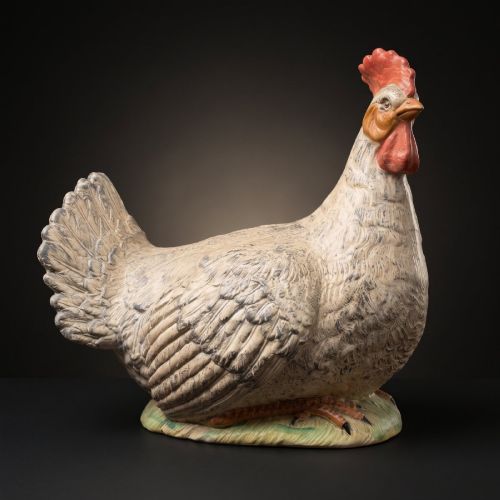
Among the sculpted fauna, a terracotta hen stands ready to supervise the room with unflinching ceramic gaze.
Assessing quality and execution
The standard of a terracotta sculpture depends upon the crispness of the modelling and the sensitivity of the painted or patinated finish. Finer examples display confident handling of anatomy and expression, whether depicting an animal or a human subject.
Evidence of the artist's hand in the clay distinguishes superior works from more commercial productions. The preservation of the original surface and the balance of the composition ultimately determine the visual impact of the piece.
Georges Morin·Foucher·Arthur Gué·Demetrios Galanis·Girieud
The 20th Century French Terracotta Glossary
- Terracotta
- Fired unglazed clay of a brownish-red colour utilised for sculpture and decorative objects. It provides a porous, matte surface that readily accepts paint.
- Animalier
- A nineteenth and twentieth century genre focusing on the realistic portrayal of animals. Sculptors in this tradition concentrated on the accurate musculature and posture of subjects like dogs and hens.
- Bust
- A sculpted representation of a person from the chest up. These pieces capture facial expression and hairstyle characteristic of their period.
- Patina
- The surface appearance developed through age, handling or applied finish. On terracotta, it refers to the interplay between the fired clay and any subsequent paint layers.
20th Century French Terracotta: Frequently Asked Questions
What is 20th century french terracotta?
These pieces comprise sculpted figures, animal studies, busts and display objects made from fired clay in France during the twentieth century.
They reflect the diverse artistic movements and decorative arts of the period, ranging from naturalistic animalier subjects to stylised human portraits.
How were these terracotta sculptures used?
Sculptures of this type served as interior ornaments, mantelpiece decorations or, in the case of mannequins, functional shop display pieces.
Their substantial weight and decorative finish made them suitable for placement on tables, pedestals or shelves within domestic and commercial spaces.
How should I care for terracotta?
Terracotta requires gentle dusting with a dry cloth to prevent the accumulation of particles within the porous surface or painted areas.
Avoid moisture and liquid cleaners, as painted finishes on these sculptures can be sensitive to damp environments and harsh chemicals.
How do I identify the period of a piece?
Dating relies on stylistic markers, artist signatures, and the specific characteristics of the modelled clay and painted surface.
Early twentieth-century examples often align with Art Nouveau or early modernist sensibilities, while later pieces reflect mid-century aesthetic shifts.