
20th Century Dining Table
When choosing a 20th century dining table, you select a piece shaped by Edwardian craft, refectory utility and substantial timber character.
20th Century Dining Table
A 20th century dining table brings together domestic practicality and period design, drawing on Edwardian elegance, Arts and Crafts utility, and rustic farmhouse traditions. These tables serve daily meals and large gatherings, offering robust construction suited to active rooms.
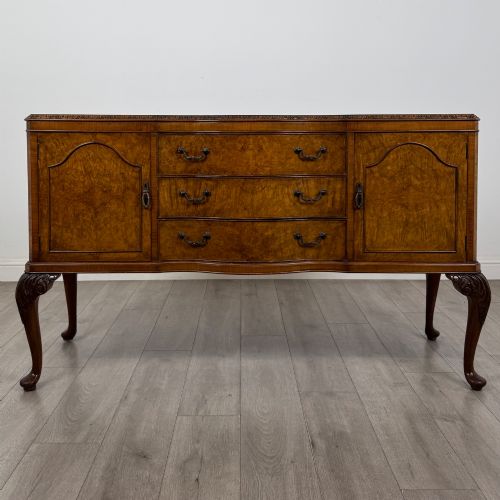
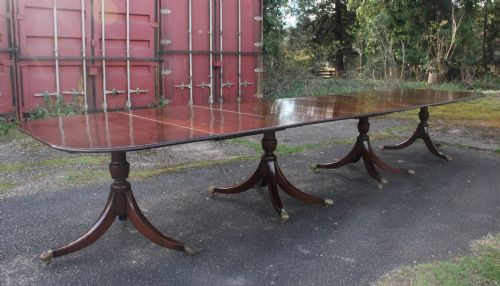
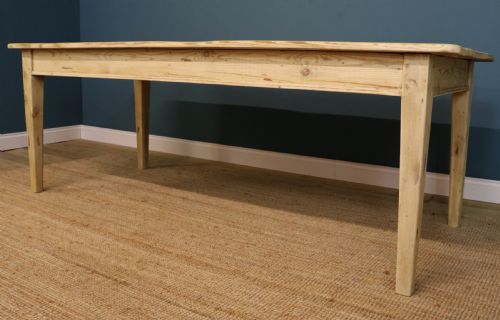
Alternative forms include mahogany tables with pedestal bases or extending leaves, alongside pine tavern and farmhouse tables reflecting French and English country use. Smaller bistro tables and industrial iron-based designs also appear, providing compact options for varied interior layouts.
Materials and construction methods
Construction relies heavily on durable hardwoods like oak and mahogany, supplemented by pine for simpler utility tables and occasional burr walnut veneer on finer Edwardian surfaces. Joinery techniques prioritize stability, utilising sturdy refectory frames, trestle bases, and functional gateleg mechanisms.
Metal elements such as cast iron and brass appear in industrial and tavern tables, providing robust support bases paired with solid wooden tops. Surfaces are finished to highlight natural grain patterns, ranging from honey-toned polishes to bleached pine.
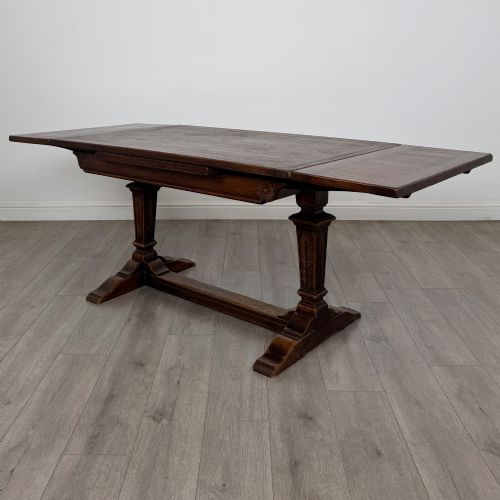
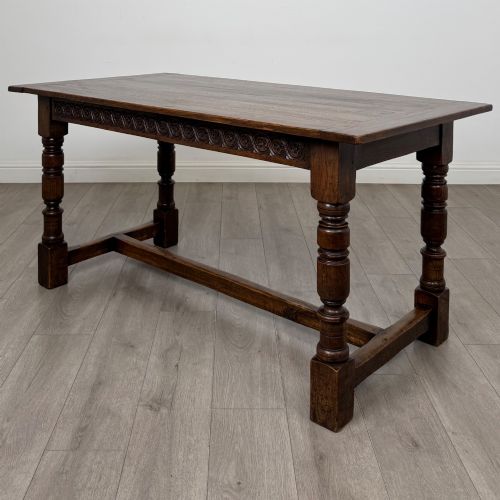
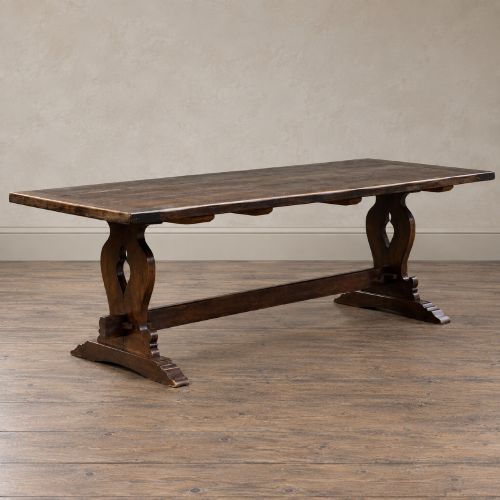
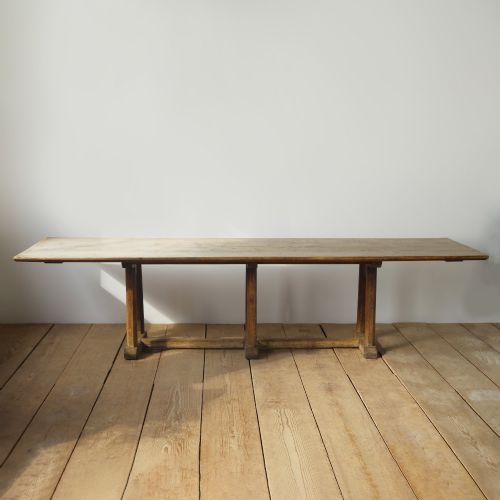
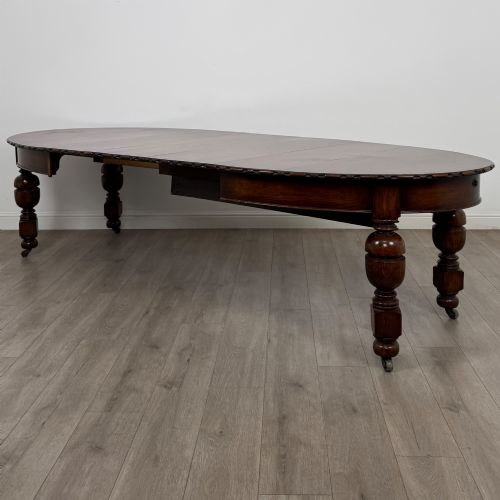
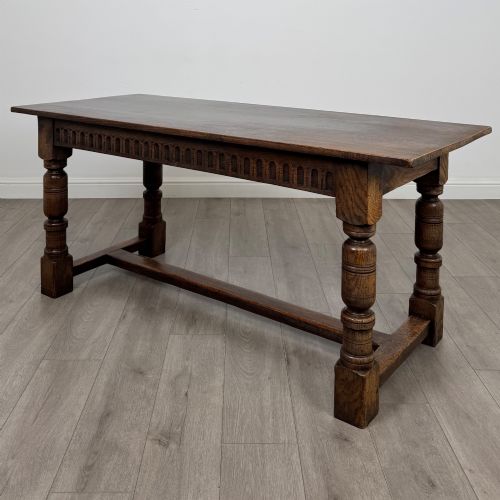
Refectory tables and draw leaf extending mechanisms dominate the available dining table inventory.
Indicators of quality
Quality rests in the selection of solid timber, the stability of extending mechanisms like draw leaves or pedestals, and the precision of the joinery. Superior examples maintain structural integrity across large spans without sagging.
Attention to detail in carved elements, well-fitted extension leaves, and balanced proportions distinguish finer workshop pieces from basic utilitarian tables.
The 20th Century Dining Table Glossary
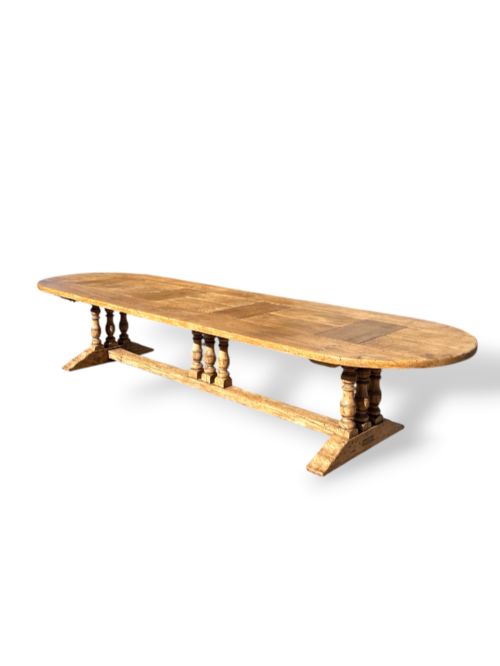
- Refectory table
- A long, narrow dining table historically used in communal dining halls, characterised by sturdy legs connected by a low stretcher rail.
- Draw leaf table
- An extending table with pull-out leaves stored beneath the main surface, allowing the top to expand easily.
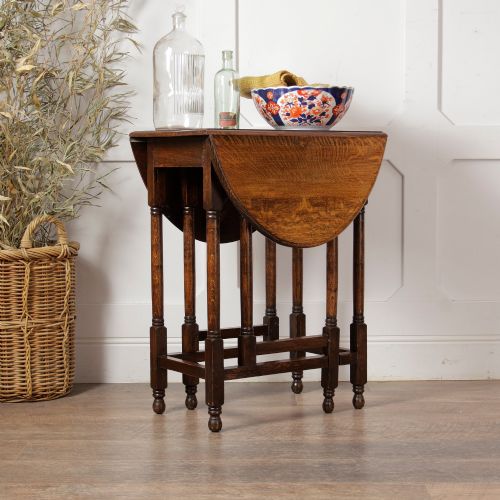
- Gateleg table
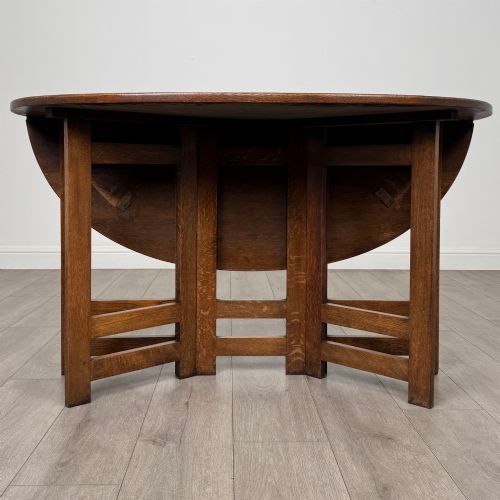
- A table with hinged leaves supported by swing-out legs that resemble a gate opening.
- Pedestal table
- A table supported by one or more central columns or pillars rather than four corner legs.
- Jacobean revival
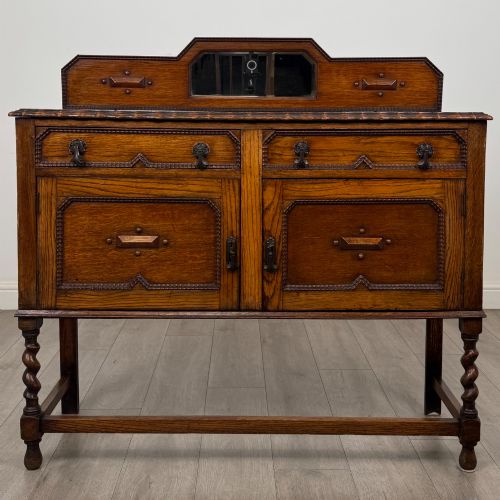
- A style borrowing heavily from seventeenth-century English design, featuring dark oak, geometric mouldings, and turned legs.
20th Century Dining Table: Frequently Asked Questions
How do I measure for an extending table?
Measure your dining space with the leaves fully closed and again when fully extended to ensure adequate clearance around the room for chairs and movement.
Account for the legs and support mechanism when seated, ensuring guests have sufficient legroom underneath.
What is a refectory table used for?
Refectory tables were originally built for communal dining in monasteries and large halls, designed to accommodate many diners along a narrow surface.
Today, they function well in large kitchens and dining rooms as sturdy gathering places for daily meals.
How do I care for an oak dining table?
Clean the surface regularly with a soft, slightly damp cloth and dry immediately to protect the wood grain.
Avoid placing timber surfaces in direct sunlight or near heat sources to prevent the wood from drying out or cracking.
What is the difference between draw leaf and gateleg tables?
Draw leaf tables feature hidden panels that slide out from beneath the main surface to extend the length while keeping the main top stable.
Gateleg tables rely on hinged drop leaves supported by swing-out legs, allowing the entire structure to fold down compactly when not in use.