
19th Century Writing Slope Desk
A 19th century writing slope desk brings portable craftsmanship to modern studies, offering fitted compartments and sloped surfaces for correspondence.
19th Century Writing Slope Desk
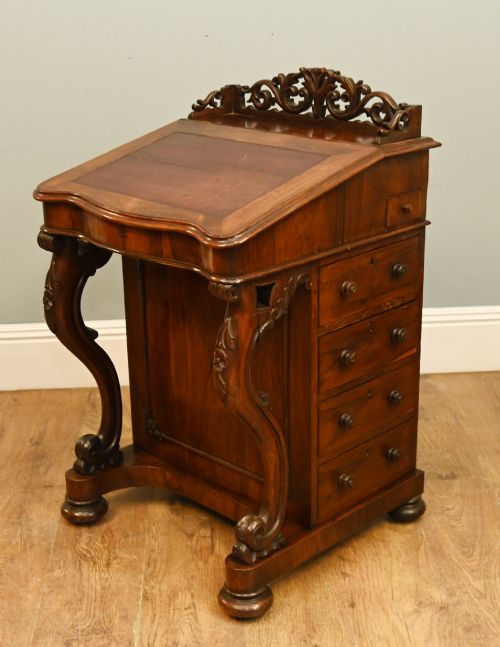
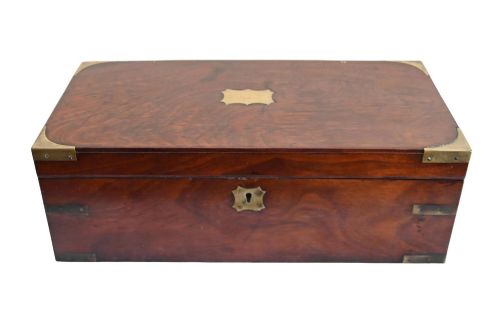
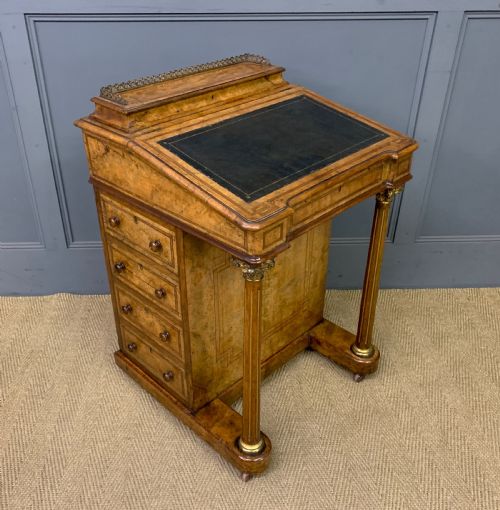
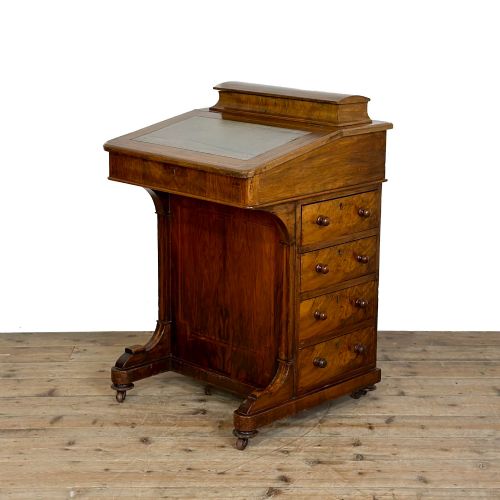
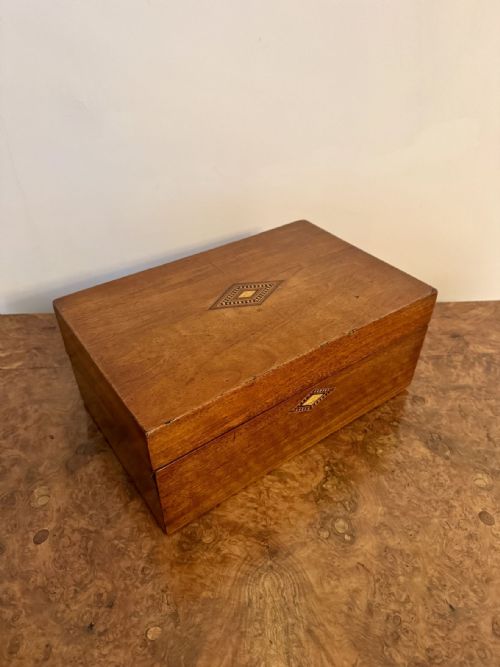
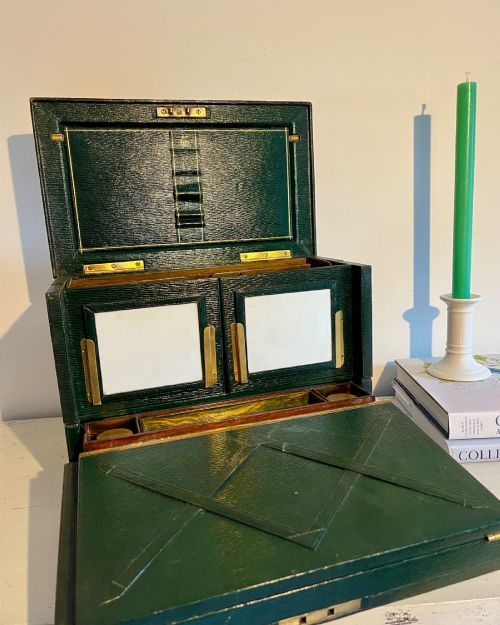
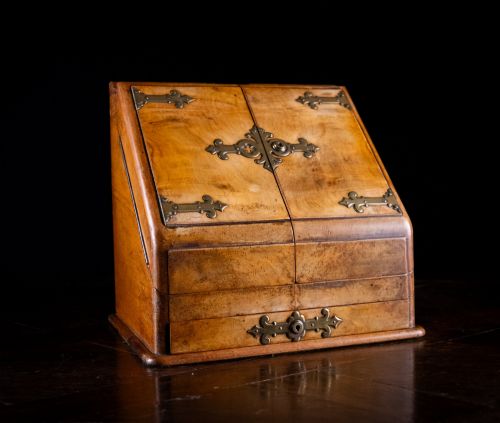
A 19th century writing slope desk provides a compact, portable writing surface that folds open to reveal fitted compartments for paper, ink, and pens. These pieces range from simple campaign boxes to elaborate Davenport desks and bureau cabinets.
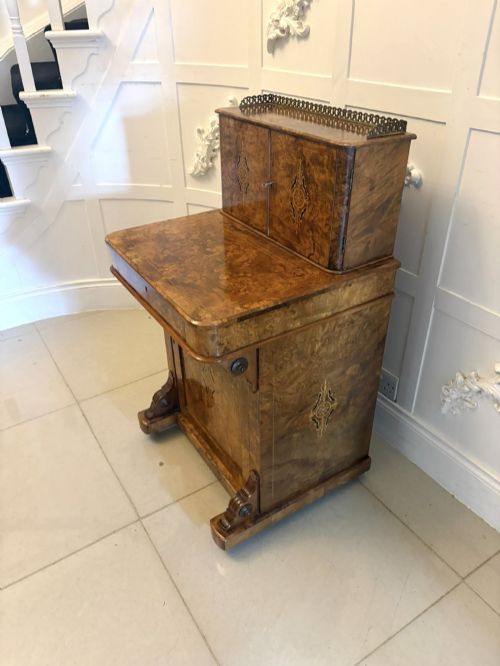
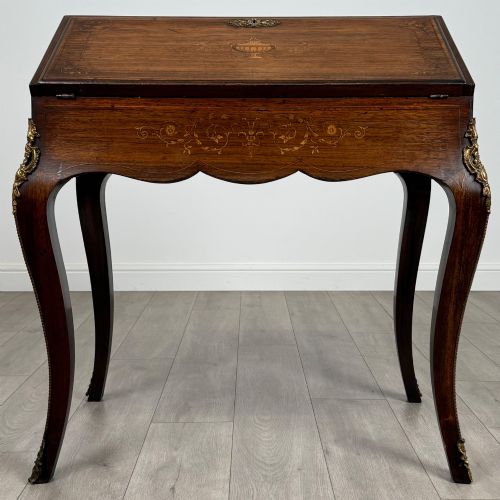
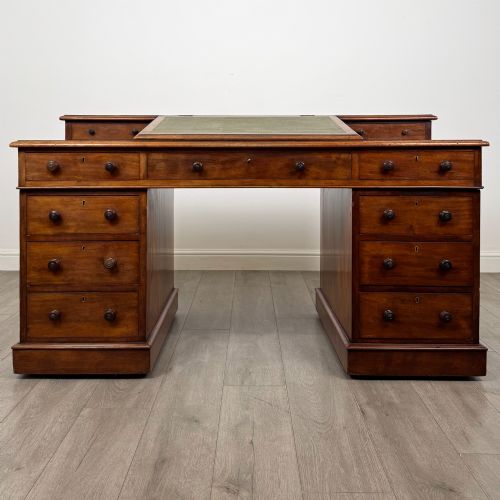
Victorian and Georgian versions dominate the selections, appearing in woods like mahogany, rosewood, and burr walnut. Buyers frequently encounter tabletop writing boxes alongside standing pedestal forms with leather-lined writing surfaces.
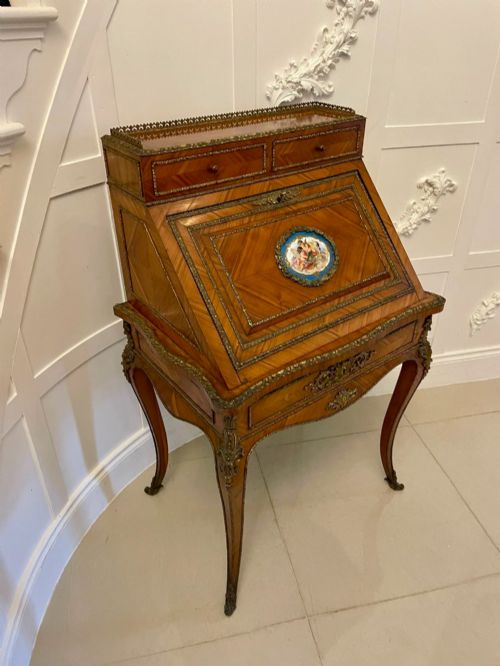
Origin variations include French revival designs, Chinese rosewood pieces, and Dutch inlaid oak examples. The selection spans straightforward travel boxes to substantial architectural desks built for domestic and professional correspondence.
Materials and construction methods
Cabinet makers built these pieces using dense hardwoods such as mahogany, rosewood, and oak, often veneered with burr walnut or amboyna to create striking surface patterns. Secondary timbers like satinwood frequently line the interior drawers and compartments.
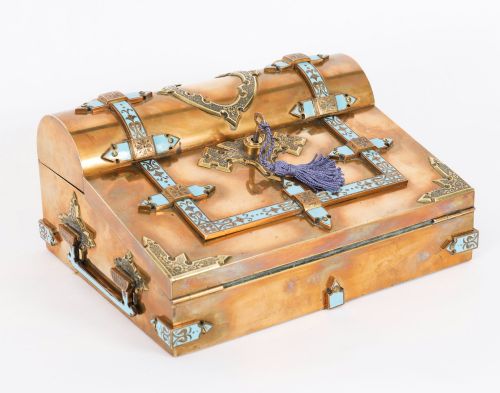
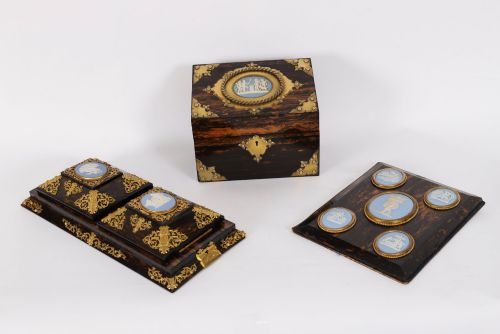
Brass corners, strapwork, and inlay strengthen the joints and protect the edges during travel. Leather panels, sometimes gold-tooled, provide the writing surface inside the folding lids.
Periods represented span from Georgian and Regency eras through the height of the Victorian age.
Distinctions in quality
Quality rests on the selection of timber veneers and the precision of the brass binding or inlay. Superior pieces display book-matched burr walnut or rosewood grain across the entire exterior surfaces without disruption.
Internal complexity dictates distinction, separating simple partitions from fitted stationery cabinets with secret drawers, working locks, and maple interiors. The integration of secondary woods and the crispness of carved details like Green Man motifs mark higher workshops.
Wilkinson & Co·Gillow & Co·Maple & Co
The 19th Century Writing Slope Desk Glossary
- Writing slope
- A portable box with a hinged lid that slants downward to provide an angled surface for handwriting. Inside, compartments store stationery and writing instruments.
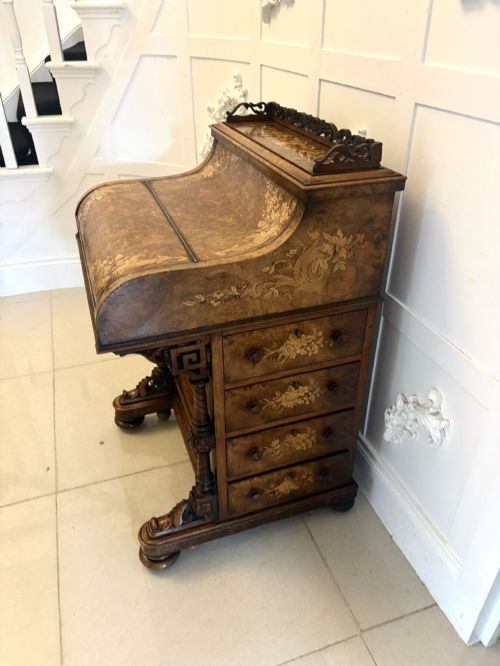
- Davenport desk
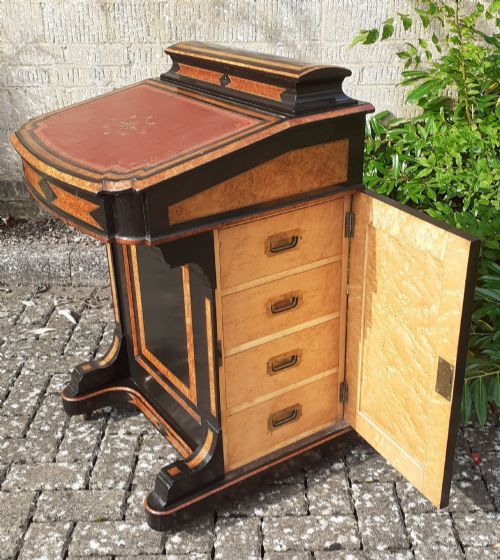
- A compact small desk featuring a sloped top, a set of side drawers, and often a stationery compartment on top. They became popular during the Victorian period.
- Campaign box
- Furniture designed to dismantle or fold for military travel, distinguished by recessed brass handles and corner brackets. They prioritised durability and portability.
- Tunbridge Ware
- Small wooden decorative objects adorned with intricate mosaic patterns made from tiny segments of different coloured woods. These mosaics form geometric or pictorial designs.
- Bureau de dame
- A lady's small writing desk, typically French in origin and featuring curved cabriole legs or delicate veneer work. They often include internal pigeonholes and small drawers.
19th Century Writing Slope Desk: Frequently Asked Questions
How do I use a writing slope today?
These boxes sit on modern tables or desks to hold stationery, letters, or laptops. Opening the sloped lid provides a traditional inclined surface for writing notes.
Interior compartments store pens and small office supplies, keeping work spaces orderly when closed.
What is the difference between a slope and a Davenport?
A writing slope is a portable box placed on top of a table or desk for writing. It folds shut to contain papers and travels easily.
A Davenport is a stationary standing desk with drawers built into the side beneath the sloping writing surface.
How do I tell Georgian from Victorian slopes?
Georgian pieces from the early nineteenth century often feature simpler mahogany or oak construction with straightforward brass escutcheons. Their lines tend toward classical restraint.
Victorian examples frequently utilise exotic veneers like burr walnut, ornate brass inlay, and complex internal stationery fittings characteristic of later industrial cabinet making.
Were campaign slopes used in the military?
Campaign writing boxes were built for officers on the move during military campaigns abroad. Their flush brass corners and strapwork protected the wood from rough transport.
Camphor wood and mahogany were chosen for these pieces to withstand tropical climates and heavy handling.