



19th Century Transferware Tray
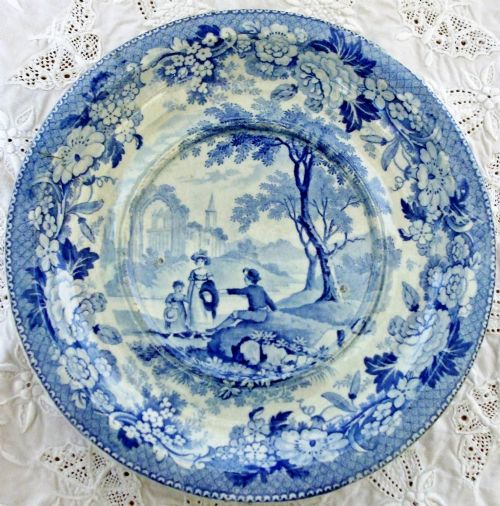
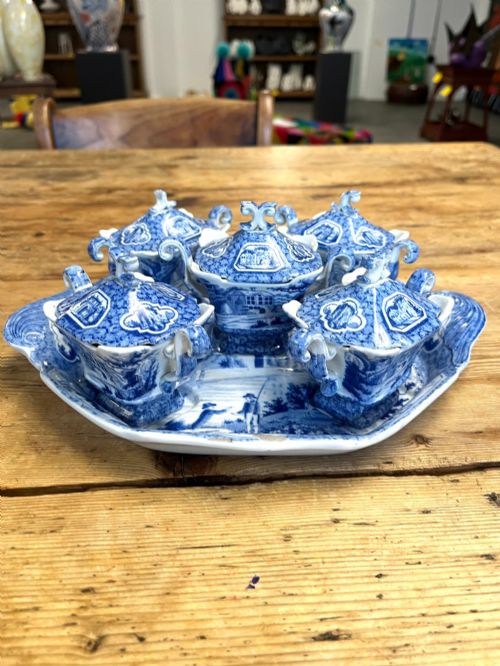
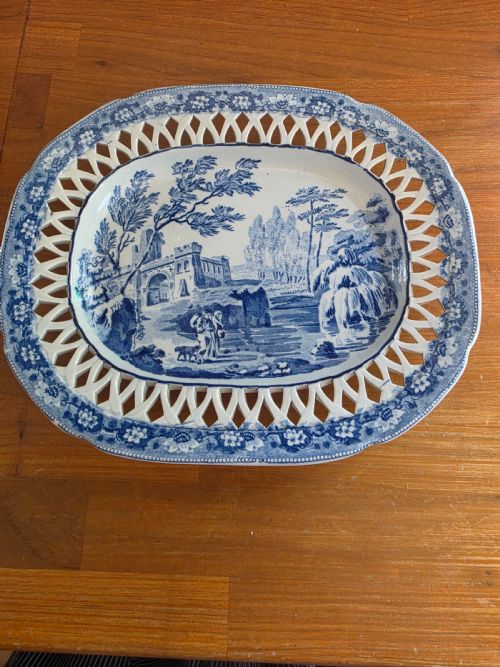
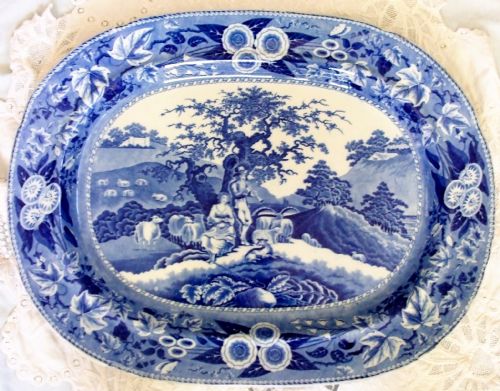
These 19th century transferware tray items and platters combine utilitarian service with crisp blue and white printed imagery for any table.
19th Century Transferware Tray
A 19th century transferware tray or platter is a ceramic serving piece designed for culinary presentation, most frequently encountered here as large blue and white meat platters and serving dishes. These objects originate from Georgian, Regency, and Victorian periods, spanning earthenware, pearlware, and porcelain bodies.
Makers produced these utilitarian dishes in various shapes, including serving trays, meat plates, and specialised serving platters complete with reservoirs. The decorative schemes utilise blue and white transfer printing to display pastoral scenes, architectural views, and Chinoiserie patterns across the ceramic surface.
Buyers seeking this phrase encounter British tableware ranging from early nineteenth-century examples to later Victorian pieces. The selection demonstrates how potteries adapted traditional forms for domestic dining through applied cobalt decoration.
How they were made
Potters formed these pieces using earthenware, pearlware, or porcelain, shaping them into platters and trays before applying a glossy glaze. Cobalt pigment served as the primary colourant for the transfer-printed designs, which depicted scenes such as the Piping Shepherd or Byron Views.
The transfer printing technique involved engraving a copper plate, inking it with cobalt pigment, and transferring the impression to tissue paper that was subsequently applied to the biscuited ceramic body. Artisans then fired the piece and applied a transparent glaze to seal the printed surface permanently.
19th Century Transferware Tray Retail Price Guide 2026
Typical asking prices for 19th century transferware tray among the pieces listed under this phrase on Sellingantiques today, from the lower quarter to the upper quarter. They describe what is for sale here now, not the wider market.
Object forms include meat plates, serving dishes, and substantial platters decorated with cobalt pigment in blue and white.
What varies in quality
Quality in these transfer-printed pieces depends largely on the clarity of the cobalt transfer and the precision of the glaze application. Finer examples display sharp, well-defined pictorial details without smudging in the blue pigment.
The sophistication of the ceramic body also distinguishes the range, with refined pearlware and early porcelain bodies representing higher production standards than standard earthenware. Additionally, complex forms such as platters with reservoirs indicate superior functional design.
Davenport·Minton·Spode·Copeland and Garrett·Don Pottery·John Rogers and Son
The 19th Century Transferware Tray Glossary
- Transferware
- Ceramic pottery decorated by transferring a printed design from an engraved copper plate via tissue paper. This technique allowed potteries to produce intricate pictorial patterns consistently across large services.
- Pearlware
- A refined earthenware body developed in the late eighteenth century featuring a subtle bluish glaze that pooled in recesses. It bridged the gap between creamware and later white earthenwares.
- Cobalt pigment
- A metallic oxide used to achieve deep blue colouration under the glaze. It withstood high firing temperatures without losing its intensity.
- Reservoir
- A recessed channel or well built into the surface of a carving platter to collect meat juices during service. It represents a functional enhancement found on larger dining pieces.
- Chinoiserie
- A decorative style reflecting European interpretations of Chinese artistic motifs. It appears frequently in nineteenth-century blue and white pottery patterns.
19th Century Transferware Tray: Frequently Asked Questions
How were transferware platters used?
These large ceramic platters served joints of meat and main dishes at the dining table during the nineteenth century. Their sturdy earthenware and pearlware construction accommodated heavy daily service.
Specialised forms included recessed channels to manage juices during carving. They functioned both as practical kitchenware and decorative dining room accessories.
How do I care for an antique platter?
Wash these ceramic pieces gently by hand using mild detergent and warm water to protect the historic glaze and cobalt transfer print. Avoid modern dishwashing machines and harsh abrasives entirely.
Display them securely on stable surfaces or use specialist plate hangers if mounting them on walls. Sudden temperature changes can stress the antique ceramic body.
How can I tell the period of a tray?
Examine the ceramic body, glaze characteristics, and backstamps to determine the likely era of manufacture. Early nineteenth-century pieces often utilise pearlware bodies with pooling blue glaze.
Later Victorian examples typically feature whiter earthenware fabrics and more mechanised transfer techniques. Maker marks and named pattern titles further help narrow down the production date.
What is the difference between earthenware and porcelain?
Earthenware is an opaque, porous ceramic body that requires a fired glaze to become completely waterproof. It forms the foundation of most utilitarian nineteenth-century serving platters.
Porcelain is a denser, vitrified material that is whiter and frequently translucent when held to the light. Both materials accepted cobalt transfer printing successfully during this era.