


19th Century Timber Stools
These 19th century timber stools are practical survivors from workshops and country kitchens, offering honest utility and solid construction that suit modern rooms.
19th Century Timber Stools
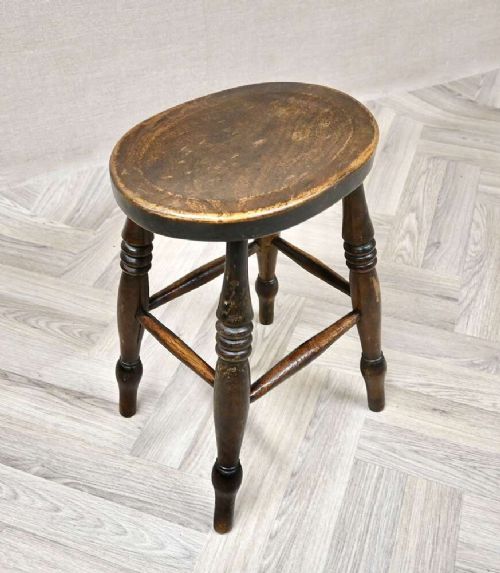
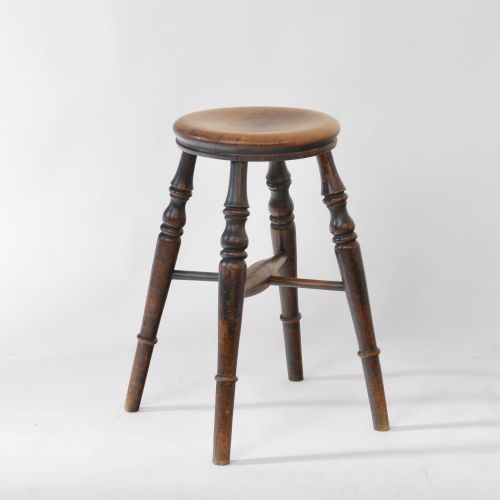
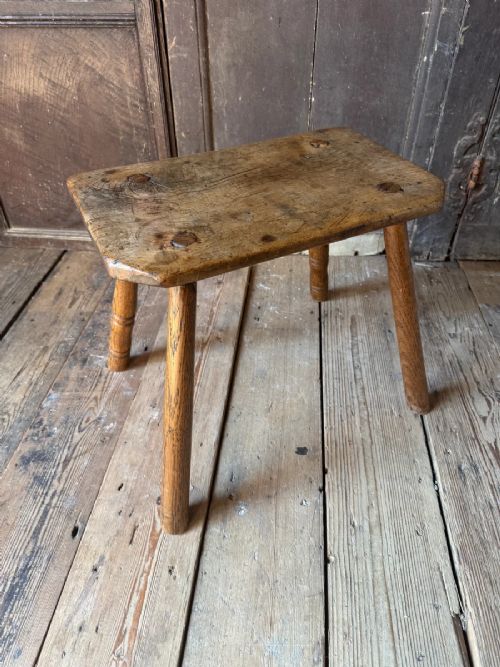
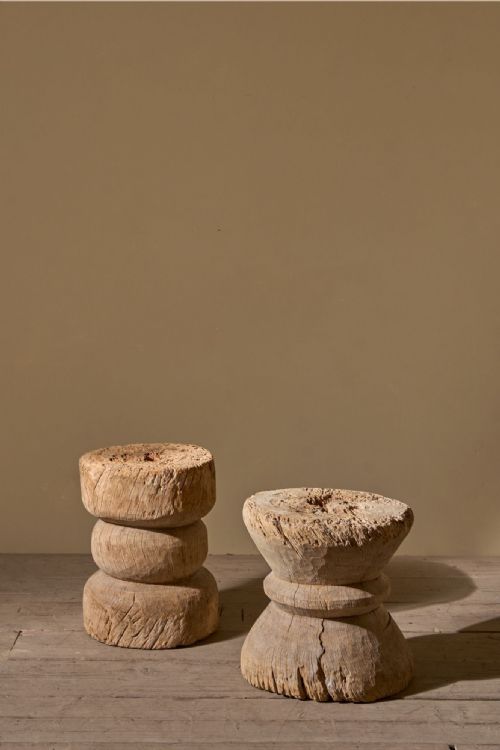
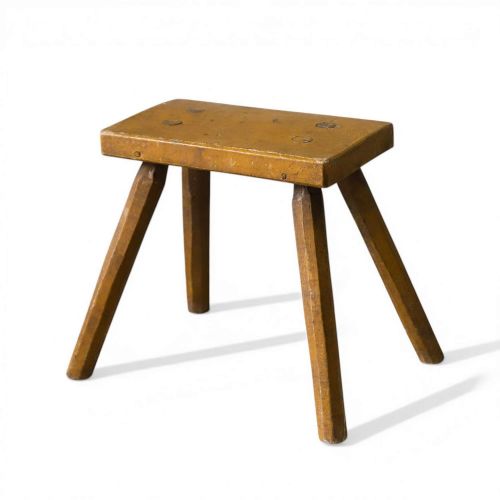
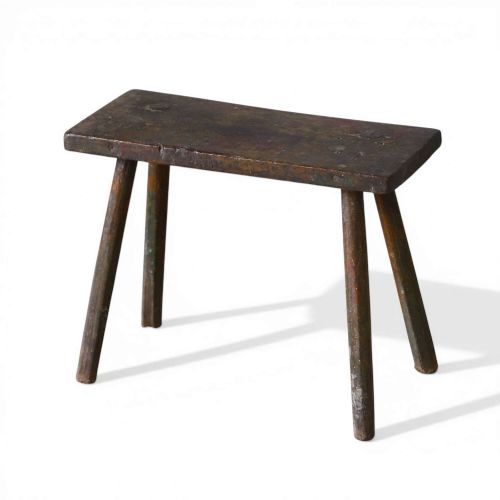
When you search for 19th century timber stools, you encounter a diverse array of utilitarian seating originating from British country houses, European farmsteads, and artisan workshops. The selection ranges from simple milking stools and pub seats to specialised working furniture such as machinist, cobbler and cutler stools.
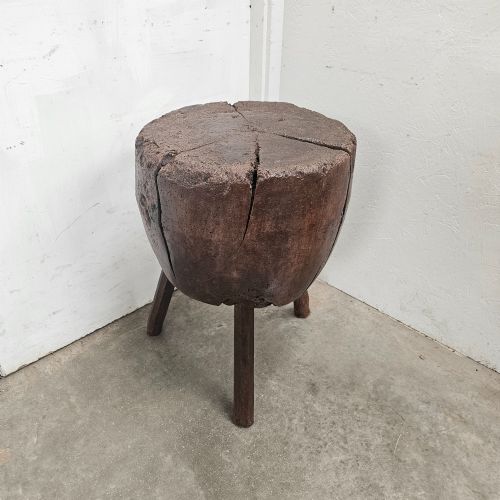
Most pieces date across the Victorian era, utilising native woods shaped for specific domestic or trade tasks. Alongside traditional three-legged and four-legged designs, related forms like side tables, chopping blocks, and footstools appear frequently within the category.
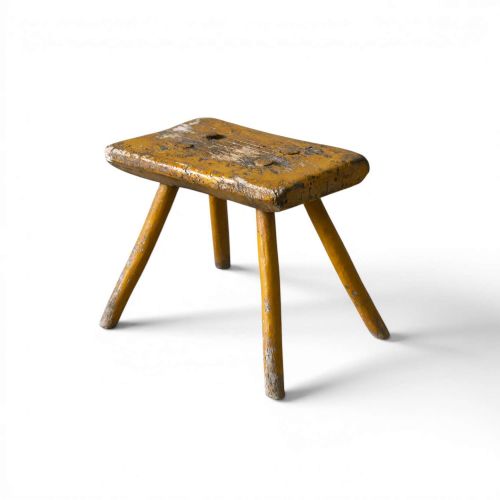
Regional variations introduce distinct character, from Scottish pokerwork pieces to Eastern European examples retaining original paint surfaces in ochre, yellow, or green. Vernacular styles emphasise function above ornamentation, relying on sturdy joinery and honest wear to establish their period charm.
Materials and construction methods
Maker's choice of timber depended directly on availability and the physical demands placed on the seat. Dense hardwoods such as oak, beech, ash, and elm provided the structural resilience required for daily workshop or agricultural use.
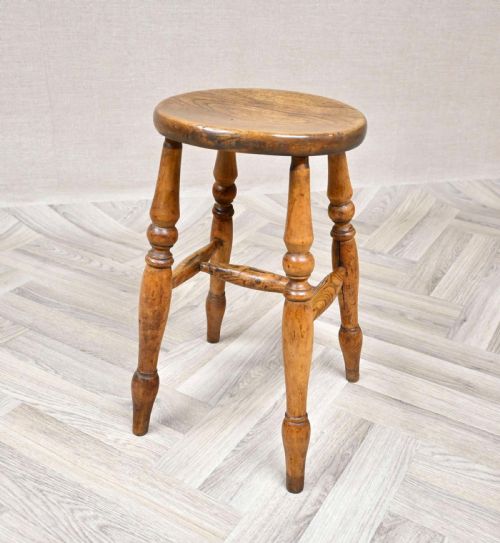
Turned components, joined legs, and pegged seats demonstrate traditional carpentry techniques passed down through generations of rural craftsmen. Surfaces often show the tool marks of adzes, drawknives, and lathes, recording the direct hand of the maker.
Finishes vary from untreated natural wood to original painted layers and decorative pokerwork. Selected pieces incorporate secondary materials like woven rattan, cane, or fabric upholstery to soften the seating surface.
A Scottish stool carries the defiant burn of 'Touch me wha daur' in traditional pokerwork.
Distinguishing quality and character
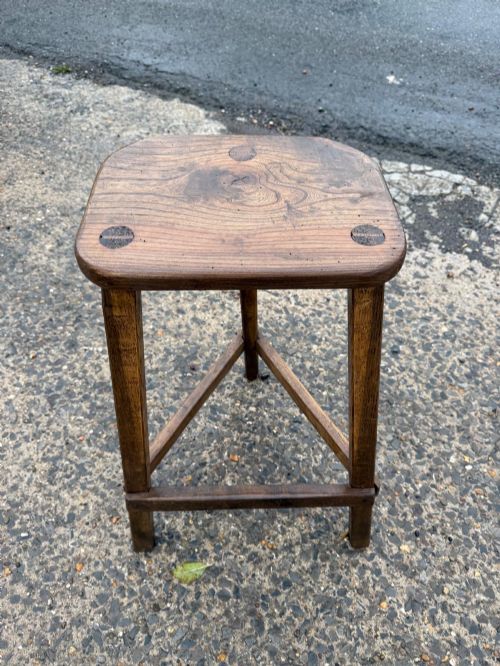
The distinction between ordinary and exceptional examples rests in the integrity of the timber and the honesty of the wear. Grain configuration, particularly in burr elm or sycamore tops, elevates the visual presence of a simple form.
Originality of surface remains paramount, with surviving early paint finishes or untouched patination carrying significantly more appeal than stripped or heavily restored timber. Structural stability achieved through period repairs or sound original construction preserves the utility inherent in these objects.
The 19th Century Timber Stools Glossary
- Vernacular
- Everyday objects made by local craftsmen for specific functional uses rather than high-style polite society. These pieces reflect regional traditions and readily available local materials.
- Pokerwork
- A decorative technique using heated metal tools to burn designs into a wooden surface. Scottish examples frequently display traditional mottoes or patterns applied in this manner.
- Windsor
- A style of seating construction where legs and back spindles are wedged directly into a solid sculpted seat slab. This method ensures robust durability for heavy daily use.
- Milking stool
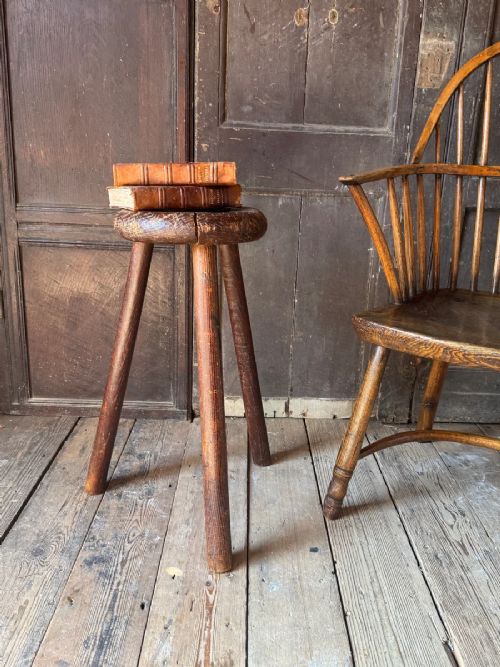
- A low, typically three-legged seat designed for stability on uneven agricultural floors. The tripod base prevents wobbling during daily farm chores.
- Turned wood
- Timber shaped on a lathe by rotating it against cutting tools to create symmetrical legs, stretchers, or columns. This process allowed makers to produce consistent structural components.
19th Century Timber Stools: Frequently Asked Questions
How were milking stools used?
Milking stools served farmworkers during daily livestock milking routines, engineered with three legs to remain steady on uneven barn floors. Their compact size allowed milkers to carry them easily from stall to stall.
Over time, these low seats transitioned into domestic use around hearths and cottage kitchens. Their simple portability makes them versatile side surfaces or seats in contemporary interiors.
What defines a vernacular stool?
Vernacular stools represent regional, utilitarian craftsmanship uninfluenced by metropolitan high-style design movements. Makers prioritized practical function and local timber availability above academic ornamentation.
This approach yields honest, unpretentious forms that wear their working history openly. Each piece tells a story of the specific trade or domestic environment it served.
Can I use these stools daily?
Most timber stools from this period were built for heavy industrial or agricultural labour, meaning their structural frames remain exceptionally robust. Solid joints and sturdy hardwood construction allow them to withstand regular seating demands.
Care should be taken with painted surfaces or delicate woven elements, but solid wood tops thrive with normal everyday use. Periodic gentle waxing helps maintain the protective patina.
How do I spot original paint?
Original paint surfaces exhibit natural craquelure, fading, and wear patterns consistent with decades of handling and environmental exposure. The pigment settles evenly into the wood grain rather than masking the underlying texture.
Modern repainting or touch-ups often appear flat and lack the subtle variations accumulated over generations of use. Examining the edges and underside reveals the natural integration of the finish with the timber.