


19th Century Teak Trunk
A 19th century teak trunk is a sturdy piece built for travel and storage that brings rich timber grain and period metalwork into a room.
19th Century Teak Trunk
A 19th century teak trunk serves as a robust storage container built to withstand the rigours of colonial travel, naval journeys and domestic use. Buyers seeking a 19th century teak trunk will find pieces ranging from utilitarian military campaign chests to ornate dowry coffers and Zanzibar trunks.
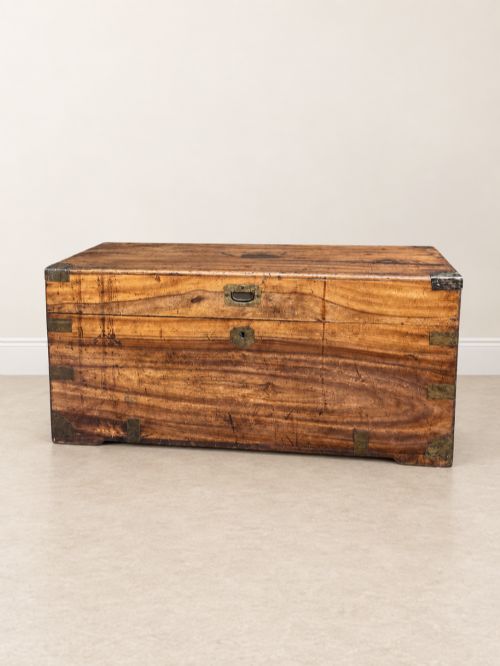
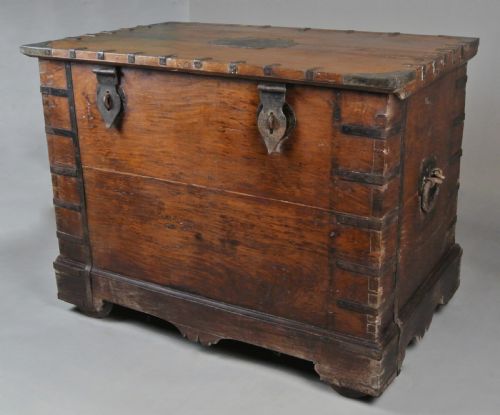
The versions most commonly met on this page include brass-bound military campaign chests, iron-strapped dowry chests, and blanket boxes originating from various colonial outposts. These items function equally well as low coffee tables or deep storage chests in contemporary interiors.
Originating from periods such as the Victorian era and spanning the 19th century, these trunks reflect diverse stylistic influences including Anglo-Indian, Dutch colonial, and Portuguese designs. The construction prioritises heavy timber and secure fastenings to protect contents during long voyages.
How they were made
The primary material used across these listings is dense teak, complemented by secondary timbers like ebony or general hardwood. Craftsmen selected teak for its natural resilience to moisture and warping in tropical climates.
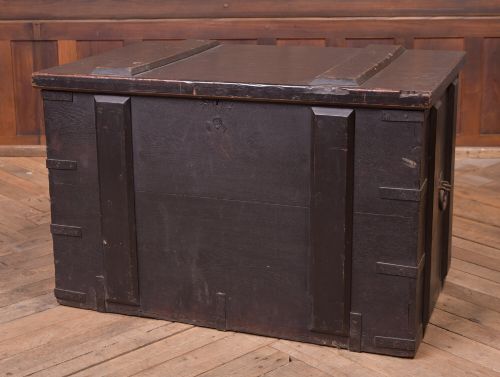
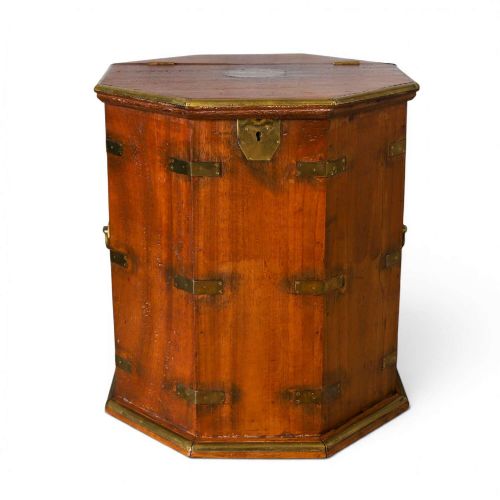
Metal reinforcement defines the construction of many pieces, utilising brass corners, brass strapping, or heavy iron bands to protect the edges and joints. Additional detailing often includes bone inlay, carved motifs, lacquer finishes, or painted surfaces depending on the regional workshop.
Listings feature teak combined with brass, iron, and bone across styles from Victorian military campaign to Anglo-Indian and Dutch colonial.
What varies in quality
Quality in these trunks rests upon the integrity of the original timber construction and the completeness of the metal mountings, such as brass corners, recessed handles, and strapwork. Pieces that retain their original locks, hinges, and structural bracing command greater interest among collectors.
The finesse of regional craftsmanship also separates standard utility chests from finer examples, seen in intricate carving, precise dovetail joints, or decorative brass studding. Surviving stands, original painted surfaces, and unusual configurations like octagonal or ripple-moulded designs elevate a piece further.
The 19th Century Teak Trunk Glossary
- Campaign chest
- A portable chest of drawers or trunk made in sections with recessed brass handles and corner brackets designed for military officers on the move. These pieces break down for easy transport.
- Zanzibar chest
- A heavy timber trunk characterised by brass studding, strapwork, and elaborate hardware, often associated with trade routes along the East African coast. They typically feature internal till compartments.
- Dowry chest
- A large storage coffer created to hold household goods and valuables for a bride, frequently decorated with deep carvings or iron strapping. These trunks are built on a substantial scale.
- Ripple moulding
- A decorative wave-like profile carved into the wooden framework of a coffer or chest. This technique creates texture and visual depth across the surface of the timber.
19th Century Teak Trunk: Frequently Asked Questions
What is a campaign trunk?
A campaign trunk is a portable storage chest designed for military officers travelling on land or sea during the nineteenth century. These pieces usually feature flush-fitting brass handles and reinforced corners to endure frequent transit.
Built in sections or fitted with carrying handles, they allowed owners to pack clothing and equipment securely. Their robust design translates well into modern homes as functional coffee tables or bedroom storage.
How do I identify a Zanzibar chest?
Zanzibar chests are identified by their heavy teak construction, dense brass studding, and intricate metal strapwork. They often include a small secret drawer or internal till hidden beneath the main lid.
These trunks reflect influences from Indian and Middle Eastern craftsmanship traded along the East African coast. Their decorative hardware and substantial iron or brass fastenings set them apart from standard domestic boxes.
Can I use a trunk as a coffee table?
These trunks make practical coffee tables due to their flat tops and low proportions. Their internal storage space also offers a convenient place to hide living room clutter.
When using one as a table, ensure the lid is stable and consider placing a protective tray on top if placing drinks. The dark teak grain and metal mounts add a grounded focal point to a sitting room.
What distinguishes Anglo-Indian furniture?
Anglo-Indian pieces combine traditional British furniture forms with local carving techniques and native timbers such as teak. Workshops in regions like the Bombay Presidency produced these items for colonial officials and export.
They often feature elaborate floral carvings, elephant motifs, or contrasting ebony details. This blending of cultures results in decorative chests and tables distinct from standard European domestic furniture.