
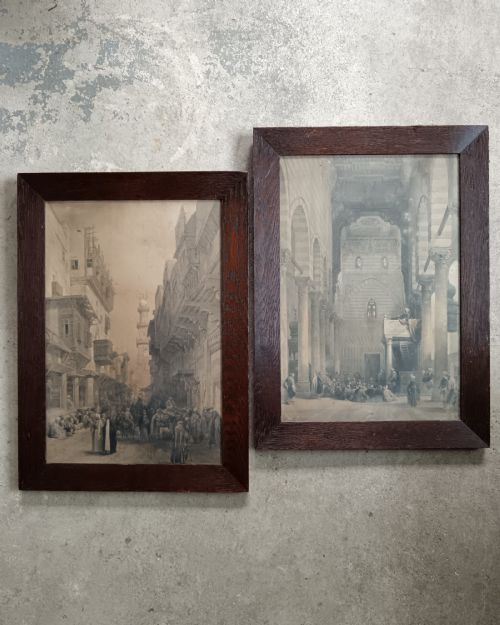

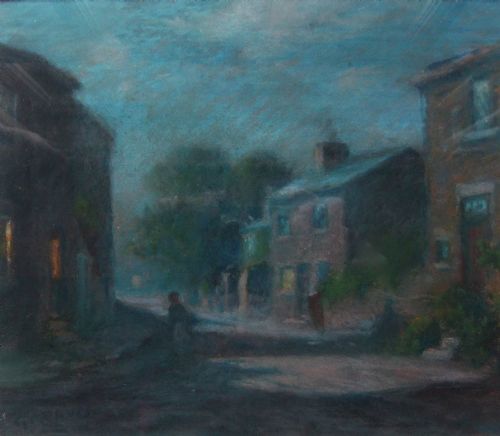


19th Century Street Scene
These 19th century street scene works capture historic urban life through period paintings and watercolours that bring early townscapes into modern rooms.
19th Century Street Scene
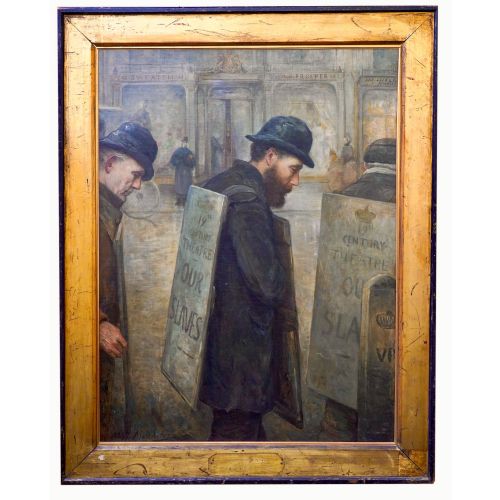
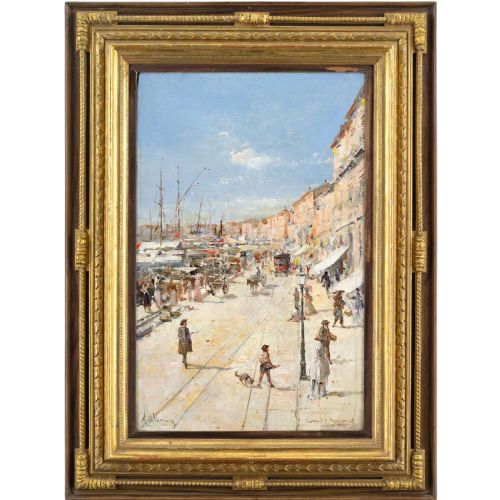
A 19th century street scene depicts bustling thoroughfares, architectural views, and daily urban life from the Georgian era through the early twentieth century. These works document historic towns, continental plazas, and city streets populated by figures, horses, and market sellers.
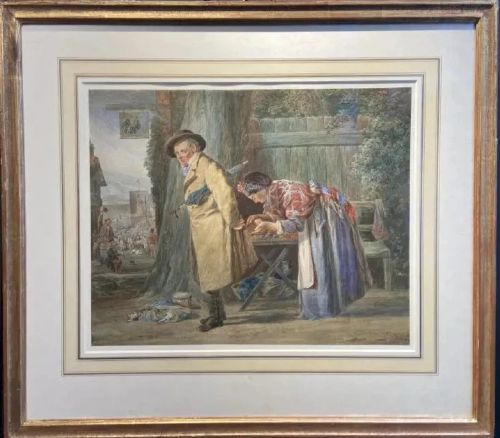
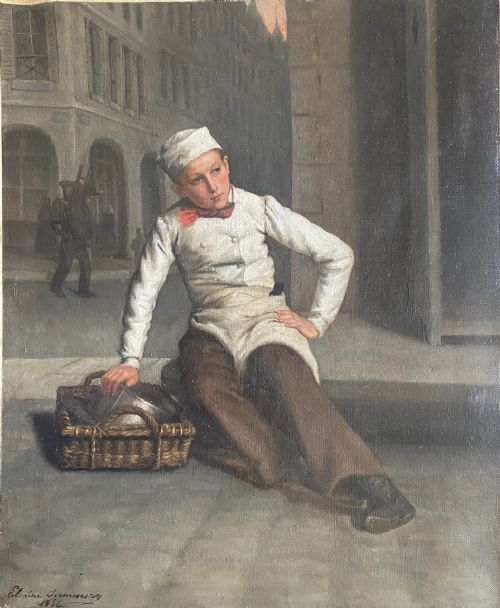
The selections on this page span British, French, Italian, and Dutch locations, rendered in mediums ranging from detailed watercolours to large oil paintings. Buyers will encounter urban landscapes from Yorkshire alleys to Parisian boulevards.
Works originate from various periods including Victorian social realism, British impressionism, and continental genre painting. Each piece preserves a distinct architectural backdrop and social record of nineteenth-century life.
How They Were Made
Artists painted these urban views primarily using oil on canvas, oil on board, and watercolour on paper, occasionally employing pastel or lithography. Canvases and papers were housed in period frames, sometimes featuring gold leaf and giltwood.
Techniques varied between precise architectural draftsmanship for city buildings and looser brushwork for figures and atmospheric street lighting. Pigments were applied to capture natural light, evening shadows, and weather conditions in townscapes.
Listings feature works created across various media, predominantly oil on canvas, watercolour, and oil on board.
What Varies in Quality
Quality rests in the handling of perspective, architectural precision, and the integration of human figures within the urban landscape. Superior examples demonstrate confident brushwork and a balanced composition that brings depth to the street view.
The skill with which light and atmosphere are rendered distinguishes masterly depictions from standard topographical records. Original framing and the preservation of the paint or paper surface also contribute to the standing of a piece.
Felix Stone Moscheles·Augusto Alberici·Joseph H Barnes·David Roberts·Albert Ludovici Jnr·William Greaves·Léon Joseph Voirin·Cornelis Christian Dommersen·William George Meadows·Lewis J Wood·Robert Hollands Walker·Walter Meegan·Charles H Poingdestre·Walter Emsley·Ettore Ascenzi·Paul Paul·Matthew Hale·Alfred Leyman·Henry Schafer·John Ward Knowles·Paul Marny·Mary Evelina Kindon·John Sinclair·Henry Stanton Lynton
The 19th Century Street Scene Glossary
- Genre painting
- Depiction of aspects of everyday life by subjects taken from ordinary coterminous life. These works often show market stalls, street sellers, or figures outside inns.
- Social realism
- Art movement that depicts the everyday conditions of the working classes and poor. These scenes highlight ordinary people engaged in daily urban labour.
- Lithography
- A planographic printing process used to produce multiple impressions from a stone or metal plate. David Roberts Cairo views utilise this technique.
- Giltwood
- Wood that has been coated with gold leaf or a gold-coloured finish. Many period frames utilise this material to enhance the artwork.
- Townscape
- An artistic representation of the physical aspects of a city or urban area. These differ from pure landscapes by focusing on buildings, streets, and human activity.
19th Century Street Scene: Frequently Asked Questions
What periods do these street scenes cover?
The works span from the late Georgian era through the Victorian period and into the early twentieth century, specifically covering decades from the 1850s to the 1910s.
Different artistic movements, including social realism and impressionism, influenced how artists recorded these historic towns and cities during those decades.
Where were these urban scenes painted?
Locations include British cities and towns such as York, Whitby, Liverpool, and London, alongside continental European destinations like Paris, Rome, Messina, and various Dutch and Belgian streets.
Artists travelled extensively to record local architecture, market squares, and architectural views across Britain and Europe.
How should I frame and display a watercolour?
Watercolours on paper require framing behind glass with acid-free mounts to protect the delicate pigments from ultraviolet light and atmospheric moisture.
Display them away from direct sunlight in rooms with stable humidity to preserve the paper and original framing.
How do I tell an oil painting from a watercolour?
Oil paintings feature textured brushstrokes and pigment applied to canvas or wood boards, often displaying a glossy or matte varnish layer.
Watercolours utilise translucent washes of water-soluble paint on paper, revealing the texture of the sheet beneath the pigment.