



19th Century Sheep Art
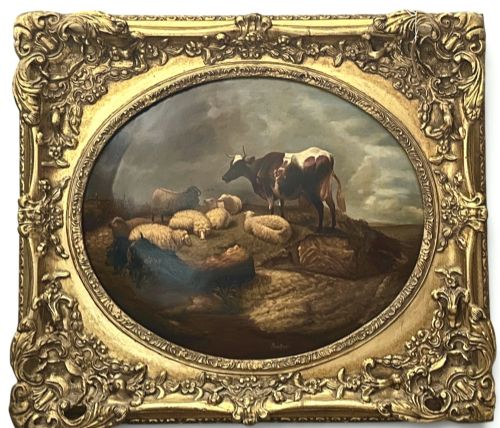
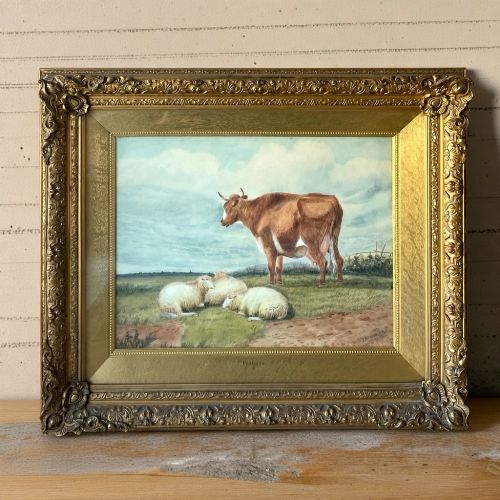
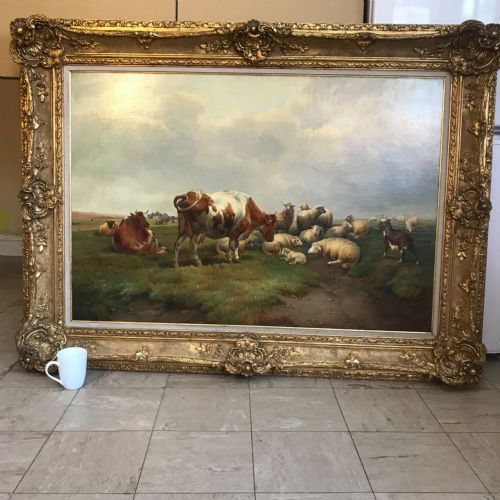
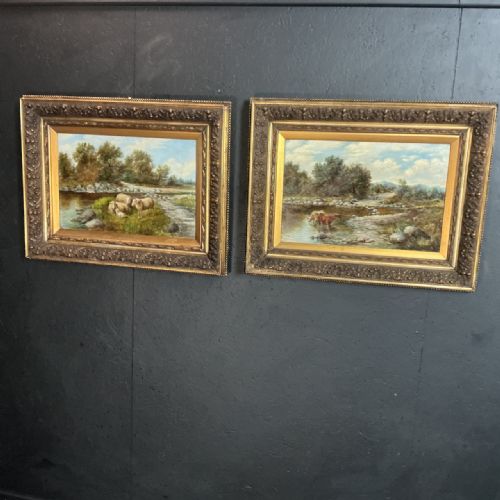
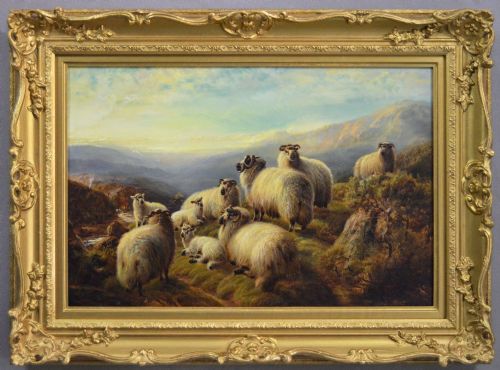
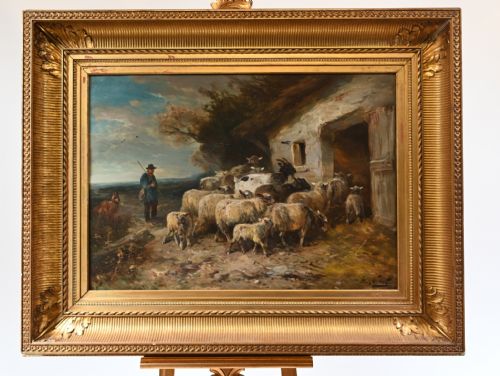
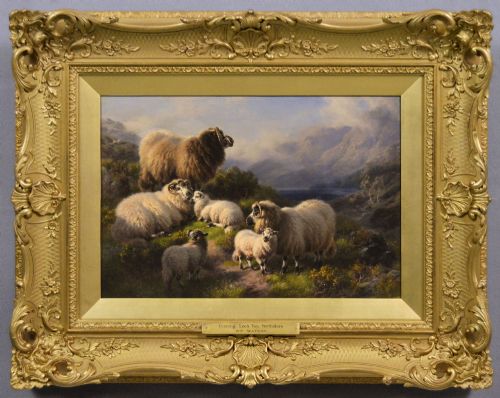
When you search for 19th century sheep art, you encounter pastoral oils and watercolours capturing rural life and livestock across Britain and Europe.
19th Century Sheep Art
Collectors seeking 19th century sheep art typically look at oil paintings on canvas and watercolours on paper depicting flocks, shepherds, and rural landscapes. These works span the Victorian period, originating from British, Belgian, and Dutch artists who recorded agricultural scenes and highlands.
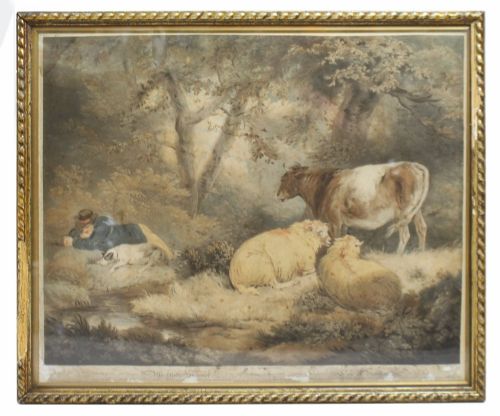
The most common pieces met on this page are framed oil paintings and watercolours rendered in Victorian pastoral and realism styles. They frequently depict sheep resting in lanes, grazing on clifftops, or sheltering in barns during winter snows.
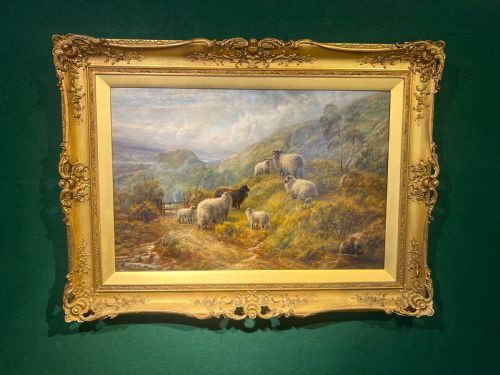
Subjects range from expansive Scottish highland scenes with cattle and sheep to intimate watercolours of English country lanes. Works emerge from named painters and followers of established continental and British masters.
Materials and methods
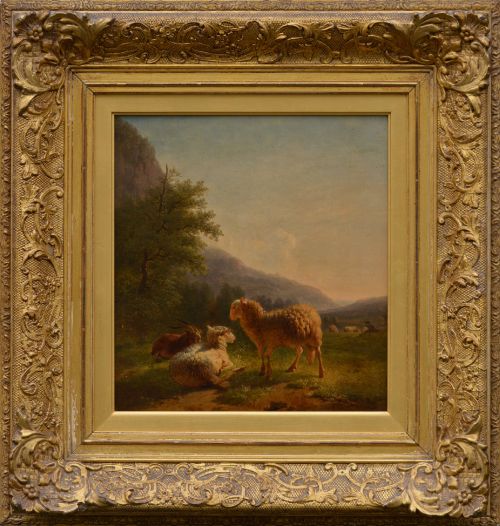
Works are predominantly executed in oil on canvas or watercolour on paper, framed in giltwood and gesso. Artists built up oil pigments to render the texture of wool and the atmospheric light of rural landscapes.
Paper supports and canvases are paired with traditional carved wooden frames finished with gilding. These materials reflect standard nineteenth-century studio practices for fine art paintings and wall art.
19th Century Sheep Art Retail Price Guide 2026
Typical asking prices for 19th century sheep art among the pieces listed under this phrase on Sellingantiques today, from the lower quarter to the upper quarter. They describe what is for sale here now, not the wider market.
Several sheep patiently pose on coastal clifftops and snowy mountain passes, proving that nineteenth-century livestock possessed a remarkable sense of adventure.
Distinctions in execution
Quality separates through the handling of natural light, anatomical precision in depicting animals, and the depth of the surrounding landscape. Stronger examples display careful observation of texture in fleeces and realistic integration of livestock within the terrain.
The sophistication of the palette and the preservation of the original canvas, paper, and gilt frame influence the standing of a piece. Works by listed artists demonstrate deliberate compositional structure compared to looser pieces by anonymous followers.
George Morland·Eugène Verboeckhoven·James Smetham·Robert Watson·William Watson Jnr·Henry Schouten·William Henry Mander·Thomas Sidney Cooper·Franz van Severdonck·William Sydney Cooper·Robert John Hammond·James de Rijk·Bernard Walter Evans·Henry Charles Fox·Basil Bradley·Charles Jones·George Turner·Frederick Richard Lee·Henry Birtles·George Faulkner Wetherbee·William Greaves·William Luker Snr·John W Morris·Anthonij Anton Mauve·Laurens Plas
The 19th Century Sheep Art Glossary
- Oil on Canvas
- Pigment mixed with drying oil applied to stretched fabric. This medium allows for rich colour depth and layered textures.
- Watercolour
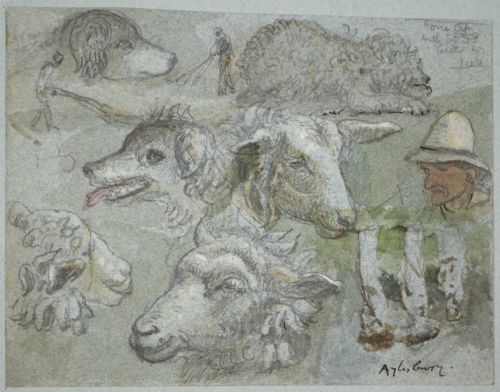
- Pigment suspended in a water-based solution applied to paper. It produces transparent washes and delicate atmospheric effects.
- Giltwood
- Wood carved and covered with a thin layer of gold leaf. Frames from the period frequently utilise this finish.
- Gesso
- A plaster-like mixture applied to wood frames before gilding. It provides a smooth surface for intricate mouldings.
- Mezzotint
- A printmaking process of the tonal engraving family. It enables the creation of subtle gradations of light and shade.
19th Century Sheep Art: Frequently Asked Questions
What subjects appear in nineteenth century sheep paintings?
Paintings show flocks grazing in pastures, resting in coastal lanes, or gathering in barns during winter. Landscapes often feature Scottish highlands, English countryside, and Belgian farmlands.
Shepherds and sheep dogs frequently accompany the livestock, anchoring the rural narrative within pastoral and realism styles.
How do you identify nineteenth century watercolours?
Watercolours from this era use paper supports beneath glass, often retaining period framing materials like gesso and giltwood. The medium creates transparent washes of colour that capture soft daylight and weather effects.
Signatures or inscriptions by artists frequently appear in the lower corners of the composition.
Where were these pastoral paintings created?
Works originate from artists working across Britain, Belgium, and the Netherlands during the Victorian era. Regional landscapes span Kent, Sussex, Wharfedale, and the Scottish highlands.
Continental painters like Eugène Verboeckhoven and Henry Schouten contributed European pastoral scenes alongside British contemporaries.
How should these framed artworks be displayed?
Artworks require placement away from direct sunlight and damp environments to protect canvases, watercolours, and gilt frames. Stable indoor humidity preserves both the paper or canvas and the original gesso mouldings.
Wall mounting should utilise secure fixings suited to the weight of traditional wood and giltwood frames.