
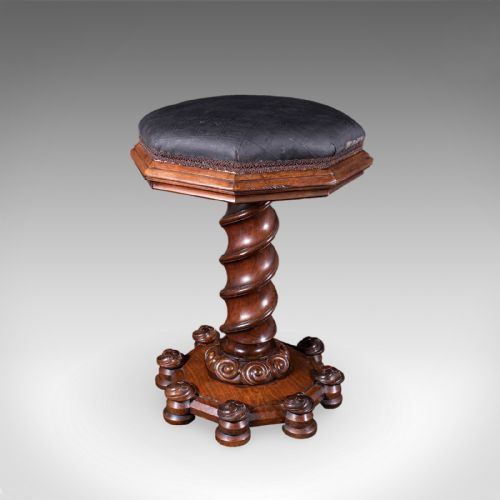


19th Century Piano
These pieces of 19th century piano seating span the Victorian and Regency eras, offering solid utility and period craftsmanship for the modern interior.
19th Century Piano
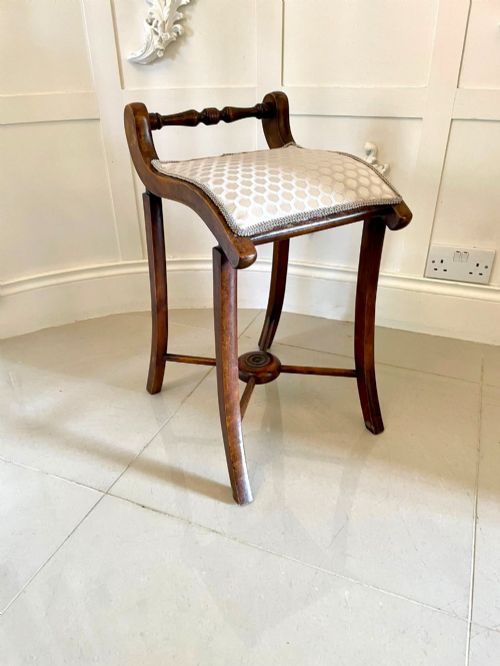
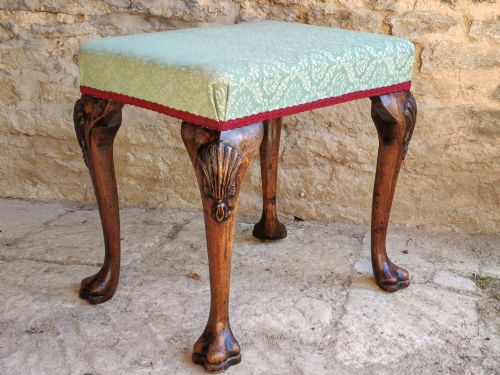
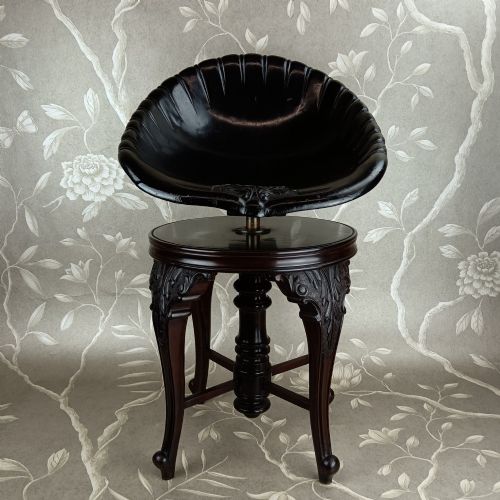
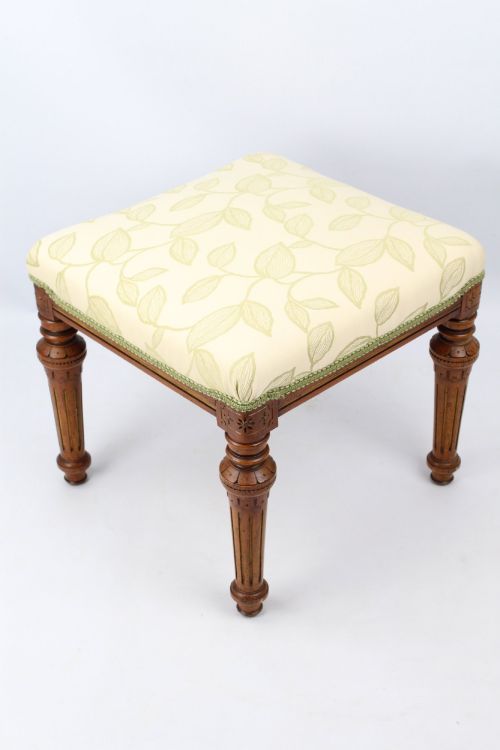
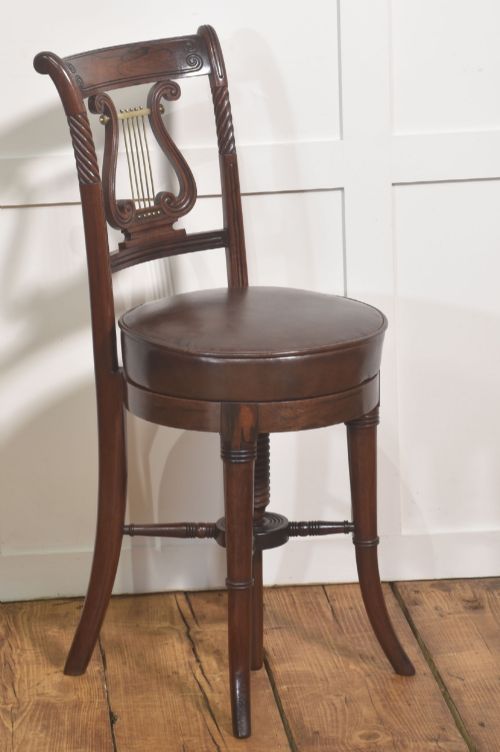
When you search for a 19th century piano, you are predominantly looking at seating designed specifically for musicians, including adjustable stools, revolving chairs, and music benches. These items date from the Georgian, Regency, William IV, and Victorian periods.
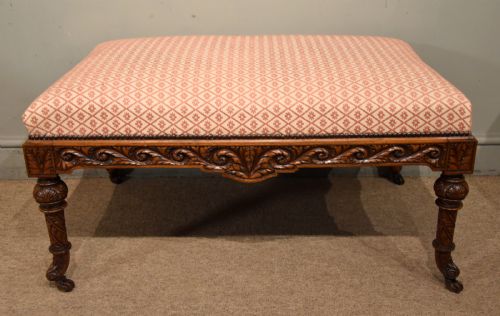
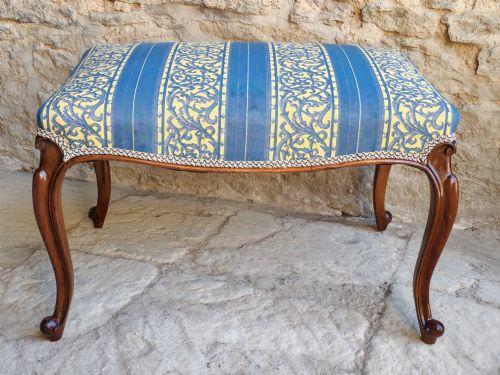
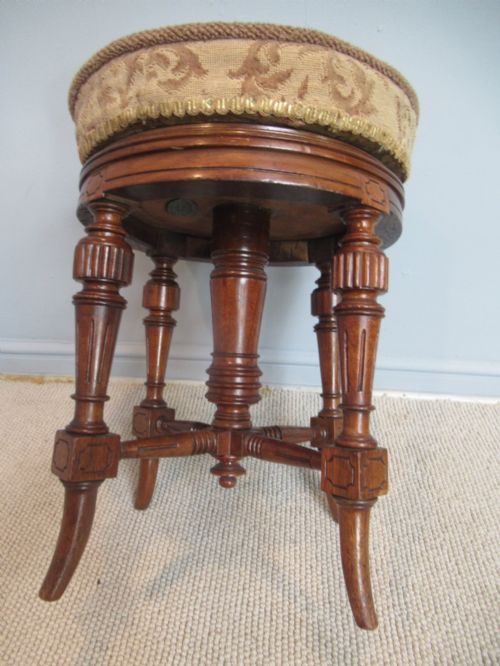
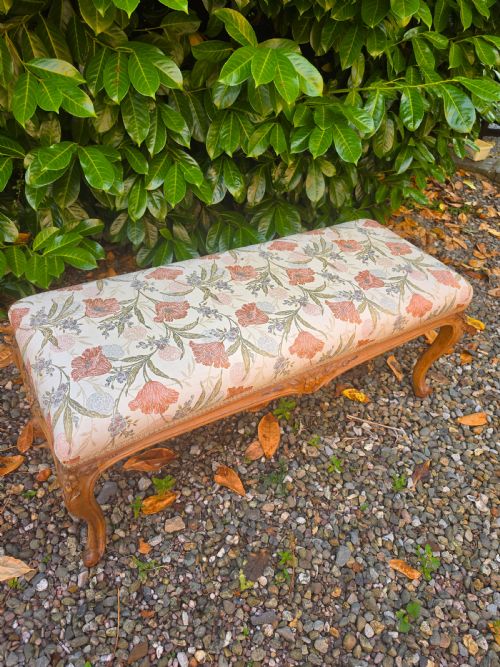
The most common forms on this page are circular rise-and-fall stools and rectangular benches in mahogany or rosewood, often featuring mechanical screw adjustments to alter the seat height for the player.
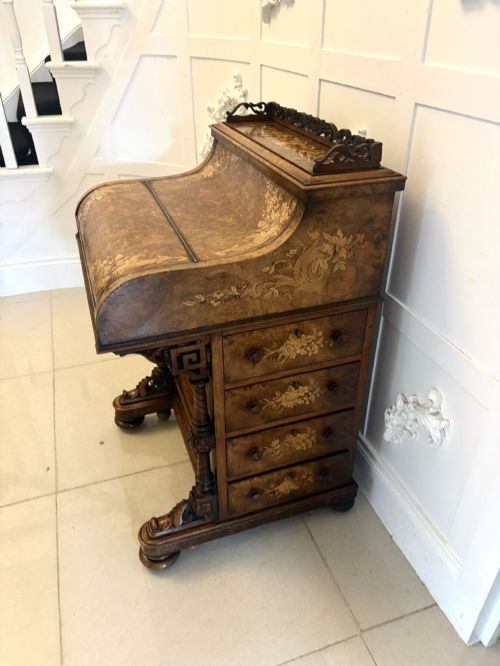
Beyond dedicated piano seating, the records include related musical and writing forms such as Davenport desks with piano tops, music chairs with backrests, and occasional stools utilised across nineteenth-century drawing rooms.
How they were made
Cabinetmakers of the period relied heavily on dense hardwoods like mahogany, walnut, and rosewood, frequently incorporating exotic veneers such as burr maple or goncalo alves for decorative impact. These timbers were carved, turned, and polished by hand to create sturdy frames.
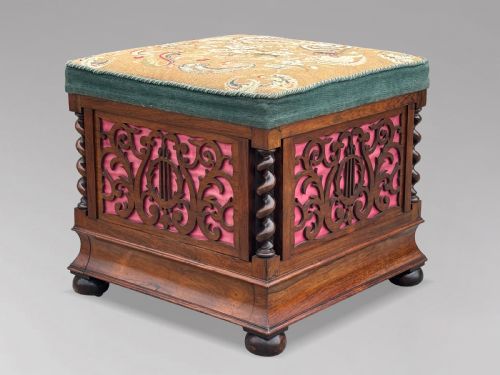
Mechanical ingenuity defined the construction of height-adjustable music seats, which utilised internal iron screw mechanisms, brass fittings, and swivel joints to allow smooth rotation and vertical movement. Seats were traditionally stuffed and upholstered in materials including velvet, leather, needlepoint, and patterned fabric.
The listings show nineteenth-century seating executed in mahogany, walnut, rosewood, and padouk, spanning Regency, William IV, and Victorian periods.
What varies in quality
The distinction between ordinary and superior pieces rests in the crispness of the timber carving, the choice of highly figured veneer, and the robustness of the mechanical adjustment mechanism. Maker attribution also plays a role in elevating a piece.
Finer examples demonstrate seamless joinery, original upholstery materials or sympathetic traditional re-upholstery, and heavy, well-cast brass or ormolu mounts rather than mass-produced replacement hardware.
Jennens & Bettridge·Charles Nosotti·Holland & Son
The 19th Century Piano Glossary
- Rise and fall
- A mechanical seating adjustment system that uses a central screw thread to raise or lower the circular top when rotated. This allowed musicians to easily find their preferred playing height.
- Revolving stool
- A seat with a top that spins freely on a central pivot or threaded spindle. This design permitted slight movement and turning during long practice sessions.
- X-framed
- A structural furniture design where the supporting legs cross in an X shape, often seen in Regency and Victorian stool bases. It provides stable floor contact and visual symmetry.
- Caryatid
- A sculpted female figure serving as an architectural support or furniture leg instead of a traditional column. In nineteenth-century seating, these figures were carved in wood to support the seat corners.
- Marquetry
- The art of applying decorative pieces of veneer to a structure to form ornamental patterns or pictures. Craftsmen utilised contrasting woods like walnut and fruitwood to create intricate geometric or floral designs.
19th Century Piano: Frequently Asked Questions
How do you adjust a 19th century piano stool?
Most adjustable piano stools from this era operate via a central wooden or iron screw mechanism hidden beneath the upholstery. By firmly grasping the padded seat top and rotating it clockwise or counter-clockwise, the internal screw raises or lowers the sitting surface to the desired height.
Older examples may feature simple pin-and-hole riser bars or wooden pegs, but the screw mechanism is standard for mid-to-late Victorian pieces. Care should be taken not to unscrew the mechanism past its stopping point.
Can I use a music stool as regular seating?
These historical stools are sturdy enough for everyday seating around a desk or in a living room, provided the mechanical interior remains stable. Their compact footprints make them versatile for smaller spaces.
However, because many period stools were designed specifically for short keyboard practice sessions or dressing tables, fixed-height versions or those with wide, flat upholstered tops generally offer more comfort for extended sitting than spinning or narrow round seats.
What is the difference between a music stool and a piano stool?
The terms are frequently used interchangeably by makers and dealers, but music stools often encompass designs intended for vocalists, harpists, or organists, as well as pianists. This includes chairs with supportive backrests and specialised chapel or organist benches with music risers.
Piano stools specifically refer to compact round or rectangular seats, often with adjustable mechanisms, built to sit neatly beneath the keyboard overhang when not in use.
How do I identify a Victorian piano stool?
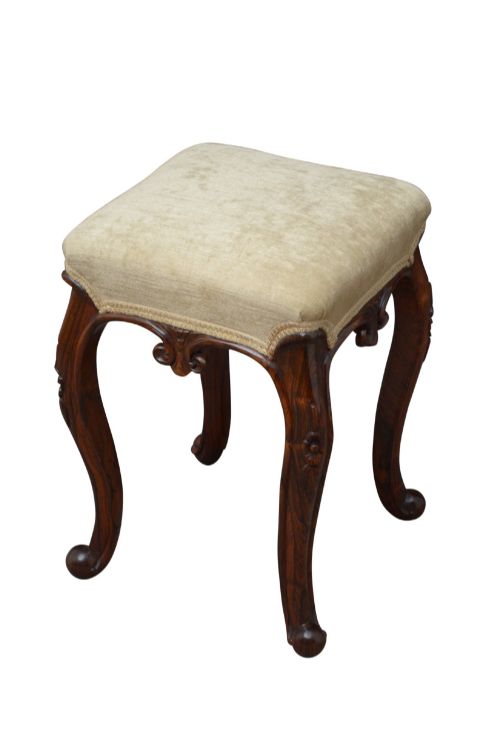
Victorian piano stools are typically identified by their use of dark timbers such as walnut and rosewood, combined with revival styles like Rococo Revival, Neoclassical, or Aesthetic Movement decoration. Look for heavy cabriole legs, carved floral motifs, or papier-mâché details dating from the mid to late nineteenth century.
Maker stamps, brass patent plaques under the seat, or registration lozenges stamped into the wood can also help confirm the exact period and origin of the piece.