




19th Century Perfume Box
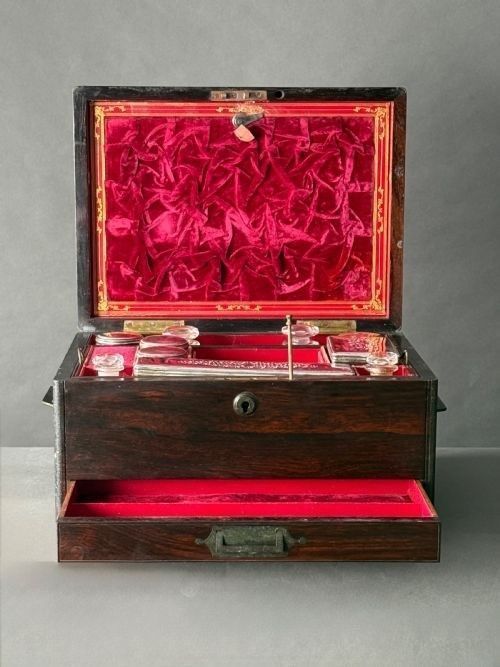
These 19th century perfume box examples are refined travelling companions and dressing-table caskets, housing crystal flasks for personal scent.
19th Century Perfume Box
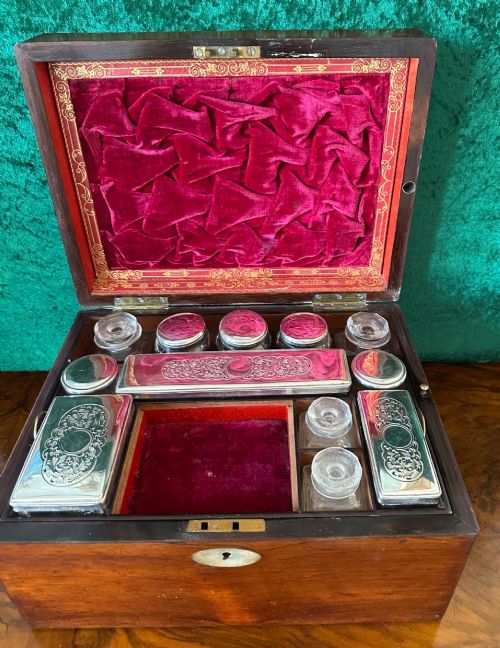
A 19th century perfume box serves as a portable container for storing glass scent bottles and vanity accessories securely during travel. These objects range from compact Georgian rosewood vanity boxes and shell-inlaid early containers to elaborate Victorian combination caskets fitted with crystal cut bottles.
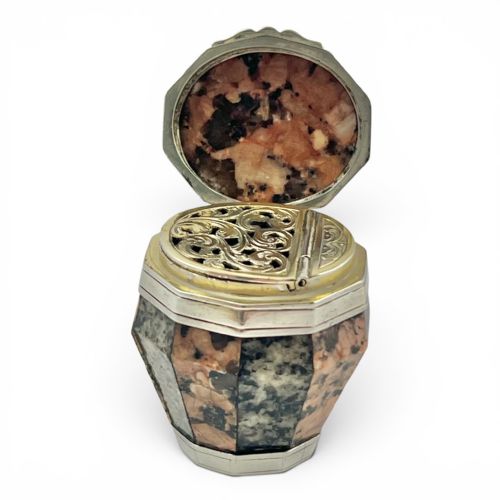
The selection includes French bronze perfume caskets, Regency travelling dressing table boxes, and small silver vinaigrettes. Buyers frequently encounter brass-bound ladies travelling vanity cases alongside fitted boxes housing original glass bottles and trays.
How they were made
Cabinetmakers constructed the exterior shells using hardwoods such as rosewood, walnut, coromandel, and fruitwood, often reinforcing the corners and edges with brass mounts. Interiors were lined with velvet and fitted precisely to secure glass scent flasks, pill boxes, and silver-gilt accessories.
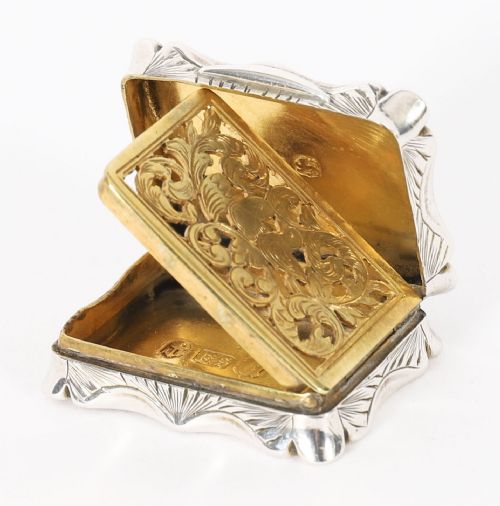
Silversmiths and metalworkers produced intricate sterling silver vinaigrettes, gilt mounts, and bronze caskets using casting and engraving techniques. Glassmakers supplied heavy cut crystal and silver-mounted bottles designed to fit flush within the wooden compartments.
19th Century Perfume Box Retail Price Guide 2026
Typical asking prices for 19th century perfume box among the pieces listed under this phrase on Sellingantiques today, from the lower quarter to the upper quarter. They describe what is for sale here now, not the wider market.
Tiny gilt vinaigrettes allowed owners to carry sharp aromatic vinegars discretely in their pockets.
What varies in quality
Quality depends on the integrity of the fitted interior, the condition of the original velvet lining, and whether the accompanying glass scent bottles match the housing. Finer examples retain their complete sets of cut crystal flasks and original brass or silver hardware.
The execution of exterior woodwork, such as precision brass inlay, tight mitre joints, and well-fitted locking mechanisms, separates standard travelling boxes from superior caskets. Maker attribution through stamped silver hallmarks or fitted labels also elevates the standing of a piece.
Edward Smith·Tonnel Paris·Asprey
The 19th Century Perfume Box Glossary
- Vinaigrette
- A small ornamental box featuring a pierced internal grille, designed to hold a sponge soaked in aromatic vinegar. These pieces were carried in pockets or reticules during the Georgian and Victorian periods.
- Casket
- A decorative box or chest intended for holding jewellery, letters, or small valuables. In this context, they frequently house scent bottles and vanity items.
- Coromandel
- A dense, heavy timber imported from Asia and Africa, characterised by rich dark brown colour with dramatic black streaks. Cabinetmakers utilised it extensively for high-end Victorian luxury boxes.
- Sterling silver
- An alloy consisting of silver and other metals, standardised for quality in British plate. Makers stamped pieces with hallmarks indicating the assay office and year of production.
- Cut glass
- Glass decorated by cutting facets or patterns into the surface using a rotating wheel. This technique creates sparkling geometric designs on the perfume bottles housed within these boxes.
19th Century Perfume Box: Frequently Asked Questions
How were 19th century perfume boxes used?
Owners utilised these fitted boxes to transport delicate glass scent bottles, cosmetics, and small jewellery items safely during carriage journeys or railway travel.
Upon reaching a destination, the boxes functioned as portable dressing-table displays, keeping personal fragrances and grooming tools organised and close at hand.
What materials are typical for these boxes?
Exterior construction relies heavily on dense hardwoods like rosewood, coromandel, and walnut, frequently enhanced with brass banding, mounts, or shell inlay.
Interiors incorporate plush velvet linings designed to cradle cut glass scent bottles, silver-gilt flasks, and small pill boxes.
How do I identify a Victorian box?
Victorian examples often feature robust brass mounts, coromandel or walnut veneers, and fitted interiors designed for combined jewellery and scent storage. Hallmarks on silver mounts and bottles provide precise dating clues.
Stylistic shifts across the century move from restrained Regency forms toward more elaborate mid and late-Victorian combination caskets.
Are the glass bottles usually original?
Many surviving boxes retain their fitted sets of cut glass scent bottles and matching stoppers, specifically shaped for the interior compartments.
Because bottles were fragile and frequently replaced, finding a complete set with original glass adds significant interest for collectors.