




19th Century Pearl Pendant
A 19th century pearl pendant brings the unmistakable depth of Victorian craftsmanship to the neckline, offering a tangible piece of history.
19th Century Pearl Pendant
Buyers encounter varied configurations ranging from simple pearl pendants to elaborate multi-gem creations and parure sets. The selection spans distinct stylistic revivals including Renaissance Revival alongside classic Victorian work.
How they were made
Makers utilised yellow gold in nine, twelve, fourteen, fifteen, and eighteen-carat standards, alongside silver, platinum, and enamel. Natural saltwater and baroque pearls provide the central luminous focus for these designs.
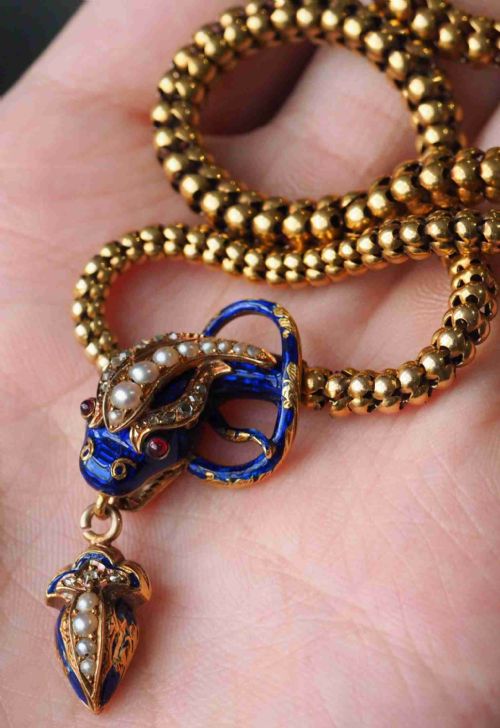
The construction integrates gemstones such as diamonds, rubies, turquoise, amethysts, peridots, and painted miniatures. Metalwork involves intricate bezel settings, detailed enamelling, and sculptural forms like serpents, crosses, and grapes.
Nineteenth-century jewellers occasionally turned reptiles into romantic statements, as seen in the recurring use of diamond-eyed serpents.
What varies in quality
The distinction between standard and exceptional pieces rests upon the quality of the materials and the complexity of the goldsmithing. Natural saltwater pearls and substantial diamond accents elevate the character of a piece.
Design ambition shapes the tier of the object, distinguishing simple drop pendants from multi-gem Austro-Hungarian creations or painted miniature lockets. The integrity of the enamel and the precision of the gem setting determine the overall standard.
The 19th Century Pearl Pendant Glossary
- Baroque pearl
- An irregularly shaped pearl that departs from a spherical form, prized for its organic contour and individual character.
- Parure
- A matching set of jewellery designed to be worn together, which in this period includes coordinating earrings and pendants.
- Mourning locket
- A piece designed to hold a keepsake or lock of hair, often associated with remembrance during the Victorian era.
- Enamel
- A decorative vitreous substance fused to metal surfaces through firing, utilised to add colour and intricate pattern.
19th Century Pearl Pendant: Frequently Asked Questions
What periods do these pendants come from?
These items originate from the Victorian era and the broader nineteenth century, with specific examples dated around eighteen sixty and eighteen eighty.
The styles reflect the design sensibilities of these decades, including Renaissance Revival influences.
What materials are used in nineteenth-century pendants?
Pieces incorporate gold in various carat weights, silver, and platinum, paired with natural saltwater and baroque pearls.
Additional materials include diamonds, rubies, turquoise, enamel, and painted miniatures.
Are these items part of larger sets?
Some listings include parure sets that combine pendants with matching earrings or incorporate necklaces into multi-part assemblies.
Other examples exist as individual pendants, lockets, or brooches adapted for suspension.
How do motifs vary across these pieces?
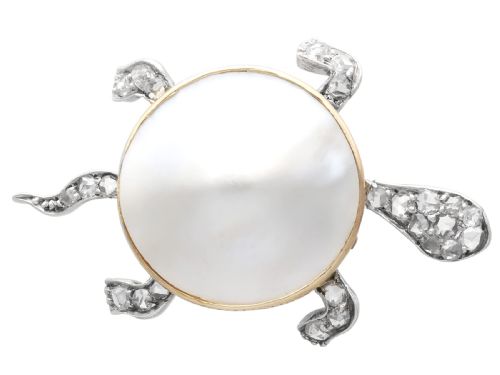
Designs feature figurative and symbolic forms, ranging from snakes and serpents to crosses, grapes, and turtles.
Others focus purely on gemstone arrangements and baroque pearl configurations.