


19th Century Painted Bedstead
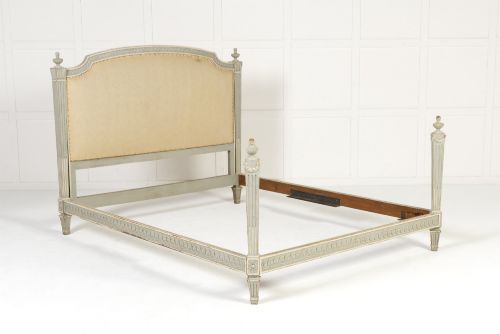
A 19th century painted bedstead brings instant character to a bedroom through traditional craftsmanship and hand-finished surface decoration.
19th Century Painted Bedstead
A 19th century painted bedstead combines structural metal or timber with decorative surface pigment, offering a distinct alternative to standard polished wood furniture. These pieces span single, double, king, and super king sizes to suit various interior spaces.
The selection here includes examples from the Victorian era alongside French, Austrian, and Italian regional designs. Formats range from standard head and footboards to four poster and half tester configurations.
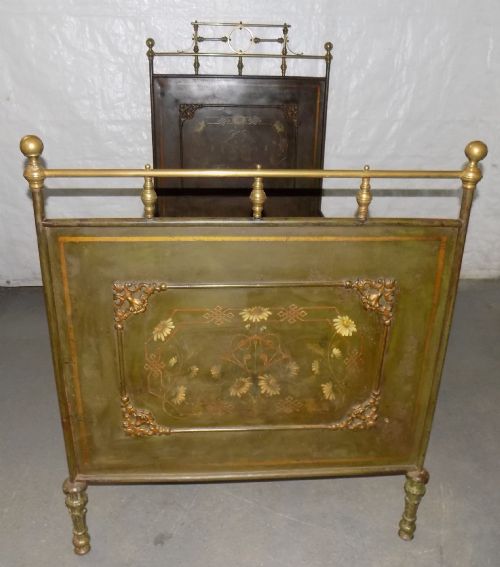
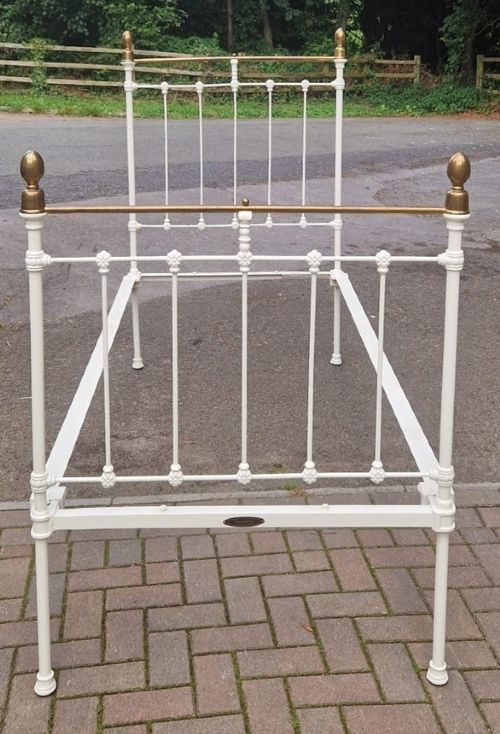
French styles and Victorian ironwork dominate the selection, often incorporating painted metal or toleware alongside brass details. Buyers encounter wooden French frames finished in cream or black alongside robust iron structures.
How they were made
Makers utilised cast iron, brass, and timber as the primary structural foundations for these beds. Metal components were cast and forged to create rigid frames, while wooden elements were shaped to form sweeping headboards and footboards.
Surface decoration relied on applied paint finishes, including toleware techniques on metal surfaces. Artisans layered pigments directly onto iron, sheet metal, and wood, frequently pairing dark or cream tones with polished brass mounts.
Listings feature items dated across the nineteenth century, including specific years like 1850, 1870, 1880, 1890, and 1900.
What varies in quality
Quality rests in the integrity of the original surface finish and the crispness of the cast detailing. Pieces retaining their early paint schemes without excessive later overpainting command greater interest from purists.
The refinement of the silhouette distinguishes finer examples, particularly in Italian and French toleware or curvaceous wooden frames. Robust construction in the iron and brass joints ensures the frame remains stable in daily use.
The 19th Century Painted Bedstead Glossary
- Toleware
- Painted or lacquered metalware, typically tin or sheet metal. This technique provided a durable decorative surface for beds originating from continental workshops.
- Half Tester
- A bed featuring a partial canopy extending only partway over the head of the bed. This style was popular during the Victorian period for suspending decorative drapery.
- Four Poster
- A bed with four vertical columns supporting an upper canopy frame. These substantial pieces provide a commanding focal point within larger bedrooms.
- Cast Iron
- Molten iron poured into a mould to form solid structural components. This material allowed Victorian makers to produce intricate scrollwork and sturdy bed frames.
- Regency
- An English design style spanning the early nineteenth century. Pieces from this period often draw on classical Greco-Roman motifs.
19th Century Painted Bedstead: Frequently Asked Questions
How do I clean a painted bedstead?
Dust the surface regularly with a soft, dry cloth to prevent dirt accumulation. Avoid harsh chemical cleaners that can damage the original painted finish.
For stubborn marks, use a damp cloth with mild soap, drying the area immediately afterwards. Take special care around brass elements to preserve their finish.
Will a 19th century bed fit modern mattresses?
Many antique beds vary slightly from standard modern sizing due to historical dimensions. Check the internal length and width measurements carefully before purchasing a mattress.
Some frames may require custom-made mattress bases or wooden slats to ensure proper support. Consulting the listed dimensions helps avoid fitting issues.
How do I assemble an iron bedstead?
Most metal frames utilise wedge-fit joints or side rails that slot directly into the head and footboard posts. Tap the joints gently with a rubber mallet if components stick during assembly.
Ensure all bolts and connections are tightened evenly to maintain structural rigidity. Having two people simplifies the process of aligning the heavy side rails.
What is toleware on a bed?
Toleware refers to painted or enamelled sheet metal used for decorative effect on continental European furniture. On these beds, it provides a smooth canvas for applied floral or monochrome designs.
This technique offers a distinct matte or semi-gloss texture that differs from standard timber or cast iron. It appears frequently on Austrian and Italian pieces.