

19th Century Open Shelving
Nineteenth century open shelving delivers practical storage through bookcases, wall shelves, and whatnots built from mahogany, walnut, and rosewood.
19th Century Open Shelving
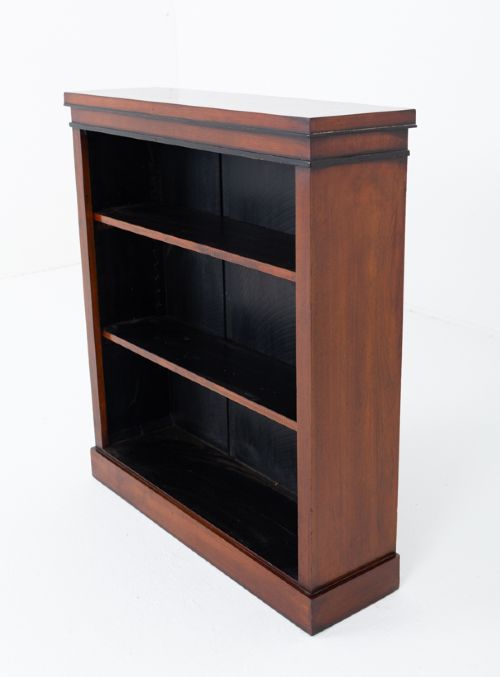
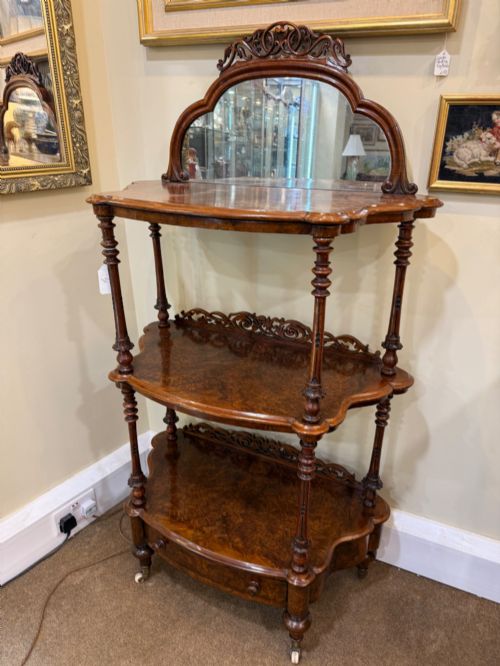
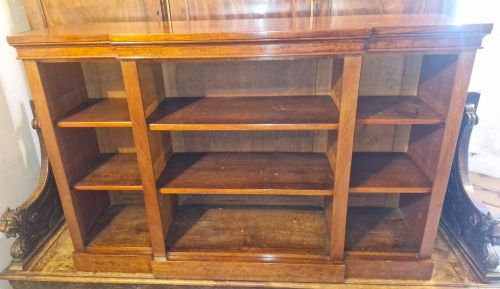
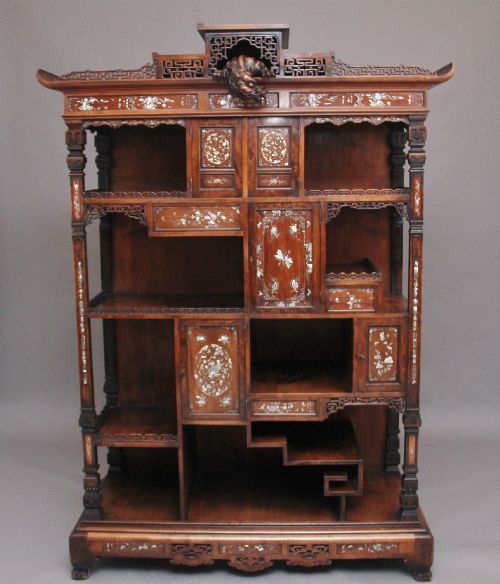
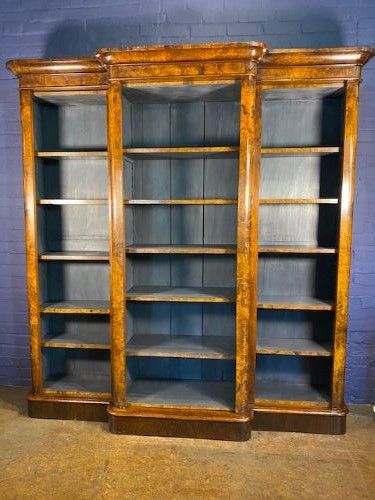
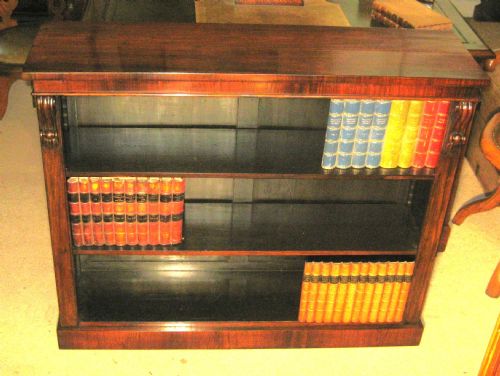
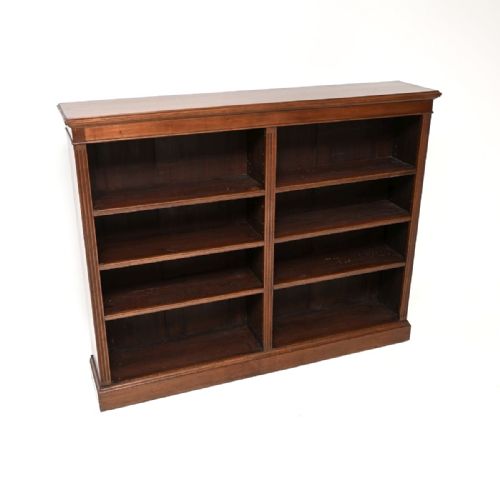
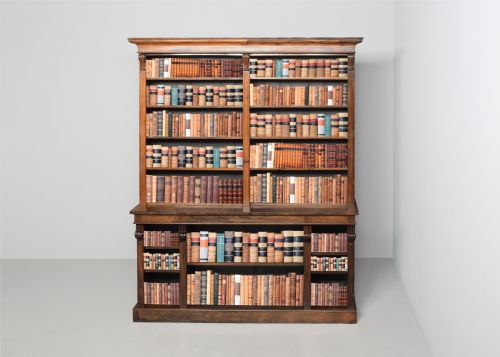
Nineteenth century open shelving encompasses freestanding bookcases, wall-mounted tiers, corner cabinets, and multi-layered whatnots designed for displaying books and ornamental objects. Buyers seeking 19th century open shelving most frequently encounter mahogany and walnut bookcases from the Victorian and Regency periods, alongside rosewood étagères.
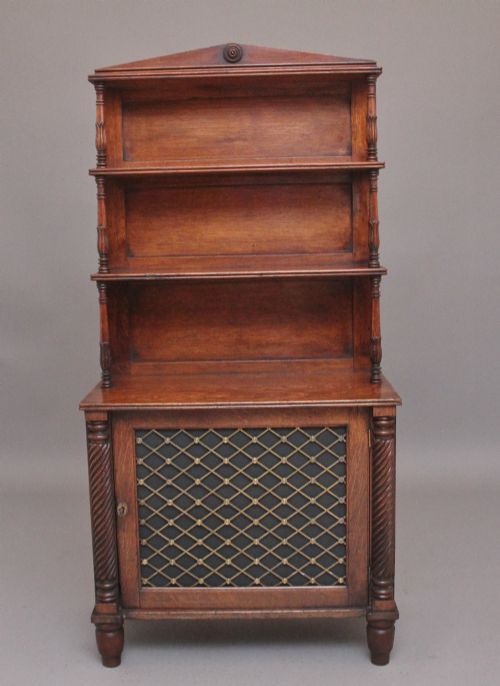
The utility of these pieces spans library rooms and intimate parlours, offering accessible ledges where books and collections remain visible. Formats range from low, long breakfront units to tall upright shelving and cascading waterfall designs.
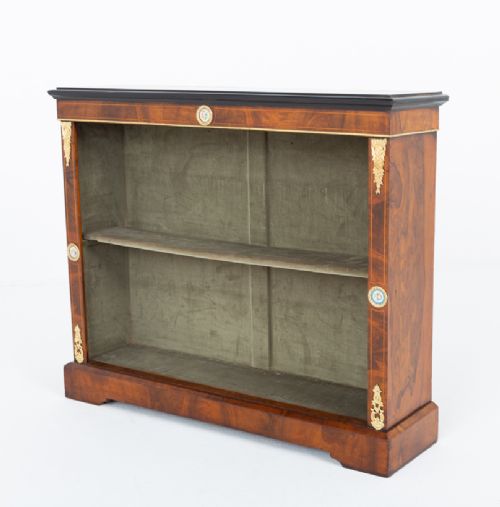
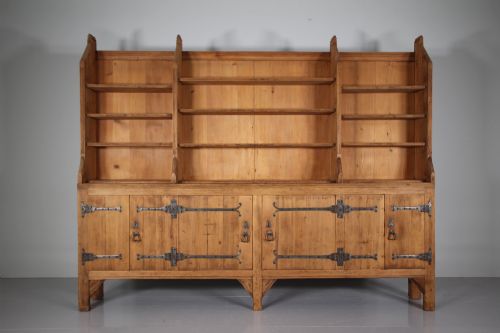
Origins vary across English workshops, French provincial makers, and Anglo-Indian production, bringing diverse timbers and carved details to the inventory. Simpler pine and oak utility pieces sit alongside heavily figured burr walnut mounted with ormolu.
Materials and Construction
Cabinet makers utilised dense hardwoods including mahogany, walnut, rosewood, and padauk, often selecting timbers with pronounced grain patterns or burr figures for prominent surfaces. Secondary woods like pine provide internal structure and backing boards within larger library bookcases.
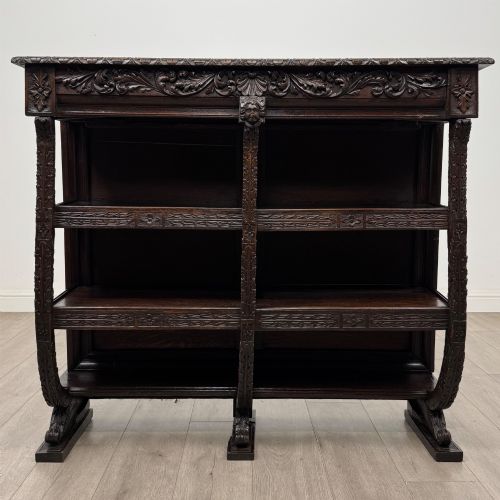
Construction techniques combine traditional dovetailing for drawers with adjustable shelf systems supported on wooden racks, brass pins, or metal ratchets. Applied decorative elements include brass mounts, ormolu enrichments, hand carvings, and painted finishes.
Formats span bookcases, corner shelves, wall shelves, display cabinets, étagères, and whatnots.
Standards of Execution
Distinction across pieces rests on the selection of timber veneers, the crispness of hand-carved ornamentation, and the integration of secondary metals such as ormolu or brass. Superior examples exhibit tightly figured burr walnut or select mahogany matched symmetrically across the facade.
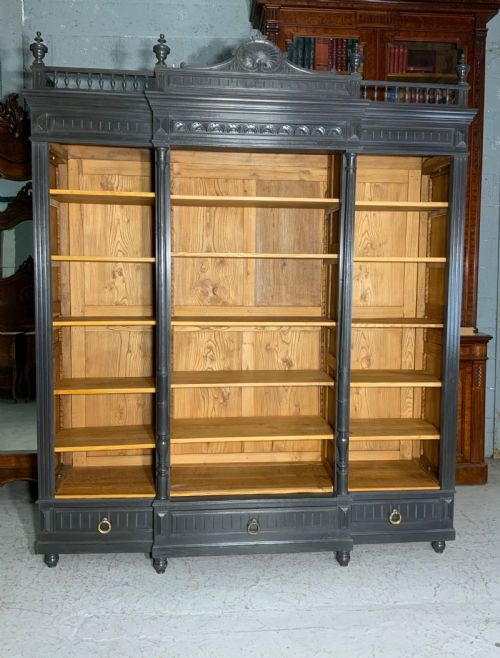
Mechanical refinement marks the upper tiers of production, particularly in adjustable shelving mechanisms that operate smoothly within side pilasters. Heavy solid wood backs and substantial timber thickness distinguish substantial library pieces from lighter display tiers.
Johnstone and Jeanes·Gillows
The 19th Century Open Shelving Glossary
- Waterfall bookcase
- A tiered shelving unit where each successive shelf steps back from the one below, typically associated with the Regency period.
- Étagère
- A piece of furniture consisting of a set of open shelves for displaying small objects or ornaments.
- Whatnot
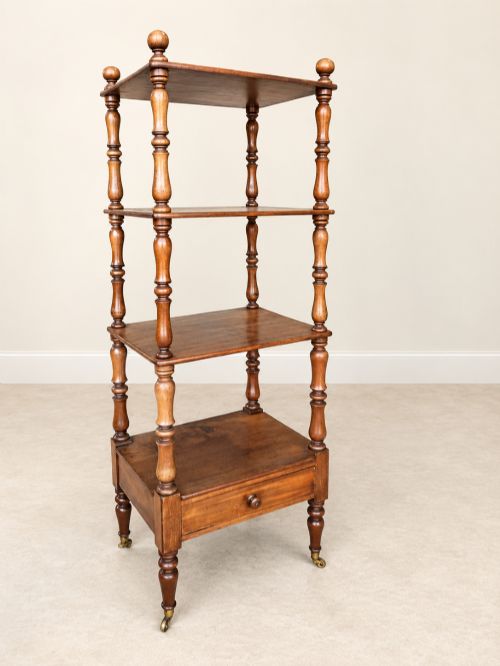
- A multi-tiered open shelving stand used for books or ornaments, popular throughout the Victorian era.
- Breakfront
- A piece of furniture with a central section that projects forward from the flanking outer sections.
- Ormolu
- Gilded bronze mounts applied to furniture as decorative enrichment, seen on walnut and rosewood cabinets.
19th Century Open Shelving: Frequently Asked Questions
How do I style open shelving?
Arrange books vertically and horizontally alongside decorative ceramics to break up linear visual weight. Leave breathing room around objects so the timber backboards remain visible.
Anchor lower shelves with heavier volumes and place lighter items or smaller pieces on upper tiers. This distribution maintains visual stability across the unit.
Are shelves adjustable?
Many examples feature adjustable shelves supported by wooden ratchets, brass pins, or slotted pilasters inside the cabinet walls. This system allowed libraries to accommodate varying book heights.
Fixed shelves appear more frequently in smaller wall units, corner brackets, and specific étagères where structural uprights remain slender.
Where were these used?
Libraries, drawing rooms, and studies housed these units to keep working reference volumes and cherished collections close at hand. Smaller wall-mounted shelves and whatnots served intimate parlour spaces.
Alcove cupboards and low bookcases fitted neatly beneath windows or beside fireplaces in formal Victorian and Georgian interiors.
How do I identify the wood?
Mahogany shows a reddish-brown tone with straight or ribbon grain, while walnut presents darker brown hues with rich figuring. Rosewood displays deep purplish-brown streaks and an oily lustre.
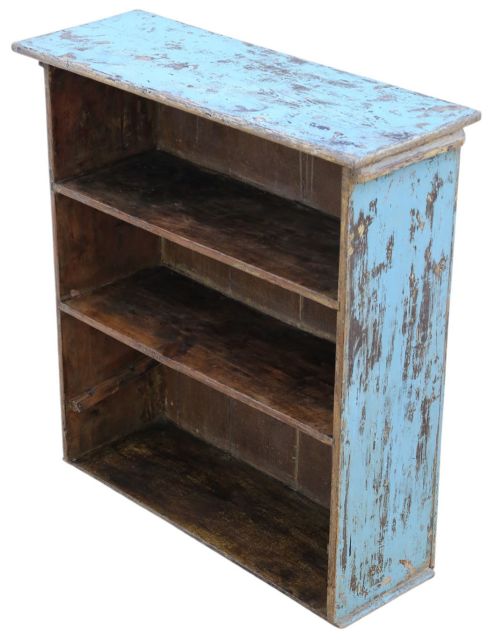
Pine and oak offer lighter, more rustic grain patterns, often found in provincial pieces or hidden interior components of larger library bookcases.