

19th Century Oak Side Table
A 19th century oak side table offers sturdy utility and rich grain, grounding a room with dependable surface space.
19th Century Oak Side Table
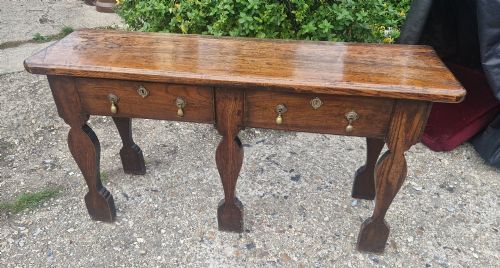
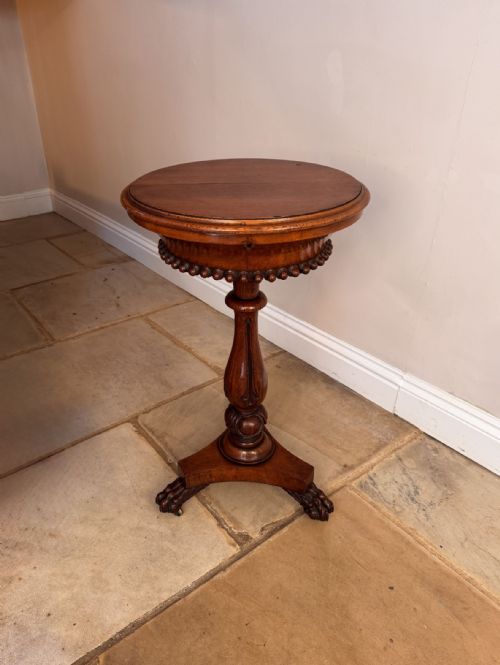
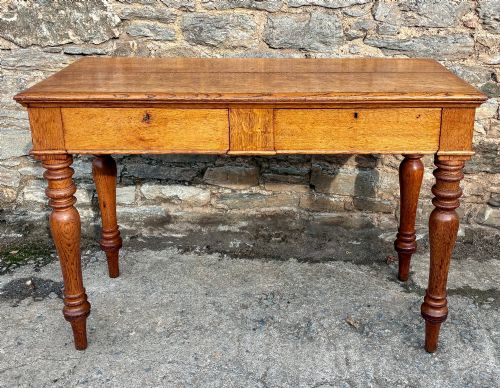
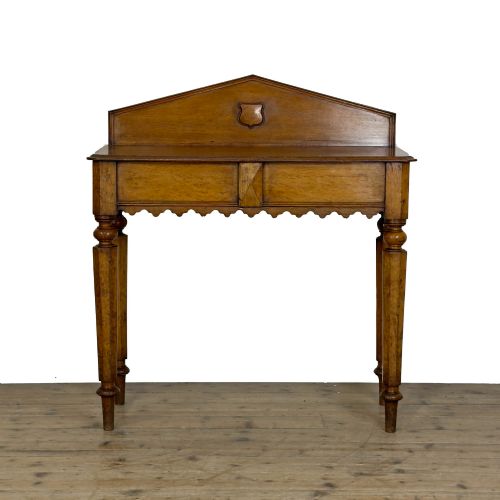
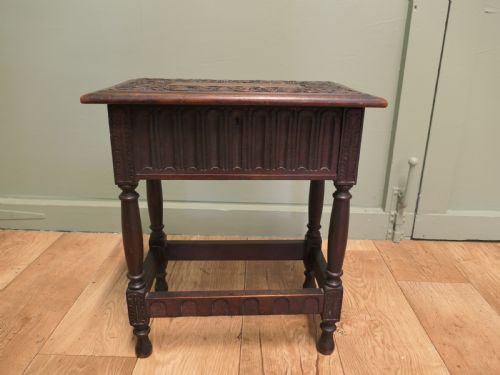
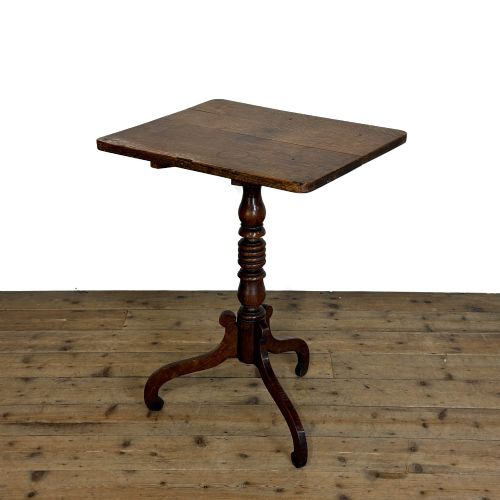
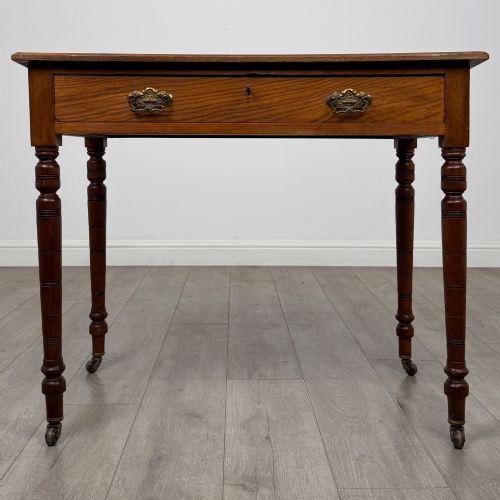
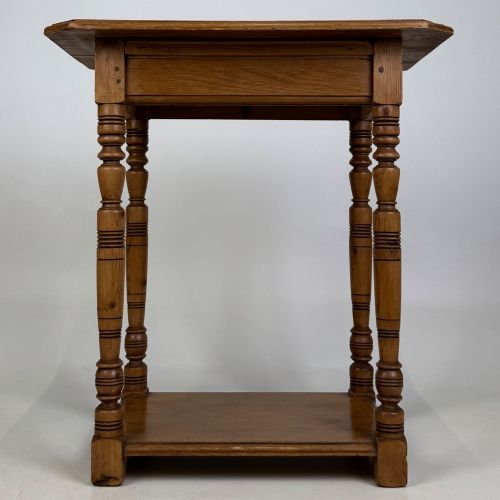
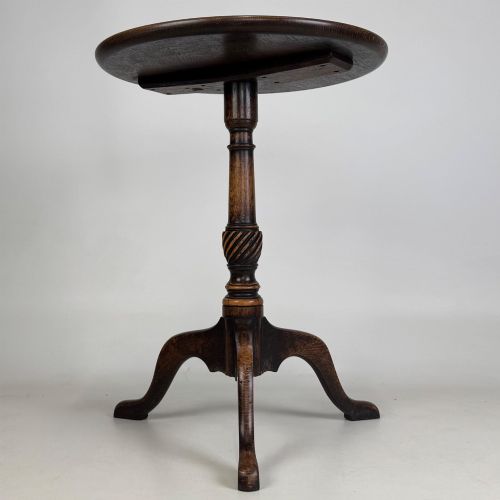
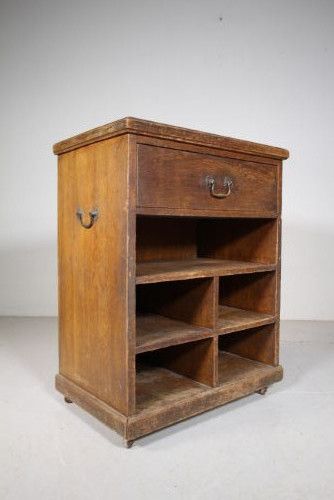
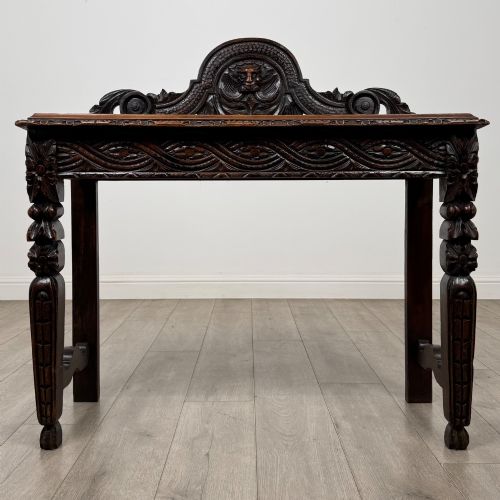
When you search for a 19th century oak side table, you encounter practical domestic furniture spanning simple country pieces to elaborately carved Victorian and Gothic Revival designs. These items served functional roles in hallways, bedrooms, and parlours, operating as lowboys, console tables, or writing desks.
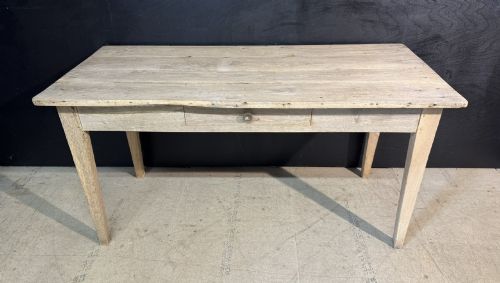
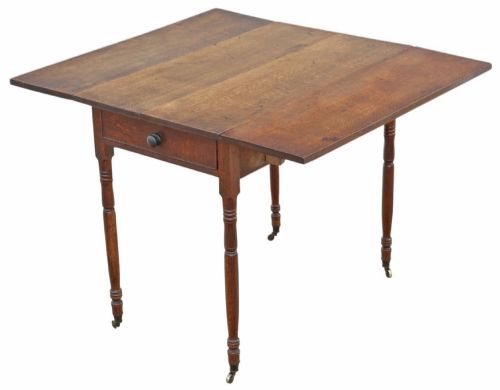
You are most likely to meet rectangular formats featuring single drawers, turned or barley twist legs, and plank tops. Regional variations appear frequently, connecting English country workshops with French provincial and Welsh traditions.
Scale remains modest across the majority of examples, designed to fit narrow passages or bedside positions without dominating the floor plan. Heavier proportions emerge in architectural revival styles and large Scottish or provincial serving tables.
Materials and construction
Solid timber construction dominates the evidence, utilising native oak supplemented occasionally by pollard oak, yew, ash, or pine for secondary framing and drawer linings. Joinery relies on traditional methods including pegged mortise and tenon joints, dovetails for drawer boxes, and robust plank construction.
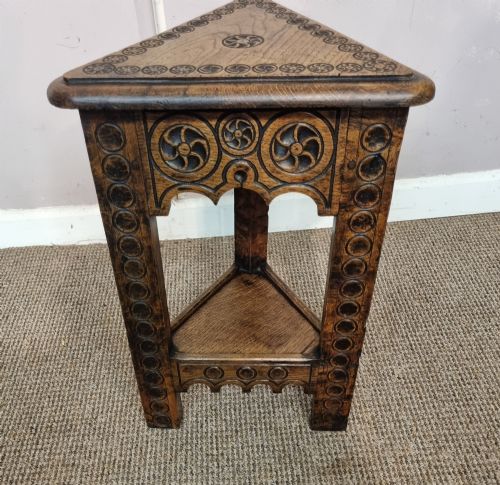
Surface treatments vary from dry, unpolished finishes showing natural grain to richer golden tones and darker waxed patinas accumulated through decades of use. Decorative elements integrate carved motifs, brass drop handles, leather inserts, and inset marble or copper tops on select exhibition pieces.
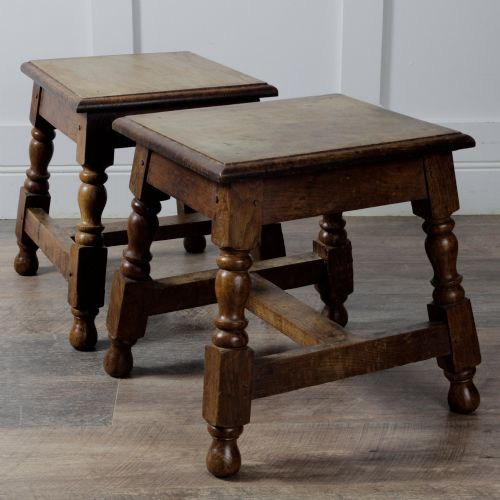
One unexpected variant pairs ecclesiastical church stools with domestic side tables using robust X-frame oak stretchers.
Distinguishing quality
The standard of a 19th century oak side table rests in the crispness of its hand-carved detail and the selection of timber figures. Superior examples display tight medullary rays in quarter-sawn oak and smooth drawer operation supported by hand-cut dovetails.
Proportion and integrity dictate value, with unaltered surfaces and original brass hardware outranking pieces that have undergone extensive timber replacement or aggressive stripping. Structural rigidity in the joints and legs separates utilitarian daily items from finer workshop output.
Liberty and Co·Wylie and Lochhead·Heals of London
The 19th Century Oak Side Table Glossary
- Lowboy
- A small table with one or more drawers and long legs, frequently used as a dressing table or side table in the eighteenth and nineteenth centuries.
- Barley twist
- A type of turning resembling a spiralling rope, popular in furniture legs and stretchers during revival periods.
- Cricket table
- A small, lightweight occasional table typically featuring three legs and a round wooden top.
- Medullary ray
- The ribbon-like cellular structure visible in quarter-sawn oak, producing a distinctive silver-flake grain pattern.
- Pembroke table
- A drop-leaf table with hinged flaps on either side, introduced in the eighteenth century and continued through the nineteenth century.
19th Century Oak Side Table: Frequently Asked Questions
How do I spot a fake?
Examine the drawer linings and undersides for tool marks, timber shrinkage, and consistent wear patterns that match genuine age.
Machine-cut screw threads or modern adhesives indicate later alterations rather than original nineteenth-century manufacture.
Were these tables used in kitchens?
Many sturdy oak tables served utilitarian functions in domestic workspaces, including food preparation and general household administration.
Thicker plank tops and simple scrubbed finishes typically point towards farmhouse or provincial kitchen origins.
How do I care for oak?
Maintain the finish by applying natural beeswax sparingly and buffing with a soft cloth to preserve the surface sheen.
Keep wooden furniture away from direct heat sources and dramatic humidity shifts to prevent timber splitting.
What is the difference between a side table and a console?
Side tables are freestanding pieces designed to stand against any wall, finished on all primary visible sides.
Console tables traditionally require wall fixing or rely on specific bracket placement, often featuring decorative front legs with simpler rear supports.