


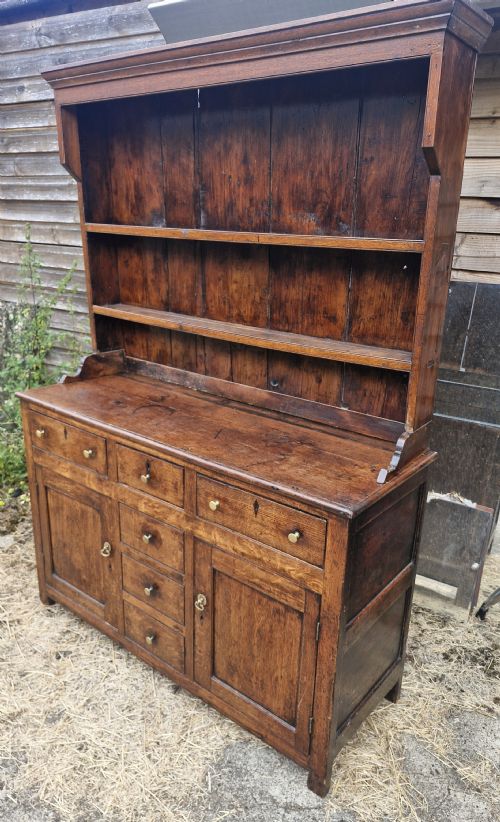


19th Century Oak Hutch
A 19th century oak hutch brings solid regional character and honest timber into a room.
19th Century Oak Hutch
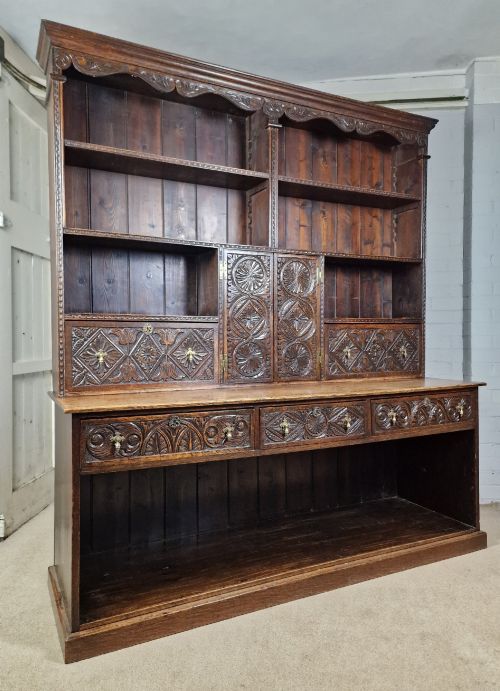
When buyers search for a 19th century oak hutch, they are usually looking at large storage furniture combining lower cupboards or drawers with upper display shelving, commonly catalogued as dressers, cabinets, and bookcases. The examples appearing on this page span the 18th0s, Regency, and Victorian periods, reflecting both British regional traditions and continental European workshops.
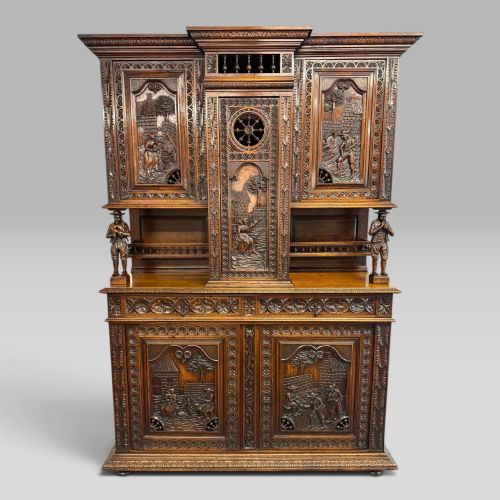
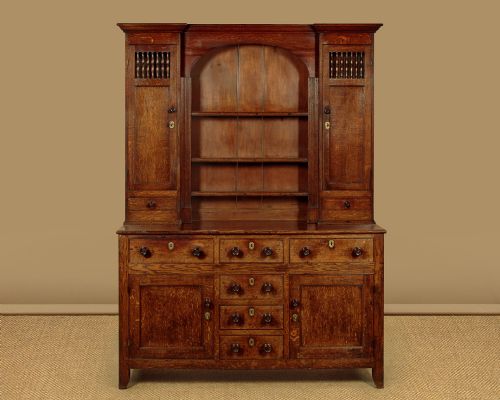
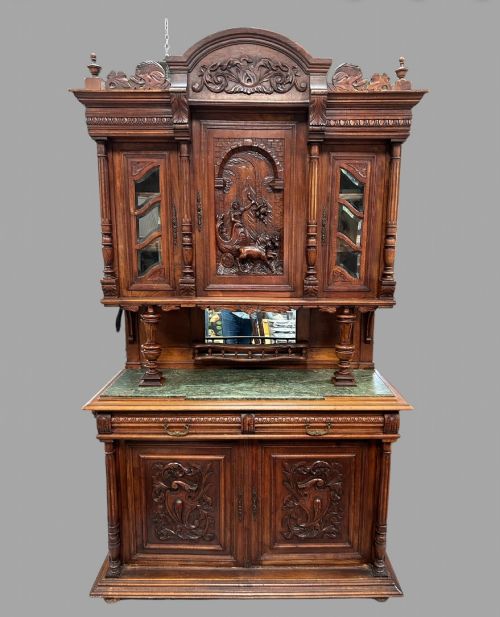
The British pieces lean heavily towards Welsh cottage and country house forms, often featuring plate racks above base cabinets designed for domestic utility. Alongside these sit French provincial walnut and oak pieces, including carved hunting cabinets, buffets, and Breton cabinets that display regional continental detailing.
Makers and joiners worked primarily in solid timber, adapting vernacular designs to suit farmhouses, country kitchens, and larger domestic interiors. The variety on offer ranges from utilitarian two-part Welsh dressers to heavily carved revival pieces intended for formal display.
Materials and Construction
Construction relies fundamentally on solid oak, selected for its durability and strong grain, occasionally accompanied by walnut or secondary timbers. Joinery methods utilised traditional framing techniques to build substantial two-part structures capable of supporting heavy upper plate racks and contents.
Decorative surface work incorporates hand carving, particularly visible on French provincial and Renaissance revival pieces, alongside turned wooden elements and fitted brass hardware. Certain items integrate glass panels and marble surfaces, introducing varied textures to the primary timber framework.
19th Century Oak Hutch Retail Price Guide 2026
Typical asking prices for 19th century oak hutch among the pieces listed under this phrase on Sellingantiques today, from the lower quarter to the upper quarter. They describe what is for sale here now, not the wider market.
Several pieces include dedicated clock dressers, proving that past generations valued knowing the exact hour while fetching the dinner plates.
Assessing Quality and Character
Quality in these pieces is dictated by the integrity of the timber, the crispness of the hand carving, and the retention of original structural components like the upper rack. Regional variations in proportion and the complexity of the joinery distinguish straightforward vernacular furniture from ambitious country house or revival commissions.
The handling of the oak surfaces, from simple waxed finishes to deeper patination achieved over generations of domestic use, separates standard utility items from pieces possessing strong visual presence. Original hardware, glass, and structural completeness further define the standing of individual examples.
The 19th Century Oak Hutch Glossary
- Welsh dresser
- A traditional dining room or kitchen storage piece featuring lower cupboards or drawers surmounted by open plate shelves. These units served as practical furniture for storing and displaying everyday ceramics.
- Plate rack
- The open shelving superstructure attached to the upper section of a dresser, designed to display plates upright. They form an integral visual and structural component of many country storage pieces.
- Two-part
- A piece of furniture constructed in separate upper and lower modules for ease of transport and placement. This method was essential for moving large oak dressers and bookcases into domestic rooms.
- Patina
- The surface sheen and colour acquired by oak over decades of handling, polishing, and environmental exposure. It remains a key indicator of age and careful preservation.
- Vernacular
- Architecture and furniture built by local craftsmen using traditional regional methods and materials rather than high academic styles. Most country dressers and cottage cabinets fall into this practical category.
19th Century Oak Hutch: Frequently Asked Questions
What is a 19th century oak hutch used for?
These large storage items served primarily in kitchens and dining areas for holding tableware, linens, and provisions. The upper shelves displayed ceramic plates while the lower cupboards and drawers concealed bulky kitchenware.
Today, they function similarly in domestic settings, providing substantial display space and enclosed storage for books, tableware, or collections while anchoring a room with traditional timber character.
How do you distinguish Welsh dressers from other regional styles?
Welsh dressers typically feature distinct proportions with open plate racks fixed above base cabinets or sets of drawers. Their construction often reflects local British country workshop traditions using native oak.
Continental alternatives, such as French provincial buffets or Breton cabinets, rely on heavier regional carving styles, panelled doors, and distinct cornices that separate them from British vernacular work.
Are these pieces built in separate sections?
Many larger examples are constructed as two-part furniture, meaning the upper plate rack or bookcase lifts off the lower base cabinet. This made transportation through doorways and staircases manageable for historical households.
When positioning one in a home, checking whether a piece is a single solid unit or a two-part construction helps with moving and installation.
How do you care for antique oak furniture?
Maintaining 19th century oak requires keeping the timber away from direct heat sources and sudden humidity shifts that can cause the wood to split. Regular dusting and occasional application of appropriate wax help preserve the surface sheen without building up heavy residues.
Avoiding harsh chemical cleaners ensures the historic patination developed over the centuries remains undisturbed.