


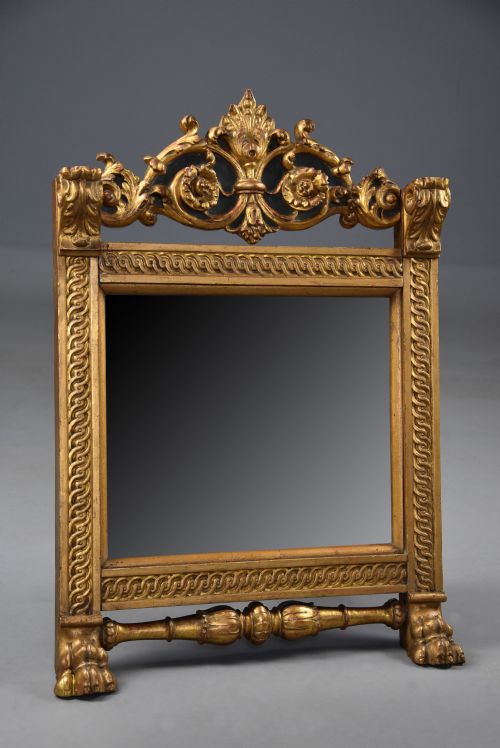


19th Century Mirror Desk
A 19th century mirror desk combines a practical writing surface with an integrated looking glass, bringing functional elegance to a bedroom or study.
19th Century Mirror Desk
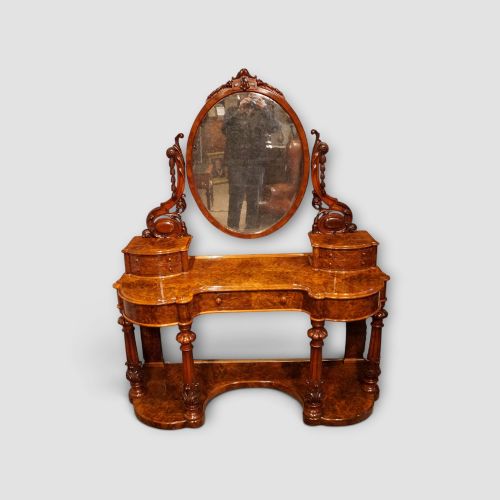
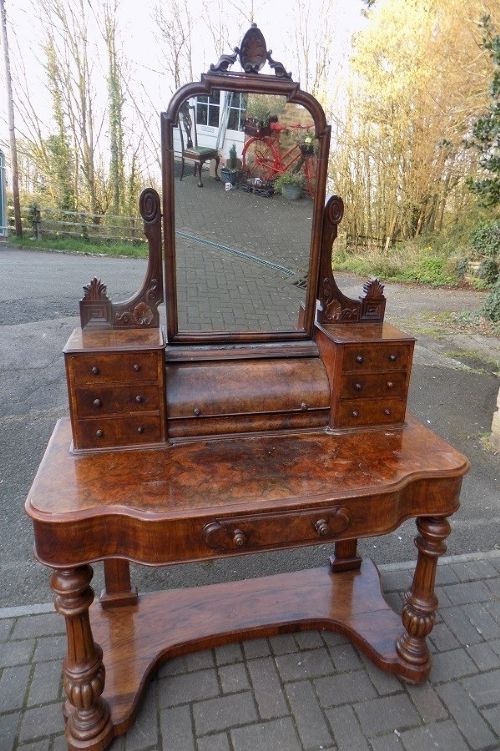
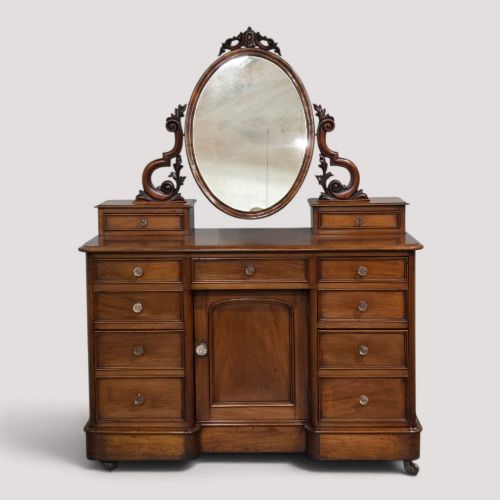
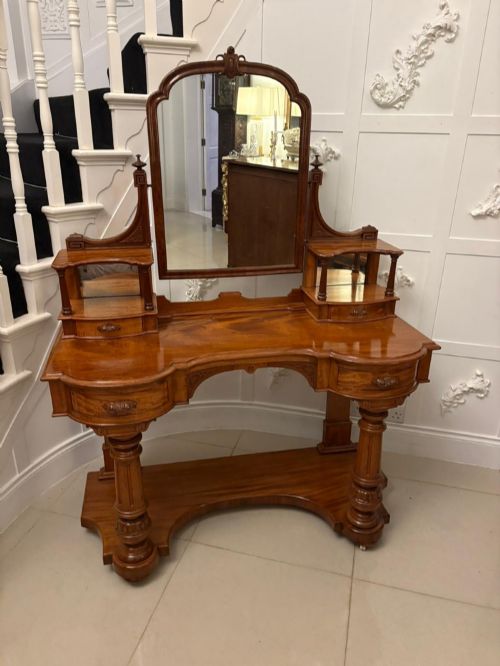
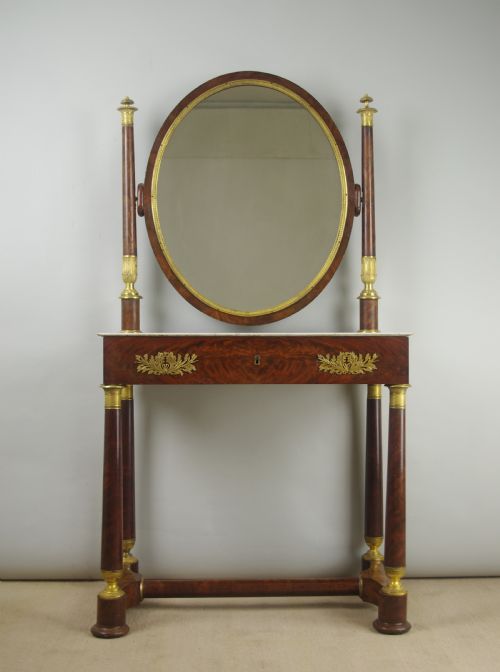
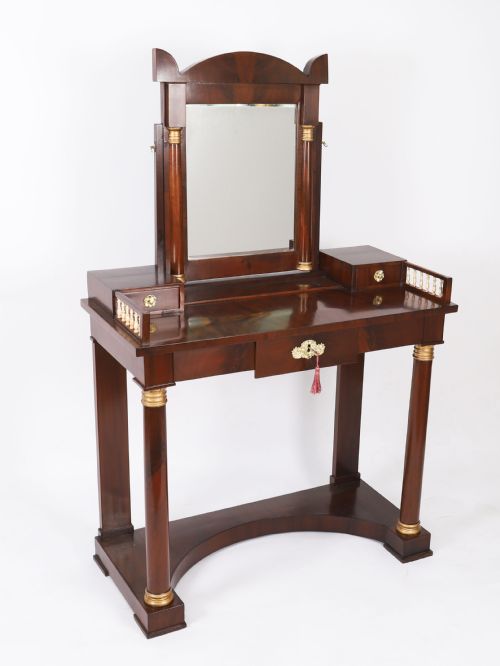
When searching for a 19th century mirror desk, buyers encounter a variety of forms primarily rooted in Victorian and French Empire aesthetics. These pieces often overlap with dressing tables, duchess tables, and bureau fitments that incorporate pivoting or fixed glass plates.
The most common versions on this page are mahogany or burr walnut dressing tables featuring large swing mirrors, alongside French Empire and Renaissance style variants. Dating spans from the early 1800s through the late Victorian decades.
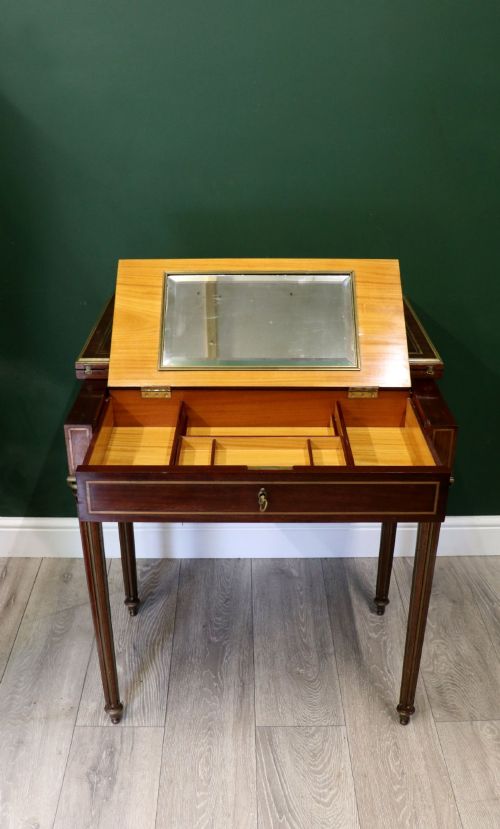
Forms range from grand carved kneehole pieces to delicate bureau bookcase combinations and inlaid writing tables. Each variation serves the dual purpose of personal grooming and correspondence.
Materials and construction
Cabinet makers relied heavily on solid and veneered timbers, predominantly rich mahogany and figured burr walnut, supported by secondary structural woods. Surfaces frequently display intricate marquetry or brass inlay.
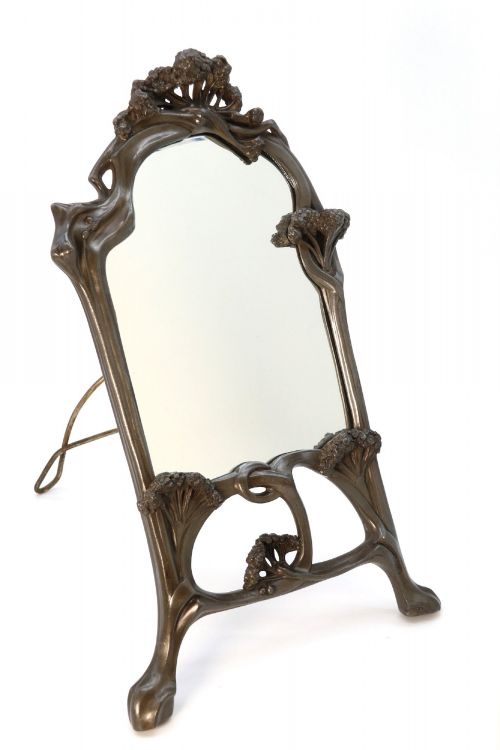
Decorative elements involve cast or chased ormolu mounts, carved giltwood, and porcelain plaques set into the timber frame. Mirror glass is typically heavy plate, sometimes held by pivoting brass arms or easel backs.
19th Century Mirror Desk Retail Price Guide 2026
Typical asking prices for 19th century mirror desk among the pieces listed under this phrase on Sellingantiques today, from the lower quarter to the upper quarter. They describe what is for sale here now, not the wider market.
Many Victorian dressing tables include secret compartments hidden beneath trinket drawers for clandestine love letters.
Assessing craftsmanship
Superior examples demonstrate meticulous timber selection, ensuring figured grains align harmoniously across drawer fronts and writing surfaces. Finely executed hand-carvings and crisp ormolu mountings distinguish workshop masterpieces from standard production.
Structural integrity reveals itself in traditional joinery, smooth drawer runners, and the quality of the original mirror glass. The depth of the polish and retention of original hardware heavily influence overall desirability.
Louis Auguste Moreau
The 19th Century Mirror Desk Glossary
- Duchess dressing table
- A large Victorian dressing table featuring a large central swing mirror supported by small trinket drawers or jewellery compartments. These substantial pieces typically include a lower tier or shelf between the legs.
- Ormolu
- Gilded bronze used for decorative mounts and accents on furniture, particularly prominent in French Empire pieces. The technique involves applying a mercury and gold amalgam to bronze.
- Bureau fitment
- A writing section integrated into a larger piece of furniture, often housing small pigeonholes and drawers. It converts a standard table into a compact workspace.
- Swing mirror
- A looking glass hung on pivots within a vertical frame, allowing the user to adjust the tilt angle. It is usually mounted atop dressing tables or bureau desks.
19th Century Mirror Desk: Frequently Asked Questions
What is a 19th century mirror desk?
A 19th century mirror desk is a piece of antique furniture designed for writing or grooming that incorporates a built-in looking glass. These items span various revival styles and woods from the Victorian and continental eras.
They function as both a writing surface and a vanity, making them versatile additions to period interiors.
How do I identify a Victorian dressing table?
Victorian dressing tables often feature dense mahogany or burr walnut veneers, substantial carved supports, and large swing mirrors. They frequently include small trinket drawers flanking the base of the glass.
Later Victorian iterations lean towards the duchess style with demi-lune configurations and elaborate superstructure arrangements.
Are French Empire and English pieces different?
French Empire pieces from this era typically showcase architectural symmetry, darker mahogany, and prominent ormolu mounts or classical bronze figures. English Victorian versions tend to focus on rich timber grain and robust carved ornamentation.
Continental examples also frequently incorporate decorative porcelain plaques or giltwood finishes.
Where should I place a mirror desk?
These pieces suit bedrooms, dressing rooms, or studies where natural light can illuminate the writing surface and mirror. Positioning them perpendicular to a window prevents glare on the glass.
Ensure adequate clearance around the piece for any swing mirror adjustments and chair movement.