

19th Century Mahogany Armoire
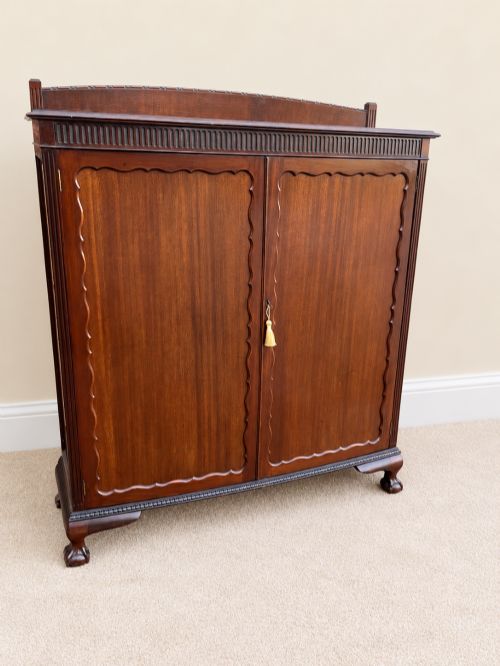
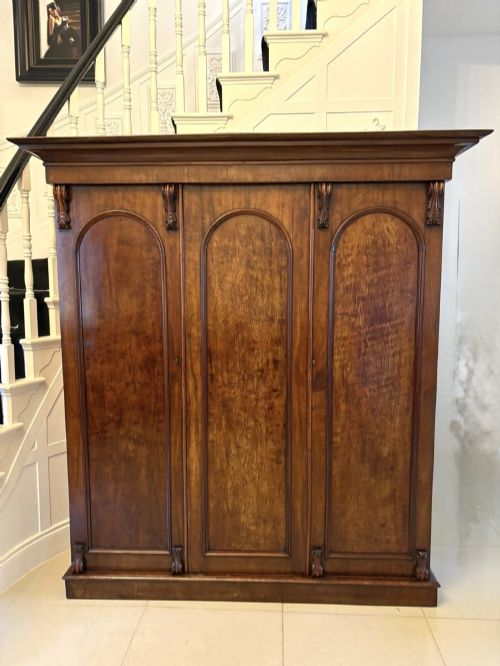
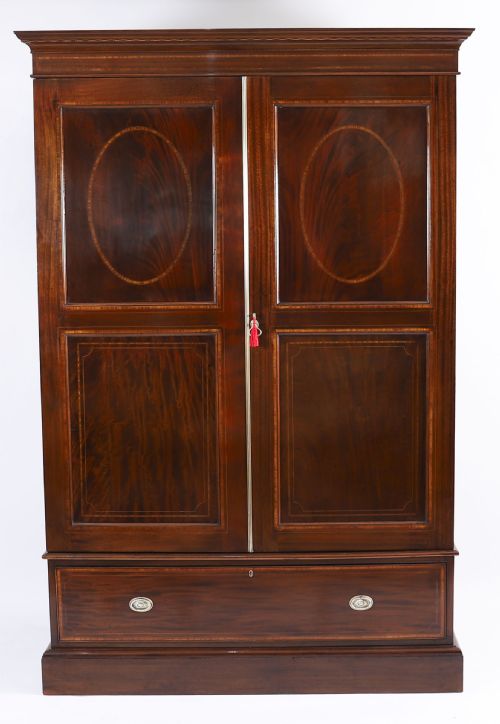
A 19th century mahogany armoire brings substantial timber and grand presence to a bedroom, offering deep storage within classical proportions.
19th Century Mahogany Armoire
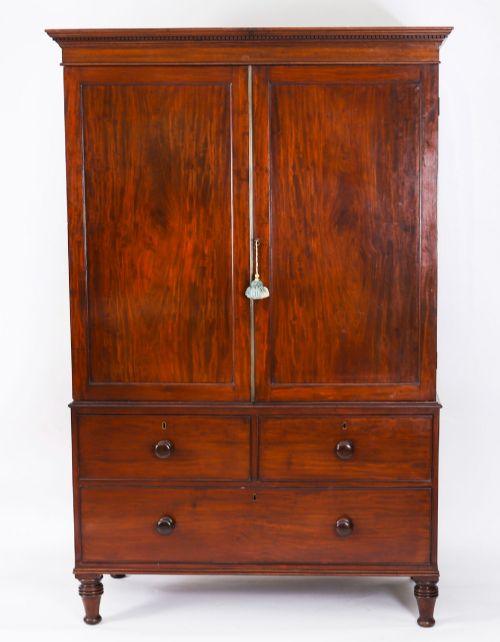
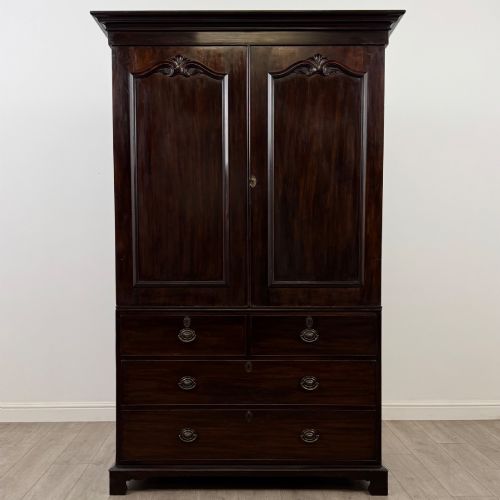
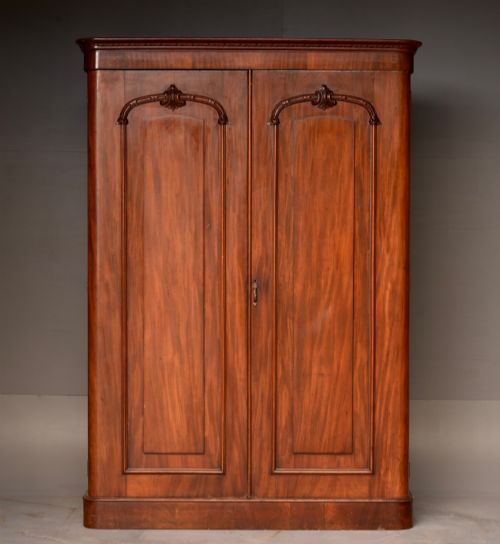
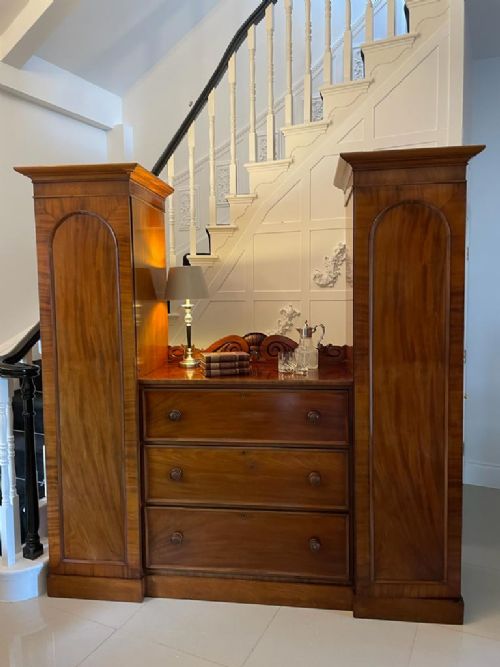
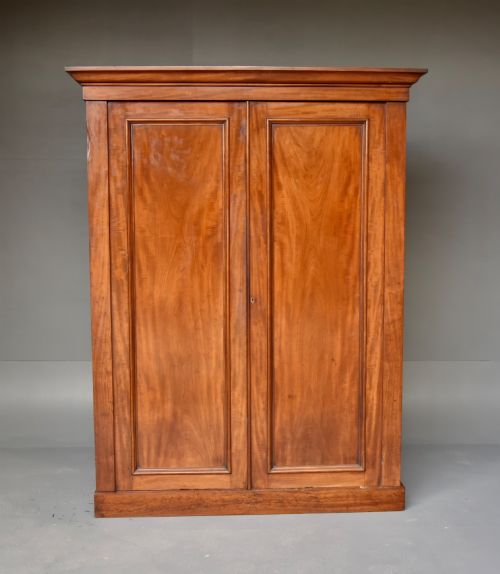
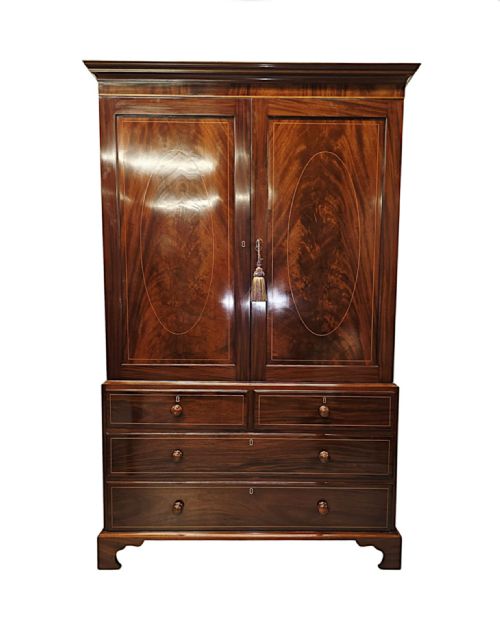
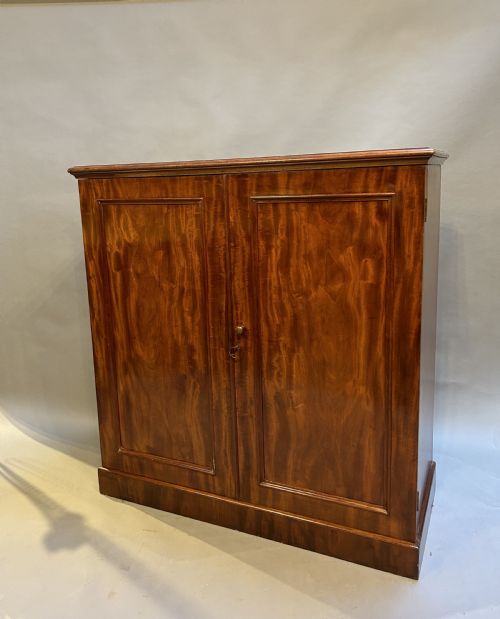
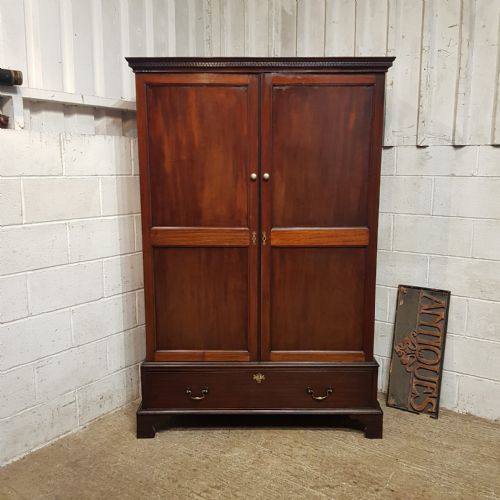
A 19th century mahogany armoire spans grand French wardrobe forms and British linen presses, wardrobes, and compactums produced across the Georgian, Regency, William IV, and Victorian periods. You will regularly encounter double and single door wardrobes alongside linen presses fitted with internal sliding trays above drawers.
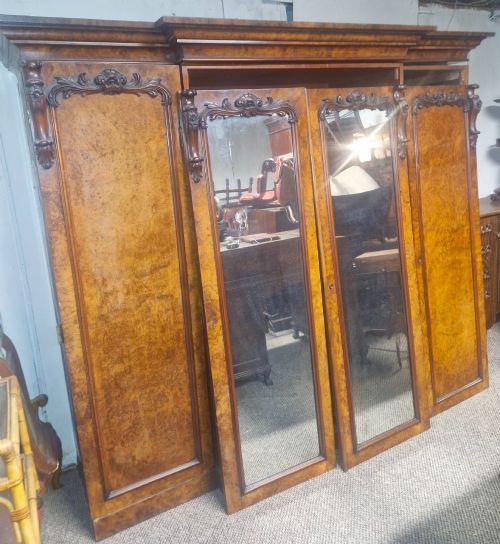
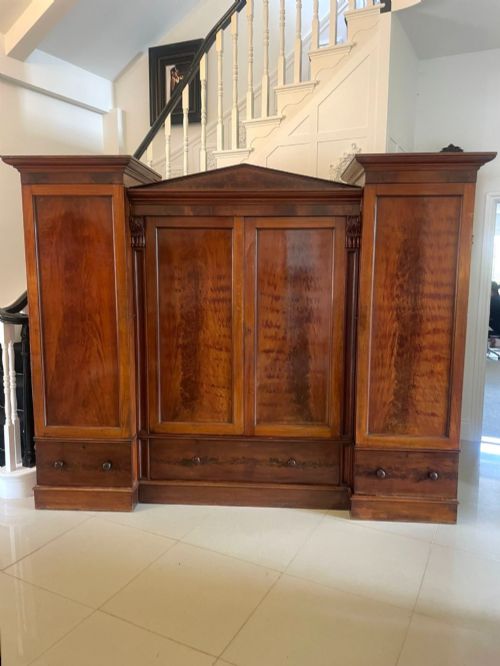
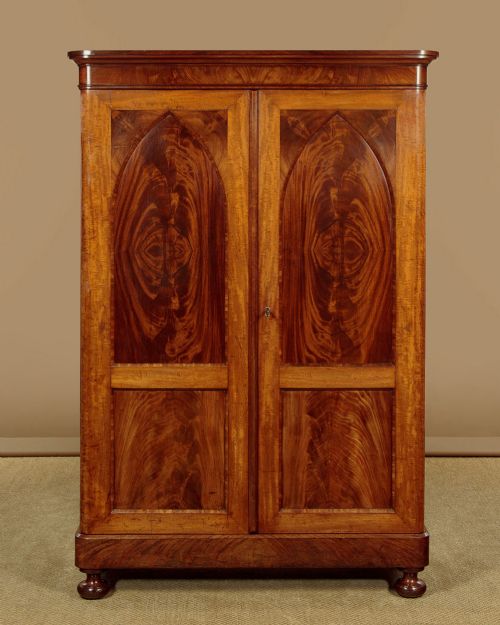
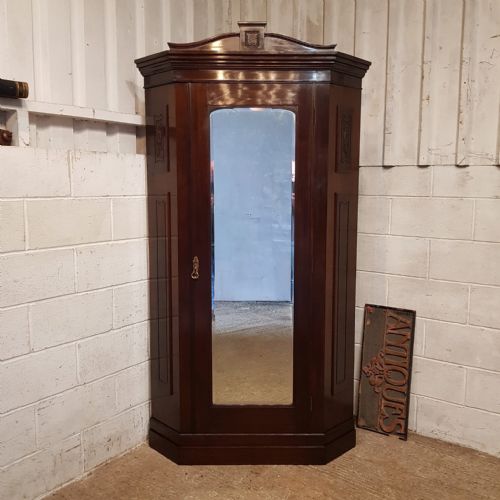
Makers utilised rich timber variants including flame mahogany, often enhanced by inlay, crossbanding in rosewood or amboyna, and brass or ormolu mounts. Pieces range from large four-door architectural wardrobes to slim corner cupboards and French empire revival armoires.
The domestic scale of these pieces reflects their original use in principal bedrooms and dressing rooms of substantial houses. Surviving examples demonstrate regional variations from British workshops to French ateliers and Channel Island makers.
How They Were Made
Cabinet makers applied figured veneers such as flame mahogany over stable secondary woods, arranging grain patterns symmetrically across large door panels. Solid mahogany formed structural carcases, cornices, and drawer linings, frequently incorporating hand-cut dovetail joints.
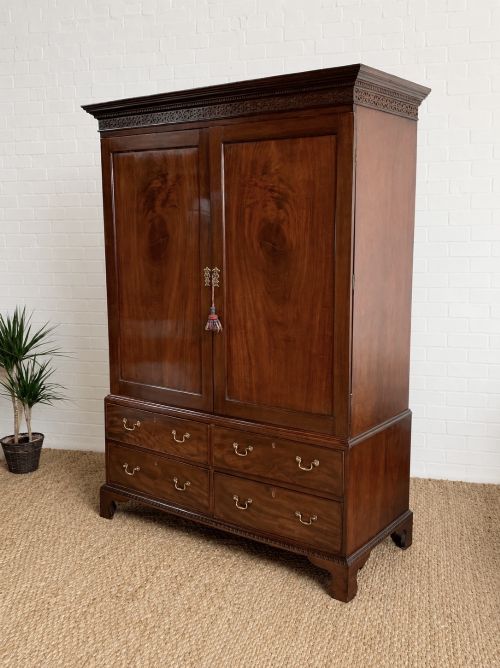
Decorative surface details relied on precision inlays of satinwood, boxwood, and amboyna, alongside blind fretwork cornices carved directly into the timber. Metalwork elements including brass handles, glass door panels, and gilt bronze or ormolu mounts completed the construction.
19th Century Mahogany Armoire Retail Price Guide 2026
Typical asking prices for 19th century mahogany armoire among the pieces listed under this phrase on Sellingantiques today, from the lower quarter to the upper quarter. They describe what is for sale here now, not the wider market.
Listings feature 19th century mahogany armoires alongside Victorian double wardrobes, George IV linen presses, and William IV compactums.
What Varies in Quality
The distinction between standard production and exceptional craftsmanship rests on the selection and matching of timber veneers. Superior examples display striking flame figuring across every door panel, whereas lesser pieces rely on plain timber or mismatched grain.
Structural refinement marks the upper tier of pieces, seen in sophisticated internal configurations like linen press sliding trays, secret drawers, and substantial brass hardware. Finer items also retain crisp carving on cornices and precise joinery that maintains door alignment over centuries.
S and H Jewell·Heals
The 19th Century Mahogany Armoire Glossary
- Armoire
- A large freestanding cupboard or wardrobe, typically of continental European origin, designed with doors enclosing hanging space or shelves.
- Compactum
- A multi-compartment wardrobe combining hanging space, linen slides, and internal drawers within a single unified piece of furniture.
- Linen Press
- A tall storage piece featuring upper sliding trays or shelves enclosed by doors, positioned above a chest of base drawers.
- Flame Mahogany
- A highly figured timber veneer cut from the branch junction of the mahogany tree, creating a distinctive flaming pattern.
- Blind Fretwork
- Carved ornamentation applied to a flat surface in geometric or interlaced patterns without piercing through to the background.
- Crossbanding
- A narrow strip of veneer laid around the border of a larger panel with the grain running at right angles to the centre.
19th Century Mahogany Armoire: Frequently Asked Questions
What is a compactum wardrobe?
A compactum is a specialised multi-functional wardrobe designed to house various types of clothing within one footprint. It typically divides its interior between hanging space, dedicated linen slides, and smaller drawers.
These pieces were constructed to offer comprehensive gentleman or lady's outfit storage without requiring separate chests of drawers. Their clever internal architecture makes them highly practical for modern bedrooms needing efficient storage.
How do I care for mahogany furniture?
Mahogany requires stable indoor humidity levels and protection from direct sunlight to prevent the rich timber and veneer from fading or drying out. Regular dusting with a soft, dry cloth maintains the polished surface.
Occasional application of traditional beeswax nourishes the grain without building up heavy chemical residues. Avoid placing these large wooden pieces near direct heat sources or damp exterior walls.
Are these wardrobes easy to dismantle?
Many large 19th century wardrobes and armoires were constructed to break down into manageable modular sections, including cornices, base units, sides, and doors. This design allowed furniture makers to transport and install massive pieces into upper floor bedrooms.
When moving or reassembling these items, care must be taken with traditional knockdown bolts and heavy timber panels. Professional installation is often recommended to ensure proper alignment of doors and internal components.
What distinguishes a linen press from a wardrobe?
A linen press specifically incorporates internal sliding trays or shelves behind its upper doors, historically designed for storing flat linens rather than hanging garments. Below these trays sits a chest of functional drawers.
Standard wardrobes, by contrast, focus primarily on vertical hanging space for coats and dresses. Many antique linen presses have since been converted to modern wardrobe use by removing interior trays to install a hanging rail.